

- Common Japanese phrases for apologizing
- “Sumimasen” (すみません)
- “Gomen nasai” (ごめんなさい)
- “Mōshiwake arimasen” (申し訳ありません)
- The dual role of “Sumimasen”
- Apologizing with Japanese slang
- Situational apologies in Japan
- In business settings
- To friends
- For cultural mistakes
- Master apologizing in Japanese
- Frequently Asked Questions
- What are the three common phrases for apologizing in Japanese?
- How does ‘Sumimasen’ differ from ‘Gomen nasai’?
- What is the significance of apologizing in Japanese culture?
- When should I use slang terms like ‘gomen’ or ‘warii’?
- How should I apologize in a professional setting in Japan?
In Japan, the act of apologizing goes beyond merely acknowledging a mistake; it embodies a vital cultural practice that expresses respect and fosters harmony. An apology signifies not just an admission of fault, but also a commitment to remedy any harm done and to preserve the relationship with the other person. This deep-rooted tradition highlights the importance of maintaining social connections and understanding in Japanese society.
Apologizing in Japan is a nuanced art that goes beyond mere words. There are various expressions for saying “sorry,” each tailored to specific situations and the nature of your relationship with the person involved. By mastering the subtleties of Japanese apologies, you can foster deeper connections and demonstrate your respect for the culture and its values.
No need to fret! This article is your guide to mastering the art of apologies in Japanese. You’ll discover essential phrases for both casual and formal contexts, and understand how the circumstances can influence the way an apology is conveyed.
Common Japanese phrases for apologizing
Let’s explore three common phrases used for apologizing in Japanese.
“Sumimasen” (すみません)
“Sumimasen” is a multifaceted phrase in Japanese that can express everything from a simple acknowledgment of a minor mishap to a heartfelt apology for more significant errors. For instance, if you unintentionally bump into someone while walking, you can say, “すみません、気づかなかった!” (Sumimasen, kizukanakatta!), which means, “Sorry, I didn’t see you there!” This phrase is essential for navigating social interactions in Japan with politeness and respect.
“Gomen nasai” (ごめんなさい)
“Gomen nasai” is a heartfelt expression typically used to apologize in personal situations. If you find yourself needing to cancel plans with a friend, for instance, you could say, “ごめんなさい、予定が変わってしまった。” (Gomen nasai, yotei ga kawatte shimatta.), which translates to “Sorry, my plans have changed.” This phrase conveys sincerity and is a thoughtful way to express regret.
“Mōshiwake arimasen” (申し訳ありません)
In Japanese, “Mōshiwake arimasen” serves as a formal apology, often used in professional environments or for significant errors. For instance, if you find yourself running late to a meeting, you can express your regret by saying, “申し訳ありません、遅れてしまいました。” (Mōshiwake arimasen, okurete shimaimashita.), which means “I am sorry for being late.” This phrase demonstrates respect and accountability in communication.
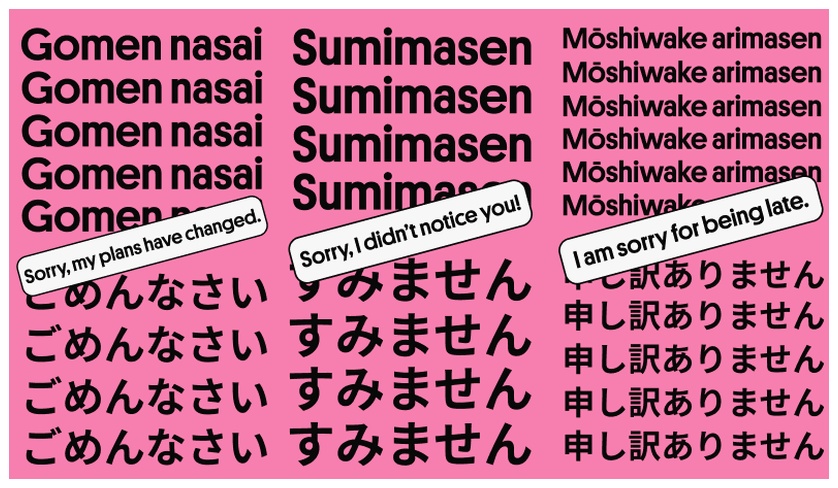
Though all three phrases express apologies, they differ significantly in formality and context. “Sumimasen” is the most adaptable, suitable for both formal and informal occasions. In contrast, “Gomen nasai” is casual, commonly used among friends and family. On the other hand, “Mōshiwake arimasen” is the most formal option, typically reserved for serious errors or professional environments.
Here’s a short video showing you how Japanese apologies changed depending on the formality.
https://youtube.com/shorts/gES6152SR9o?si=ncZJFH2n1B8TTK1l
The dual role of “Sumimasen”
The term “sumimasen” can be a bit perplexing, as it serves a dual purpose in Japanese, meaning both “sorry” and “thank you.” When expressed as gratitude, it conveys a blend of appreciation and a hint of apology, almost as if saying, “I appreciate your help and apologize for any inconvenience.”
For example, when someone returns an item you’ve dropped, you might express your appreciation by saying, “すみません、ありがとう” (sumimasen, arigatou). This phrase beautifully blends “sorry” and “thank you,” reflecting a culture that values gratitude and politeness.
Consider a scenario in a restaurant: when a waiter serves you a glass of water, expressing gratitude with “sumimasen” is a thoughtful gesture. This phrase not only conveys thanks but also reflects a cultural value of humility and the intent to avoid imposing on others.
Apologizing with Japanese slang
Japanese slang provides an array of expressions for saying “sorry.” When chatting with friends, incorporating slang can infuse a lighthearted vibe into your apology. However, in formal situations, it’s advisable to use traditional phrases to convey respect and sincerity.
For example, the term “ごめん” (gomen) serves as a casual expression for “I’m sorry,” commonly used among friends or peers. If you happen to forget your friend’s book, you could say, “ごめん、忘れた!” (Gomen, wasureta!), which means “Sorry, I forgot!” This phrase captures the informal tone of apologies in everyday conversations.
Another popular slang term in Japanese is “わりぃ” (warii), a super casual way to say sorry. It translates to “my bad” or “I messed up.” You’ll often hear it in relaxed environments or among close friends. For instance, if you accidentally step on a friend’s foot, you might say, “わりぃ、大丈夫?” (Warii, daijōbu?), which means, “Sorry, are you okay?”
While using slang terms can bring a playful and relaxed tone to your apologies among friends, it’s important to revert to traditional expressions like “sumimasen” and “gomen nasai” in formal or unfamiliar contexts. This ensures your message is received with the respect it deserves.
Situational apologies in Japan
Let’s dive into the nuances of apologies in various contexts in Japan. In a professional environment, apologies are typically more formal and often include a deeper bow to convey genuine remorse. Conversely, when apologizing to friends, the tone becomes more relaxed, yet the heartfelt sincerity behind the apology remains crucial.
Japanese culture emphasizes the importance of etiquette, particularly when it comes to expressing apologies in different contexts. Here are some examples of how to navigate apologies in various situations:
In business settings
In the workplace, it’s crucial to express apologies in a formal and respectful manner. For instance, if you arrive late to a business meeting, you could say, “お待たせしてしまい、申し訳ありません。” (Omataseshiteshimai mōshiwake arimasen), which means, “I’m sorry for keeping you waiting.” This phrase conveys sincere remorse and demonstrates your respect for others’ time.
To friends
When it comes to apologizing to friends, a relaxed tone works best. For instance, if you accidentally spill a drink on your friend’s shirt, you might say, “ごめん、服を汚しちゃった。” (Gomen, fuku o yogoshichatta.), which translates to “Sorry, I stained your shirt.” Feel free to sprinkle in some casual slang phrases to make your apology even more friendly!
For cultural mistakes
If you accidentally commit a cultural faux pas, like forgetting to take off your shoes before entering a Japanese home, a heartfelt apology is essential. You can express your regret by saying, “すみません、文化の違いを理解していませんでした。” (Sumimasen, bunka no chigai o rikai shiteimasen deshita.), which translates to, “I’m sorry, I didn’t understand the cultural difference.” This demonstrates your respect for their customs and your willingness to learn.
Master apologizing in Japanese
Navigating apologies in Japanese can be tricky at first, but with practice, you’ll quickly master the appropriate words and levels of formality for different situations.
Our recommendation is to keep it straightforward. For casual apologies to friends, simply say “gomen.” In more formal or professional settings, opt for “gomen nasai.” As you become more familiar with the Japanese language, feel free to incorporate slang and various formal expressions of apology to enhance your communication.
Typically, apologies are reserved for when we’ve made a mistake, which doesn’t happen all that frequently for most people. So why not seize the opportunity to practice saying “sorry” with an online Japanese tutor at LingualNeeds? This way, you can refine your apology skills without the risk of offending anyone!
Frequently Asked Questions
What are the three common phrases for apologizing in Japanese?
The three common phrases are ‘Sumimasen’ (すみません), ‘Gomen nasai’ (ごめんなさい), and ‘Mōshiwake arimasen’ (申し訳ありません).
How does ‘Sumimasen’ differ from ‘Gomen nasai’?
‘Sumimasen’ is versatile and can be used in both formal and informal contexts, while ‘Gomen nasai’ is more casual and typically used among friends.
What is the significance of apologizing in Japanese culture?
Apologizing in Japanese culture is crucial as it expresses respect, fosters harmony, and demonstrates a commitment to remedy any harm done.
When should I use slang terms like ‘gomen’ or ‘warii’?
Slang terms like ‘gomen’ and ‘warii’ can be used among friends in casual situations, but traditional phrases should be used in formal or unfamiliar contexts.
How should I apologize in a professional setting in Japan?
In a professional setting, you should use a formal phrase like ‘Mōshiwake arimasen’ and accompany it with a deeper bow to convey genuine remorse.


