
- Key findings
- States best and worst at receiving compliments
- States best and worst at giving compliments
- How compliments can be uncomfortable and insincere
- Americans’ favorite compliments by state
- Communicate more confidently with LingualNeeds
- Methodology
- Frequently Asked Questions
- Why do many Americans feel uncomfortable receiving compliments?
- Which states are the best at receiving compliments?
- What percentage of people feel the need to return a compliment immediately?
- What challenges do people face when giving compliments?
- How do preferences for compliments differ by gender?
Offering a compliment is a simple yet powerful way to spread positivity and forge connections, whether with friends or strangers. Additionally, it acts as a fantastic language learning tool, allowing students to understand the nuances of complimentary behavior across cultures while practicing essential phrases.
Mastering the art of giving genuine compliments is a valuable life skill that often requires practice. The more you express sincere praise, the more instinctive and effortless it becomes.
Not everyone reacts to compliments in the same manner. When a compliment feels insincere, it can be challenging for the recipient to accept it. At LingualNeeds, we aimed to explore how people across America both give and receive compliments, so we conducted a survey with 1,991 participants. Continue reading to discover the regions where compliments are most welcomed and the reasons some individuals may be reluctant to accept them.
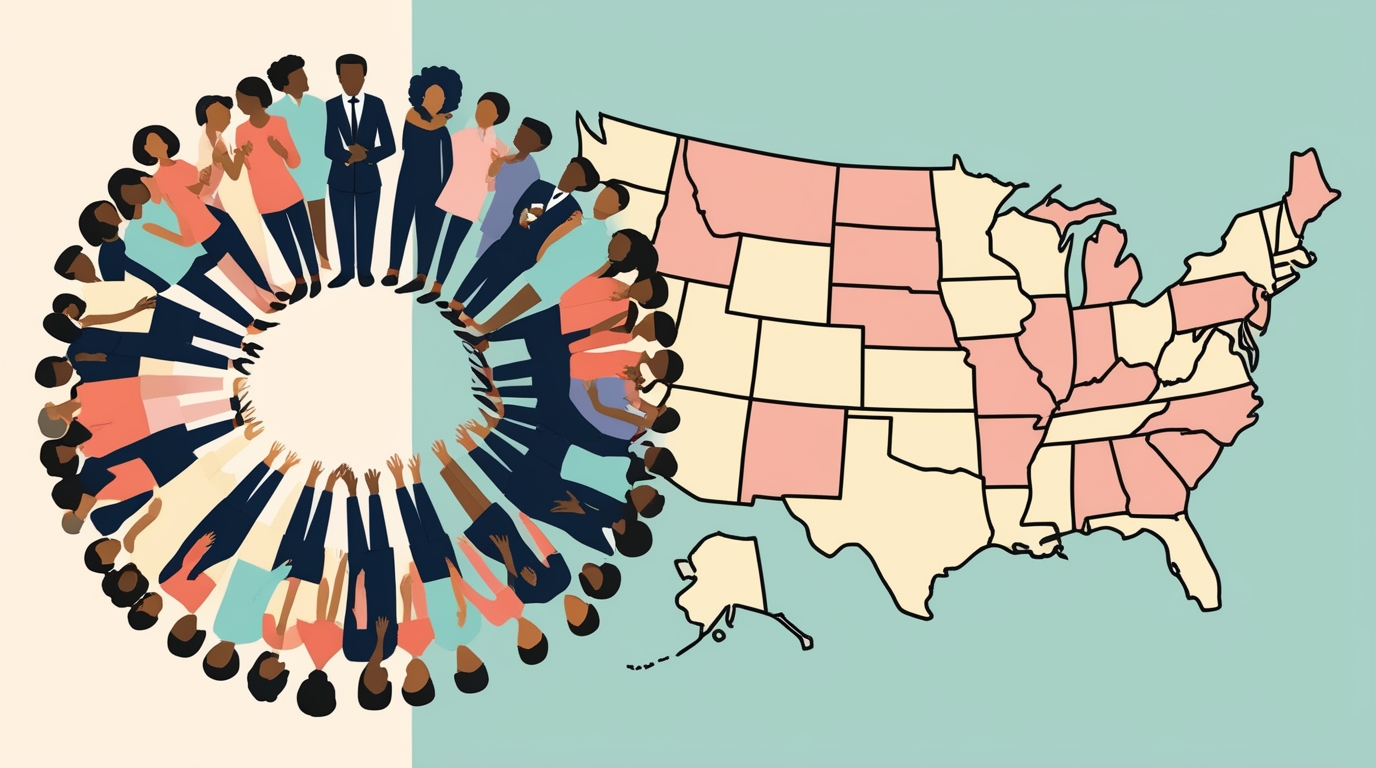
Key findings
- The majority of Americans (70%) report feeling uncomfortable receiving compliments.
- Mississippi, Louisiana, and Washington are the best states at receiving compliments.
- Wisconsin, Florida, and North Carolina are the best states at giving compliments.
- Almost half, 49%, feel the need to immediately return a compliment after receiving one.
- Giving compliments is uncomfortable for 43%.

Learn a language with personalised 1-on-1 classes with our expert tutors from all over the world
French lessons online
Spanish lessons online
States best and worst at receiving compliments
Every compliment is unique, and a person’s reaction can vary widely based on several factors. The context—such as the timing and location—along with the identity of the compliment-giver and the recipient’s current emotional state, all play a crucial role in shaping how a compliment is received.
To explore how individuals across America react to compliments, we conducted a survey with questions like, “Do you ever fumble your words when someone compliments you?” and “Do compliments ever make you feel uneasy?” We then assigned points based on their responses, identifying those who scored the highest as the most skilled at graciously accepting compliments.
Although a simple “thank you” is often the go-to response for compliments, many find it challenging to say. Our research shows that 70% of Americans feel uneasy when receiving compliments. For some, this discomfort stems from uncertainty about the complimenter’s intentions. In fact, among those who occasionally struggle with accepting compliments, 53% attribute their discomfort to doubts about the sincerity of the praise.
Our analysis reveals that residents of Mississippi, Louisiana, and Washington excel at graciously accepting compliments. Impressively, every participant from Mississippi noted that receiving compliments enhances their self-esteem. Whether you’re praising someone’s stylish outfit or the charm of their garden, offering compliments in these states is typically well-received and appreciated.
Conversely, some states struggle the most with accepting compliments. Residents often respond by downplaying their achievements or expressing self-doubt, saying things like, “Oh, this is just an old shirt,” or, “My apple pie was better last time.” This reluctance can make it difficult for them to embrace positive affirmations wholeheartedly. Notably, West Virginia, Idaho, and Pennsylvania rank as the states where people are least comfortable receiving compliments.

States best and worst at giving compliments
Receiving compliments isn’t the only challenge people face with kind words; giving them can be equally daunting. Interestingly, a survey found that 43% of respondents feel uneasy about offering compliments. Despite this discomfort, many still make an effort to spread positivity, with 63% reporting that they compliment others at least once a week.
Wisconsin, Florida, and North Carolina stand out as the top states for giving compliments. The residents of these states seem to derive genuine happiness from uplifting others through kind words, fostering stronger connections in the process. No matter the reason behind their generosity, the people here truly enjoy spreading positivity and appreciation.
Compliments can be a powerful tool for building diverse relationships, according to Sylvia Johnson, a language expert at LingualNeeds. She emphasizes that even small, simple words can make a significant difference in fostering connections and overcoming barriers.
When used genuinely and thoughtfully, compliments can be powerful instruments for bridging language and cultural divides. They spark positive reactions, foster shared understanding, and promote mutual exchanges, making interactions more seamless and enjoyable.
Engaging in the language of another through compliments can have a huge impact.
“Mastering the art of giving compliments in various languages not only showcases respect for diverse cultures but also highlights the unique ways compliments function across different societies. In American culture, for instance, there is a strong focus on individual accomplishments and personal traits, resulting in a higher frequency of compliments related to skills, looks, and achievements. Grasping the subtle nuances of complimenting in the U.S. enhances communication and offers valuable insights into the cultural values that influence social interactions,” Johnson explains.
A striking 77% of Americans prefer to share compliments face-to-face rather than through digital means, which only 23% choose. This highlights the value of personal connection and the impact of spoken words in our interactions.

Learn a language online with our free learning materials.
Learn English online
Learn French online
How compliments can be uncomfortable and insincere
Compliments often catch us off guard, making them all the more delightful. It’s challenging to anticipate what others will say, whether their words are positive or negative. In this sense, receiving a compliment is akin to unwrapping a surprise gift—joyful yet sometimes awkward, especially if you feel unprepared to reciprocate.
As a result, a significant number of individuals feel a strong urge to reciprocate compliments, with 49% expressing the need to respond immediately after receiving one. However, this impulse can lead to inauthentic exchanges, as 41% of people confess to offering compliments that lack genuine sentiment.
While compliments are often meant to uplift, they can sometimes leave recipients feeling uneasy. In fact, 60% of individuals report discomfort with being the center of attention, as compliments inherently draw focus to them. Additionally, factors like low self-esteem and the fear of seeming arrogant further contribute to this discomfort. Understanding these feelings can help us navigate the complex dynamics of giving and receiving praise.
The more you practice offering genuine compliments, the easier they will feel for the person receiving them. Although it requires some effort, mastering the art of complimenting can significantly enhance your interactions, allowing you to forge connections with others more effortlessly.

Americans’ favorite compliments by state
Compliments can cover a wide range of topics, but Americans clearly have their favorites. In a recent survey, we asked respondents what type of compliment they would cherish the most, providing options like cooking, style, creativity, and more. The results were revealing: people across the nation unanimously favored five key areas for praise—kindness, intelligence, humor, parenting, and their professional accomplishments.
Compliments resonate differently with each gender. For women, the most cherished praises center around kindness (20%), intelligence (18%), and parenting, which ties with style and appearance (11%). Meanwhile, men tend to appreciate compliments about their intelligence (20%), kindness (15%), and humor (14%). Understanding these preferences can help us communicate more effectively and meaningfully.

Communicate more confidently with LingualNeeds
Compliments hold a unique ability to uplift spirits and foster connections. This is particularly true in the realm of language learning, where these affirming words can significantly enhance a learner’s confidence. By receiving praise, language learners often feel more encouraged to participate in conversations, making the learning journey more enjoyable and effective.
At LingualNeeds, our private tutors will not only shower you with compliments during your language lessons but, more importantly, equip you with the vocabulary you need to express gratitude effectively. Whether you’re seeking an English tutor for yourself or looking for an engaging tutor for your child, LingualNeeds has the perfect match for everyone.
When embarking on the journey of learning a new language, having a knowledgeable tutor is essential. They can guide you in expressing sincerity and appreciation in culturally appropriate ways. This ensures that your compliments are received with the same warmth and positivity with which they are offered, fostering genuine connections.
Offering a compliment, whether in a personal or professional context, can leave a lasting impression when executed thoughtfully. Those few kind words can significantly enhance workplace morale and strengthen personal connections. With the support of LingualNeeds tutors, you can swiftly develop the skill to deliver genuine compliments that pave the way for new opportunities.
Methodology
Between January 10 and 15, 2024, we conducted a survey with 1,991 Americans to explore their experiences with giving and receiving compliments. Our diverse group of respondents included individuals aged 18 to 76, comprising 49% female, 49% male, and 2% nonbinary participants.
Frequently Asked Questions
Why do many Americans feel uncomfortable receiving compliments?
70% of Americans report feeling uneasy when receiving compliments, often due to uncertainty about the complimenter’s intentions.
Which states are the best at receiving compliments?
Mississippi, Louisiana, and Washington are identified as the states where residents excel at graciously accepting compliments.
What percentage of people feel the need to return a compliment immediately?
49% of individuals express the need to respond immediately after receiving a compliment.
What challenges do people face when giving compliments?
43% of respondents feel uneasy about offering compliments, yet 63% still compliment others at least once a week.
How do preferences for compliments differ by gender?
Women tend to value compliments about kindness, intelligence, and parenting, while men prefer those related to intelligence, kindness, and humor.