

- Spaced Repetition System (SRS)
- Apps that Are Based on SRS Method
- Extra Memorizing Tool
- How to Use Your Eyes, Ears, and Smell to Learn Spanish
- 35-Minute Cycling to Energize Your Brain
- Frequently Asked Questions
- What is the Spaced Repetition System (SRS)?
- How can apps like AnkiDroid help with language learning?
- What role does visualization play in memorizing words?
- Why is combining Anki with Quizlet recommended?
- How does physical activity affect memory retention?
If you find that words are constantly escaping your memory, it might be time to reassess your study methods. Instead of waiting for your tutor to provide the ideal retention strategy, take the initiative to explore memory-enhancing techniques during your free time. These methods have been validated by both researchers and students around the globe, proving their effectiveness in improving recall.
Spaced Repetition System (SRS)
For those with full-time jobs, a spaced repetition system (SRS) may appear to be a daunting commitment. The process of crafting flashcards and organizing them into boxes can easily consume half of your evening whenever you set out to learn a new set of words. Not to mention the time spent understanding how the system itself operates. Despite these concerns, an increasing number of users are finding success with this method. To learn more about how the Spaced Repetition System works and the advantages it offers, check out this informative video:
A quick dive into YouTube revealed a wealth of evidence showcasing the popularity of Spaced Repetition Systems (SRS) among dedicated language learners. These individuals are committed to achieving fluency in their target language in under two years, leaving no room for the struggles of a forgetting curve. SRS operates on the principle of revisiting the same set of vocabulary at strategically timed intervals. For a clearer understanding of how SRS functions, check out this brief video.
Apps that Are Based on SRS Method
I’ve thoroughly explored the effectiveness of the SRS system through AnkiDroid, and I’ve found it to be a game-changer for mastering Spanish grammar online. By using the app during my daily commute, I’ve significantly boosted my retention skills. Additionally, it empowers you to take charge of your learning experience by allowing you to assess and focus on what you truly need to improve.
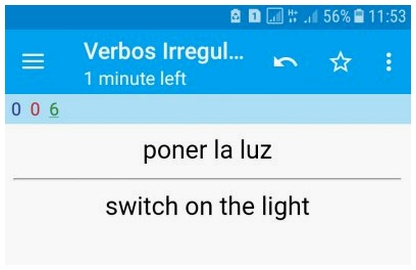
In the screenshot above, you’ll notice a card displaying both an answer and a repetition range. This feature allows you to assess your mastery of the word and choose how often you want to review it based on your confidence level.
Explore a variety of SRS-based app alternatives like MosaLingua and others that cater to your language learning needs. These apps are perfect for those with busy schedules, allowing you to practice new material anytime, without the hassle of creating handmade flashcards or boxes.
Currently, I can complete two decks in just 5 to 10 minutes. However, I was taken aback to discover that the app lacks notifications to remind me to begin another session. I searched through the mobile app settings but couldn’t find any option for this feature.
Extra Memorizing Tool
I highly recommend pairing Anki with Quizlet. While Quizlet doesn’t utilize spaced repetition like Anki, it brings a wealth of advanced features to enhance your learning experience. You can create your own study sets and access those shared by fellow learners, allowing you to reinforce new definitions through a diverse array of engaging training exercises.
I believe the app developers should diversify the exercise options, as the limited variety can lead to boredom quickly. Currently, the mobile version offers only four activities—Cards, Learn, Match, and Test—while the web version boasts seven, adding Write and Spell Gravity to the mix. Additionally, the web app features a fantastic option for printing study sets, allowing users to choose from various layouts, including handy index flashcards.
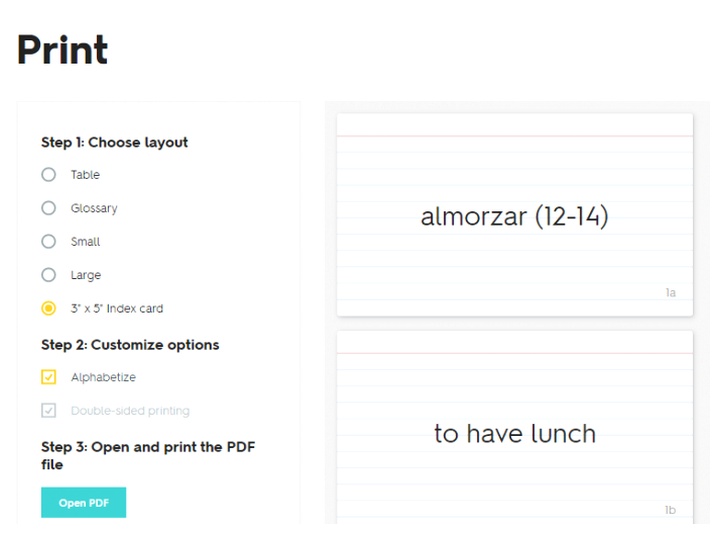
As a result, Quizlet acts as your digital vocabulary tool, allowing you to create printed flashcards if you want to explore the traditional use of the spaced repetition system (SRS) method.
How to Use Your Eyes, Ears, and Smell to Learn Spanish
Visualization plays a crucial role in semantic encoding, which is the first step in memorizing words. Simply put, semantic encoding involves linking the meaning of a word to our sensory experiences—like what we see, hear, touch, smell, or taste. For example, when trying to remember the Spanish words “asignatura” (academic subject) and “aula” (lecture hall), I connect “asignatura” to the sight of my Linguistic University and “aula” to the musty scent of old desks in poorly ventilated classrooms.
While everyone shares similar sensory receptors, our memories linked to them are unique. When learners come across the intriguing Spanish word “la lluvia,” some may picture umbrellas, while others envision wellington boots or puddles. For me, this word evokes the image of raindrops on a window and the comforting scent of cocoa warming my hands.
I’ve found that using printed flashcards is an effective method for learning new vocabulary. Each flashcard represents a separate word, and the tactile experience of handling them significantly enhances memorization. This hands-on approach taps into our sensory memory, allowing us to “touch” the words and connect them to specific experiences. Furthermore, flipping the cards to reveal a collection of images instead of just a one-word definition adds a layer of visualization. This technique mirrors how children learn by associating words with pictures, making it easier to absorb and retain new information.
When learning Spanish online, it’s best to avoid searching for unrelated images. Throughout your life, you’ve developed personal associations that align perfectly with the words in a new language. Your goal now is to tap into those memories and connect them with their new definitions.
35-Minute Cycling to Energize Your Brain
Your mind can tire quickly if you don’t regularly alternate between mental and physical activities. While a therapist might prescribe medication to enhance cognitive function, embracing natural methods such as yoga and fitness can significantly boost both your physical health and mental well-being.
A recent study reveals that engaging in physical activity, particularly 35 minutes of cycling, can greatly improve your ability to memorize information learned four hours earlier.
Balancing work, home life, and learning can be quite challenging for many students. For instance, if classes conclude at 9:00 PM, it could mean that a learner might have to begin studying as late as midnight. This scenario raises concerns about the effectiveness of such a schedule, especially for those who need to be at work by 9:00 AM the next day.
In summary, numerous techniques exist for memorizing vocabulary, but you only need 3 to 4 effective ones to make significant progress. When learning a second language, finding the right balance of time, tools, and effort remains the most effective strategy for success.
Frequently Asked Questions
What is the Spaced Repetition System (SRS)?
The Spaced Repetition System (SRS) is a learning technique that involves revisiting the same set of vocabulary at strategically timed intervals to improve memory retention.
How can apps like AnkiDroid help with language learning?
Apps like AnkiDroid utilize the SRS method, allowing users to practice vocabulary during their daily routines and assess their mastery of words, thus enhancing retention.
What role does visualization play in memorizing words?
Visualization assists in semantic encoding, linking the meaning of words to sensory experiences, which enhances the memorization process.
Why is combining Anki with Quizlet recommended?
Combining Anki with Quizlet provides the benefits of spaced repetition from Anki while offering diverse study sets and engaging activities from Quizlet.
How does physical activity affect memory retention?
Engaging in physical activity, such as cycling for 35 minutes, can significantly improve your ability to memorize information learned earlier.


