- Key findings
- Majority of Americans believe in using positive phrases to improve their mood
- “Life is good” among top 5 most optimistic phrases
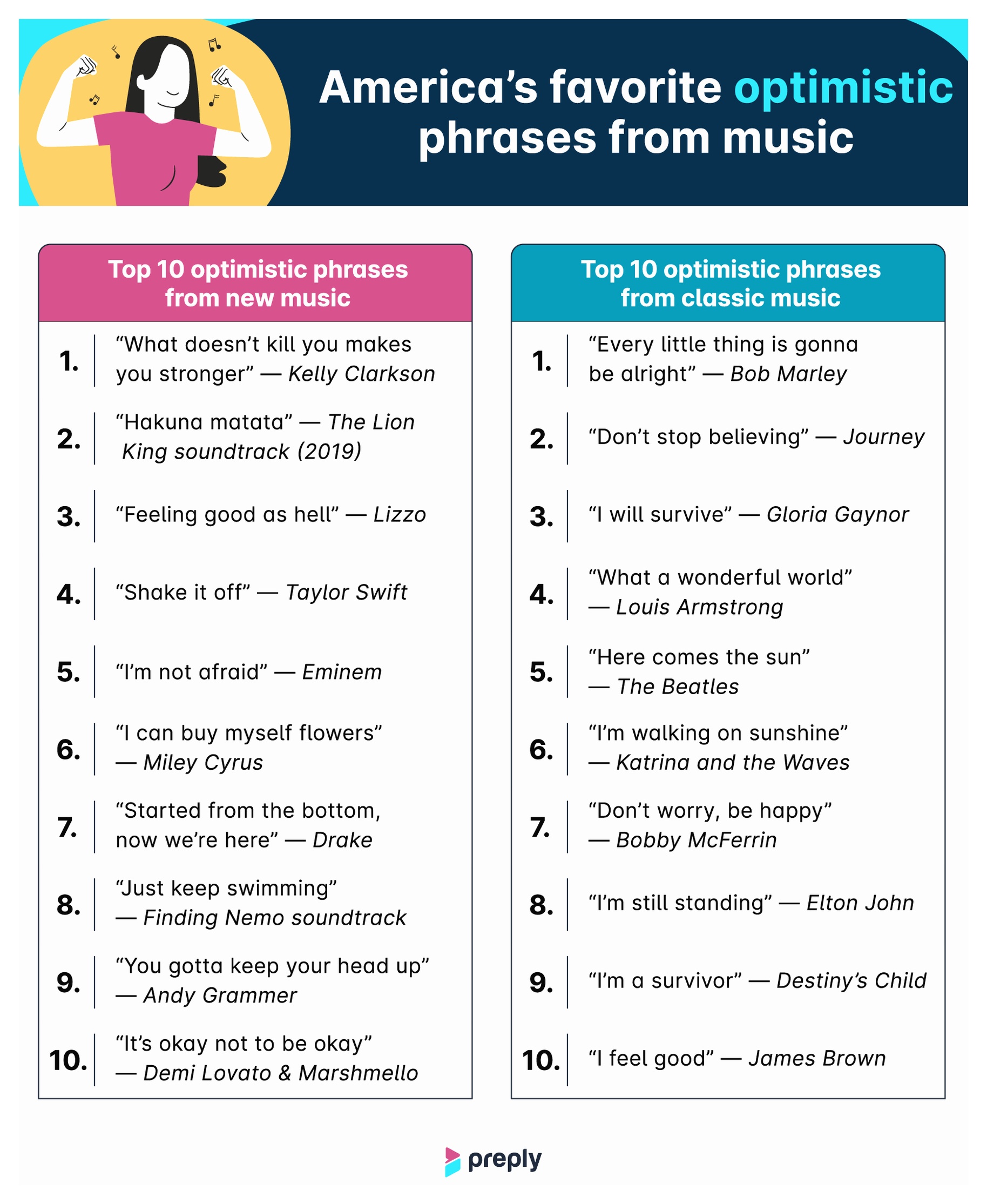
- Kelly Clarkson’s “what doesn’t kill you makes you stronger” is the most optimistic new-music phrase
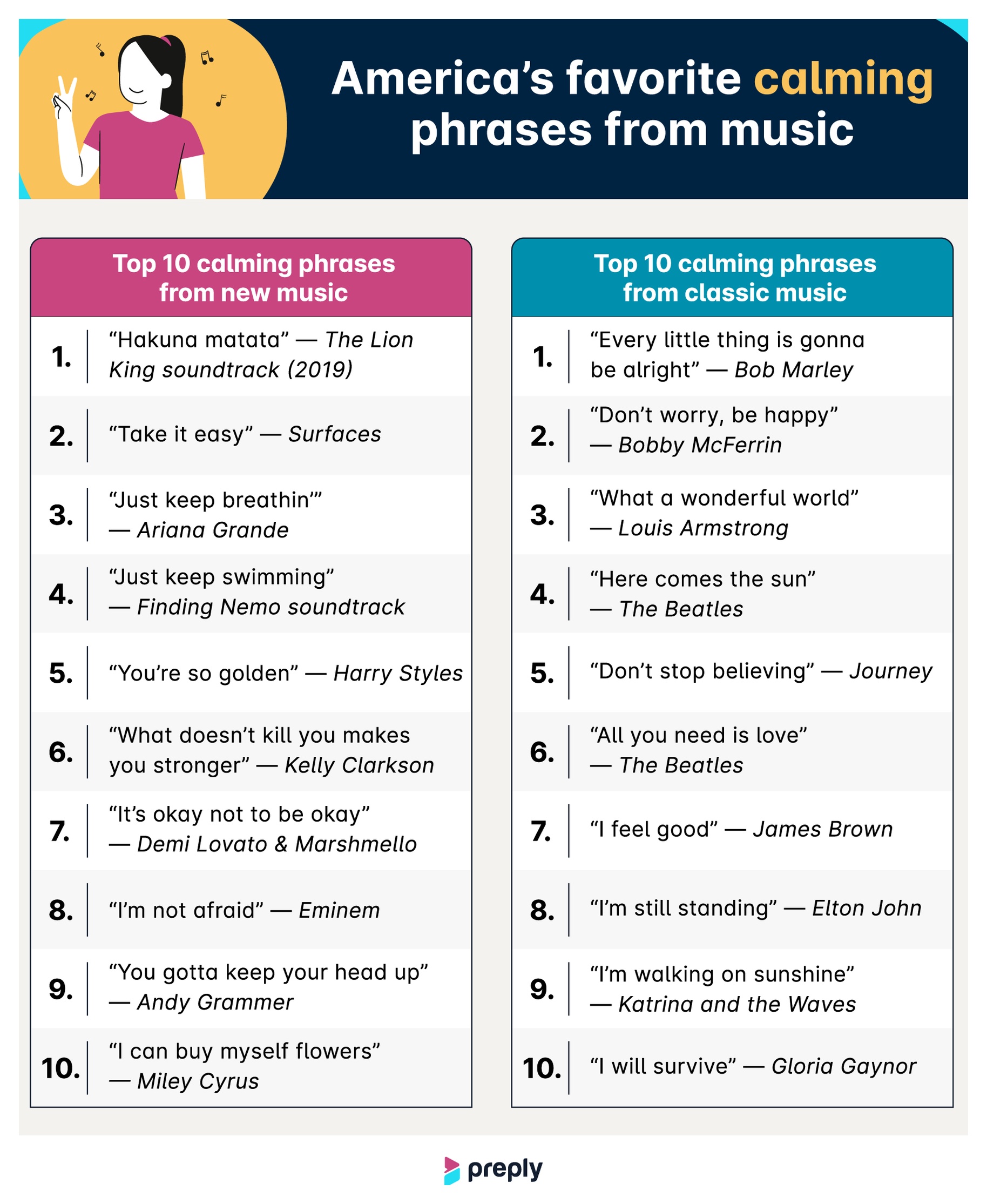
- Bob Marley’s “every little thing is gonna be alright” is the most calming classic-music phrase
- Gen Z is in their positivity era
- 1 in 10 say “this Barbie is _____” is the most annoying positive slang phrase
- Never stop learning
- Frequently Asked Questions
- What is ‘good vibes’ language?
- What are some of the most optimistic phrases according to Americans?
- How do Americans feel about using positive phrases in conversation?
- Which music lyrics resonate most positively with Americans?
- What generational differences exist in the use of positive phrases?
We inhabit a vibrant world brimming with playful language that invites us to express ourselves creatively. From trendy slang to clever puns, catchy words and phrases have a remarkable ability to resonate, particularly when they bring a sense of joy and positivity.
At LingualNeeds, a top language learning platform specializing in private English lessons, we are excited to delve into the intriguing concept of “good vibes” language. This involves using uplifting phrases that not only inspire positivity but also encourage relaxation and strengthen connections between people.
To achieve our goal, we conducted a survey among Americans to identify prevalent trends in positive language usage. We explored expressions influenced by music and cultural events, while also assessing terms and phrases that might not universally evoke positive feelings.
Key findings
- “The best is yet to come” is the most optimistic phrase according to Americans.
- Half of Americans feel more connected to people who quote positive phrases from music in conversation.
- Americans feel most connected with the positive colloquialism “keep calm and carry on.”
- “Live, laugh, love” is the most cringey phrase according to nearly half of Americans.

Learn a language with personalised 1-on-1 classes with our expert tutors from all over the world
French lessons online
Spanish lessons online
Majority of Americans believe in using positive phrases to improve their mood
Brightening their daily interactions, an impressive 1 in 4 people frequently incorporate uplifting phrases into their English conversations. This trend of positivity extends beyond in-person chats, with more than half (56%) also choosing to share encouraging words in their social media posts occasionally.
A striking 79% of Americans believe in the uplifting power of positivity, showing that they think using positive phrases can significantly boost their mood.
When confronted with challenges, one in six individuals report that they are “extremely likely” to turn to uplifting phrases for motivation, both for themselves and those around them.
The trend of positivity extends into home decor, with many individuals incorporating uplifting messages into their living spaces. On average, people display two positive phrases, whether through a chic poster or a decorative item, adding a vibrant touch to their homes.
Although physical displays of positivity are popular, Americans tend to favor incorporating uplifting mantras into conversations and social media rather than using them as decor. These affirmations come from a diverse array of sources, drawing inspiration from music, personal interactions, films, television, and literature.
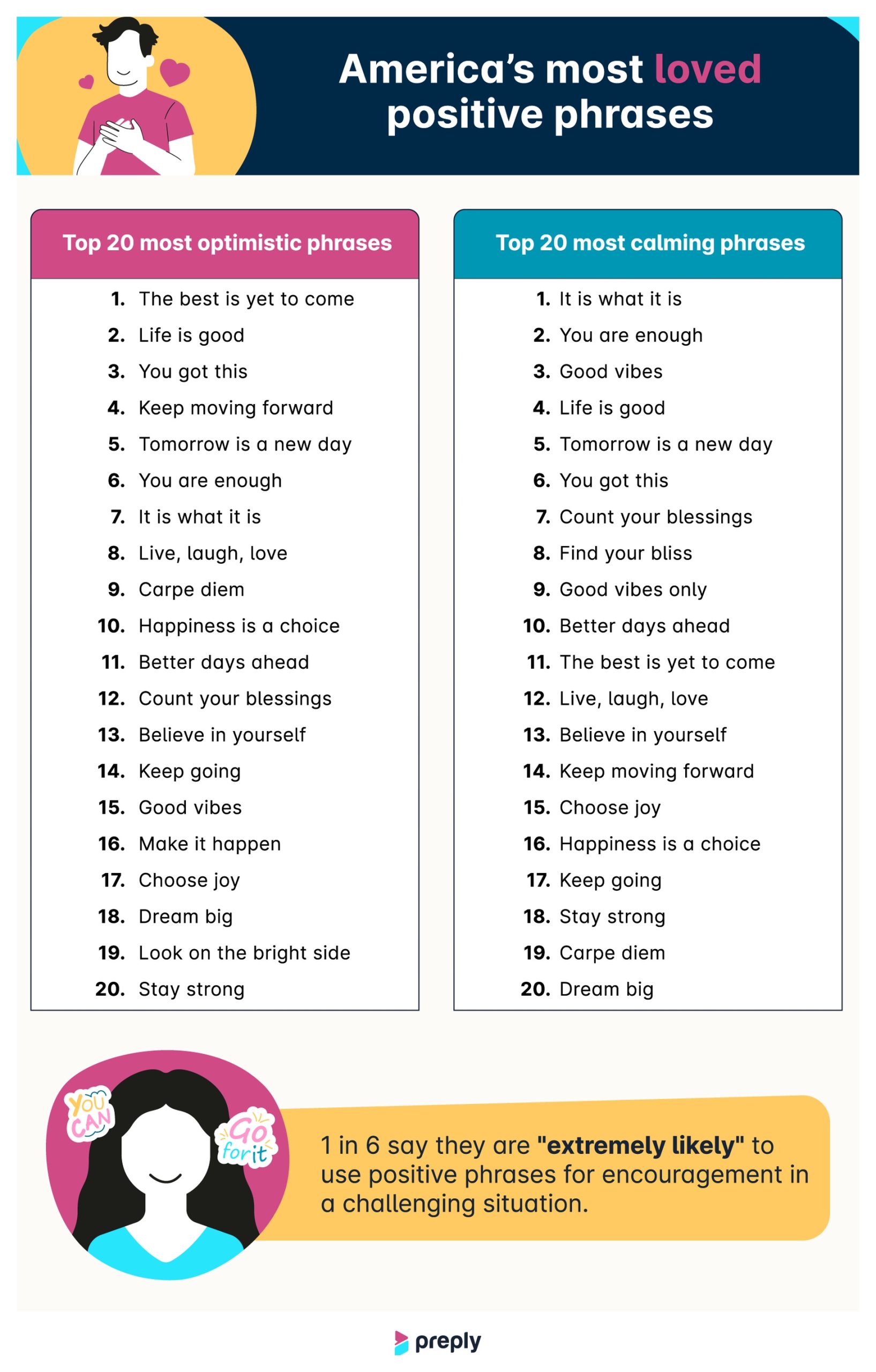
“Life is good” among top 5 most optimistic phrases
For many Americans, the phrase “the best is yet to come” embodies a spirit of optimism that is both uplifting and inspiring. This hopeful outlook aligns perfectly with the quintessential elements of American culture, particularly the relentless pursuit of the “American dream.”
Generations have united in their belief that optimism is key, with Gen Z, millennials, and Gen X rallying around the idea that “the best is yet to come.” In contrast, baby boomers are divided, often toggling between this hopeful mantra and the comforting phrase “life is good.”
Conversely, many people turn to the phrase “it is what it is” when in search of comfort and tranquility. This expression serves as a collective sigh for the nation, embodying the serenity and acceptance that arises from allowing situations to unfold without resistance.
Generational differences reveal unique approaches to finding calm. Gen Z often adopts the laid-back mantra of “it is what it is,” while millennials seek reassurance in the phrase “you are enough.” For Gen X, the comforting thought of “life is good” serves as a source of relaxation, whereas baby boomers find tranquility in the reminder to “count your blessings.” Each generation has its own way of fostering peace and comfort in a busy world.
Learn a language online with our free learning materials.
Learn English online
Learn French online
Kelly Clarkson’s “what doesn’t kill you makes you stronger” is the most optimistic new-music phrase
Music and lyrics possess a unique ability to enrich our everyday experiences. Remarkably, half of all Americans confess that they connect better with people who incorporate uplifting song lyrics into their conversations.
Pop music, known for its infectious melodies and relatable lyrics, resonates with 51% of Americans, making it the leading genre for feel-good tunes. Close on its heels are rock, country, and indie, which also capture listeners’ hearts with their uplifting themes.
Exploring the uplifting lyrics of Kelly Clarkson’s anthem, “What Doesn’t Kill You Makes You Stronger,” it’s clear that this empowering song is climbing the ranks of feel-good tunes.
Every generation has its own anthem that resonates with their experiences. Gen Z connects with Drake’s motivational message in “Started from the Bottom,” celebrating their journey and achievements. Meanwhile, millennials embrace the carefree spirit of “hakuna matata” from The Lion King, reflecting their optimistic outlook on life. For Gen X and baby boomers, Kelly Clarkson’s empowering mantra, “What doesn’t kill you makes you stronger,” serves as a reminder of resilience and personal growth.
As we switch to timeless melodies, Bob Marley’s uplifting message that “every little thing is gonna be alright” resonates with Gen Z, millennials, and Gen X, captivating their hearts. Meanwhile, baby boomers find joy in Louis Armstrong’s soulful rendition of “What a Wonderful World,” celebrating the enduring optimism woven into each classic note.
Bob Marley’s “every little thing is gonna be alright” is the most calming classic-music phrase
Get ready to unwind with some soothing sounds! The catchy tune “Hakuna Matata” from The Lion King reminds us to embrace a worry-free mindset, and it’s a hit across generations—Gen Z, millennials, and Gen X are all on board this chill train. Meanwhile, boomers enjoy the laid-back vibes of Surface’s “Take It Easy.”
As we revisit classic tracks, Bob Marley’s iconic phrase “every little thing is gonna be alright” emerges once more as the ultimate calming mantra in music history. Its soothing message continues to resonate, offering comfort and reassurance to listeners everywhere.
When it comes to soothing tunes that resonate with different generations, Gen Z and millennials are embracing the laid-back mantra of “don’t worry, be appy.” In contrast, Gen X and baby boomers find their peace in the timeless classic “What a Wonderful World.”
Gen Z is in their positivity era
Colloquialisms—those informal phrases and slang that reflect the uniqueness of a language or culture—are an integral part of everyday communication in America. Remarkably, one in five people regularly incorporates these expressions into their daily conversations.
The trend becomes even more pronounced when we look at the bigger picture: 59% of people use positive slang in their daily conversations at least occasionally. This shift in language has a noteworthy social impact, as nearly 43% of individuals feel a stronger bond with those who infuse their talks with uplifting expressions.
We spoke with Sylvia Johnson, a language expert at LingualNeeds, about the role of colloquialisms in reflecting and shaping our societal values and emotions. She explains, “Colloquialisms are fascinating linguistic artifacts that provide deep insights into the intricacies of our societal beliefs and feelings.”
Language serves as a mirror to history, revealing cultural norms, conveying emotions, and influencing the continuous development of communication. Take, for example, the vibrant idioms we use to articulate feelings of frustration or joy; they offer a fascinating insight into the emotional landscape of a culture.
“Studying colloquialisms helps us better understand the intricate interplay between language, culture, and society.”
The phrase that resonates most with Americans, evoking feelings of happiness and connection, is none other than “Keep calm and carry on.” This iconic slogan, which dates back to a British wartime campaign in 1939, surprisingly eclipses newer slang like “wholesome” and “that slaps.” Its enduring message has provided comfort and positivity across generations, proving it to be a timeless source of encouragement.
Like many trends, generational preferences play a significant role in how phrases resonate. Gen Z is particularly drawn to the flexible expression “In my _______ era,” a vibe influenced by Taylor Swift’s popular The Eras Tour. Millennials, on the other hand, find joy in the cheeky phrase “don’t threaten me with a good time.” Meanwhile, Gen X and baby boomers appreciate the reassuring sentiment of the classic “keep calm and carry on.”

1 in 10 say “this Barbie is _____” is the most annoying positive slang phrase
The world of slang is extensive, but not every phrase resonates positively with everyone. Among them, “live, laugh, love” stands out as a major cringe trigger for many Americans, with 41% eager to see it disappear. Following closely are the phrases “it is what it is” and “good vibes only,” which also rank high on the list of expressions that make people wince.
A phrase gaining attention, especially with the cultural phenomenon of the Barbie movie, is the versatile “this Barbie is _______.” Despite its popularity, 10% of Americans find this colloquialism rather irritating.
As we explore the world of everyday irritations, we uncover the generational divides that shape our language. For instance, baby boomers often find the phrase “that slaps” grating, while Gen Z, millennials, and Gen X collectively roll their eyes at the now-dated expression “YOLO.”
As our cultural language evolves, it seems some phrases might just be left in the past.

Never stop learning
Language is not only a tool for communication; it’s a powerful medium for expressing emotions, shaping our cultural identities, and building communities. This dynamic and ever-evolving nature of language makes the process of learning it both captivating and enriching.
At LingualNeeds, our personalized one-on-one tutoring goes beyond simply teaching you a language; we help you truly understand its nuances. Our expert online language tutors focus on the intricacies of conversation, empowering you to communicate confidently in any situation, whether casual or formal. If your aim is to master Spanish and excel in using positive phrases, our diverse range of online Spanish classes is designed to support you every step of the way.
The confidence acquired through personalized learning gives you a distinct advantage, paving the way for valuable business connections and opportunities. In the competitive business landscape, effective communication is crucial, and LingualNeeds empowers you to not only speak a language but truly connect with it.
Whether you’re a native speaker curious about the latest trends or a language learner ready to immerse yourself in a vibrant new language, arm yourself with essential conversational skills. This will not only enhance your communication but also open doors to valuable connections and exciting business opportunities.
Remember: language is a powerful tool. Let’s use it to spread good vibes!
Methodology
We aimed to survey at least 1,000 individuals because a larger sample size enhances the accuracy of our findings, making it easier to apply the results to a broader population. By doing so, we minimize the margin of error, leading to more informed decision-making based on the gathered data. A larger sample also provides us with additional data points for statistical analysis, boosting the reliability and validity of our conclusions. This approach allows us to draw more robust insights into the perceptions of the entire population.
On July 21, 2023, we conducted a survey with 995 Americans to explore their views on widely used positive phrases. The participants, aged between 18 and 76, comprised 49% women, 49% men, and 2% nonbinary individuals, providing a diverse snapshot of perspectives across different demographics.
Frequently Asked Questions
What is ‘good vibes’ language?
‘Good vibes’ language involves using uplifting phrases that inspire positivity, encourage relaxation, and strengthen connections between people.
What are some of the most optimistic phrases according to Americans?
Some of the most optimistic phrases include ‘The best is yet to come’, ‘Life is good’, and ‘Keep calm and carry on’.
How do Americans feel about using positive phrases in conversation?
Half of Americans feel more connected to people who quote positive phrases from music in conversation, and approximately 1 in 4 people frequently use uplifting phrases in their English conversations.
Which music lyrics resonate most positively with Americans?
Kelly Clarkson’s ‘What Doesn’t Kill You Makes You Stronger’ is noted as the most optimistic new-music phrase, while Bob Marley’s ‘Every little thing is gonna be alright’ is recognized as the most calming classic-music phrase.
What generational differences exist in the use of positive phrases?
Generational differences show that Gen Z prefers phrases like ‘it is what it is’, millennials lean towards ‘you are enough’, Gen X favors ‘life is good’, and baby boomers find comfort in ‘count your blessings’.