- Key findings
- Nearly a third of bullied children lose interest in social activities
- “Stop” and “Leave me alone” are the most common phrases against bullying
- Adults can be bullied, too
- LingualNeeds understands the power of words
- Frequently Asked Questions
- What percentage of American parents report that their child has been bullied?
- What are the most common phrases parents teach their children to use against bullies?
- How often do American children experience bullying encounters?
- What impact does bullying have on children’s academic performance?
- Are adults also affected by bullying, and if so, what percentage has experienced it?
Bullying is a nightmare that no parent wants their child to experience. While we often focus on the emotional scars that bullied children carry, we must also acknowledge the silent struggle parents face as they watch their kids suffer. This emotional burden can be just as challenging for them, adding an extra layer of complexity to the issue.
In this article, we explore how parents equip their children with the wisdom and encouragement needed to transform challenges into opportunities for growth and resilience.
Our exploration delves into the strategies parents use to empower their children to face bullies, while also examining how adults handle similar challenges. Through a comprehensive survey, we aimed to uncover the emotional obstacles parents face and the results that emerge when children apply the guidance they receive.
Explore the effective language and strategies that equip individuals of all ages to confront bullying, whether it manifests through hurtful words or actions.
Key findings
- The majority (84%) of American parents report that their child has been bullied.
- Over a third of parents admit their child has missed school due to bullying.
- “Stop” is the top phrase (53%) parents teach their children to say when facing a bully.
- According to 3 in 5, their child telling a bully to “stop” has not resolved the problem.
- More than half (51%) report that they have experienced bullying as an adult.

Learn a language with personalised 1-on-1 classes with our expert tutors from all over the world
French lessons online
Spanish lessons online
Nearly a third of bullied children lose interest in social activities
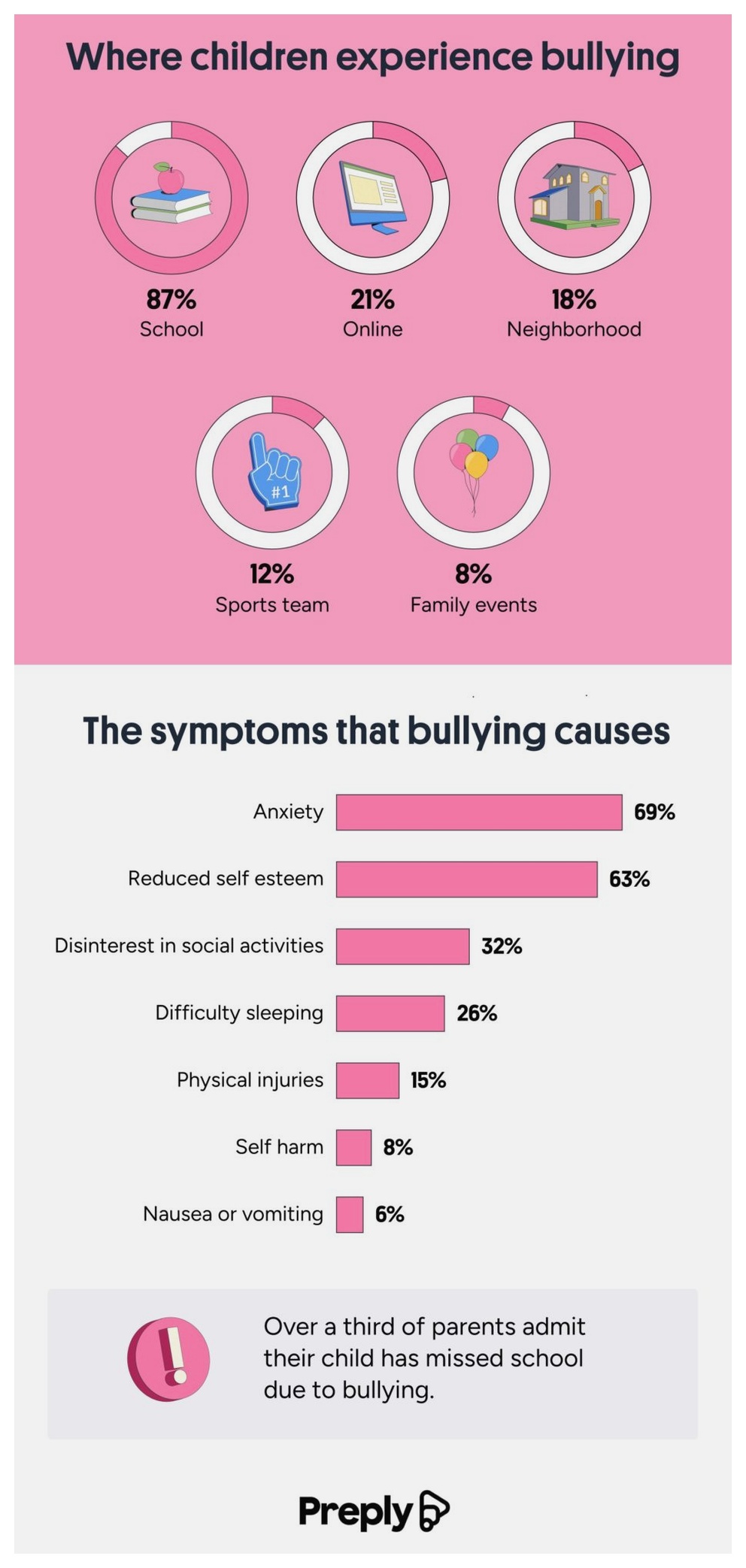
An alarming 84% of American parents have reported that their child has experienced bullying, highlighting a widespread issue affecting families nationwide. Schools are the main battleground for this problem, with a staggering 87% of bullying incidents occurring in these environments. While online bullying is less common at 21%, it remains a significant threat that cannot be overlooked.
What’s truly alarming about these statistics is not just how common bullying is, but how often it happens. On average, American children endure bullying encounters twice a week.
The challenges of bullying go far beyond the immediate act itself. Alarmingly, when parents report bullying to teachers or other parents, 36% find their concerns go unanswered, and nearly 40% feel that their voices are overlooked by schools and fellow parents. This highlights a critical gap in support and communication when it comes to addressing bullying.
Notably, there is a gender-related difference in how parents engage with authority figures when addressing bullying. Fathers report feeling heard at a slightly higher rate than mothers, with 53% expressing satisfaction compared to 46% of mothers.
Bullying leaves a lasting impact on its victims, often leading to a range of emotional and psychological challenges. Among these, anxiety is the most common, affecting a staggering 69% of children who experience bullying. Additionally, 63% of parents report that their children struggle with diminished self-esteem as a result of these traumatic experiences.
The effects of bullying reach far beyond the individual, significantly affecting social interactions. In fact, 32% of children report a diminished interest in social activities as a result of bullying. Alarmingly, just 9% of parents think that bullying has no effect on their child’s well-being.
The impact of bullying extends into the academic world, affecting both attendance and performance. Alarmingly, over one-third of parents report that their children have skipped school due to bullying incidents. Furthermore, 1 in 3 parents observe a noticeable drop in their child’s academic performance directly linked to these negative experiences.
Dr. Christopher Donoghue, a bullying expert from Montclair State University, highlights a crucial point: the impact of bullying extends far beyond the victims. He emphasizes that the repercussions are felt throughout the entire school community, affecting not only those targeted but also the bullies themselves. This often-overlooked aspect underscores the widespread harm that bullying inflicts on everyone involved.
Bullying disrupts the school environment, creating obstacles that hinder both learning and social development in children. In such situations, teachers and parents face significant challenges in delivering the support and care necessary to help affected students thrive.
When children confide in their parents about being bullied, it’s crucial for parents to prioritize self-care first. Take the time to truly listen to your child and reflect on your own emotions in response. Acknowledge their feelings by repeating back what they’ve shared, ensuring they feel heard and understood. This supportive approach lays the groundwork for addressing the situation effectively.
“Stop” and “Leave me alone” are the most common phrases against bullying
Parents are dedicated to equipping their children with both verbal and non-verbal skills to effectively tackle bullying. Among these, strong verbal communication is essential, enabling children to assertively address bullies. In fact, a notable 53% of parents have taught their kids to respond decisively by simply saying, “Stop,” when faced with bullying situations.
Furthermore, 51% of children recommend using the phrase “Leave me alone,” while 23% prefer saying, “Your words do not bother me.” These expressions empower kids to assert their boundaries and stand up for themselves. However, their effectiveness can differ. Notably, 60% of parents report that simply telling a bully to “stop” often fails to resolve the issue.
According to Donoghue, simply confronting a bully often falls short because bullies typically hold more power than their victims, which is often the reason behind their aggressive behavior. Seeking help is the best course of action. While it may be challenging to approach a teacher initially, victims can start by confiding in friends and family to gain support.
Victims of bullying often struggle to identify their tormentors, especially when faced with anonymous social media posts, private group chat messages, and hurtful remarks made behind their backs. This kind of behavior can create a sense of social isolation, leaving children feeling alone and unsupported. For those who express feeling completely isolated at school, it’s crucial for parents to take immediate action to seek assistance and support.
Many parents recognize that body language plays a crucial role in combating bullying. In fact, 49% of them highlight the importance of fostering a strong, confident posture in their children when they encounter a bully.
It’s important to highlight that more than 20% of parents have yet to discuss body language with their children. This gap presents a valuable opportunity to strengthen kids’ confidence in handling bullying situations effectively.
Parental attitudes towards physical retaliation against bullies differ significantly across generations and individuals. Worryingly, over 40% of parents suggest that their children should physically “fight back” when faced with bullying. This advice is more frequently given by fathers, with 40% endorsing physical resistance, compared to 34% of mothers.

Learn a language online with our free learning materials.
Learn English online
Learn French online
Adults can be bullied, too
Bullying is not confined to childhood, with many Americans continuing to grapple with bullies in their day-to-day adult lives.
Fascinatingly, over 25% of adults confess to having bullied someone at some point in their lives. Notably, men are more likely to be among these perpetrators, with a bullying rate of 31%, compared to 24% for women.
When it comes to adult bullying, the statistics reveal a troubling reality. Approximately 51% of adults report having faced bullying at some point in their lives. Notably, women are particularly vulnerable, with 59% indicating they’ve been victims, compared to 42% of men. This highlights the ongoing issue of bullying in adulthood and its disproportionate impact on women.
When examining the data by generation, Gen X stands out as the most impacted group, with 54% feeling the effects. They are closely followed by Baby Boomers at 53%. Meanwhile, Millennials report an impact rate of 51%, and Gen Z is not far behind at 41%.
Adults handle bullying differently than they guide their children to do. Interestingly, more than a third of adults who experience bullying opt to minimize their contact with the aggressor, employing avoidance as a key strategy.
In a striking contrast, one-third of individuals choose to tackle the problem directly by confronting the bully. When we look at this through a gender lens, we see that women are more likely to avoid the situation, with 41% opting for this strategy, whereas men tend to take a more confrontational approach, with only 32% choosing to avoid the bully.
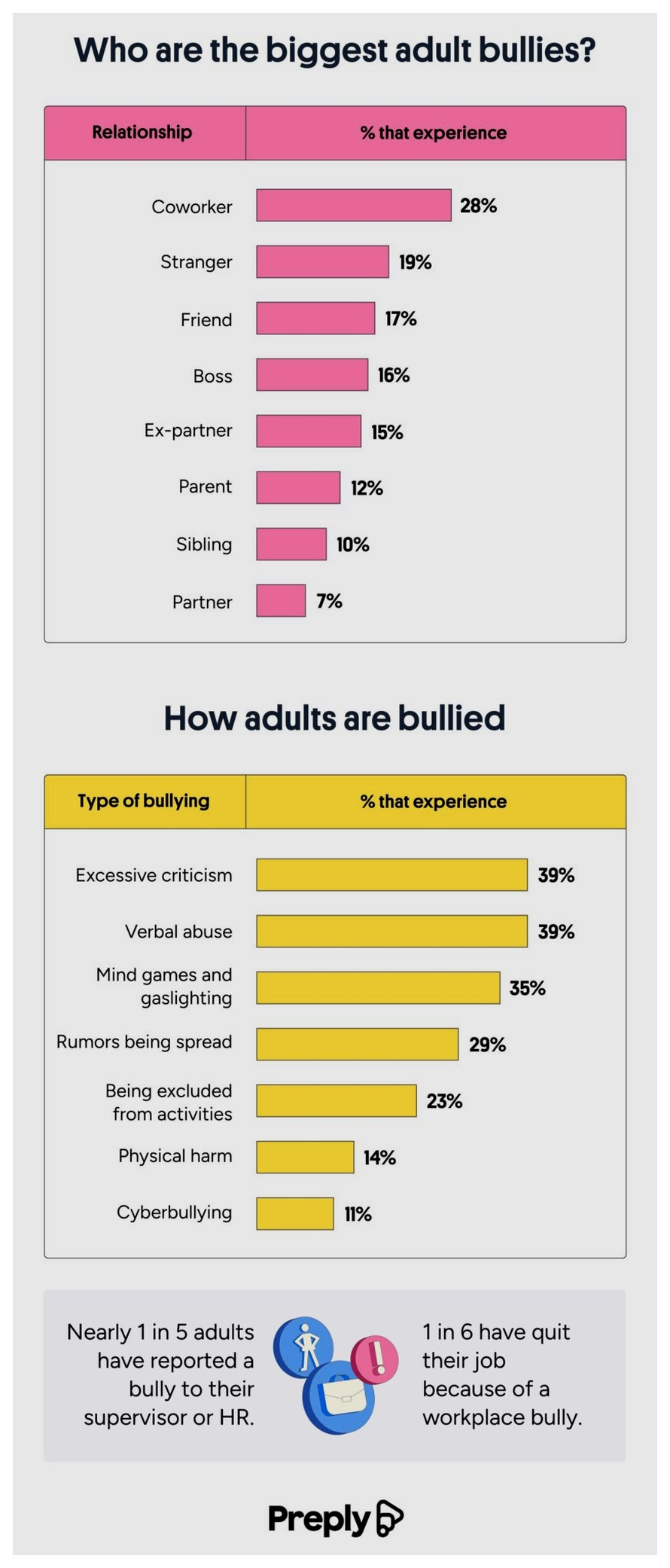
In the realm of adult bullying, coworkers emerge as the leading offenders, with 28% of adults pinpointing them as the main source of harassment. Surprisingly, friends also play a significant role, with 17% of individuals reporting bullying behavior from them, surpassing the rates of ex-partners at 15% and bosses at 16%.
The workplace has become a critical arena for addressing bullying, with nearly 20% of employees reporting such behavior to their supervisors or HR. Even more concerning, 16% of adults have left their jobs entirely because of toxic work environments.
Women are significantly more likely to resign from their jobs due to bullying, with nearly 20% taking this step. In comparison, only about 11% of men report making the same choice. This stark difference highlights the ongoing issue of workplace bullying and its disproportionate impact on women.
LingualNeeds understands the power of words
Words possess a remarkable power: they can inflict pain or foster healing. While they can create rifts between people, they also have the potential to unite us and clarify misunderstandings. Bullying extends beyond mere actions; it is intricately connected to the subtleties of communication, including our choice of words, tone, and the intentions that underpin our messages.
This idea highlights the crucial role of effective communication in all areas of life. By fostering clear understanding, expressing ourselves skillfully, and using empathetic language, we can avoid conflicts, ease emotional tensions, and build stronger connections with others.
As parents face the difficult issue of bullying, effective and empathetic communication is essential. This is where LingualNeeds truly shines, offering valuable support in these challenging conversations.
At LingualNeeds, we go beyond teaching vocabulary; we focus on mastering the art of communication. Our online tutoring platform equips learners to grasp not just the dictionary definitions of words, but also the emotions and intentions behind them. Recognizing that communication is uniquely influenced by culture, context, and language, we tailor our approach to meet the diverse needs of every learner.
Our language tutors understand that effective communication varies greatly across cultures, especially when it comes to slang, which can sometimes be perceived as offensive or even bullying in different contexts. To help learners navigate these nuances, we provide them with essential verbal skills that promote cultural sensitivity and respect in their interactions.
At LingualNeeds, we harness the transformative power of language to cultivate understanding and connection. Together with parents and learners, we are committed to making a meaningful impact—one word at a time, bridging cultures and languages.
Methodology
We aimed to gather a substantial sample size because larger samples provide a clearer and more accurate representation of the population, which enhances the ability to generalize our findings. This approach minimizes the margin of error, leading to more informed decision-making based on the data we collected. With an extensive sample, we gain more data points for statistical analysis, boosting the reliability and validity of our conclusions. As a result, we can make stronger inferences about the overall perceptions of bullying within the population.
On September 29, we conducted a survey involving 987 American parents of children who have faced bullying. The participants, aged between 18 and 76, included a balanced representation of genders: 49% identified as female, 49% as male, and 2% as nonbinary.
Frequently Asked Questions
What percentage of American parents report that their child has been bullied?
84% of American parents report that their child has been bullied.
What are the most common phrases parents teach their children to use against bullies?
The most common phrases are ‘Stop’ (53%) and ‘Leave me alone’ (51%).
How often do American children experience bullying encounters?
On average, American children endure bullying encounters twice a week.
What impact does bullying have on children’s academic performance?
Many parents observe a noticeable drop in their child’s academic performance directly linked to negative experiences of bullying.
Are adults also affected by bullying, and if so, what percentage has experienced it?
Yes, approximately 51% of adults report having faced bullying at some point in their lives.