
- Key takeaways
- The states where people are nicest and rudest to AI
- A look inside how we talk to our AI companions
- Exploring AI interactions across generations and genders
- How we talk to AI impacts our relationships with people
- Boost communication with LingualNeeds’s AI-integrated learning
- Methodology
- Frequently Asked Questions
- Why is it important to be considerate when communicating with AI?
- Which states are considered the nicest to AI?
- How does age affect interactions with AI?
- What percentage of Americans feel frustration towards AI?
- How can interactions with AI influence our communication with people?
Have you ever found yourself venting your frustration at ChatGPT? Or shouted, “Connect me to a representative!” in irritation while dealing with an automated customer service system, only to accidentally take that frustration out on the next person who speaks to you?
Why should you be considerate when communicating with AI? It might seem insignificant, but being rude to AI assistants can negatively impact your communication skills. Think about how your interactions with devices like Alexa or chatbots might influence your overall mood and demeanor for the day. If you unleash frustration on a machine, it can translate into irritability in your conversations with colleagues or loved ones. By treating AI with respect, you foster better habits that enhance your interpersonal relationships.
Embracing kindness is a vital character trait that not only enriches our lives but also uplifts those around us. The respect we demonstrate towards AI, similar to the patience we offer human customer service representatives, can enhance our own behavior and mood. This positive energy can create a ripple effect, improving our interactions with others in the future.
At LingualNeeds, we’re transforming language learning by blending human insight with cutting-edge AI technology. Our innovative approach harnesses the power of AI to enhance the experiences of both tutors and learners. We’re confident that this human-AI partnership will significantly elevate the learning journey. From personalized English lessons to engaging Spanish instruction, we’re using AI to redefine how languages are taught and learned.
Our goal is to highlight regions in the U.S. where kindness towards AI comes naturally, as well as areas that could enhance their interactions by adopting a more positive approach and mastering effective AI usage.
To determine our rankings, we conducted a survey exploring how people interact with AI, focusing on aspects like politeness, manners of expression, and communication styles. We assigned positive points for responses that reflected courteous interactions and negative points for those indicating rudeness. By averaging the scores of residents from each state, we identified which states ranked as the most polite and the rudest in their interactions with AI technology.
Explore how certain states are showcasing kindness by extending it to our AI companions, and discover the impact of communication between humans and AI on our relationships!
Key takeaways
- People in New Mexico, Maryland, and Florida are nicest to AI.
- Those living in Connecticut, West Virginia, and Michigan are rudest to AI.
- 82% of people who are polite to AI only do so out of habit.
- 1 in 3 Americans have expressed anger or frustration toward an AI.
- Generally, people are ruder to AI the more frequently they use it.

Learn a language with personalised 1-on-1 classes with our expert tutors from all over the world
French lessons online
Spanish lessons online
The states where people are nicest and rudest to AI
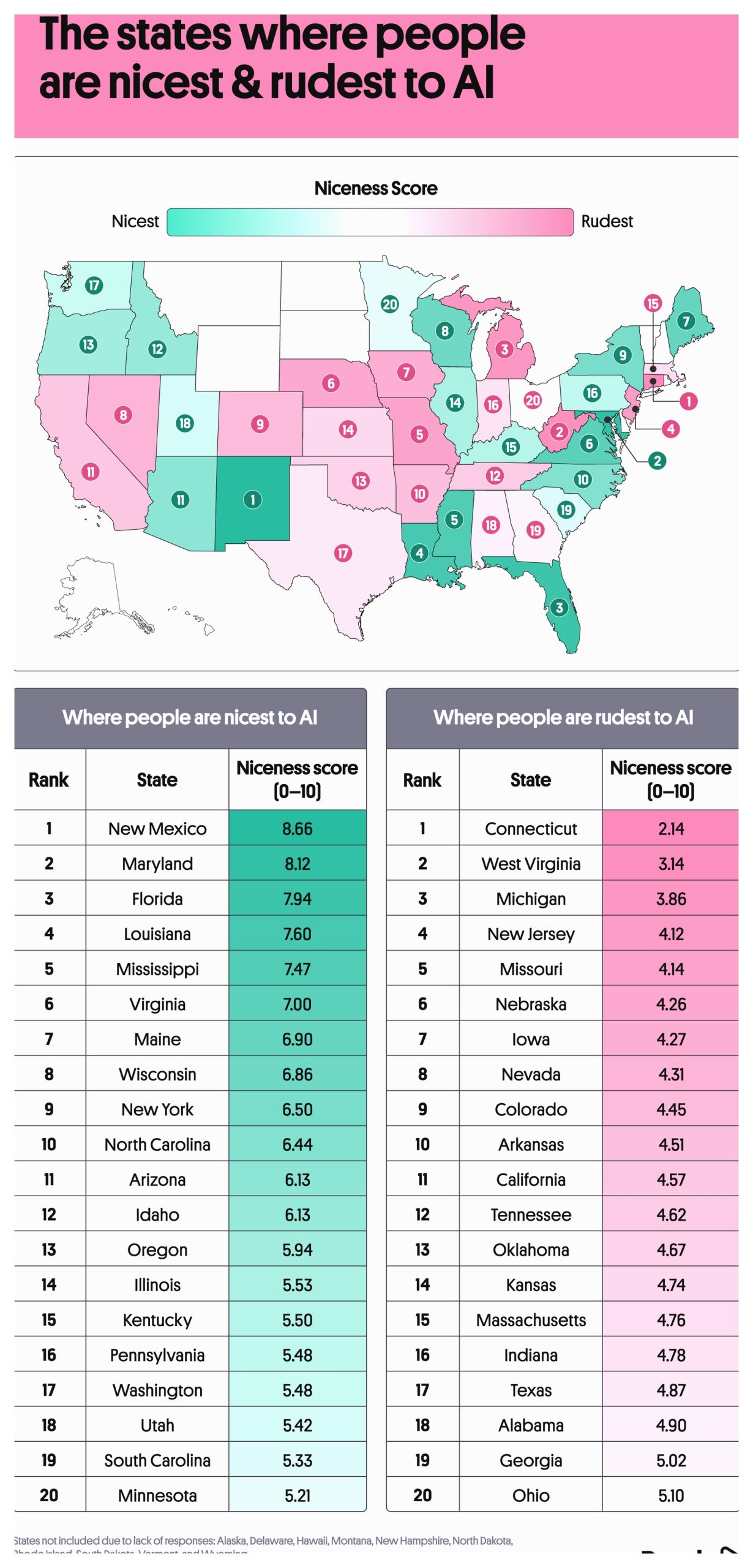
The attitude towards AI varies widely across the U.S., reflecting the country’s diverse landscape. Residents of New Mexico, Maryland, and Florida are particularly warm-hearted, showing the most kindness to AI. In contrast, Connecticut, West Virginia, and Michigan have earned a reputation for being less friendly, ranking as the rudest states toward our artificial companions.
Certain states are elevating AI etiquette to an intriguing level. For instance, 12% of Indiana residents confess they are more courteous to AI than to fellow humans. In Massachusetts, 10% admit they treat AI nicely due to concerns about potential repercussions. Meanwhile, Virginians lead the way in consistently practicing politeness with AI, showcasing a unique relationship with technology.
Interestingly, Virginians are the most vocal users of AI, showing a unique level of engagement compared to other states. In contrast, Ohio residents tend to use the most offensive language with bots, while New Jerseyans often express their frustration by typing in all caps. Minnesotans lead in belittling their AI companions. Notably, Californians are the most likely to experience guilt after being rude to AI, highlighting a complex relationship between users and technology.
In the wake of increased AI communication, Kansas residents appear to be growing more impatient with others after interacting with the technology. In contrast, North Carolinians stand out as the most egalitarian, treating AI customer service interactions with the same respect and expectations as they would with human representatives—more so than any other state.
A look inside how we talk to our AI companions
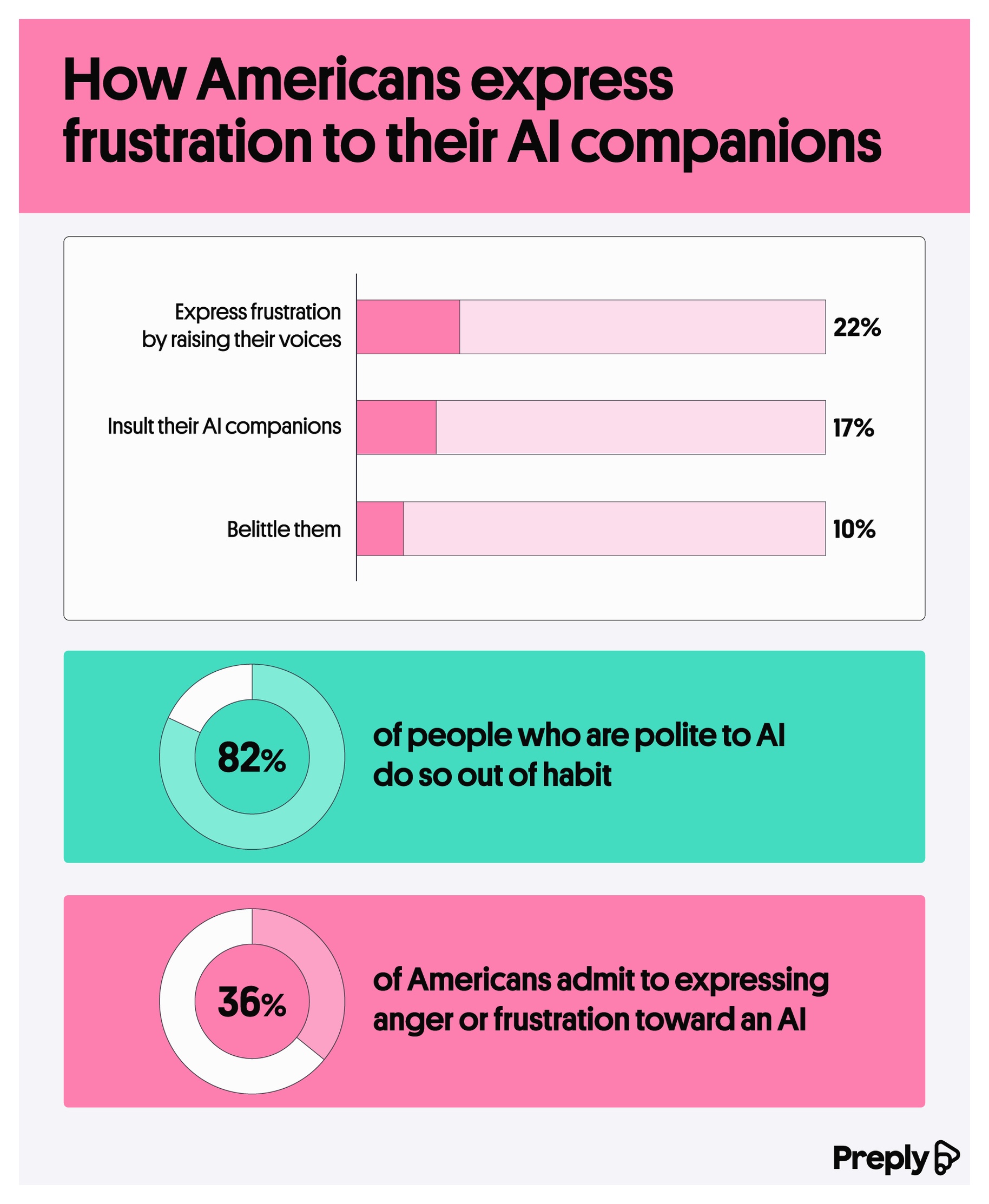
As our reliance on AI technology grows, we’re uncovering intriguing insights into human behavior. Notably, 82% of Americans who treat AI with kindness attribute this behavior to an automatic habit rather than a deliberate choice.
This highlights the significant impact of habitual behavior on our communication styles. The tendency of most people to interact kindly with AI indicates that respectful dialogue—whether with technology or individuals—can become second nature. By acknowledging and nurturing these positive habits, we can cultivate more constructive interactions with both AI and fellow humans in our everyday lives.
The concept of “nice” varies from person to person. When it comes to polite language, only about 25% of individuals report consistently using it when interacting with AI, while nearly 28% admit they’ve never used polite language at all. This highlights that, regardless of what “nice” means to you, showing courtesy towards AI is not a common practice.
More than one in three Americans confess to feeling frustrated with artificial intelligence. When these frustrations boil over, users react in various ways. Notably, 22% of them resort to raising their voices at their AI, while 17% choose to use harsh or derogatory language. Alarmingly, about 10% of users go as far as to belittle their virtual companions.
Learn a language online with our free learning materials.
Learn English online
Learn French online
Exploring AI interactions across generations and genders
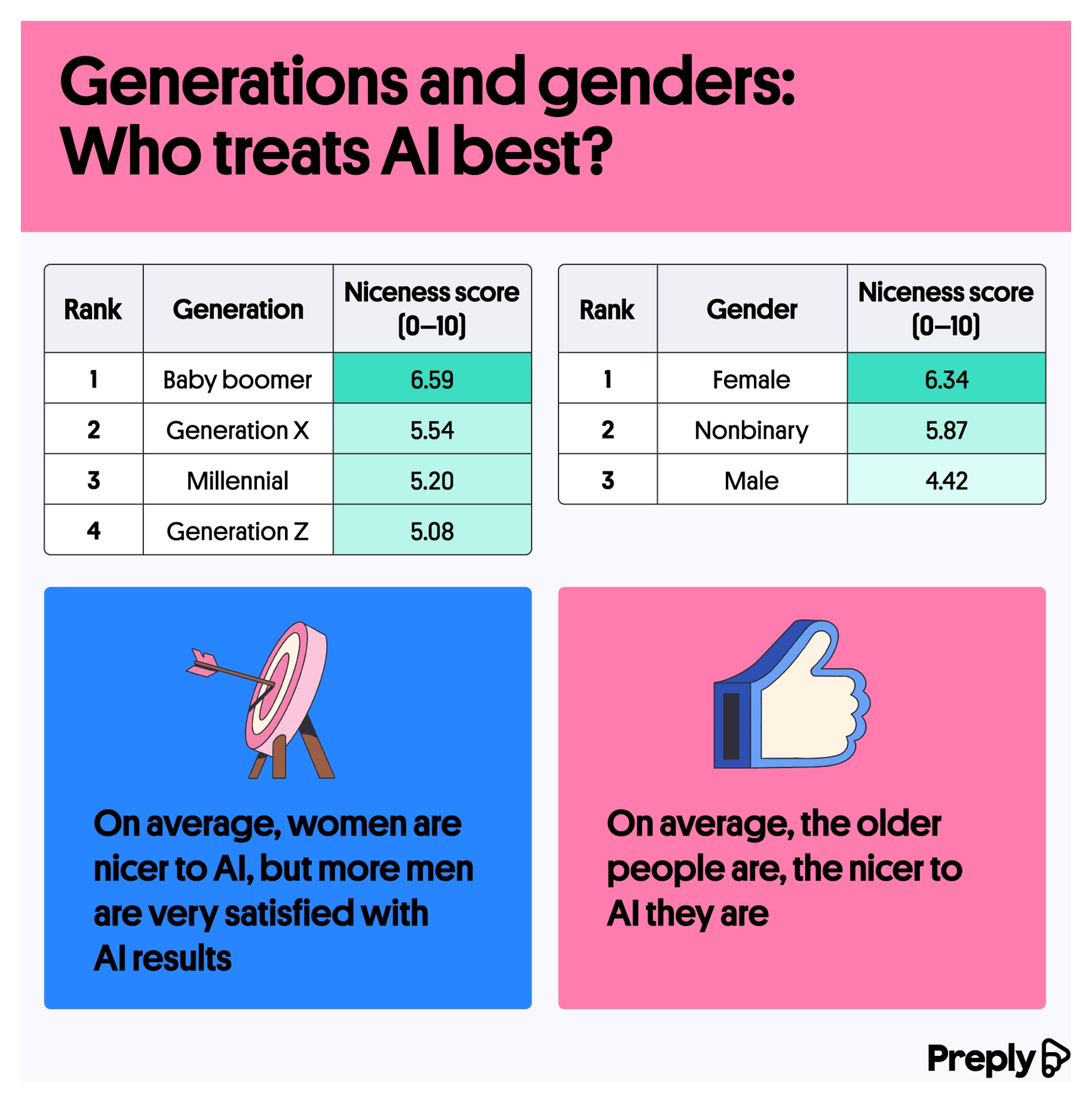
Demographic factors play a significant role in how we interact with our AI companions. Elements such as age, gender, and generational background can influence the tone of our communication, shaping whether we come across as more polite or casual in our exchanges.
Interestingly, age significantly influences our interactions with AI. Our survey reveals that as people grow older, they tend to be kinder to their AI companions. Supporting this, a study published in the Journal of Personality and Social Psychology indicates that traits like warmth, generosity, and helpfulness tend to increase with age, and this friendliness extends to our digital assistants as well.
Digital native Gen Z individuals are twice as likely to experience guilt over their conversations with AI compared to baby boomers. This trend suggests that baby boomers, who generally engage more positively with AI, have less to feel guilty about. On the other hand, Gen Z’s heightened awareness may indicate their understanding that how we interact with AI can significantly influence its future development and behavior.
Younger generations of AI users are expected to integrate this technology into their daily lives more than ever before. This trend raises important questions about how continuous exposure to AI might shape their language development and communication skills.
Sylvia Johnson, a language expert and the head of methodology at LingualNeeds, emphasizes the exciting potential of AI in enhancing language skills. She notes that immersive and interactive AI games can make learning for children not only engaging but also highly effective.
Using AI’s structured, repetitive dialogue can help polish children’s language if utilized correctly, Johnson continued.
“However, it’s crucial for parents and educators to foster a balanced communication environment for children,” Johnson emphasized. “Children thrive on genuine, face-to-face interactions that artificial intelligence simply can’t replicate.”
Beyond generational differences, other demographic factors, such as gender, influence our interactions with AI technology.
Our survey reveals an intriguing trend: men tend to be less polite to AI than women. For every three women who engage with AI courteously, only two men do the same. Surprisingly, many men report higher satisfaction with AI outcomes despite this difference in etiquette. This does not mean that rudeness leads to better results; rather, it may highlight varying gender expectations and stereotypes in how people interact with AI. Additionally, biases in AI training data could reinforce these stereotypes, impacting user satisfaction. A Pew Research study also indicates that women are generally more skeptical about AI, which could further explain these findings.
Biases in AI significantly influence how we interact based on our cultural backgrounds, impacting the quality of the responses we receive. When AI frequently misinterprets our intentions, it can lead to feelings of frustration and resentment. Understanding these biases is crucial for improving our communication with AI and enhancing the overall experience.
“When exploring the relationship between AI and diverse cultures, it’s crucial to acknowledge that each culture communicates in its own distinct way,” Johnson explained. “The depth of a language, including its idioms, expressions, and the social norms that govern communication, all play a significant role in shaping how individuals from various cultures engage with AI.”
As AI users, all we can do now is be aware of these nuances when communicating with AI.
Johnson emphasized that AI model creators need to be attentive and adaptable to cultural nuances, similar to how a traveler adjusts to a new culture.
“Johnson emphasized that teaching AI to recognize and appreciate the rich diversity in communication styles presents an exciting challenge. It’s crucial for this technology to resonate with and feel intuitive to individuals from all cultural backgrounds.”
Despite the complexities surrounding AI, a notable 65.6% of Americans express satisfaction with its current capabilities. However, it’s interesting to note that even among this satisfied group, one-third admit to experiencing frustration or anger towards their digital companions.
How we talk to AI impacts our relationships with people
Our interactions with AI—whether kind or rude—can shape more than just our immediate experiences. As we integrate this technology into our daily lives, the way we treat AI can establish the groundwork for our overall communication habits. Over time, these habits may become second nature, impacting how we engage with others and potentially influencing societal dynamics on a larger scale.
For instance, consistently being rude to AI can set a precedent that normalizes impolite behavior, which may spill over into our interactions with other people. On the other hand, treating AI with kindness can foster a culture of empathy and respect. Our respectful interactions with AI go beyond simply using technology; they play a vital role in nurturing the interpersonal skills essential for building a more understanding and connected community.
Let’s take a moment to consider how certain groups interact with AI. Notably, Gen Z tends to be less courteous to AI customer service representatives compared to their human counterparts. If this behavior becomes a pattern, it could lead to a troubling trend where their communication skills with human customer service also deteriorate, ultimately impacting the quality of their interactions.
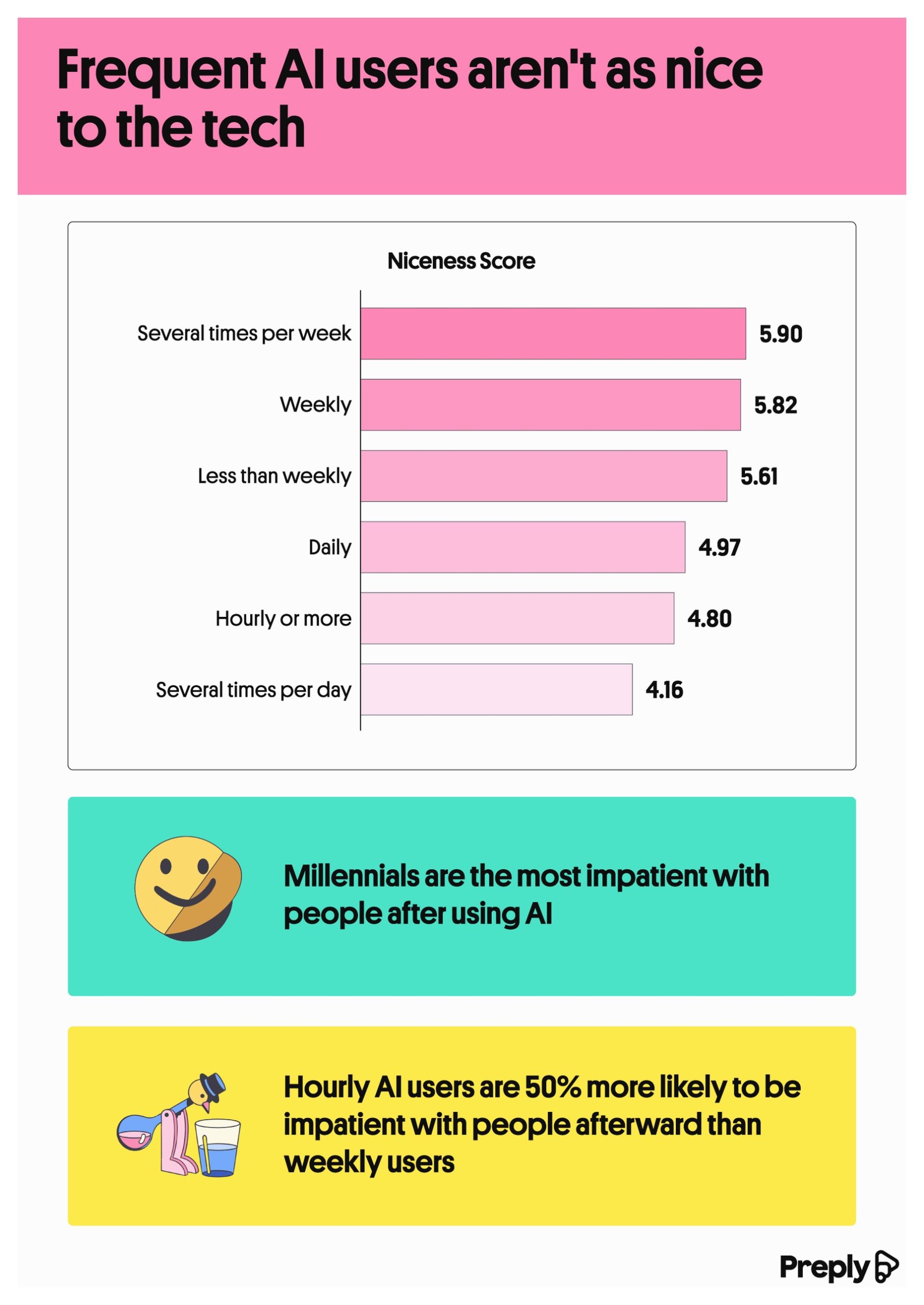
As our interactions with AI systems become more common, the risk of misunderstandings in AI communication increases. Notably, Millennials may grow increasingly impatient with human interactions after spending extended periods engaging with AI.
Hourly users of AI are 50% more likely to display impatience towards others compared to those who use it on a weekly basis. This striking statistic underscores a significant concern: frequent interactions with AI may lead to a pattern of rude behavior. When impatience becomes a habit, it can spill over into our interactions with people, ultimately diminishing the quality of those relationships. Understanding this connection is crucial for fostering more respectful and effective communication in our daily lives.
Almost one in three people express that constantly being nice to AI can feel exhausting. This highlights the importance of developing emotional intelligence in our interactions, even when engaging with artificial intelligence.
Our interactions with AI can significantly influence our communication skills in real-life relationships. The extent to which our language habits with AI translate to our interactions with people is an intriguing area for further study. However, our initial findings suggest a concerning pattern: individuals who frequently engage with AI in a negative manner may be more likely to treat others poorly as well.
Cultivating a habit of mindful communication with AI can be a powerful way to boost our emotional intelligence. In an era where human and AI interactions are becoming more intertwined, practicing kindness and respect in our exchanges strengthens the bonds of our social fabric and enhances our understanding of one another.
Boost communication with LingualNeeds’s AI-integrated learning
Mastering AI can feel akin to picking up a new language—practice is essential! Just as effective communication is crucial for conveying your thoughts clearly, the same applies to your interactions with AI. If you’re finding these exchanges frustrating, LingualNeeds is your go-to resource for honing your skills in engaging with both human and AI conversations seamlessly.
At LingualNeeds, we go beyond mere language learning—we empower you to communicate effectively in a rapidly evolving, AI-driven world. Our innovative platform leverages machine learning to connect you with the ideal tutor tailored to your needs. Whether you’re seeking online Spanish lessons for yourself or an English tutor for your children, our AI-backed educators are at the forefront of the language learning revolution, equipping you for success in the future.
Regardless of your communication needs or language aspirations, we’re ready to assist you. Begin your journey toward language mastery by scheduling a trial lesson with LingualNeeds today!
Methodology
In February 2024, we conducted a nationwide survey of 1,988 Americans, gathering insights into their experiences with artificial intelligence. Our diverse participants, aged 18 to 78, included 50% female, 48% male, and 2% nonbinary individuals. The survey explored how people communicate with AI, focusing on their choice of language—such as levels of politeness, expression styles, and how these differ from interactions with other people.
We developed our rankings by examining typical polite interactions between people and assigning points based on how respondents interacted with AI in a similarly respectful manner. Positive points were given for using courteous phrases such as “please” and “thank you,” as well as for employing language akin to that used in human or AI customer service. Conversely, points were deducted for negative behaviors like expressing anger, yelling, using disrespectful language towards AI, or indicating a decrease in patience with others after using AI.
Residents’ scores were averaged to determine the overall state ratings. Each score is based on a 10-point scale, where a score of 10 indicates the most friendly person or state toward AI.
Frequently Asked Questions
Why is it important to be considerate when communicating with AI?
Being rude to AI can negatively impact your communication skills and overall mood, potentially influencing how you interact with others.
Which states are considered the nicest to AI?
Residents of New Mexico, Maryland, and Florida are recognized for showing the most kindness to AI.
How does age affect interactions with AI?
As people grow older, they tend to be kinder to their AI companions, with traits like warmth and helpfulness increasing with age.
What percentage of Americans feel frustration towards AI?
More than one in three Americans admit to feeling frustrated or angry towards artificial intelligence.
How can interactions with AI influence our communication with people?
Rude interactions with AI can normalize impolite behavior, which may spill over into our relationships with others, while treating AI kindly can foster a culture of empathy.