
- Frequently Asked Questions
- What are the main differences in spelling between American and British English?
- How do British and American English differ in the use of the letter ‘u’?
- What is an example of a word that has different endings in American and British English?
- How does French influence British English spelling?
- What spelling convention do British English speakers prefer for certain verbs?
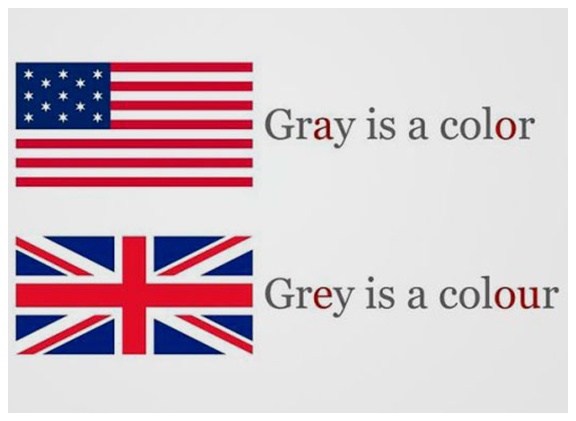
The differences in American and British spelling include simple changes that affect the meaning, pronunciation and use of words.
Today, English speakers, both native and non-native, form the largest linguistic group globally. This diverse community communicates through a wide array of dialects, showcasing the rich variations of the language.
Today, I direct your attention to examples of variations in spelling in American and British English.
British vs. American English
Past participles and simple past verbs are often spelt differently:
-ed ending (American English)
- smelled
- spelled
- dreamed
- learned
-t ending (British English)
- smelt
- spelt
- dreamt
- learnt
The British prefer the ending “re” while Americans prefer “er”:
- theatre – theater
- centre – center
British extra letters:
- u
- the letter combination “ou” in the middle of words – glamour, moustach, colour
- the ending “ue” in the words analogue, catalogue, dialogue
But pay attention! Something is wrong with one of these words. Can you guess which one?
British spelling includes the use of “ll” in the last syllable:
- Mr. Traveller
- Travelling
In American English, many verbs end in “-ize”: memorize, organize, prioritize.
And in British English, “-ise”: memorise, organise, prioritise.
The French impact on British English, which began around 1066, is evident in the practice of adding or keeping the letter “e” at the end of certain words, such as “cheque.” This linguistic feature highlights the historical connections between the two languages and their lasting influence on each other.
In the word “ageing,” the letter “e” has been retained.
What examples do you know?
Frequently Asked Questions
What are the main differences in spelling between American and British English?
The main differences include variations in endings, such as -ed vs. -t for past participles, and -er vs. -re for certain words.
How do British and American English differ in the use of the letter ‘u’?
British English often includes the letter ‘u’ in words like ‘colour’ and ‘favour’, while American English omits it, using ‘color’ and ‘favor’.
What is an example of a word that has different endings in American and British English?
Examples include ‘organize’ in American English and ‘organise’ in British English.
How does French influence British English spelling?
French influence is seen in the retention of the letter ‘e’ in certain words, like ‘cheque’, which is not present in American English.
What spelling convention do British English speakers prefer for certain verbs?
British English speakers often prefer the ending ‘-ise’, such as in ‘realise’, compared to the American ending ‘-ize’, as in ‘realize’.


