
- The months in French and other words to know
- Explore the French months and seasons
- New beginnings: Le printemps
- Mars: The month of showers
- Avril: A fishy month
- Mai: The month to be free
- It’s getting warmer – l’eté
- Juin: The start of summer
- Juillet: A revolutionary time
- Août: A month to get away
- The most colorful season – automne
- Septembre: The return to work
- Octobre: Wine time
- Novembre: The month of remembrance
- Get your gloves on – l’hiver
- Décembre: The festive month
- Janvier: Time to hit the sales
- Février: A chance to eat crêpes
- Grammar rules for the French months
- How to gender the months
- When to capitalize the months
- Which prepositions to use
- How to say dates in French
- A summary of the seasons and time-related phrases in French
- Put LingualNeeds in your diary
- Frequently Asked Questions
- What are the twelve months in French?
- How do you express dates in French?
- What seasonal changes occur in France throughout the year?
- What is a popular tradition in February in France?
- How are the months gendered in French?
Mastering the months of the year in French goes beyond simply expanding your vocabulary; it provides a unique glimpse into the rich cultural tapestry of France as it changes with the seasons.
In France, each month brings its own unique charm, from the playful “les giboulées de mars” (March showers) to the delightful festivities of “la Chandeleur” (Candlemass). Discover the seasonal wonders that keep the spirit alive throughout the year!
Whether you’re cozying up with a steaming cup of “chocolat chaud” (hot chocolate) in the winter or treating yourself to a refreshing “glace” (ice cream) in the summer, let’s dive into the fascinating details of the French calendar together!
The months in French and other words to know
Let’s kick things off by exploring all 12 months in French, complete with example sentences to help you practice during your French lessons!
|
French |
English |
Example Sentence in French |
English Translation of Sentence |
|
janvier |
January |
Nous avons fêté le Nouvel An en janvier. |
We celebrated New Year’s in January. |
|
février |
February |
Je vais skier en février pendant les vacances d’hiver. |
I’m going skiing in February during the winter break. |
|
mars |
March |
Les arbres commencent à fleurir en mars. |
Trees start to blossom in March. |
|
avril |
April |
Avril est connu pour ses averses printanières. |
April is known for its spring showers. |
|
mai |
May |
La fête du Travail est le premier mai. |
Labor Day is on the first of May. |
|
juin |
June |
Les jours sont les plus longs en juin. |
The days are longest in June. |
|
juillet |
July |
La France célèbre la Fête nationale en juillet. |
France celebrates Bastille Day in July. |
|
août |
August |
Beaucoup de Français prennent leurs vacances en août. |
Many French take their vacations in August. |
|
septembre |
September |
La rentrée des classes se fait en septembre. |
The return to school takes place in September. |
|
octobre |
October |
Les feuilles tombent des arbres en octobre. |
Leaves fall from the trees in October. |
|
novembre |
November |
Nous commémorons l’armistice de 1918 en novembre. |
We commemorate the armistice of 1918 in November. |
|
décembre |
December |
Noël est le temps fort de décembre. |
Christmas is the highlight of December. |
Explore the French months and seasons
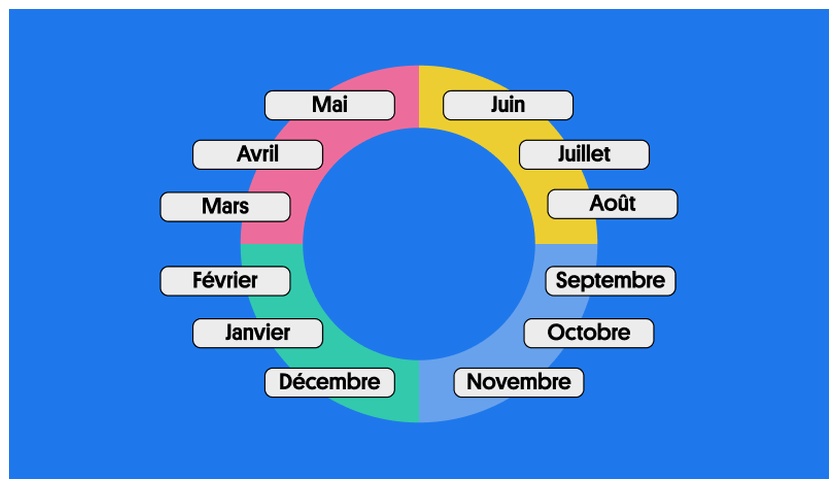
France adheres to the Gregorian calendar, which includes “les douze mois” (the twelve months) of the year. The country enjoys a temperate climate, characterized by “les quatre saisons” (the four seasons): “le printemps” (spring), “l’été” (summer), “l’automne” (autumn), and “l’hiver” (winter). This seasonal variety enhances the beauty and cultural richness of France throughout the year.
The French calendar is not merely a way to track time; it is a vibrant tapestry of celebrations and traditions that reflect the rich culture and history of France. Each month unveils unique festivities, offering a fascinating insight into the nation’s heritage.
New beginnings: Le printemps
What better way to kick off our exploration than with “le printemps”? This enchanting term translates to “the first times,” derived from the Old French words “prins” and “temps.” It beautifully captures the essence of new beginnings and the vibrant spirit of spring.
Mars: The month of showers
March, aptly named after the Roman god of war, heralds the arrival of spring. This month is known for its capricious weather, often bringing sudden spring showers that prompt everyone to duck into cozy bistros. A popular French saying captures this essence perfectly: “En mars, quand il fait beau, prends ton manteau” (In March, when the weather’s nice, take your coat), reminding us to be prepared for anything!
Avril: A fishy month
April derives its name from the Latin word “aperire,” which translates to “to open.” This is fitting for a month when nature awakens, and flowers begin to bloom and reveal their beauty.
France joins in the global fun of April Fool’s Day with its unique twist known as “Poisson d’Avril,” or April Fish. On this playful day, children delight in attaching paper fish to the backs of their unsuspecting classmates. But why fish? One intriguing theory traces back to the reign of Charles IX, when seafood was commonly exchanged as a treat, since meat was prohibited during Lent.
Mai: The month to be free
As May rolls in, the rain subsides, and people can step out without their coats. It’s the perfect time for France to embrace themes of freedom and triumph, as the month kicks off with “La fête du Travail” on the first and continues with “Victory in Europe Day” on the eighth.
May marks the arrival of the prestigious Cannes Film Festival, a must-attend event for film enthusiasts from around the globe. Since its inception in 1949, this celebrated festival has become a testament to France’s enduring passion for cinema and its vibrant film culture.
It’s getting warmer – l’eté
In France, summer transcends mere seasonal change; it embodies “l’été,” the “grandes vacances” or “big vacation.” This cherished time marks a two-month school break, allowing families to escape to the countryside for adventures. Interestingly, the term “été” is derived from the Latin “aestas,” which also inspired the word “festival,” highlighting the celebratory spirit of this vibrant season.
Juin: The start of summer
In June, France comes alive with the celebration of the longest day of the year through “la fête de la Musique,” also known as the festival of music. Launched in France in 1984, this vibrant event has since spread worldwide, evolving into “Make Music Day.” On this special day, everyone is invited to take to the streets and share their musical talents, with one simple guideline: all performances must be free for the public to enjoy. So grab your instruments and join in the joyous celebration of music!
Juillet: A revolutionary time
July, known as “Juillet” in France, is a vibrant month that hosts two of the country’s most celebrated events: the legendary Tour de France and the festive Bastille Day.
The Tour de France captivates audiences worldwide with its thrilling three-week race. Yet, the ultimate viewing experience can be found at the iconic finish line on the Champs-Élysées in Paris, where fans gather to witness the excitement up close.
On July 14, mid-month, France celebrates Bastille Day, a vibrant tribute to the French Revolution. This lively occasion features dazzling fireworks and spirited parades, all while embracing the core values of the nation: “liberté, égalité, fraternité” (liberty, equality, brotherhood).
Août: A month to get away
August, or “août,” brings a welcome slowdown to life in France. As the hottest month of the year, it also marks the peak of vacation season. You’ll see locals embracing the laid-back vibe, often spotted “vivre en tongs” (living in flip flops) as they relax on the sun-kissed beaches that line the coast.
Sweltering summer days invite leisurely meals, often ending with a refreshing “sieste” to beat the midday heat. In France, there’s a saying that captures this essence: “quand août est bon, abondance à la maison,” which translates to “when August is good, abundance fills the home.”
The most colorful season – automne
As autumn leaves dance past the window, France slows down, embracing a season filled with bountiful harvests and cherished traditions. While the name closely resembles its British English counterpart, be mindful of the distinct “o” and the silent “e.”
Septembre: The return to work
September signals “la rentrée,” the much-anticipated return to school and work following the summer break. It’s also the perfect opportunity to schedule that long-overdue haircut or dental appointment, as many services resume after the summer hiatus.
September marks a vibrant resurgence in cultural activities, with theaters and operas unveiling exciting new performances and galleries launching fresh exhibitions. A highlight of the month is the prestigious Festival d’Automne à Paris, which celebrates contemporary art from across the globe, offering a dynamic platform for innovative artists.
Octobre: Wine time
As October arrives and temperatures drop, communities unite to celebrate “la fête des vendanges,” the grape harvest festival. It’s the perfect opportunity to enjoy a “verre de vin” and toast to one of France’s most beloved exports—wine. Remember to raise your glasses and say “santé”! Additionally, October is the ideal time to explore outdoor markets, which are overflowing with fresh produce from the harvest before winter sets in.
Novembre: The month of remembrance
In November, or “novembre,” France embraces a season of remembrance and reflection. On November 1, the nation observes All Saints’ Day, known as “la Toussaint,” when families pay tribute to their loved ones who have passed away. They adorn graves with chrysanthemums, the traditional flowers of the dead, symbolizing their respect and love. Just as we express the sentiment “rest in peace,” the French convey their wishes with “repose en paix.”
Armistice Day, observed on November 11th, marks the historic conclusion of World War I. The French president honors the occasion by placing a wreath at the Tomb of the Unknown Soldier, a poignant tribute to those who sacrificed their lives. This solemn ceremony is complemented by vibrant parades that fill the streets of Paris, celebrating peace and remembrance.
Get your gloves on – l’hiver
As temperatures drop and winter sets in, it’s only natural to feel the urge to cozy up and hibernate. Interestingly, the French word for winter, “hiver,” shares its Latin roots with “hibernate.” In fact, even the letter “h” in “hiver” is a bit sleepy itself—it’s silent and goes unpronounced!
Décembre: The festive month
In France, December is synonymous with vibrant Christmas markets, known as “marchés de Noël,” which truly embody the holiday spirit. These charming events are a cherished tradition, showcasing a delightful array of handcrafted gifts, local delicacies, and the warm comfort of “vin chaud” (mulled wine).
France ushers in the new year with the vibrant celebration of “la Saint-Sylvestre,” featuring spectacular fireworks that light up the night sky. As the clock strikes midnight, revelers joyfully exchange the phrase “bonne année,” meaning happy new year, marking the start of fresh beginnings.
Janvier: Time to hit the sales
While January may bring chilly weather, the French embrace the season by diving into “les soldes d’hiver” (the winter sales). These eagerly awaited sales feature significant discounts and last for six weeks, drawing shoppers eager to snag great deals.
On January 6, shops close in celebration of the “galette des Rois” (King’s Cake) holiday. Families gather to enjoy this delightful almond pastry, which is a tradition for crowning a king or queen on Epiphany. The festive feast often includes hearty dishes like cassoulet and tartiflette, adding to the celebratory spirit.
Février: A chance to eat crêpes
February, or “février,” brings a delightful winter tradition in France known as “la Chandeleur.” On this day, typically observed on February 2, exactly forty days after Christmas, the French indulge in making and enjoying crêpes. The crêpes’ round shape and golden hue beautifully represent the end of winter and the promise of returning sunshine.
Grammar rules for the French months
Mastering the grammar rules for the French months of the year is quite simple, especially with a few handy tips. Here’s everything you need to know to ensure you don’t end up looking like an April Fool!
How to gender the months
French language learners have a fortunate advantage: all months are masculine, as they are linked to the term “le mois.” This means you can confidently use terms like “janvier” and “février” without worrying about gender variations. This consistent rule simplifies the process of mastering the calendar, eliminating the need to memorize gender distinctions for each month.
When to capitalize the months
In French, months are treated like regular nouns, so you only capitalize them when they appear at the beginning of a sentence. This rule also applies to the days of the week and seasons. For instance, you would write “lundi, mardi, mercredi” for Monday, Tuesday, and Wednesday, without any capitalization.
Which prepositions to use
There are some quick rules to learn for months, seasons, and prepositions:
- “En” (in) for months: “en janvier,” “en février,” etc.
- “Le” (the) for dates: “le 1er mai,” “le 14 juillet,” etc.
- Use “à” for specific times and “en” for seasons or parts of the day based on context, e.g., “en été” (in summer) and “à la tombée de la nuit” (at dusk).
Language learning comes with its quirks and exceptions! While the general rule is to use “en” before seasons, we break that pattern with “printemps.” Instead, we say “au printemps.”
How to say dates in French
In French, when expressing dates, the typical format follows the sequence of day, month, and year. It’s important to note that the definite article “le” precedes the date. For instance, you would say “le 5 juin 2023” to mean the 5th of June, 2023.
In French, the days of the week are mentioned before the date. For example, you would say “le jeudi 9 novembre 2023,” which translates to “Thursday, the 9th of November, 2023.” This format is especially useful for letting your new French friends know when to celebrate your birthday!
A summary of the seasons and time-related phrases in French
As you can’t have the months without the seasons, here’s a table of the seasons for your reference.
|
French |
English |
Example Sentence in French |
English Translation of Sentence |
|
le printemps |
spring |
Le printemps est ma saison préférée car tout est en floraison. |
Spring is my favorite season because everything blooms. |
|
l’été |
summer |
En été, je passe beaucoup de temps à la mer. |
In summer, I spend a lot of time by the sea. |
|
l’automne |
autumn/fall |
L’automne apporte des couleurs magnifiques avec les feuilles. |
Autumn brings beautiful colors with the leaves. |
|
l’hiver |
winter |
Pendant l’hiver, il fait trop froid pour sortir sans manteau. |
During winter, it’s too cold to go out without a coat. |
When discussing particular days or months in French, it’s important to include a few additional words for clarity. Here’s a helpful list of essential vocabulary related to the French calendar to enhance your conversations.
|
French |
English |
Example Sentence in French |
English Translation of Sentence |
|
la semaine |
the week |
Une semaine a sept jours. |
A week has seven days. |
|
le week-end |
the weekend |
Je vais à la campagne tous les week-ends. |
I go to the countryside every weekend. |
|
le jour |
the day |
Chaque jour a ses propres défis. |
Every day has its own challenges. |
|
la date |
the date |
Quelle est la date aujourd’hui ? |
What is the date today? |
|
le mois |
the month |
Quel est ton mois de naissance ? |
What is your birth month? |
|
l’année |
the year |
2023 est une année spéciale pour moi. |
2023 is a special year for me. |
|
l’anniversaire |
the birthday |
Nous fêtons son anniversaire en juillet. |
We celebrate his birthday in July. |
|
le calendrier |
the calendar |
J’ai marqué la date sur le calendrier. |
I marked the date on the calendar. |
|
les saisons |
the seasons |
Quelle est la meilleure saison pour visiter la France ? |
What is the best season to visit France? |
|
la fête |
the celebration |
La fête nationale est le quatorze juillet. |
The national celebration is on the fourteenth of July. |
|
l’heure |
the hour/time |
À quelle heure commence le film ? |
What time does the movie start? |
|
aujourd’hui |
today |
Aujourd’hui, nous allons étudier le français. |
Today, we are going to study French. |
|
demain |
tomorrow |
Demain sera un autre jour. |
Tomorrow will be another day. |
|
hier |
yesterday |
Hier, il a beaucoup plu. |
Yesterday, it rained a lot. |
|
la météo |
the weather |
La météo annonce du soleil pour demain. |
The weather forecast is sunny for tomorrow. |
|
le solstice |
the solstice |
Le solstice d’été est le jour le plus long de l’année. |
The summer solstice is the longest day of the year. |
|
l’équinoxe |
the equinox |
L’équinoxe de printemps tombe en mars. |
The spring equinox falls in March. |
|
la saison sèche |
the dry season |
La saison sèche est idéale pour le tourisme en Martinique. |
The dry season is ideal for tourism in Martinique. |
|
la saison des pluies |
the rainy season |
La saison des pluies commence en juin dans beaucoup de pays. |
The rainy season begins in June in many countries. |
Put LingualNeeds in your diary
There we are – a full year of learning in one blog!
Familiarity with the French calendar can be a game changer for scheduling meetings or remembering birthdays. You wouldn’t want to confuse “mars” with “mai” and risk overlooking a significant occasion!
Mastering the French months is an excellent way to enhance your language skills. You can expand your vocabulary by scheduling a personalized session with a LingualNeeds tutor or enrolling in an online French course. With a dedicated tutor, you have the flexibility to choose your study pace—whether you want to dive deep into “janvier,” explore half of “avril,” or tackle a single lesson on “novembre.”
Frequently Asked Questions
What are the twelve months in French?
The twelve months in French are janvier, février, mars, avril, mai, juin, juillet, août, septembre, octobre, novembre, and décembre.
How do you express dates in French?
In French, dates are typically expressed in the format of day, month, and year, with the definite article ‘le’ preceding the date.
What seasonal changes occur in France throughout the year?
France experiences four distinct seasons: le printemps (spring), l’été (summer), l’automne (autumn), and l’hiver (winter), each bringing unique cultural celebrations.
What is a popular tradition in February in France?
In February, the French celebrate ‘la Chandeleur’ by making and enjoying crêpes, symbolizing the end of winter and the return of sunshine.
How are the months gendered in French?
All months in French are masculine, allowing learners to use terms like ‘janvier’ and ‘février’ without worrying about gender variations.


