

- The 5 accents in French are:
- 1. L’accent aigu (acute accent) – é
- 2. L’accent grave (grave accent) – à, è, ù
- 3. La cédille (cedilla) – ç
- 4. L’accent circonflexe (circumflex) – â, ê, î, ô, û
- 5. L’accent tréma (trema) – ë, ï, ü
- How to type French accents
- On a Mac
- On a PC
- Mastering French accents: Elevate your learning with LingualNeeds
- Frequently Asked Questions
- What is the significance of accents in the French language?
- How do I pronounce the acute accent ‘é’ correctly?
- What are the different types of French accents?
- How can I type French accents on a Mac?
- What is the role of the cédille in French pronunciation?
French is celebrated for its musical quality and intricate accents, which play a crucial role in pronunciation and meaning. A prime example is the distinction between “ou” and “où.” These subtle differences can completely alter a word’s significance, showcasing the language’s depth and charm.
– “Ou” (without an accent) means “or” in English.
– “Où” (with the acute accent on the “u”) is an adverb that translates to “where” in English.
While French may appear intimidating at first, it’s these delightful intricacies that truly make it an engaging and enjoyable language to master. Get ready to embark on an exciting journey exploring the fascinating world of French accents!
Dive into the fascinating world of French accents! We’ll uncover the various types, their appropriate usage, and tips for perfect pronunciation. Plus, if you’re curious about how to type these accents correctly, we’ve got you covered on that front as well.
The 5 accents in French are:
- L’accent aigu (acute accent) – é
- L’accent grave (grave accent) – à, è, ù
- La cédille (cedilla) – ç
- L’accent circonflexe (circumflex) – â, ê, î, ô, û
- L’accent tréma (trema) – ë, ï, ü
1. L’accent aigu (acute accent) – é
The acute accent, or accent aigu, is a distinctive feature of the French language that alters the pronunciation of the letter “e.” For instance, in the word “école,” which translates to “school,” the accent gives the vowel a distinct sound, enhancing the word’s clarity and richness.
To master the French é sound, think of saying “ay,” like in the English word “say,” but with your mouth relaxed and slightly open. Picture the sensation of delightful surprise to capture the essence of this pronunciation!
It’s common to mix up é and è, but there’s an easy way to remember the difference! Just think of é as sounding like “ay” (as in “play”), while è has a more relaxed “eh” sound (like in “bed”). Keep this in mind, and you’ll never confuse them again!
To help you remember the é accent, envision it as a tiny arrow aiming up and to the right, guiding how your mouth opens when pronouncing it. Saying é is like starting to smile—light and uplifting!
You can practice the “é” sound by saying these words:
- Café, which means “coffee”
- Lycée, which translates to “high school”
- Fiancé, the term for a man who’s about to get married
The accent “é” plays a crucial role in forming past participles, particularly in tenses like the passé composé in French. By adding this accent, speakers and writers can easily differentiate between past and present verbs, enhancing clarity in both written and spoken communication.
For example, let’s take the verb “manger” (to eat):
- In the present tense: Je mange une pomme (I eat an apple)
- In the past participle form: J’ai mangé une pomme (I have eaten an apple)
Incorporating the accent “é” signifies that an action has taken place in the past. This highlights the importance of accents in the French language!
Looking to brush up on your French letters? You’re in the right place! Dive into our complete guide to the French alphabet, where you’ll find everything you need to know.
2. L’accent grave (grave accent) – à, è, ù
The French accent grave, used on the letters “a,” “e,” and “u,” has its most significant impact on the letter “e.” When placed above “e,” it alters the pronunciation to [ɛ], similar to the “e” in the English word “best.”
The grave accent found on “à” and “ù” doesn’t change how these vowels sound.
For example, the French word “où” means “where,” while “ou” translates to “or.” Additionally, “à” usually signifies “to” or “at,” distinguishing it from “a,” which is the third-person singular form of the verb “avoir,” meaning “to have.”
3. La cédille (cedilla) – ç
Take the French word “ça,” which means “that” or “it.” Here, the “c” is pronounced like an English “s,” adding a unique twist to the language. This subtle pronunciation detail is crucial for clarity. Without it, words like “garçon” or “leçon” could easily be mispronounced as “garkon” or “lekson,” leading to puzzled expressions from listeners.
Another word that showcases the cédille is “français” (French), where omitting it could result in mispronouncing it as “frankais.”
4. L’accent circonflexe (circumflex) – â, ê, î, ô, û
The circonflexe, affectionately referred to as the “little hat” in French, is a key accent mark in the language. It appears as the symbols â, ê, î, ô, and û, adding nuance and depth to French pronunciation and meaning.
The circonflexe accent, unlike many others, typically doesn’t change how a word is pronounced. Instead, it serves as a reminder of historical spellings, indicating where an “s” once followed the vowel. Take the word “forêt,” for instance; it was previously spelled “forest” in older French.
This accent is also extremely important in differentiating homographs such as “du” (of the) and “dû” (had to).
5. L’accent tréma (trema) – ë, ï, ü
The diaeresis, or tréma in French, features two dots positioned over a vowel, commonly found on the letters “ë,” “ï,” “ü,” and “ÿ.” This diacritical mark indicates that the vowel should be pronounced separately from the one preceding it, enhancing clarity in pronunciation.
The tréma serves a crucial purpose in pronunciation: it indicates that a vowel should be articulated distinctly when placed over an adjacent vowel. This is particularly helpful in situations where two vowels appear next to each other, preventing any confusion that they might be pronounced as a single sound.
Consider the word “naïve.” The tréma over the “i” indicates that it should be pronounced distinctly from the “a,” ensuring clarity in its pronunciation.
Here are a few more examples to help you understand:
- In “Noël,” the tréma above the “e” shows that it should be pronounced separately
- In “maïs,” the tréma above the “i” tells us to pronounce the “i” by itself
- In “naïve,” the tréma above the “i” separates it from the “a”
See a quick video on how to pronounce all 5 together here!
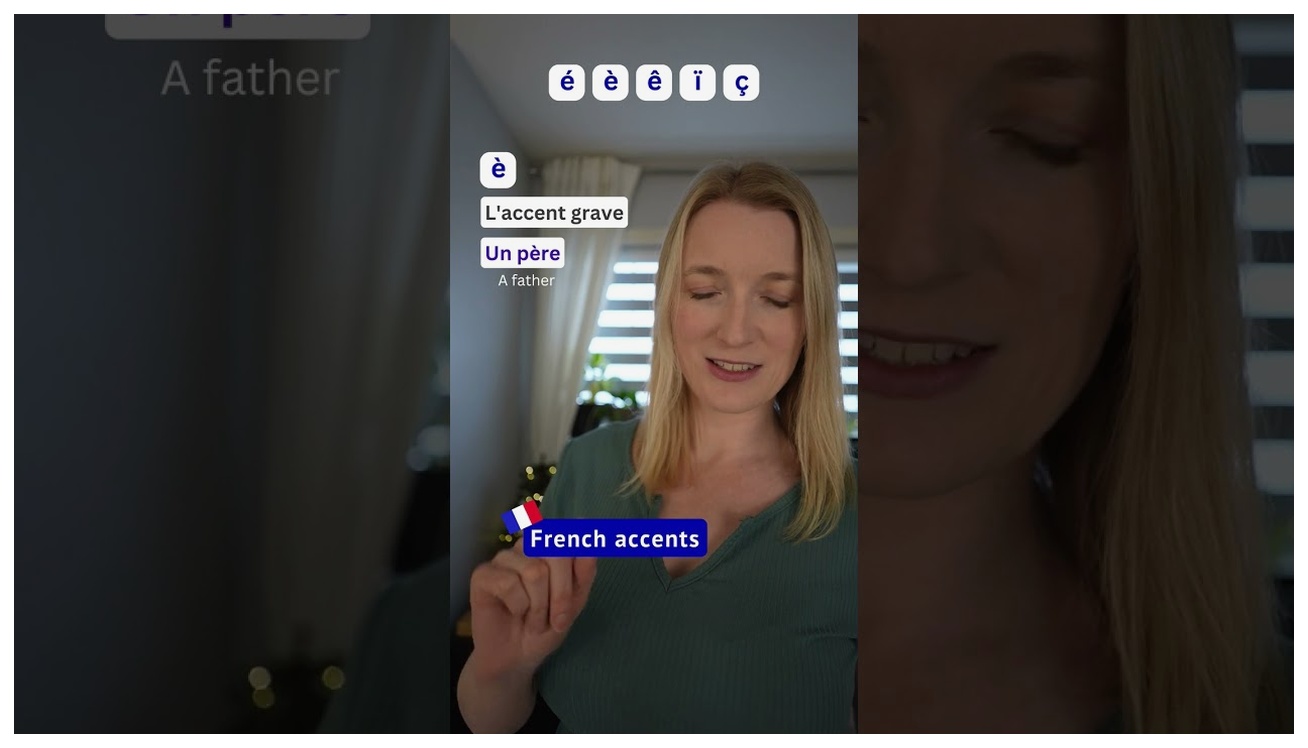
How to type French accents
On a Mac
To type French accents on a Mac, simply utilize the “Option” key. For an acute accent, press “Option” + “e,” for a grave accent, use “Option” + “`,” for a cedilla, hit “Option” + “c,” for a circumflex, go with “Option” + “i,” and for a trema, choose “Option” + “u.” After pressing the combination, release the keys and then type the letter you want to accent.
- To add an acute accent: Press “Option” + “e,” release, and type the letter to be accented
- To add a grave accent: Press “Option” + “`,” release, and type the letter to be accented
- To add a cedilla: Press “Option” + “c,” release, and type the letter to be accented
- To add a circumflex: Press “Option” + “i,” release, and type the letter to be accented
- To add a trema: Press “Option” + “u,” release, and type the letter to be accented
On a PC
Typing French accents on a PC uses the “Alt” key alongside numeric codes:
- To type “é”: Hold “Alt” and type “130” or “0233”
- For “à”: Hold “Alt” and type “133” or “0224”
- For “è”: Hold “Alt” and type “138” or “0232”
- For “ù”: Hold “Alt” and type “151” or “0249”
- To type the cedilla (“ç”): Hold “Alt” and type “135” or “0231”
- **Typing Circumflex Accents on Windows:**
To type circumflex accents (â, ê, î, ô, û), hold the “Alt” key and enter the following numeric codes:
– â: Alt + 131 or Alt + 0226
– ê: Alt + 136 or Alt + 0234
– î: Alt + 140 or Alt + 0238
– ô: Alt + 147 or Alt + 0244
– û: Alt + 150 or Alt + 0251 - To type trema accents (ë, ï, ü), hold “Alt” and enter the following codes:
– ë: Alt + 137 or 0235
– ï: Alt + 139 or 0239
– ü: Alt + 129 or 0252
As you hone your computer shortcuts, consider seizing the chance to learn French online. Not only will you expand your skills, but you can also apply your new language knowledge in real-world situations!
Mastering French accents: Elevate your learning with LingualNeeds
To quickly type accents, you can utilize keyboard shortcuts and number codes. However, to genuinely master French accents, it’s essential to engage in hands-on practice and actively hone your listening and pronunciation skills. This combination will elevate your command of the language.
Enhance your French skills by working with an experienced tutor on LingualNeeds. Our customized lessons not only focus on language proficiency but also delve into the cultural nuances behind the accents, making your learning experience both enjoyable and effective.
Elevate your French skills with LingualNeeds’ exceptional tutors and experience the joy of learning the language! Begin your journey today by scheduling your French lessons online. Whether you’re a beginner or looking to enhance your conversational abilities, LingualNeeds has the perfect class for you!
Frequently Asked Questions
What is the significance of accents in the French language?
Accents in French alter pronunciation and meaning, making them crucial for clarity and understanding.
How do I pronounce the acute accent ‘é’ correctly?
The acute accent ‘é’ sounds like ‘ay,’ similar to the English word ‘say,’ with a relaxed mouth.
What are the different types of French accents?
The five types of French accents are l’accent aigu (é), l’accent grave (à, è, ù), la cédille (ç), l’accent circonflexe (â, ê, î, ô, û), and l’accent tréma (ë, ï, ü).
How can I type French accents on a Mac?
To type French accents on a Mac, use the ‘Option’ key along with specific letter combinations, such as ‘Option + e’ for acute accent ‘é’.
What is the role of the cédille in French pronunciation?
The cédille indicates that the letter ‘c’ should be pronounced as an ‘s,’ as seen in words like ‘ça’ (that) and ‘français’ (French).


