
- What is DELF?
- What does each DELF level include?
- DELF A1
- DELF A2
- DELF B1
- DELF B2
- DELF vs DALF: What’s the difference?
- How can you prepare for the DELF exams?
- Take DELF classes
- Practice with textbooks, past exam papers, and online resources
- Work on your weak areas
- Expose yourself to French content
- Meet your DELF tutor
- Frequently Asked Questions
- What is the DELF exam?
- What are the different levels of the DELF exam?
- What skills are assessed in the DELF exams?
- How can I prepare for the DELF exams?
- What is the difference between DELF and DALF?
Starting from a beginner level and extending to an upper-intermediate level, DELF exams show a learner’s French language proficiency.
Beginners in French are encouraged to introduce themselves and grasp fundamental topics. As learners progress through the DELF levels, the language requirements become increasingly sophisticated. At the upper-intermediate stage, DELF equips students with the skills to articulate their opinions, comprehend news articles, and take effective notes in lectures or meetings. This level is particularly beneficial for university students and business professionals aiming to elevate their French proficiency!
Are you thinking about taking the DELF exams or looking for effective preparation tips? This article is your go-to resource! We’ll explore what DELF is all about, break down the components of each DELF level, and provide practical strategies to help you succeed in this esteemed examination.
What is DELF?
DELF, short for Diplôme d’études en langue française, translates to Diploma of French Language Studies. This esteemed certification, awarded by the French Ministry of National Education, evaluates French language skills based on the Common European Framework of Reference for Languages (CEFR). Successfully passing the DELF exam provides learners with a widely recognized credential, serving as proof of their French proficiency for universities, employers, and immigration authorities around the world.
The DELF exam consists of four distinct levels: A1, A2, B1, and B2. Each level features individual assessments that evaluate learners in speaking, listening, reading, and writing skills. Let’s explore the language proficiency associated with each DELF exam level:
- A1: Beginner
- A2: Advanced beginner/pre-intermediate
- B1: Intermediate
- B2: Upper-intermediate
After determining the exam that best suits your needs, you can easily register for it at a DELF exam center located in your country.
What does each DELF level include?
To successfully pass each DELF exam, you must achieve a minimum score of 50 out of 100, ensuring you earn at least five points in every component. Each DELF exam assesses your skills in speaking, listening, reading, and writing, though the duration and difficulty of these sections can differ between the tests.
Here is an overview of what each level includes:
DELF A1
The A1 exam is the entry-level assessment of the DELF, designed specifically for beginners in French. To successfully pass, candidates should be comfortable with fundamental phrases, including self-introductions, sharing their origins, and discussing their hobbies. In the writing section, they will be required to complete a form that includes personal information like their name, nationality, and address.
|
Exam component |
Component content |
|
Speaking |
Three exercises of 5 to 7 minutes: Guided conversation with the examiner, Q&A, and dialogue. |
|
Listening |
Four exercises of 20 minutes: Listening to a recording and answering questions. |
|
Reading |
Four exercises of 30 minutes: Reading documents and answering questions. |
|
Writing |
Two exercises of 30 minutes: Filling in a form and writing a minimum of 40 words. |
DELF A2
At the A2 level, learners are encouraged to apply their French skills in a variety of practical, everyday scenarios. This includes activities like shopping, asking for directions, navigating public transport, and discussing past experiences. In addition to comprehending basic conversations, students should be able to share details about their daily lives, such as their hobbies, routines, work, and school experiences.
|
Exam component |
Component content |
|
Speaking |
Three exercises of 6 to 8 minutes: Guided conversation with the examiner, monologue, and dialogue. |
|
Listening |
Four exercises of 25 minutes: Listening to a recording and answering questions. |
|
Reading |
Four exercises of 30 minutes: Reading documents and answering questions. |
|
Writing |
Two exercises of 45 minutes: Writing two texts of a minimum of 60 words each. |
DELF B1
At the B1 level, learners gain confidence in using French across various situations, from sharing dreams to expressing their emotions on different topics. Unlike the A1 and A2 exams, the B1 speaking test emphasizes more complex interactions, allowing learners to articulate their opinions rather than just respond to basic questions.
|
Exam component |
Component content |
|
Speaking |
Three exercises of 15 minutes: Guided conversation with the examiner, talking about an opinion on a given topic, and dialogue. |
|
Listening |
Three exercises of 25 minutes: Listening to a recording and answering questions. |
|
Reading |
Two exercises of 45 minutes: Reading documents and answering questions. |
|
Writing |
One exercise of 45 minutes: Writing a text of a minimum of 160 words. |
DELF B2
The DELF B2 exam is a gateway to universities in French-speaking countries, as most institutions require international students to demonstrate a B2 proficiency in French. At this level, learners gain the ability to express their opinions, persuade others, and identify their own mistakes, enhancing their communication skills in the language.
|
Exam component |
Component content |
|
Speaking |
Two exercises of 20 minutes: In this engaging activity, students deliver a monologue to share their views on a specific topic, backed by compelling arguments. Following this, they participate in a dynamic dialogue with the examiner, allowing for an interactive exchange of ideas and further exploration of the subject. |
|
Listening |
Three exercises of 30 minutes: Listening to a recording and answering questions. |
|
Reading |
Two exercises of 1 hour: Reading documents and answering questions. |
|
Writing |
One exercise of 1 hour: Writing a text of a minimum of 250 words. |
DELF vs DALF: What’s the difference?
The DELF and DALF certifications, managed by the French Ministry of National Education, cater to different proficiency levels in the French language. DELF offers four distinct certifications: A1 for beginners, A2 for pre-intermediate learners, B1 for intermediate speakers, and B2 for those at an upper-intermediate level.
DALF, or Diplôme approfondi de langue française, translates to Advanced Diploma in French Language. This prestigious certification is designed for advanced learners who possess near-native proficiency in French. DALF offers two levels of certification: C1, indicating autonomous use of the language, and C2, representing mastery. Many students who successfully complete the DELF B2 exam often pursue the DALF qualifications to further enhance their skills.
How can you prepare for the DELF exams?
To excel in the DELF exams, you need to master the four essential language skills: speaking, listening, reading, and writing. In addition to honing these abilities, it’s crucial to understand the exam structure to maximize your score. Here are some effective strategies to help you prepare for the DELF:
Take DELF classes
Enrolling in a DELF course or participating in online French classes offers targeted training to keep you on the path to success. Guided by your tutor, you’ll deepen your understanding of the language, familiarize yourself with the exam format, and gain confidence about what to anticipate on exam day.
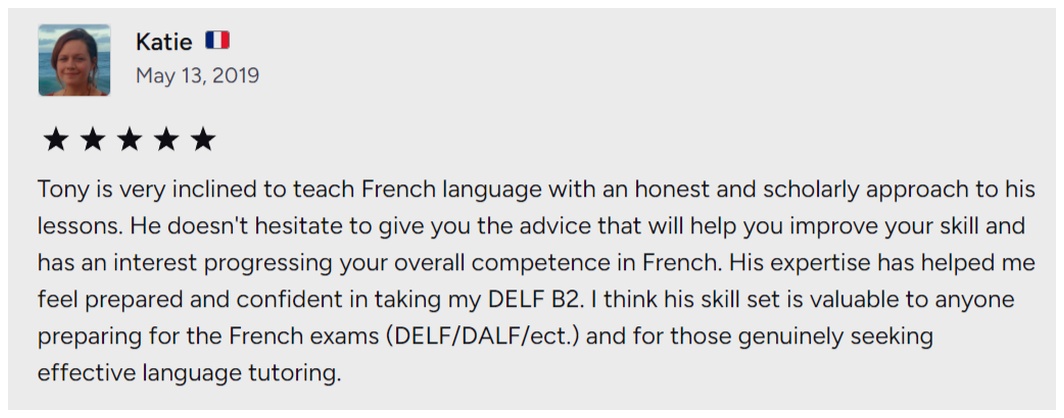
When selecting a tutor, it’s essential to focus on those who specialize in DELF exam preparation. At LingualNeeds, you can explore a diverse pool of over 200 DELF tutors ready to assist you with A1, A2, B1, and B2 levels. Before scheduling a trial lesson, take the time to read tutor reviews to understand how they’ve supported previous students. For instance, one learner shared their positive experience with a DELF B2 teacher on LingualNeeds:
Practice with textbooks, past exam papers, and online resources
Selecting the right textbooks can significantly enhance your vocabulary and grammar for exams. Additionally, practicing with previous DELF exam papers boosts your confidence by familiarizing you with the question formats. To find suitable exercise books, check the recommendations from the French Ministry of National Education, or consult your tutor about conducting mock exam sessions.
YouTube offers a wealth of exam simulation videos, particularly for the speaking section of the DELF exam. A great example is the B1 exam simulation provided by Alliance Française, a renowned international organization dedicated to promoting French language and culture globally.

Work on your weak areas
Struggling with your French pronunciation? Spice things up with some entertaining tongue twisters! If you find yourself consistently underperforming in the writing section, it might be time to enhance your vocabulary. Strengthening your word bank will not only boost your DELF exam scores but also elevate your overall fluency in French.
Expose yourself to French content
No matter your proficiency level, there are plenty of resources available to enhance your French skills. If you’re just starting out and aiming for an A1 level, consider easing into the language with French learning apps and engaging short videos on social media, such as “5 hardest words to pronounce in French.” These tools can provide a fun and effective introduction to the language!
As you progress in your language journey, your confidence will grow, allowing you to delve into diverse content types. Consider tuning into French podcasts to enhance your listening skills, watching French films to pick up authentic vocabulary in context, or reading books to strengthen your reading proficiency.
Meet your DELF tutor
Enhance your French skills with tailored feedback and expert insights from our specialized DELF tutors at LingualNeeds! Our engaging online lessons are designed to target your weaker areas, guiding you from intermediate DELF levels to mastering the advanced DALF exams. Start your journey to fluency today!
Frequently Asked Questions
What is the DELF exam?
DELF, short for Diplôme d’études en langue française, is a certification that evaluates French language skills based on the Common European Framework of Reference for Languages (CEFR).
What are the different levels of the DELF exam?
The DELF exam consists of four levels: A1 (Beginner), A2 (Advanced beginner/pre-intermediate), B1 (Intermediate), and B2 (Upper-intermediate).
What skills are assessed in the DELF exams?
DELF exams assess speaking, listening, reading, and writing skills.
How can I prepare for the DELF exams?
You can prepare by taking DELF classes, practicing with textbooks and past exam papers, working on weak areas, and exposing yourself to French content.
What is the difference between DELF and DALF?
DELF certifies proficiency from beginner to upper-intermediate levels (A1 to B2), while DALF (Diplôme approfondi de langue française) is for advanced learners with near-native proficiency, offering certifications at C1 and C2 levels.


