
- Common French exams for different CEFR levels
- A guide to French language levels
- Beginner: CEFR Level A1
- What you can do at A1 level:
- Tips to reach A1 level:
- Pre-intermediate: CEFR Level A2
- What you can do at A2 level:
- Tips to reach A2 level:
- Intermediate: CEFR Level B1
- What you can do at B1 level:
- Tips to reach B1 level:
- Upper-intermediate: CEFR Level B2
- What you can do at B2 level:
- Tips to reach B2 level:
- Advanced: CEFR Level C1
- What you can do at C1 level:
- Tips to reach C1 level:
- Mastery: CEFR Level C2
- What you can do at C2 level:
- Tips to reach C2 level:
- Advance to the next French language level with 1-on-1 tutoring
- Frequently Asked Questions
- What are the benefits of mastering French?
- What are the common French proficiency exams?
- How long does it typically take to achieve A1 level in French?
- What can you do at the B2 level in French?
- How can one-on-one tutoring help during a language plateau?
French is a global language, spoken in diverse countries such as France, Belgium, Switzerland, Senegal, Morocco, and Canada, among others. Mastering French can significantly enhance your travel, living, and working experiences in these regions. Furthermore, it opens doors to exciting business prospects, as French serves as the official language of prominent international organizations like the United Nations, the European Union, UNESCO, and NATO.
Your plans may require you to take a French exam to demonstrate your proficiency according to the Common European Framework of Reference for Languages (CEFR).
Common French exams for different CEFR levels
Here are the most common French proficiency exams for different CEFR levels, from A1 (beginner) to C2 (proficient):
- DFP (Diplômes de français professionnel) is a French Business Diploma designed for professionals in tourism, international relations, and healthcare. Exams are available for levels A1 to C1.
- **DELF Exams**: The DELF offers four exams corresponding to CEFR levels A1, A2, B1, and B2, assessing French proficiency from beginner to upper-intermediate.
- DALF: The DALF, or Diplôme Approfondi de Langue Française, follows DELF B2 and consists of two advanced levels, C1 and C2, focusing on complex French language proficiency.
- TEF: The Test d’Évaluation de Français (TEF) is widely accepted in French-speaking countries such as France, Canada, and Switzerland. It is particularly essential in Canada, where it is required for certain immigration and citizenship applications.
Each CEFR level represents a different level of language fluency:
While the CEFR levels are important, don’t forget that improving your French will benefit you beyond a language certification.
A guide to French language levels

Curious about your French proficiency level according to the CEFR? Take our free French proficiency test, and let’s discover your skill level together!
Beginner: CEFR Level A1

“You lost me at Bonjour!” – Emily, Emily in Paris
Emily, the star of “Emily in Paris,” is eager to immerse herself in the French language. Although she has a grasp of some everyday phrases, she’s still at the beginner level, often leaning on translation apps and defaulting to English in her conversations.
At the A1 level, it’s completely normal to be in the early stages of your language journey! You’ll kick things off by learning essential French greetings such as “bonjour” (hello), “ça va?” (how are you?), and “salut” (hi). From there, you’ll progress to introducing yourself, asking simple questions, and sharing your interests. Enjoy this exciting beginning!
Achieving the A1 level in French typically takes between 60 and 100 hours of dedicated study. A quality French course can make this journey enjoyable and effective, providing you with a strong foundation in pronunciation, essential vocabulary, and engaging learning materials to propel you to the next level.
What you can do at A1 level:
- Introduce yourself in French
- Understand very basic conversations and simple texts
- Ask and answer basic questions
Tips to reach A1 level:
- Take regular French lessons online
- Use gamified language learning apps
- Expose yourself to the language through French films, songs, and books
Pre-intermediate: CEFR Level A2

“Oui bien sûr! Je parle français (Yes, of course! I speak French)” – Phoebe Buffay, Friends
Phoebe Buffay’s skills extend beyond simply introducing herself in French; she can construct polite sentences and share her experiences. This indicates she has at least an A2 level of proficiency in the language.
At this exciting stage, you’ll make a significant jump from the basics of A1, like “je m’appelle” (my name is), and begin to broaden your vocabulary. You’ll dive into practical, everyday topics such as shopping, asking for directions, and ordering meals at restaurants. Although fluency is still on the horizon, you’ll feel much more comfortable engaging in brief social conversations and using essential French verbs.
To complete this level, you’ll need to invest between 160 and 200 hours of study. Building on your A1-level foundation, you’ll expand your vocabulary, allowing you to engage in conversations on a wider range of topics.
What you can do at A2 level:
- Use French in everyday situations
- Understand a basic conversation
- Connect sentences with the conjunctions et, mais, parce que (and, but, because)
Tips to reach A2 level:
- Learn words topic-by-topic in clusters, such as “clothes,” “food,” and “holidays”
- Start reading French books intended for language learners of your level
- Practice your listening skills with slow and clear French podcasts, YouTube channels, and movies
Intermediate: CEFR Level B1

“I absolutely adore the dining options in Paris; they’re simply amazing!” – Serena Williams, professional tennis player.
A significant leap from A2 to B1 is the remarkable increase in confidence. At the B1 level, you can effortlessly handle everyday conversations without prior preparation. This includes practical tasks like checking into a hotel or ordering meals while traveling in a French-speaking country.
When discussing subjects you’re knowledgeable about, you can easily express yourself and correctly conjugate most verbs, including the tricky irregular ones. Engaging with native speakers is also manageable, even if you occasionally stumble over a word or two.
To reach this level, you’ll need to invest around 360 to 400 hours of study. By this point, your vocabulary will be robust enough to discuss everyday topics confidently. Plus, if you happen to forget a word, you’ll be able to improvise, ensuring that the conversation flows smoothly without interruption.
What you can do at B1 level:
- Talk about events, experiences, plans, or personal preferences
- Give your opinion on a topic and explain why you think that way
- Cope with unexpected situations in everyday life
Tips to reach B1 level:
- Watch French movies with French subtitles
- Study the most common French words, expressions, and verbs
- Use French tongue twisters to fine-tune your pronunciation
- Take online French lessons to get feedback from a professional tutor
Upper-intermediate: CEFR Level B2

“While I may struggle with grammar, my desire to communicate is what drives me. That’s why I constantly practice.” – Bradley Cooper, actor
B2-level learners can confidently engage in conversations in French that extend beyond everyday subjects. This proficiency allows them to interact with colleagues, participate in discussions at a French university, or even make appearances on French talk shows, much like Bradley Cooper did in the video above!
As a B2-level speaker, you understand that making mistakes is a natural part of the learning journey. You’re becoming increasingly confident in conversations with native speakers, and your fluency is evident. When you encounter a word you don’t know, you skillfully navigate around it by using synonyms or alternative phrases, showcasing your resourcefulness in communication.
Congratulations! You’ve dedicated approximately 560 to 650 hours to reach a B2-level proficiency. At this stage, you can confidently choose the right adverbs, adjectives, and verbs when discussing topics you know well.
What you can do at B2 level:
- Talk about diverse subjects, beyond everyday topics
- Express the causes and the consequences of an event
- Take notes while listening to a lecture or a broadcast
Tips to reach B2 level:
- Read books, listen to podcasts, and watch the news in French to broaden the topics you know about
- Participate in a language immersion course or an internship in a French-speaking country if possible
- Pinpoint your challenges in French and address them with the guidance of a tutor for effective improvement.
Advanced: CEFR Level C1

Jodie Foster once said, “The journey of my career and the films I’ve created reflect my life, as I embarked on this path at just three years old.” Her words highlight the deep connection between her artistic endeavors and personal experiences.
Reaching C1 level in French is a significant achievement, marking you as an advanced speaker. At this stage, you can communicate with ease and grasp the intricate nuances and idiomatic expressions of the language. When enjoying French films, you’ll no longer need English subtitles; even for complex subjects, French subtitles will suffice!
When it comes to tackling complex subjects, you’ve made impressive strides in your confidence. You can now dive into French books meant for native readers, decipher unfamiliar words through context, and even share a laugh with witty jokes in French.
At this stage, learners possess a solid mastery of French, enabling them to navigate both formal and social contexts with confidence. Achieving this level typically involves dedicating between 810 and 950 hours of focused study.
What you can do at C1 level:
- Understand long and complex texts
- Express yourself fluently and spontaneously without making too much effort
- Use French in social, professional, and academic contexts comfortably
Tips to reach C1 level:
- Avoid using English or your native language; watch shows without subtitles and utilize a French-French dictionary for immersion.
- Set specific goals to remind yourself why you’re learning French
- Enrol in advanced French classes to get personal feedback
Mastery: CEFR Level C2
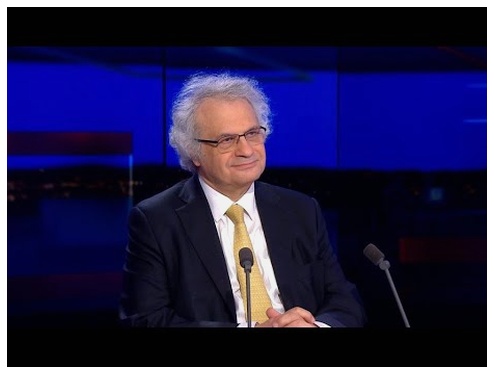
Amin Maalouf, a prominent author and Perpetual Secretary of l’Académie Française, poignantly captures the essence of our times, stating that we live in an era marked by both remarkable achievements and significant failures. This duality reflects the complexities of modern life, where progress and setbacks coexist in a delicate balance.
Lebanese-French author Amin Maalouf exemplifies the power of language mastery, having penned award-winning novels in French, a language he embraced despite it not being spoken in his childhood home. His journey to becoming a best-selling author serves as an inspiring testament for language learners, particularly those at the C2 proficiency level, demonstrating that passion and dedication can lead to remarkable achievements in a second language.
You’ve reached an impressive level of near-native proficiency in French! Your skills now extend well beyond just watching a French TV show. You can engage in in-depth discussions on a variety of subjects, craft a thesis or a comprehensive essay, and express yourself with nuance. Your French is exceptional across all four key areas: reading, writing, speaking, and listening.
Reaching C2 level proficiency means you possess a vast vocabulary, enabling you to engage in debates in French and grasp colloquial slang. Achieving this level typically requires dedicating between 1,060 and 1,200 hours to study and practice.
What you can do at C2 level:
- Accurately express yourself on various topics
- Understand and use idiomatic expressions
- Read and write complex texts accurately
Tips to reach C2 level:
- Practice all four skills
- Immerse yourself in French media to stay up-to-date
- Interact with native speakers in advanced contexts, such as a conference, debate, or language exchange
Advance to the next French language level with 1-on-1 tutoring
Achieving fluency in a language can be quite challenging. After acquiring a substantial vocabulary, many learners encounter what’s known as a language plateau, where progress seems to stall—particularly between the B2 and C1 levels. During this phase, one-on-one tutoring can be invaluable, helping you develop a tailored learning plan that accelerates your French improvement.
At LingualNeeds, our experienced tutors are here to guide you on your journey to learning French, whether you’re facing a language plateau or are just beginning. Start by assessing your current level and setting your learning objectives. Then, use our filters to explore available tutors, watch their introduction videos, and book a trial class. With tailored support, you’ll be on the fast track to mastering French in no time!
Let online French lessons take you to the next level.
Frequently Asked Questions
What are the benefits of mastering French?
Mastering French can enhance your travel, living, and working experiences in French-speaking regions and opens doors to exciting business prospects.
What are the common French proficiency exams?
Common French exams include DFP, DELF, DALF, and TEF, catering to various CEFR levels from A1 to C2.
How long does it typically take to achieve A1 level in French?
Achieving the A1 level in French typically takes between 60 and 100 hours of dedicated study.
What can you do at the B2 level in French?
At the B2 level, you can discuss diverse subjects, express causes and consequences of events, and take notes while listening to lectures.
How can one-on-one tutoring help during a language plateau?
One-on-one tutoring can provide tailored learning plans that help accelerate French improvement, especially during a language plateau.


