- How do Brits really feel about the use of slang in everyday life?
- Key findings
- Where do we learn slang?
- The most popular slang in the UK right now
- The most annoying slang in the UK
- Who uses the most slang?
- What types of people are using slang?
- When is it OK and not OK to use slang?
- Conclusion
- Frequently Asked Questions
- What role does slang play in British conversations?
- How do Brits generally feel about using slang at work?
- What are some of the most well-known slang terms in the UK?
- Where do people commonly learn slang?
- What are some of the most annoying slang words according to Brits?
How do Brits really feel about the use of slang in everyday life?
Slang plays a vital role in the daily conversations of Brits, constantly evolving as new words and phrases emerge from relationships, entertainment, and social media trends.
Slang serves as a unique bridge for many, fostering connections through relaxed and informal dialogue. However, others may perceive it as unrefined or a sign of poor education. Regardless of your stance on it, one thing is clear: slang is an integral element of the English language that we simply cannot ignore.
At LingualNeeds, we surveyed 1,500 UK citizens aged 16+ to uncover British attitudes to popular slang terms from ‘knackered’ to ‘minging’.
Key findings
- Only 20% of Brits admitted to using slang in most of their conversations
- 42% of Brits deemed using slang at work unprofessional
- The most well-known slang words in the UK include knackered (really tired), tenner (ten-pound note), cuppa (cup of tea or coffee), and skint (having no money)
- The most annoying slang words are innit (isn’t it), bird (girlfriend), bevvy (drink), and minging (ugly/gross)
- 40% of people pick up slang terms from their friends
- 66% use slang in conversations with friends
- 43% of Brits with children get annoyed when someone uses slang in conversations.

Learn a language with personalised 1-on-1 classes with our expert tutors from all over the world
French lessons online
Spanish lessons online
Where do we learn slang?
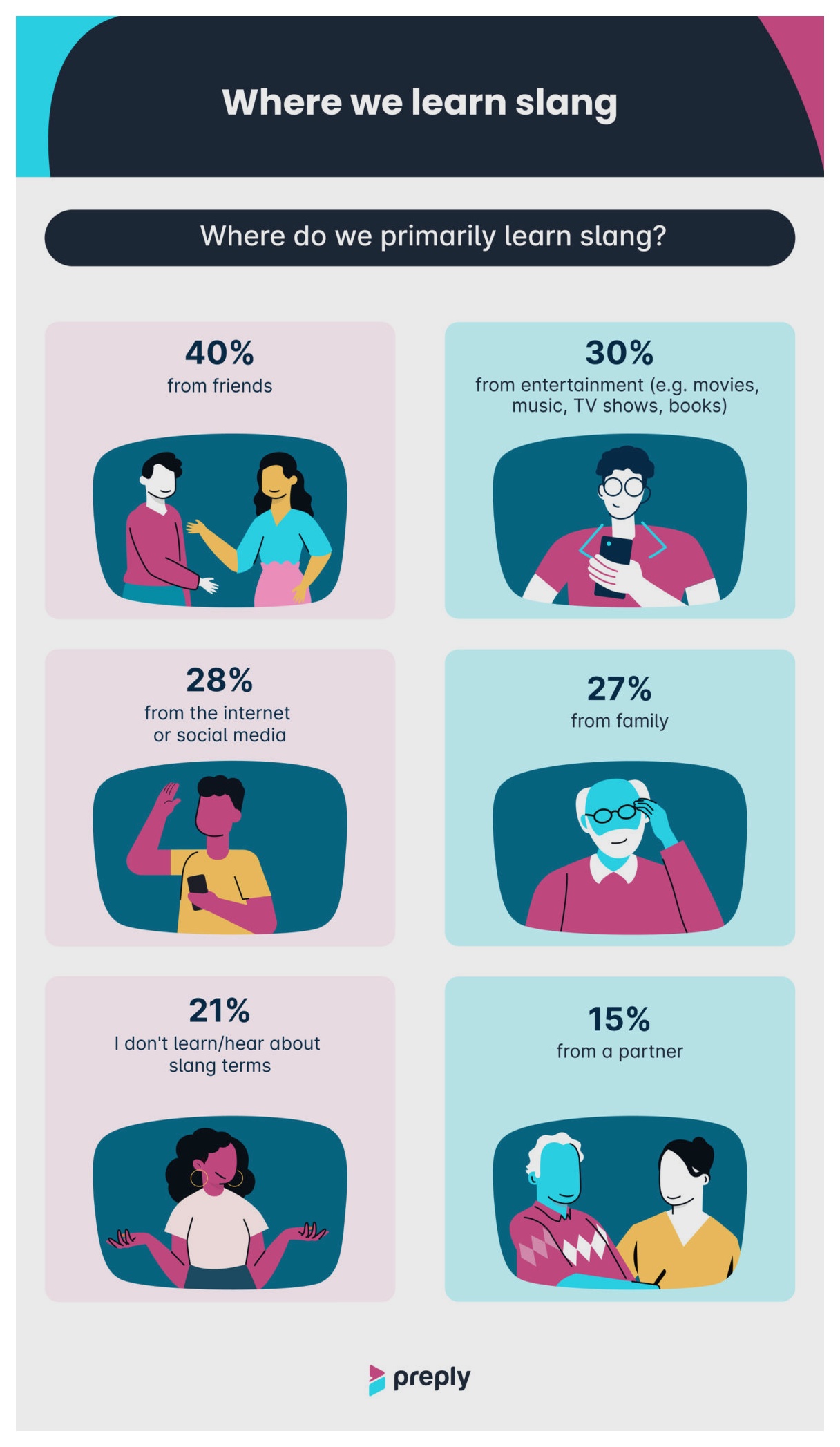
Slang is often learned from various sources, including family, friends, coworkers, and popular media like television and social networks. But what are the primary influences shaping how most people adopt these informal expressions?
A significant 40.13% of people report picking up slang words and phrases from their friends, while a smaller 15.67% credit their partners as the source of their slang knowledge.
Entertainment has become the second most prevalent method for learning slang, accounting for 30.33%. This indicates that the time people invest in movies, TV shows, music, and other entertainment forms is subtly introducing them to new colloquial expressions.
The internet ranks as the third most popular source for learning new slang, especially through social media platforms such as TikTok, Instagram, and Twitter. Remarkably, 28.20% of users say they’ve picked up slang terms from these vibrant online communities, where trends and phrases can catch on and spread rapidly.
It’s no surprise that the 16-24 age group leads the way in encountering slang terms online and through social media, accounting for 41.27% of exposure. Hot on their heels are those aged 25-34, making up 40.80% of this trend.
Conversely, individuals aged 55 and older often lack familiarity with slang, as 31.52% of them reported never having encountered or heard any slang in their daily lives.
The most popular slang in the UK right now
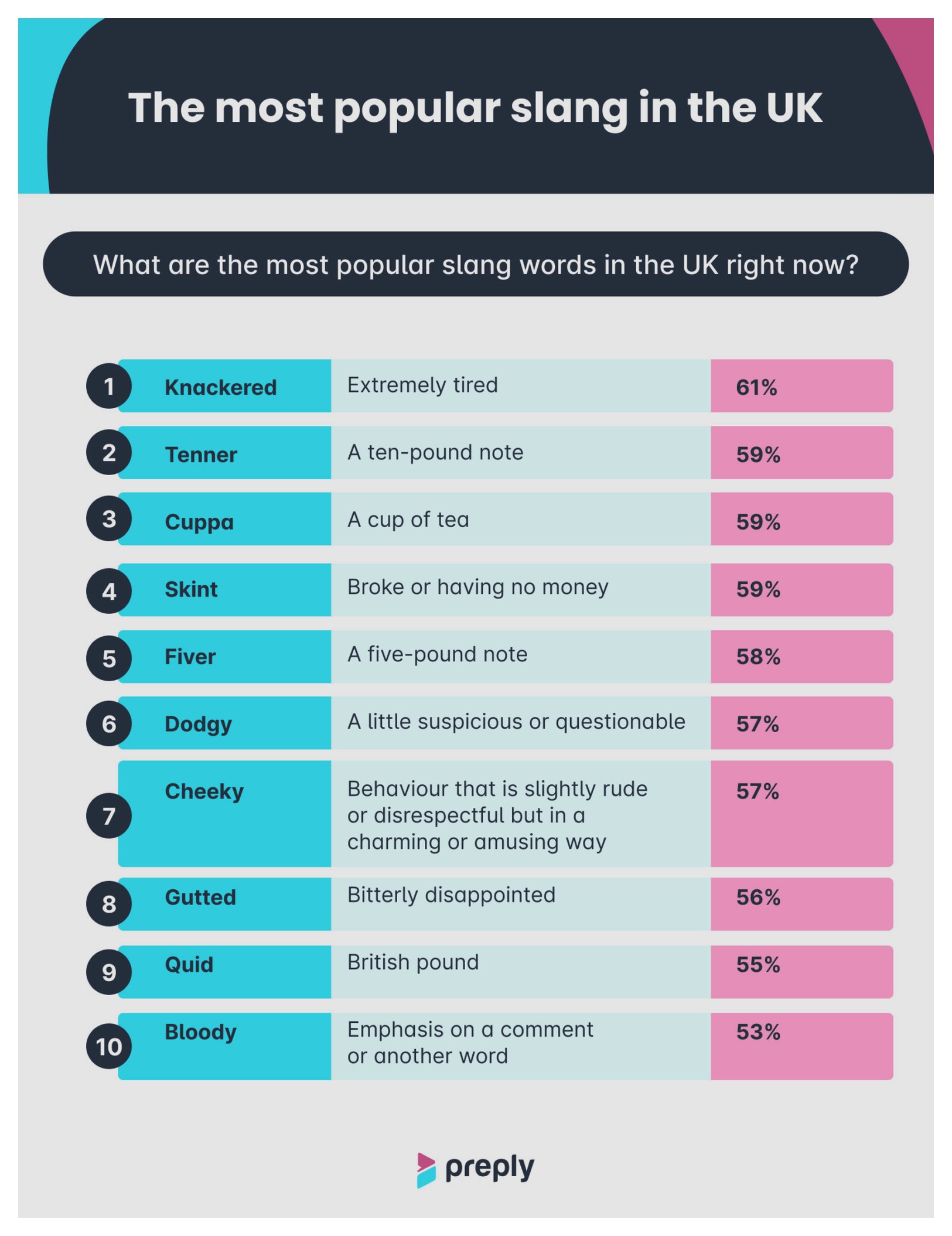
In British culture, casual conversations with friends and family are often sprinkled with colloquial language and slang. Certain terms have gained popularity and are widely recognized, such as ‘knackered,’ meaning extremely tired, ‘tenner’ for a ten-pound note, ‘cuppa’ referring to a cup of tea or coffee, and ‘skint,’ which indicates being broke. These expressions add a unique flavor to everyday chats!
An impressive 60.6% of Brits expressed confidence in using the word “knackered” correctly in a sentence, while “cheeky” closely trailed with 56.8%.
The term “Muppet,” often used informally to describe someone as foolish, is unfamiliar to nearly half of the British population. In fact, 48.67% of people are unsure about how to incorporate it into a sentence.
The slang term “knackered” was most recognized and commonly used by individuals aged 55 and older, with 74.25% familiar with it. In contrast, less than half (48.14%) of those aged 16 to 24 were unsure how to use the word.
Learn a language online with our free learning materials.
Learn English online
Learn French online
The most annoying slang in the UK
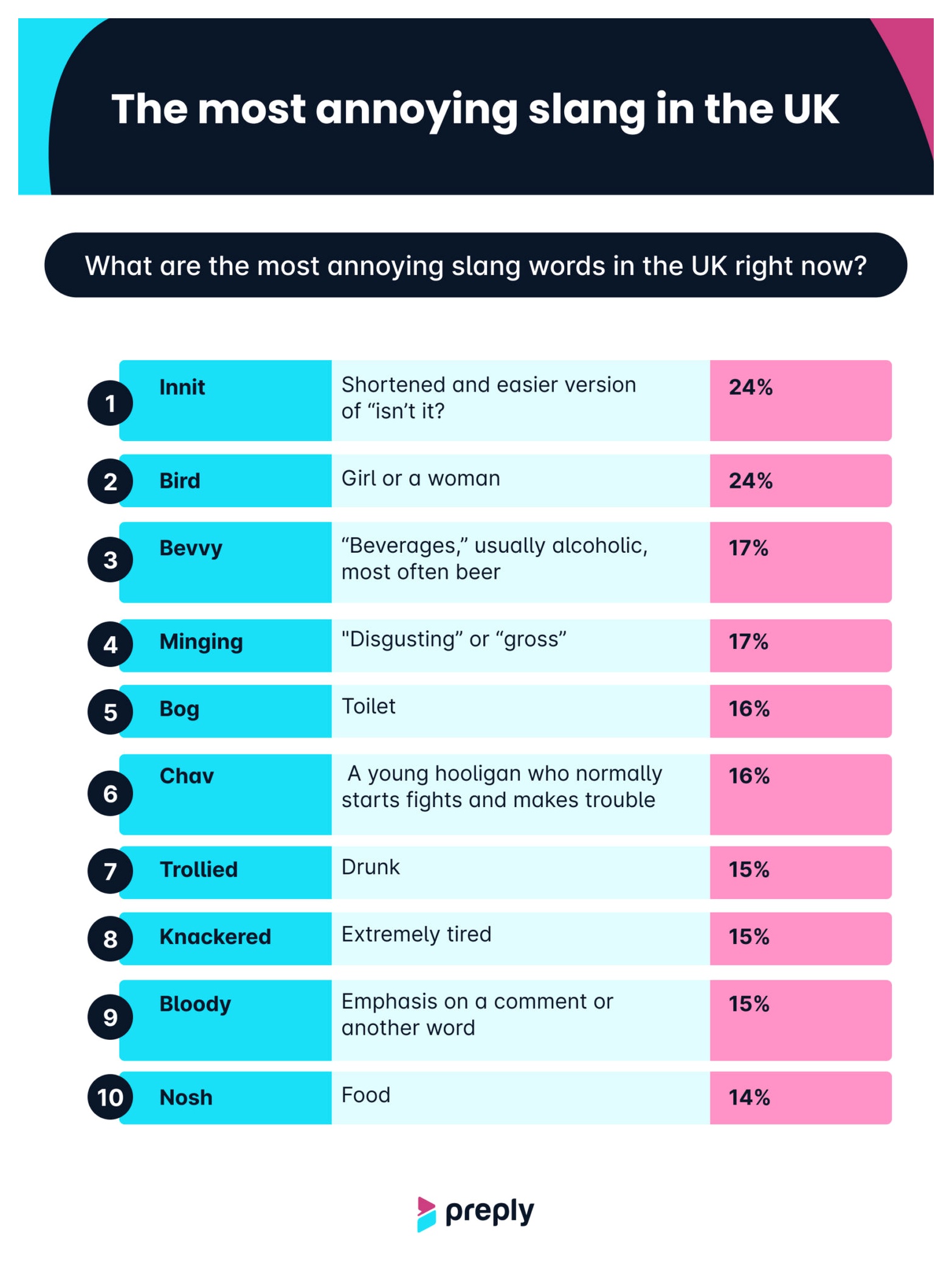
Slang is undeniably prevalent in our language, but not every term enjoys universal acceptance. Some expressions can irritate listeners, while others may even be deemed cringeworthy. So, which slang words are causing discomfort? Phrases like “innit” (isn’t it), “bird” (girlfriend), “bevvy” (drink), and “minging” (ugly or gross) frequently top the list of those that give people the ick.
A notable 24.3% of people consider the word ‘innit’ to be the most annoying term in everyday conversation. Interestingly, this sentiment is strongest among those aged 55 and older, with 29.07% of them finding it particularly irritating. This frustration may stem from the perception that ‘innit’ feels somewhat lazy, as it serves as a replacement for the already abbreviated phrase ‘isn’t it.’
The term “bird” ranked second, with 24% of respondents expressing irritation towards it. Notably, a higher percentage of women (28.13%) found the term bothersome compared to men (19.63%). This disparity may stem from its usage as a sexist and derogatory reference to women.
Among the 16-24 age group, “bird” emerged as the most annoying term, with 26.46% of respondents expressing their frustration. This reaction likely stems from the word’s outdated nature and its tendency to objectify women, perpetuating harmful gender stereotypes that this generation actively seeks to challenge.
Who uses the most slang?
Slang usage differs significantly across countries, regions, cultures, age groups, and genders. For certain communities, incorporating slang into everyday conversations feels much more instinctive and seamless.
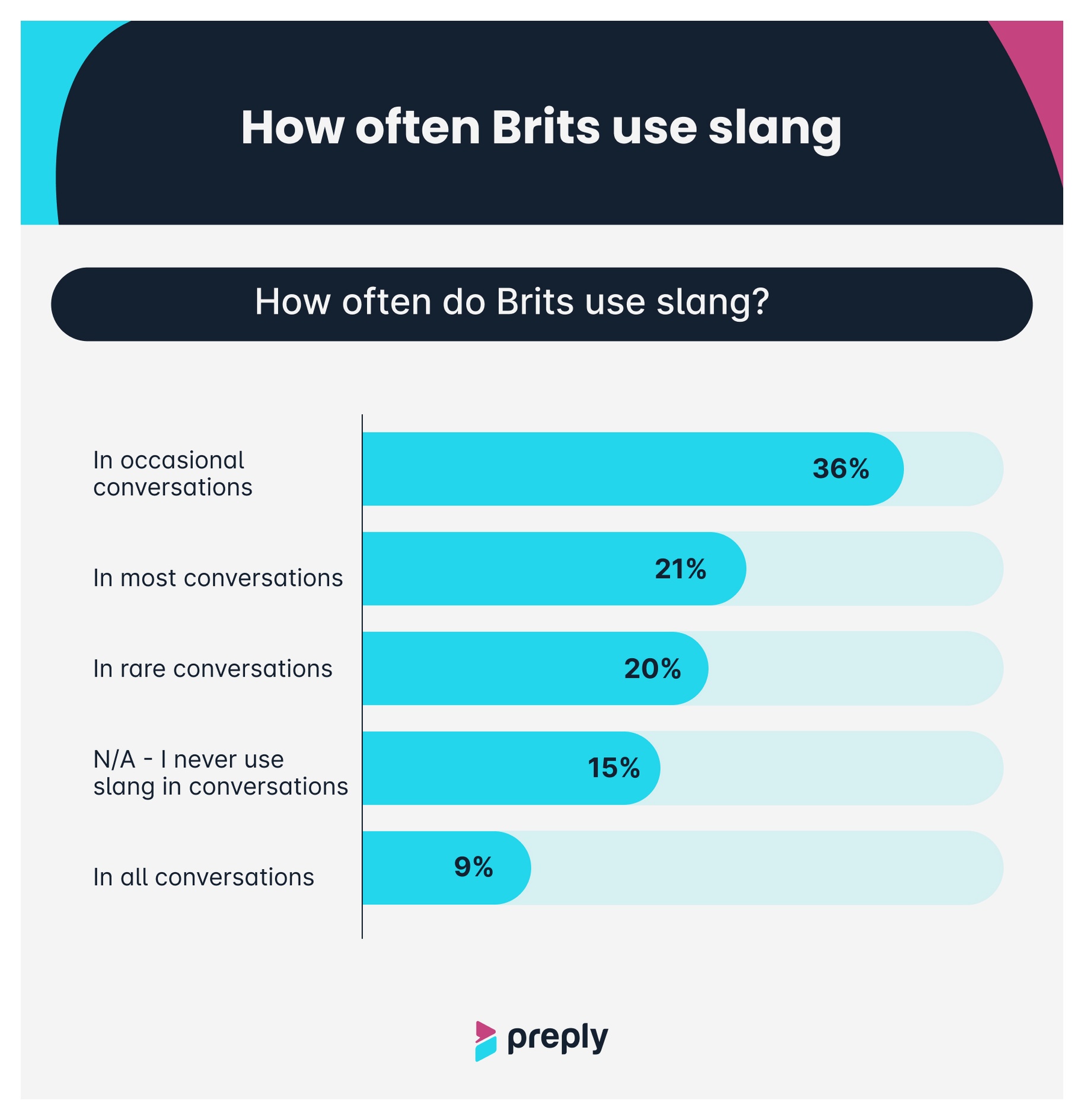
Many individuals believe that slang has its appropriate moments and settings. In fact, 36.13% of people reserve slang for occasional conversations, while a smaller group, just 8.53%, incorporates it into every interaction.
Manchester stands out as the city where slang is most frequently used in everyday conversations, with 27.56% of its residents embracing this unique linguistic style. This trend likely stems from the rich Mancunian dialect, which boasts a greater variety of slang terms and expressions compared to other cities.
When it comes to the use of slang, a greater percentage of women (38.41%) incorporate it into their casual conversations, compared to men (33.52%). However, the trend flips when it comes to those who never use slang at all: 16.06% of men reported never using it, while only 13.02% of women said the same.
As anticipated, the age group most likely to incorporate slang into their everyday conversations is 16 to 24 years old, making up 33.84% of slang users. In contrast, those aged 55 and older use slang the least, with just 9.44% engaging in this linguistic trend.
What types of people are using slang?
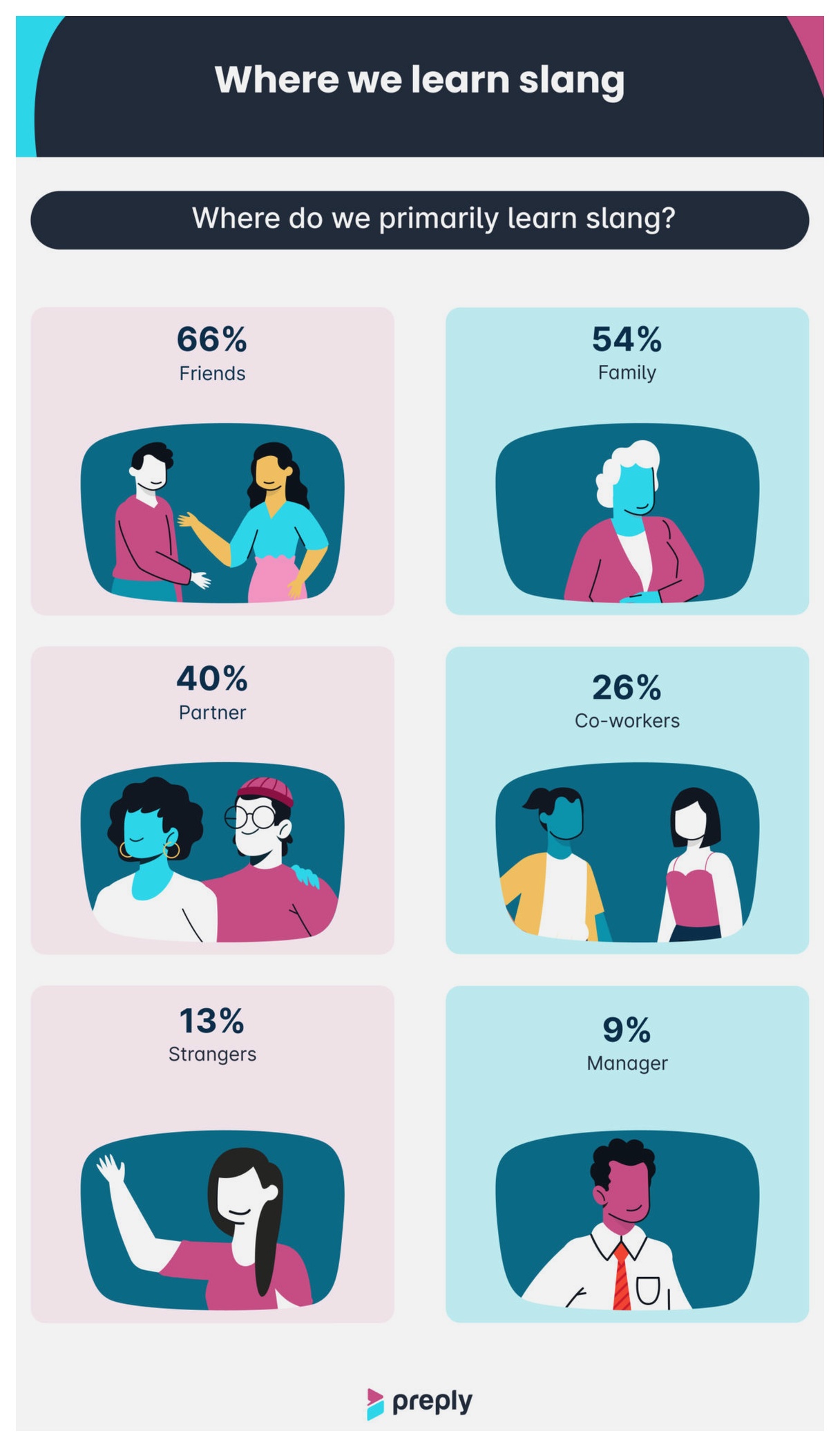
Slang serves as a powerful tool for fostering social connections and camaraderie among individuals. By using familiar terms and expressions, people can feel a genuine sense of unity, as if they’re truly “speaking the same language.”
It’s no surprise that a significant 66.4% of individuals incorporate slang into their conversations with friends, while 37.6% report that their co-workers also frequently use slang. This highlights how informal language is a common part of social interactions, both in personal and professional settings.
Only 9.06% of individuals use slang when speaking with their manager, likely because they perceive it as unprofessional in that context. Notably, a greater percentage of men (11.48%) are comfortable using slang with their managers compared to women (7.04%).
When is it OK and not OK to use slang?
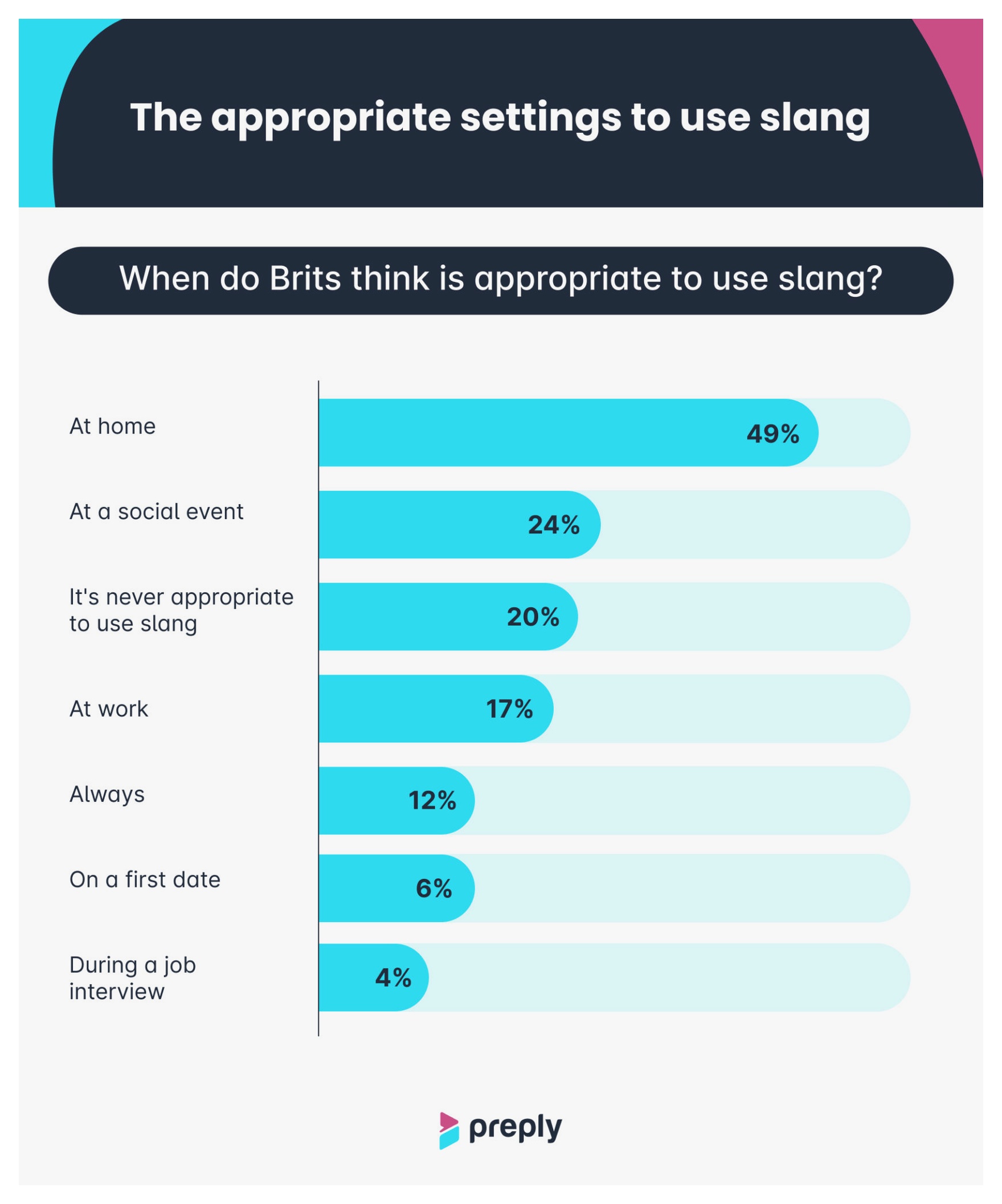
While slang is a common feature of the English language, only 20% of Brits report using it frequently in their daily conversations. This may stem from the perception that slang is unprofessional, especially in workplace settings where many individuals spend their time; 42% of Brits share this viewpoint.
The home has proven to be the ideal setting for using slang, with 48.67% of people identifying it as the best place to engage in casual, colloquial conversations.
First dates are crucial for leaving a positive impression, and it turns out that using slang is generally a risky move. In fact, only 6.20% of people find it suitable to use slang when meeting someone for the first time.
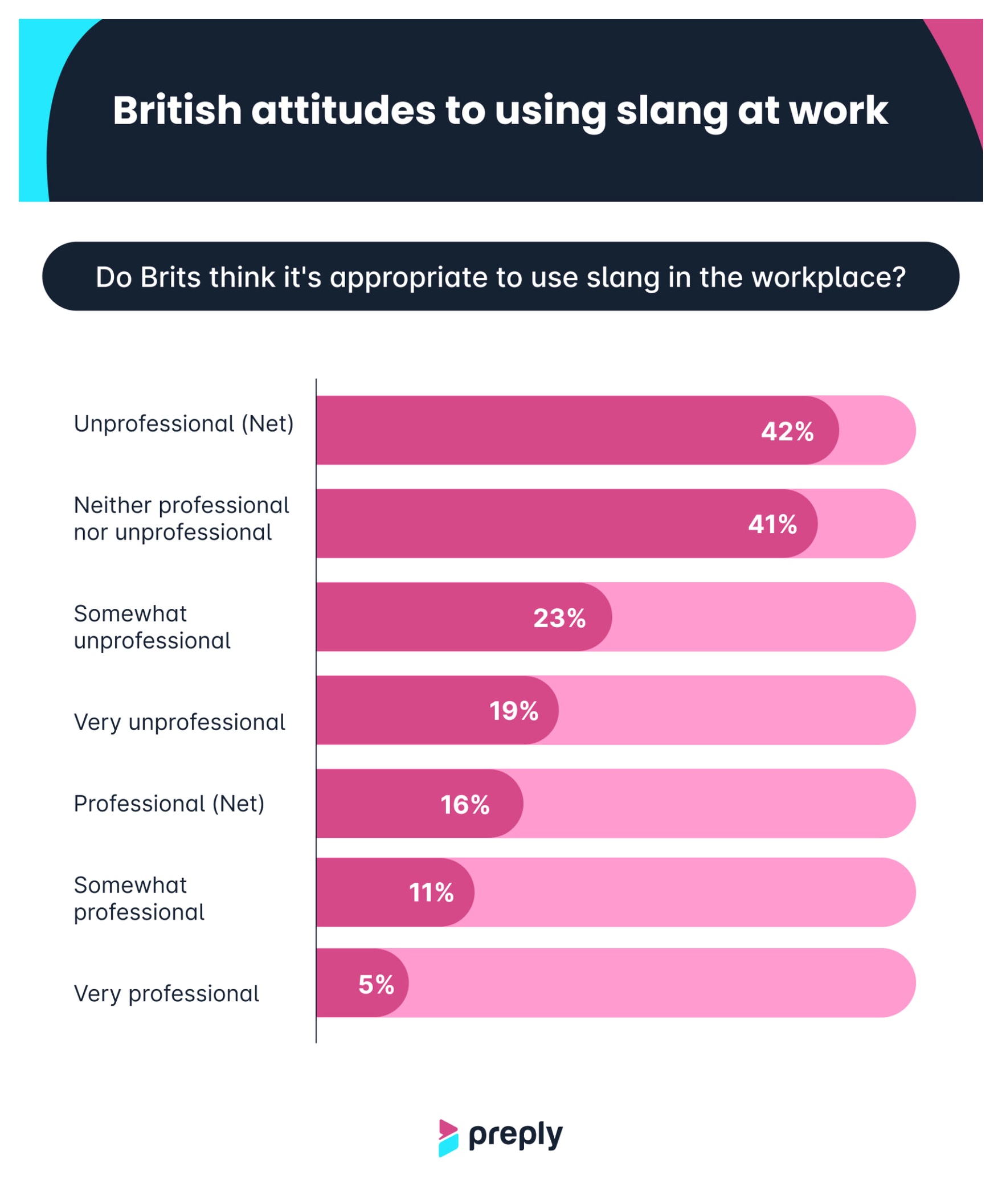
In the workplace, a significant 42.04% of individuals view slang as unprofessional, with a higher percentage of women (48.96%) than men (35.61%) sharing this sentiment. While the majority prefer to keep communication formal, a small minority of 4.33% believe that using slang can be acceptable during job interviews.
A smaller but still significant percentage (29.25%) of those aged 55 and over view slang as inappropriate to use in any conversation.
Sylvia Johnson, a language expert at LingualNeeds, explores the evolution of slang and highlights the growing trend of its use among Brits today. She delves into the factors driving this shift and what it reveals about contemporary communication.
In the mid-18th century, the term “slang” emerged as a prominent feature of the English language. Originally linked to the unique vocabulary of tramps and thieves, slang not only reflects the spirit of its time but also provides insights into the era of the speaker, showcasing the evolving nature of language.
In today’s world, slang is not just born from social media and the internet; it frequently emerges from popular culture, becoming a way for people to showcase their awareness of current trends. This informal language acts as a shorthand, encapsulating not only communication but also the bonds that connect us. By using slang, individuals strengthen their sense of belonging within their unique “tribes” or social circles.
Slang is a dynamic language tool, continuously shifting in meaning and reflecting the identity of its users. Some terms have a fleeting existence, quickly losing their edge once they gain mainstream attention—take “cheugy,” for instance, which faded into obscurity after being featured in the New York Times. In contrast, certain expressions, like “cool,” have stood the test of time; originating in the 1930s, its adaptability keeps it relevant in countless conversations today.
Conclusion
Slang in the United Kingdom is a dynamic and ever-changing aspect of language, with fresh words and expressions emerging while others fade away. However, certain perceptions about slang have remained steady over the years; it is often viewed as informal and carries a hint of rebellion.
Whether you’re a language learner, a business professional, or simply curious about British culture, mastering British slang can greatly enhance your communication skills. By taking advantage of online English lessons at LingualNeeds, you can sharpen your language abilities while diving into the rich nuances of British slang and culture.
At LingualNeeds, you can enjoy personalized one-on-one online tutoring with skilled and certified tutors dedicated to enhancing your language skills according to your specific needs and interests. Whether you’re interested in mastering slang, idioms, or formal language, our tutors are here to guide you on your learning journey. Start your adventure towards mastering British English today!
Methodology
Censuswide conducted a nationwide online survey featuring 1,500 UK citizens aged 16 and older on behalf of LingualNeeds to explore British attitudes toward popular slang terms.
Frequently Asked Questions
What role does slang play in British conversations?
Slang serves as a vital element in daily conversations, fostering connections through relaxed and informal dialogue.
How do Brits generally feel about using slang at work?
42% of Brits deem using slang at work unprofessional.
What are some of the most well-known slang terms in the UK?
Popular slang terms include ‘knackered’ (really tired), ‘tenner’ (ten-pound note), ‘cuppa’ (cup of tea or coffee), and ‘skint’ (having no money).
Where do people commonly learn slang?
People commonly learn slang from friends, family, coworkers, and popular media like television and social networks.
What are some of the most annoying slang words according to Brits?
The most annoying slang words include ‘innit’ (isn’t it), ‘bird’ (girlfriend), ‘bevvy’ (drink), and ‘minging’ (ugly/gross).