- Key takeaways
- Self-awareness about physical cues
- The language of gestures
- Reading facial cues
- Body language perceptions
- Projecting intentionally
- Methodology
- Frequently Asked Questions
- What percentage of Americans are self-aware of their body language?
- Which generation is most likely to be unaware of their body language?
- How do Americans generally perceive a happy expression in professional settings?
- What are some common gestures that Americans frequently use?
- What is the significance of eye contact in different generations?
Have you ever considered the story your facial expressions and body language tell to those around you? Non-verbal communication can often be puzzling, yet it plays a crucial role in mastering any language. At LingualNeeds, a premier language learning platform that provides private English lessons—including tailored tutoring for children—we’re diving into the fascinating ways Americans convey and interpret these unspoken signals.
In a groundbreaking survey, we explored the awareness individuals have regarding their own body cues, their ability to interpret these signals in others, and the differences across generations. Our findings provide essential insights that can significantly improve your communication skills in various social contexts, whether informal or professional. This knowledge is crucial for anyone looking to master a language, extending beyond mere vocabulary—be it adult learners or English tutors working with children.
Key takeaways
- Over 2 in 5 Americans (42%) are very self-aware of their body language, especially Gen Z (48%).
- 1 in 4 baby boomers are unaware of their body language, the most of any generation.
- 46% have experienced someone commenting on their body language, and 83% of these comments were negative.
- 60% of Americans lack confidence in interpreting body language, particularly during virtual meetings.
- 1 in 3 Americans regularly give people the middle finger, especially Gen Z (43%).
- Americans view a happy expression as the most professional.

Learn a language with personalised 1-on-1 classes with our expert tutors from all over the world
French lessons online
Spanish lessons online
Self-awareness about physical cues
This section delves into Americans’ awareness of their own body language and the common challenges they face in interpreting and using non-verbal cues. It highlights the social and professional scenarios that tend to be the most difficult for individuals to navigate.
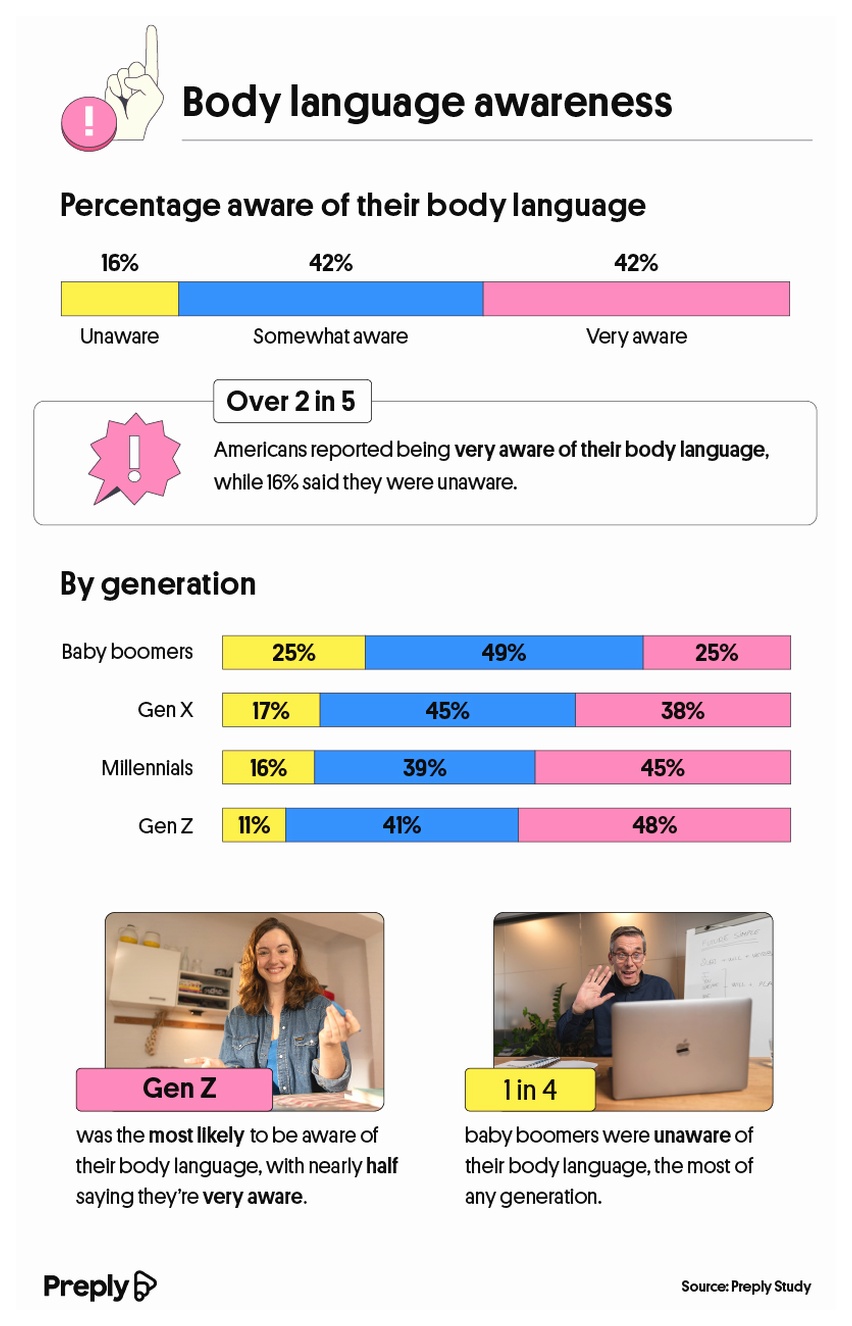
Understanding body language is crucial for effective communication; it allows us to grasp others’ emotions and intentions while fostering stronger connections. However, awareness varies across generations. More than 40% of Americans claim they are highly conscious of their own body language, with Gen Z leading the way. In contrast, only about 25% of baby boomers acknowledge that they often overlook their own nonverbal cues.
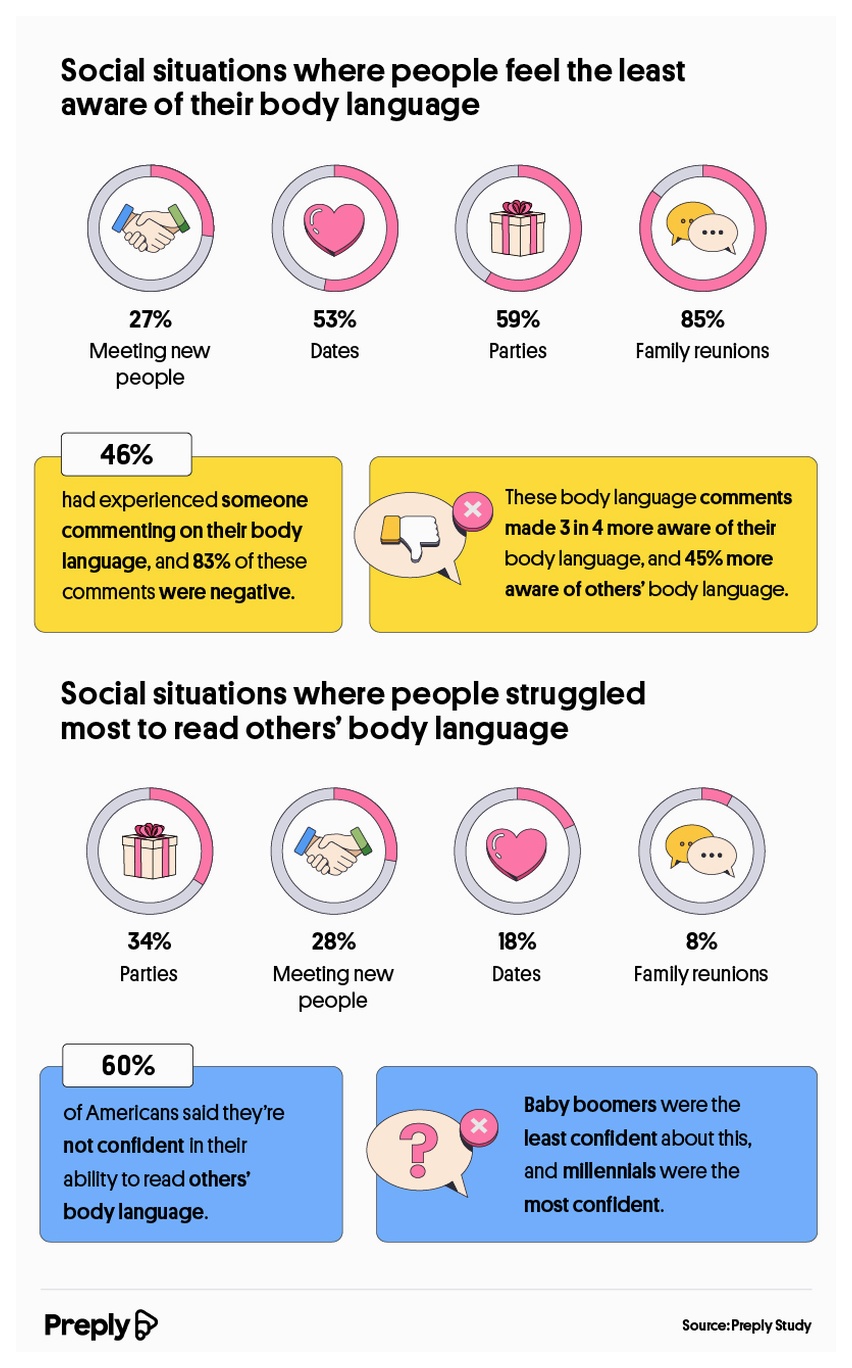
Being conscious of your body language doesn’t necessarily equate to understanding its implications. In fact, a survey revealed that 46% of respondents have received feedback about their body language, with a concerning 83% of those comments being negative. This suggests a significant gap in our non-verbal communication skills. Moreover, 60% of Americans admit they lack confidence in interpreting the body language of others. This challenge is particularly pronounced in virtual meetings (35%) and social gatherings (34%).
Self-awareness regarding body language shows notable differences between genders. Overall, men tend to feel more attuned to their body language. However, women excel in self-awareness during specific situations such as job interviews, networking events, work meetings (both in-person and virtual), and social gatherings. Interestingly, the only context in which men reported greater self-awareness of their body language is during dates.
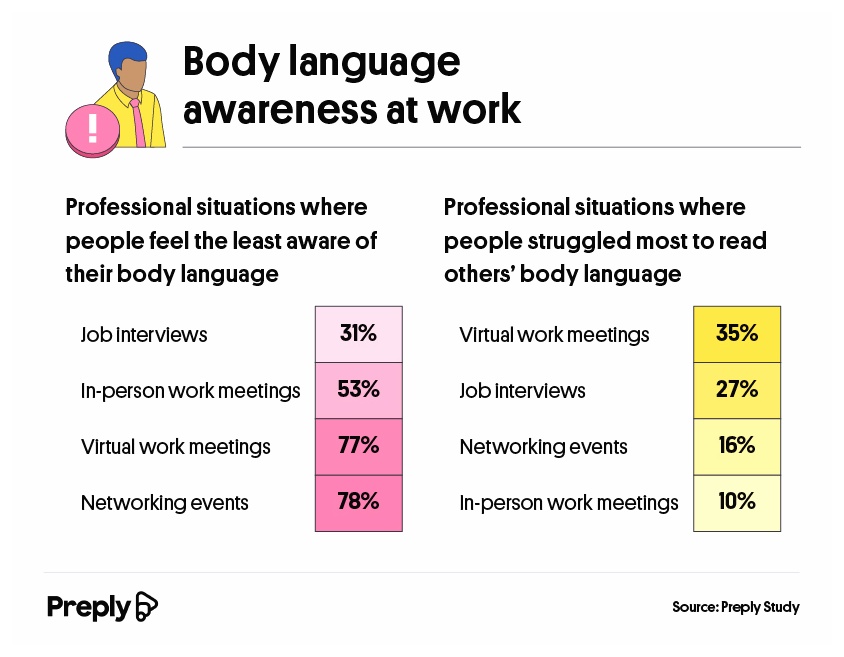
Looking to leave a lasting first impression? It goes beyond your outfit or grooming. Language barriers can often hinder effective communication in social settings, such as meetings or dates. To truly connect with others, enhancing your communication skills is essential. This is where language classes come in handy, particularly when engaging with individuals who speak a different language.
The language of gestures
From thumbs-up to shrugs and nail-biting, let’s explore the most common gestures and uncover how different generations of Americans interpret their meanings.
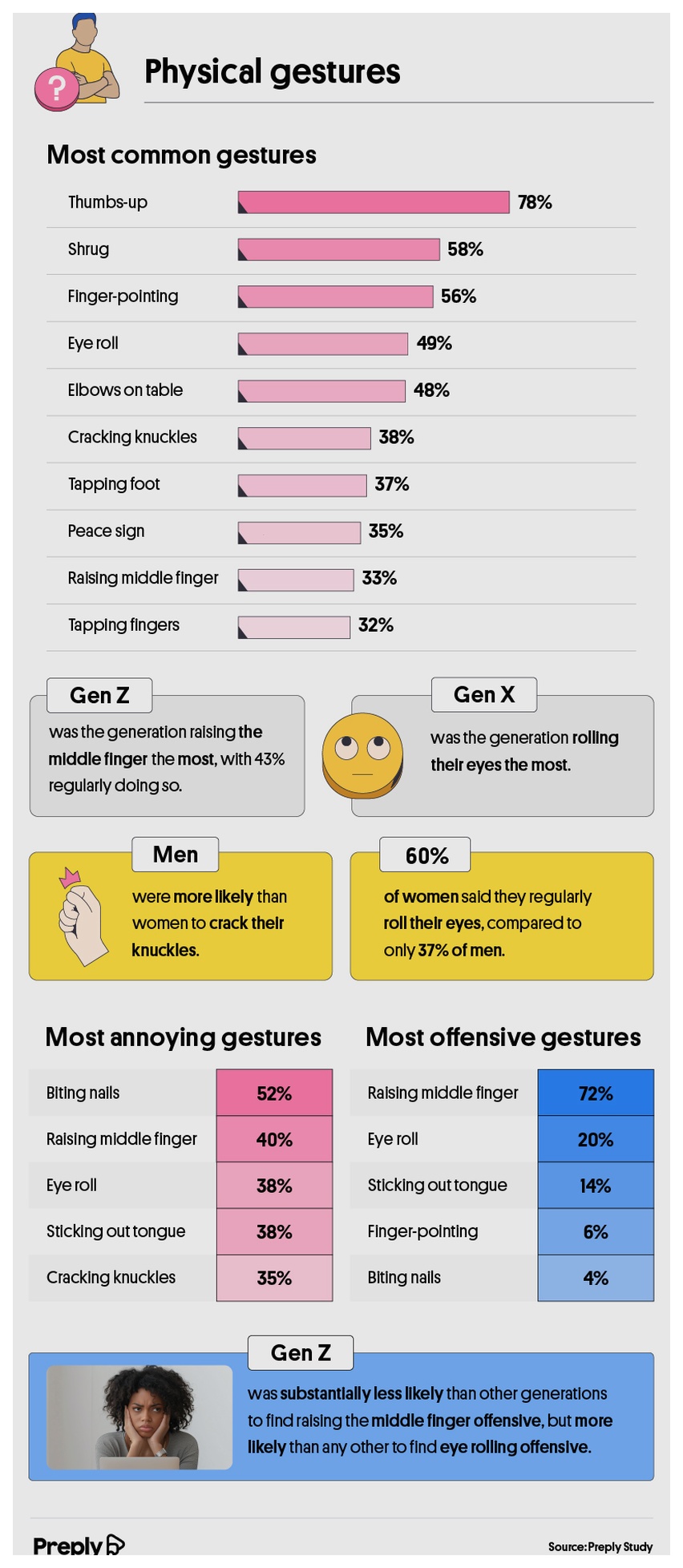
In the realm of American gestures, the thumbs-up, shrug, and finger-pointing are the most commonly used. Interestingly, about one-third of Americans confess to frequently using the middle finger, with Gen Z leading the charge at 43%. Among various gestures, nail-biting tends to annoy people the most, while the middle finger is viewed as the most offensive. It’s worth noting that this gesture carries different meanings across cultures; for instance, in Japanese Sign Language, it signifies “older brother.” This illustrates the complexities of cross-cultural communication!
Grasping body language can be complex and varies significantly by context. That’s why enrolling in a conversational Spanish class is incredibly beneficial. It goes beyond simply acquiring new vocabulary; it equips you with the skills to communicate effectively across diverse situations. You’ll also learn to decode the subtle non-verbal cues that arise when interacting with individuals from different cultures.
The interpretation of non-verbal gestures differs significantly between genders and generations, revealing the influence of cultural backgrounds on our understanding of these subtle expressions. For example, while 45% of men considered lip-biting to be attractive, only 26% of women echoed that sentiment.
Finger-pointing is a gesture that tends to alienate certain demographics more than others. While many Americans interpret this action as an indication of blame, mockery, or criticism, our research revealed that Generation X is particularly sensitive to it, often perceiving it as rude. Additionally, various gestures can be quite irritating, with each generation having its unique set of pet peeves.
- Baby boomers: Cracking knuckles
- Gen X: Cracking knuckles
- Millennials: Raising middle finger
- Gen Z: Eye roll
Physical gestures play a crucial role in interpersonal communication, varying from universally understood to potentially offensive across different cultures. Understanding non-verbal communication requires keen awareness of context and audience, as these factors significantly influence how we express ourselves and interpret the gestures of others.
Learn a language online with our free learning materials.
Learn English online
Learn French online
Reading facial cues
In this round of research, we presented participants with a variety of AI-generated facial expressions and asked them to describe what they saw. The findings revealed intriguing differences in responses between genders.
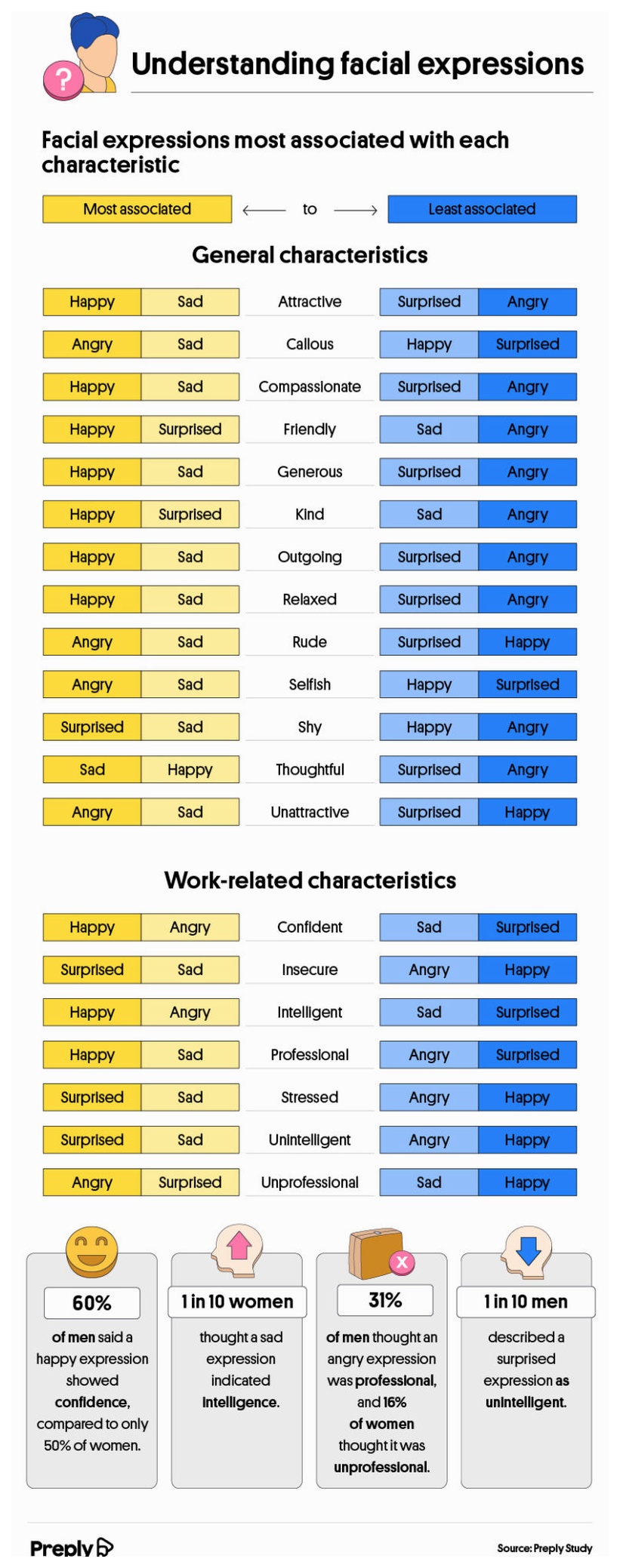
In both social and professional environments, positivity and approachability are highly prized traits. Research shows that Americans associate a cheerful demeanor, especially smiling, with professionalism. Incorporating smiles into your workplace interactions could enhance your communication and foster a more inviting atmosphere.
Reactions to certain expressions, like displaying anger, varied significantly between genders. Approximately 31% of men considered an angry look to be professional, while only 19% of women shared that view. In contrast, 16% of women believed that appearing angry is unprofessional.
Could your facial expressions influence perceptions of your intelligence? The answer might vary based on your audience. Research shows that around 10% of women link sad or concerned expressions with intelligence, whereas only 7% of men share this view.
Body language perceptions
In our survey, we presented participants with a variety of AI-generated images depicting common body language cues. We asked them to interpret the significance of each gesture. Interestingly, we discovered that signals like crossed arms, eye contact, and head tilts conveyed different meanings depending on the respondent’s generation and gender.
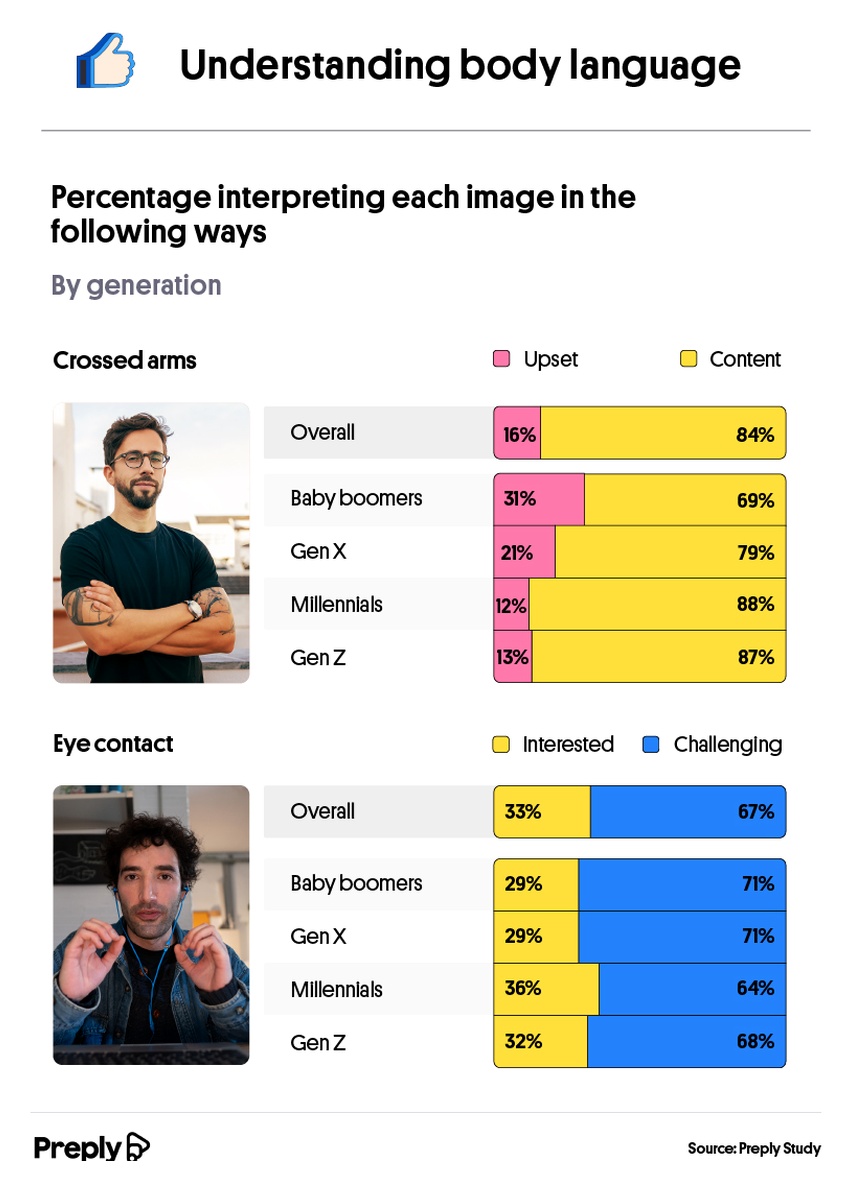
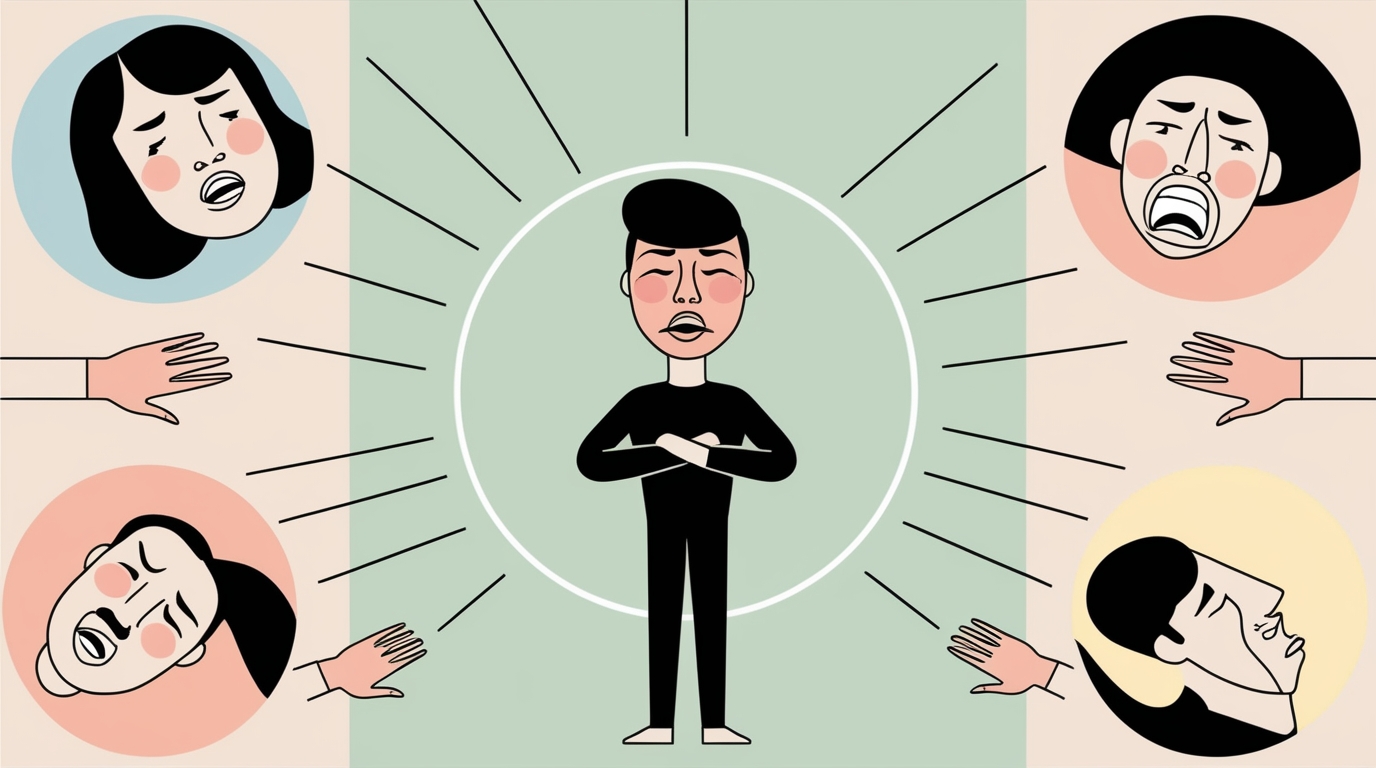
While crossed arms are commonly perceived as a defensive gesture, a significant portion of the older generation views it with even more negativity. In fact, 31% of baby boomers associate crossed arms with feelings of upset, whereas only 21% of Generation X, 12% of millennials, and 13% of Generation Z share this interpretation.
When it comes to eye contact, both baby boomers and Gen Xers often view this important non-verbal cue as potentially threatening rather than an expression of interest or connection. For these older generations, eye contact can be interpreted as a signal of dominance or even confrontation, rather than warmth or directness.
What about those gestures that might be seen as flirtatious? Interestingly, nearly 40% of men associate head tilting with flirting, while only 31% of women share that view. Even subtle movements can carry different meanings based on who’s watching. Additionally, flirting styles and affectionate nicknames can differ greatly across cultures. If you’re looking to connect with someone you admire who speaks Spanish, check out LingualNeeds’ online Spanish lessons—they’re the perfect way to express yourself!
Projecting intentionally
Often, what’s left unsaid can convey more than words ever could. Body language and facial expressions serve as powerful communication tools, especially when verbal communication falls short. By being mindful of these nonverbal cues—steering clear of negative signals and embracing those that resonate positively—we can enhance our interactions and foster deeper understanding. Whether you’re feeling anxious about an upcoming party or aiming to impress in a job interview, pay attention to your gestures and facial expressions to present your best self. Just remember to keep that nervous foot tapping in check!
Nonverbal cues are a powerful form of communication that can enhance interactions in various situations. If you want to refine your language skills, consider enrolling in LingualNeeds’ online language classes—an accessible way to boost your communication abilities and connect more effectively with others.
Methodology
LingualNeeds conducted an insightful survey involving 1,007 Americans to explore their everyday body language and how they interpret various facial expressions and gestures. The participant pool was diverse, consisting of 50% women, 49% men, and 1% identifying as nonbinary or nonconforming. In terms of generational representation, 11% were baby boomers, 23% were Gen X, 47% were millennials, and 19% were Gen Z.
Frequently Asked Questions
What percentage of Americans are self-aware of their body language?
Over 42% of Americans are very self-aware of their body language.
Which generation is most likely to be unaware of their body language?
Baby boomers are the most likely to be unaware of their body language, with 1 in 4 acknowledging this.
How do Americans generally perceive a happy expression in professional settings?
Americans view a happy expression as the most professional.
What are some common gestures that Americans frequently use?
Common gestures include thumbs-up, shrug, finger-pointing, and the middle finger.
What is the significance of eye contact in different generations?
Baby boomers and Gen Xers often view eye contact as potentially threatening, while younger generations may interpret it as a signal of interest or connection.