- Learning analytics explained
- Types of learning analytics
- 6 Training and performance metrics
- 1. Progress and completion rates
- 2. Time spent
- 3. Feedback
- 4. Performance and competency
- 5. Retention
- 6. Activity/engagement data
- Benefits of using learning analytics
- Privacy concerns
- Better decision-making
- Frequently Asked Questions
- What are learning analytics?
- What are the main stages of learning analytics?
- How can learning analytics benefit students and educators?
- What privacy concerns are associated with learning analytics?
- How does learning analytics improve decision-making in education?
The growing integration of technology in education is revolutionizing learning analytics, creating exciting new possibilities. No longer can we rely solely on final grades or post-training surveys to assess student performance; we now have a wealth of data at our fingertips to gain deeper insights into the learning experience.
The explosion of digital data generated by educational technology tools allows for unprecedented analysis and enhancement of both learning and teaching processes. This wealth of information opens new avenues for improvement, enabling educators to tailor their approaches for better outcomes.
This article explores the transformative impact of learning analytics on the education sector. We will define what learning analytics are, outline the various types available, and discuss their numerous benefits. Additionally, we’ll address important privacy concerns associated with their use, ensuring a well-rounded understanding of this innovative approach to education.
Ultimately, the outcomes are better decision-making processes for educators and employers, and improved learning for students.
HubSpot Call-to-Action Code end HubSpot Call-to-Action Code
Learning analytics explained
The education sector is rapidly evolving thanks to the influence of digital technology. As students engage in their learning journeys, they generate a wealth of data—often referred to as their “digital footprint.” This data encompasses various aspects of their educational experience, such as:
- student logins (how long they remained logged in and what they did during that time).
- library materials (what resources they used and for how long),.
- online assessments (how long they took to complete it and the score they earned).
Although this type of data has existed for years, recent advancements in learning analytics tools are now effectively utilizing it to enhance both teaching and learning experiences.
Jisc, previously known as the Joint Information Systems Committee, defines learning analytics as the process of measuring, collecting, analyzing, and reporting data on learners’ progress and the environments in which they learn. This field leverages advanced computational analysis techniques and artificial intelligence (AI), going far beyond simple spreadsheet calculations to uncover valuable insights into the learning experience.
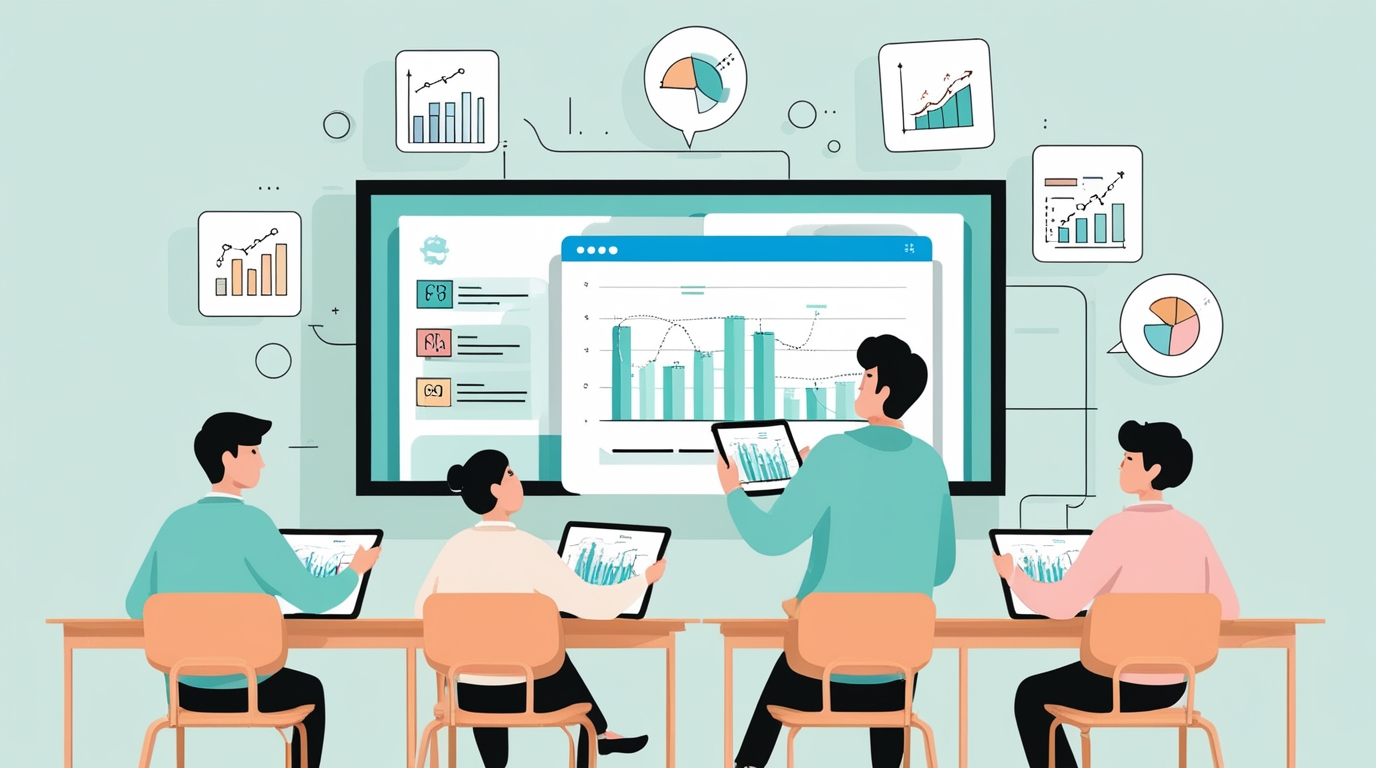
Learning analytics plays a crucial role in transforming student data into insightful charts, graphs, and visualizations, allowing educators to gain a deeper understanding of students’ experiences and assess the effectiveness of their teaching methods. This field frequently intersects with concepts like big data, drill-down data, data discovery, and data mining, highlighting the pivotal role that data analysis plays in enhancing educational research and practice.
In the UK, the Higher Education Commission highlights the significant potential of analytics to enhance the university student experience. Consequently, the commission urges all educational institutions to explore the adoption of effective learning analytics systems.
In essence, learning analytics provides a powerful tool to tackle the timeless question: “How can we effectively measure the success of education and training programs?” By leveraging data insights, it helps educators and organizations evaluate their impact and improve outcomes.
Types of learning analytics
Traditionally, assessing the effectiveness of learning requires collecting and analyzing data from your educational setting and comparing it to business metrics. For instance, you can examine the final scores employees achieve after completing a sales training program and juxtapose these scores with sales figures from before and after the training. This method provides clear insights into the training’s impact on performance.
It’s important to note that this approach is quite simplistic; various other factors may have influenced sales fluctuations, and a low score on a final training assessment doesn’t always reflect a student’s true learning progress. Furthermore, this method requires tedious and error-prone management of multiple spreadsheets, making it inefficient.
Learning analytics tools can handle the heavy lifting for you, enhancing the depth of your analysis. For example, these tools can factor in seasonal trends and other sales fluctuations, allowing for a more accurate assessment of training effectiveness.
There are three main stages of learning analytics, which are largely self-explanatory:
- Descriptive analytics: using past data to conceptualize and describe trends over time
- Diagnostic analytics: a deeper level of analytics that uses data to understand why trends or changes occurred
- **Prescriptive Analytics**: The final phase that evaluates potential outcomes and offers recommendations to enhance the learner’s experience.
These analytics are seamlessly integrated into a learning management system (LMS) that facilitates training for numerous participants, while also connecting with third-party software like Salesforce. This integration streamlines the process of data collection and analysis, making it easier to correlate important metrics and key performance indicators (KPIs).
HubSpot Call-to-Action Code end HubSpot Call-to-Action Code
6 Training and performance metrics
To gain a comprehensive insight into learning programs, various metrics can be employed. Here are some key examples:
1. Progress and completion rates
Are students finishing their training, or are they dropping out before completion? Incomplete courses can indicate a lack of engagement or ineffective teaching methods.
2. Time spent
When students rush through a module, it often signals disengagement and a wish to finish the session hastily. On the other hand, if a student takes longer than usual to complete a module, it may suggest they are facing challenges that need addressing.
While a student may excel in a course overall, they might achieve that success by focusing primarily on a key module that carries the most weight in the final grade, potentially neglecting other less significant components.
3. Feedback
Soliciting students’ feedback during a training course is a powerful way to identify the program’s strengths and areas for improvement. This valuable input can guide you in refining the current curriculum and shaping future learning experiences.
4. Performance and competency
Traditionally, the analysis of student performance has primarily centered on their scores from assessments and practical sessions. However, this is just one aspect of a much larger picture.
This metric offers a useful glimpse into a student’s skill level upon completing the course; however, it lacks nuance. It does not reveal important factors such as the time taken to finish the training or how well knowledge is retained, which are critical for a comprehensive assessment of learning outcomes.
5. Retention
An effective training program not only teaches valuable knowledge but also ensures that students retain and apply what they’ve learned long after the course concludes. The impact of this learning can be measured through continuous assessments and practical simulations conducted after the training ends.
6. Activity/engagement data
This shows students’ engagement during a training course (e.g., their reactions, comments, and reviews on various platforms).

Benefits of using learning analytics
The primary goal of utilizing learning analytics is to enhance educational outcomes, creating advantages for students, educators, and current or future employers alike. By leveraging extensive datasets, this approach fosters a win-win-win situation for all parties involved.
Traditionally, learning analytics focused primarily on predicting academic success and identifying students at risk of failure or dropout, which are certainly crucial insights. However, the potential of learning analytics extends far beyond these functions, offering a wealth of opportunities to enhance the educational experience.
Let’s take a look at the additional advantages:
- Helping students gain skills and strategies for learning, such as critical thinking and communication, by using retention metrics.
- Providing timely and actionable feedback to students and encouraging self-reflection through feedback metrics.
- Driving student engagement and, thereby, boosting achievement and retention using activity/engagement metrics.
- Providing instructors with empirical evidence on the effectiveness of teaching tools and methods—such as technology usage, curriculum changes, and instructional practices—enables informed decision-making and enhances student satisfaction, achievement, and retention.
For employers, learning analytics offers a powerful tool to align training programs with broader business objectives, ultimately enhancing the impact of professional development courses. By tracking and assessing the effectiveness of training, organizations can determine how well these initiatives support their overall goals. This strategic approach ensures optimal use of the learning and development budget, driving efficiency and results.
In essence, learning analytics harnesses the power of big data to generate valuable insights. These insights empower employees, instructors, and employers to make informed decisions that enhance overall outcomes for everyone involved.
Privacy concerns
Learning analytics harnesses the power of aggregated and anonymized big data to support both students and educators. While there are valid concerns about privacy and potential data misuse—common to all forms of data—these risks can be mitigated through robust protocols like the Jisc Code of Practice. This code outlines the responsibilities of educational institutions, ensuring that learning analytics is implemented responsibly, ethically, and effectively, while addressing crucial legal and ethical considerations.
Around the world, various regulations govern data management that organizations must adhere to. Notably, the Data Protection Act 2018 in the UK and the General Data Protection Regulation (GDPR) in the EU set stringent guidelines to ensure the privacy and security of personal data.
While it’s crucial to address the valid concerns surrounding the handling, sharing, and storage of student data, these issues shouldn’t deter us from harnessing the numerous benefits of learning analytics. By ensuring compliance with all relevant regulations, we can unlock the full potential of these powerful tools in education.
Better decision-making
Learning analytics tools harness students’ digital data to unlock the secrets of effective teaching. For students, this research translates into valuable skills and knowledge, increased engagement, and tailored learning experiences that cater to their individual needs.
For educators and employers, the advantages involve better decision-making and improved learning outcomes.
HubSpot Call-to-Action Code end HubSpot Call-to-Action Code
Discover how our website can support your organization’s corporate language training needs. After implementing the training, you can assess its impact and effectiveness using our comprehensive learning analytics!
Frequently Asked Questions
What are learning analytics?
Learning analytics is the process of measuring, collecting, analyzing, and reporting data on learners’ progress and the environments in which they learn.
What are the main stages of learning analytics?
The three main stages of learning analytics are descriptive analytics, diagnostic analytics, and prescriptive analytics.
How can learning analytics benefit students and educators?
Learning analytics can enhance educational outcomes, provide timely feedback, drive student engagement, and offer empirical evidence on teaching effectiveness.
What privacy concerns are associated with learning analytics?
Privacy concerns include potential data misuse and the need for compliance with regulations like the Data Protection Act 2018 and GDPR.
How does learning analytics improve decision-making in education?
Learning analytics enables better decision-making by providing insights into student performance and the effectiveness of teaching methods, leading to improved learning outcomes.