- Culture and identity politics
- Onward, to Mars and the Moon
- Emojis to hieroglyphics: Have we come full-circle?
- Language evolution: it’s already happening! New data reveals surprising insights
- A female led evolution, a growing generational divide and the end of emojis?
- Frequently Asked Questions
- How has written language evolved since its inception?
- What is the impact of social media on language?
- Why are languages disappearing at such a rapid rate?
- How do cultural shifts influence language?
- What challenges could arise in communication on Mars?
No matter how deep archaeologists explore the annals of history, they consistently uncover evidence of communication—be it written, spoken, or through gestures—playing a vital role in daily life. Remarkably, even dogs can interpret human gestures like pointing, suggesting that our ancient ancestors also had effective ways to signal the location of food or the presence of threats on those clear, moonlit nights.
Language, as we understand it today, has undergone an incredible evolution since the Sumerian period around 3000 BC, which is believed to showcase the first evidence of written language. Over time, features like metaphors and rhyme have enriched our communication, transcending mere survival needs and transforming language into a profound tool for expression and creativity.
Just like slang, the fresh vocabulary that emerges on social media often gets dismissed as trivial. Yet, it’s clear that this evolving language plays a significant role in shaping generational identities, distinguishing the mainstream from what TikTok deems “cool.” Ultimately, only time will reveal the lasting impact of these linguistic trends.
Unfortunately, for every new language that emerges, the world loses a language every two weeks—amounting to 26 languages each year, as reported by the Language Conservancy. This loss signifies that countless stories and rich cultural experiences, once shared for generations in those languages, fade away with time.
Around the globe, initiatives are actively working to safeguard these languages for future generations. Yet, it often feels like we are racing against the clock to ensure their survival.
In this article, we’ll explore how time and technology shape the evolution of modern languages. We’ll specifically examine how the words we often take for granted today may transform in response to future cultural and scientific advancements.
Culture and identity politics
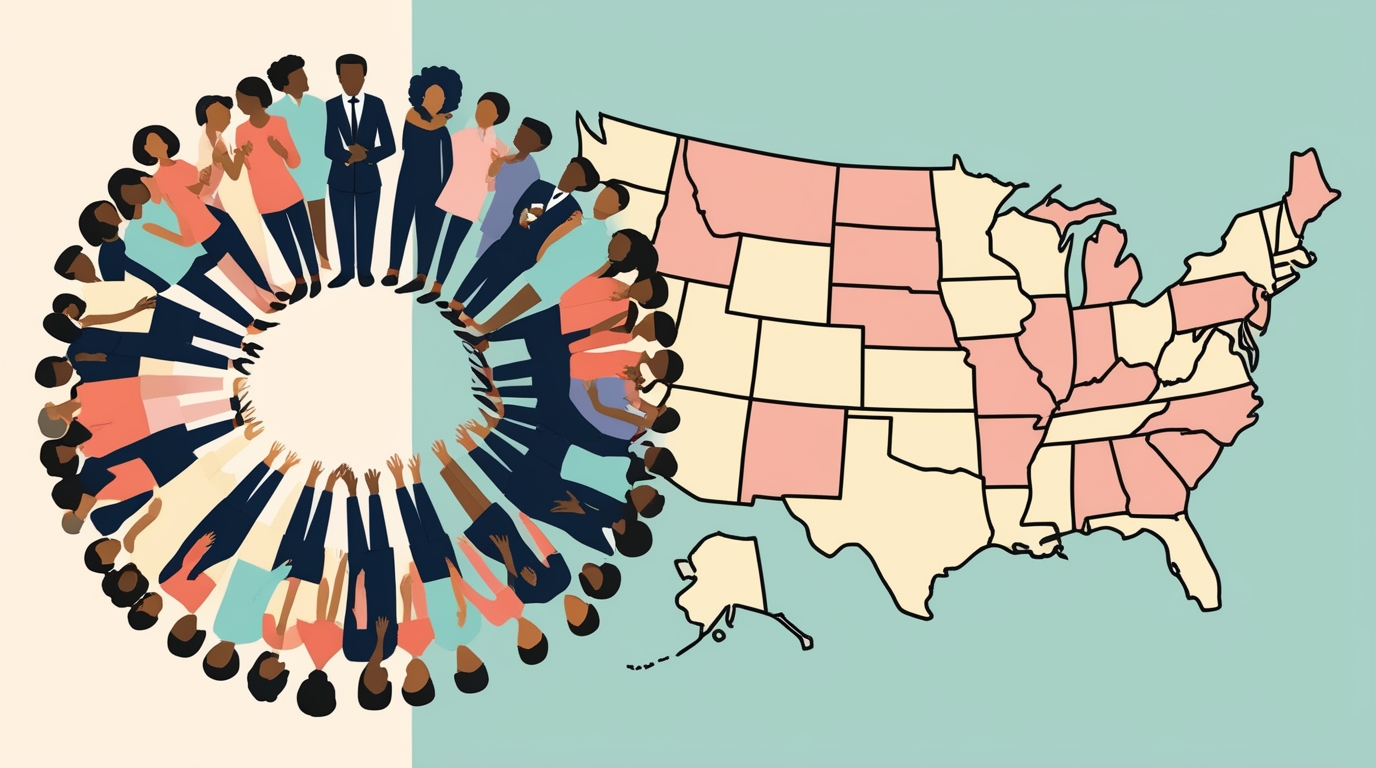
In the early 21st century, the way individuals express their identity has emerged as a crucial topic of discussion. This evolution has introduced several new terms into our everyday language. For instance, “Person of Colour” (PoC) has become a widely accepted term that encompasses various minority groups in the United States, replacing outdated language that is now seen as offensive.
Words can fade away quietly over time. For instance, in 2011, the Collins Dictionary in the UK eliminated the term “aerodrome,” which refers to a location for airships. Other words, like “conk” (nose), “caterwaul” (scream), “hobbledehoy” (an awkward adolescent), and “fizgig” (a flirtatious person), are also at risk of disappearing, joining thousands of other endangered English terms. Moreover, seemingly harmless words can be phased out of everyday language as part of efforts to promote inclusivity and minimize potential offense.
For over a decade, Microsoft Word has promoted the use of gender-neutral language, urging writers to replace terms like “fireman,” “policeman,” and “chairman” with more inclusive alternatives such as “firefighter,” “police officer,” and “chairperson.” These updated terms are not new creations; they simply reflect a more modern understanding of gender. Additionally, when it comes to potentially offensive terms like “Eskimo” or “Redskin”—the latter being rebranded for the Washington Redskins football team—it’s essential that the preferred terminology comes directly from the communities themselves.
While the intent behind using the term ‘Native American’ is well-meaning, it can sometimes miss the mark. Many individuals from this demographic may actually prefer other terms. According to the Smithsonian National Museum of the American Indian, using specific tribe names like Sioux or Navajo, as well as the terms American Indian and Indigenous American, tends to be more respectful. It’s also important to note that even though some First Nations people might use the term ‘Eskimo,’ it doesn’t mean it’s appropriate for everyone to adopt it.
The challenge of labeling a word as offensive stems from the ongoing debate over its original meaning versus its evolved connotation. Take the term “Eskimo,” for example. While it likely originates from the French word “esquimaux,” meaning “snowshoe maker,” it has also been used derogatorily for many years. Given this dual history, removing the term from Western language may be a better choice to avoid causing harm or offense.

Learn a language with personalised 1-on-1 classes with our expert tutors from all over the world
French lessons online
Spanish lessons online
Onward, to Mars and the Moon
The rapid evolution of languages on Earth continues to inspire significant intellectual pursuits and resource investment. Meanwhile, the space race has emerged as a fascinating arena for both speculation and groundbreaking discoveries, driving real-world innovation.
As of now, Mars stands out as the only planet inhabited solely by robots. While billionaires compete to transform space into a new frontier for commerce, human exploration of the Red Planet is still a distant dream. The journey takes about seven months using our current propulsion technology, highlighting the significant challenges that lie ahead for human missions to Mars.
Imagine a future one thousand years from now where humanity has not only preserved Earth but also established a thriving colony on Mars. How would the vast distance of 389.4 million kilometers impact communication between Earthlings and Martians? To explore this intriguing question, we’ll consult language expert Professor Giuseppe Longobardi for insights into the potential interplanetary lingua franca.
Chances are high that when we reach Mars, we won’t encounter any inhabitants. However, if we do, their language could be completely unfamiliar to us. Now, imagine if we successfully establish colonies on Mars. If communication between Earth and Mars were to halt for several decades, it’s likely that distinct languages would begin to evolve among the Martian settlers.
“This phenomenon has occurred frequently during the colonization of various continents. For example, Brazilian Portuguese differs subtly from its European counterpart, just as American English has its own distinct characteristics compared to British English. Such variations are to be expected!”
“Over time, American English spoken on Mars is likely to evolve and gradually diverge from the versions used in cities like Boston or Los Angeles.”
While the distances between Portugal and Brazil and between Earth and Mars are vastly different, we can hope that one day, the advancements in modern communication will bridge even interplanetary gaps as effectively as they do locally. Right now, it takes radio signals between 4 to 14 minutes to travel from Mars to Earth, depending on their respective positions. This significant delay could lead to Earthling and Martian languages evolving into two distinct forms, a stark contrast to the minimal impact of a mere few seconds.
One of the most noticeable shifts in the language spoken on our planetary neighbor would likely be the emergence of fresh slang terms.
Emojis to hieroglyphics: Have we come full-circle?
If the concept of futuristic language seems outlandish, consider this: what if a time traveler from the 19th century suddenly found themselves in today’s world? They would face the daunting challenge of understanding modern communication, particularly the fascinating role of emojis in our daily conversations.
Hieroglyphics captured the essence of entire dynasties, while emojis symbolize the evolution of modern communication. On platforms like Facebook Messenger, users can even select a favorite emoji, making replies as simple as a thumbs-up. However, this raises an intriguing question: do emojis and hieroglyphics share more than just a surface resemblance? Have we reached a point where language is regressing instead of advancing?
No, emojis and emoticons—text-based symbols that represent emotions—have certainly become a staple in global communication, but their effectiveness is constrained by several factors. Notably, they lack grammatical rules and often fail to express nuances like sarcasm. This limitation also explains why creating flawless AI translation tools is such a challenging task. Constructing clear and informative language is nearly impossible without proper context.
Professor Giuseppe Longobardi highlights that emojis are not our first attempt at condensing language. He points out that when telegrams were charged by the word, people adopted a telegraphic style that minimized content words and eliminated unnecessary ones. However, this concise form of writing faded away with the decline of telegrams as a communication method. In essence, writing styles tied to specific technologies often vanish once those technologies are no longer in use.
Achieving that latter point would mean the end of both mobile phones and the internet, an outcome that seems far-fetched unless we find ourselves in a chaotic, Mad Max-like scenario. Aside from the societal misstep that was The Emoji Movie, it’s hard to envision emojis becoming more woven into our daily lives. In fact, you can already find plush toys of popular emojis, including the infamous poop emoji!
Learn a language online with our free learning materials.
Learn English online
Learn French online
Language evolution: it’s already happening! New data reveals surprising insights
Social media has a remarkable ability to generate new words at a rapid pace, and many of these terms eventually make their way into the dictionary. Just as we see some words, like “hobbledehoy,” fade away, fresh ones like “yeet” and “lit” are ready to take their place.
Words can evolve and take on new meanings over time. A prime example is the word “extra.” Traditionally used to indicate something added, it has recently gained a new definition as an adjective signifying something extravagant or excessive, often viewed as unnecessary.
In October 2021, a OnePoll survey asked 500 participants to define various words and phrases popularized by Generation Z, such as ‘basic,’ ‘shook,’ ‘snacc,’ ‘salty,’ ‘stan,’ ‘simp,’ and ‘mood.’ The findings highlighted which demographics were most familiar with these terms, revealing that 26% of TikTok users in the UK fall within this age group. This trend underscores the influence of Gen Z on language and culture, making the results expected.
In an intriguing contrast to the world of social media, the workplace serves as a significant breeding ground for new words and phrases. A recent OnePoll survey revealed the most unpopular office buzzwords: “think outside the box” topped the list at 40%, followed by “build back better” and “synergise,” both at 25%, and “low-hanging fruit” at 24%. Ironically, even though these terms are widely disliked, they continue to spread like wildfire in professional settings. Concepts like “thinking outside the box” and “leveraging synergies” (17%) have long been the aspirations of office managers striving for innovation.
Interestingly, language has become less accessible in these instances. The term “to synergise” is puzzling for many who don’t encounter such jargon regularly, while “shook” is simply a variation of “shaken,” a term rooted in African American Vernacular English (AAVE). This discussion ties back to the earlier topic of whether it’s appropriate to adopt words and phrases from cultures that aren’t our own.
A female led evolution, a growing generational divide and the end of emojis?
The poll revealed a fascinating trend: gender significantly influenced proficiency in understanding neologisms. Remarkably, individuals identifying as female demonstrated nearly double the knowledge compared to their male counterparts.
VIBE CHECK – 53% of females knew the correct meaning of “vibe check” against 39% of males.
In a recent survey, 41% of women accurately identified the term “extra” as describing someone who is extravagant, demanding, or dramatic. In contrast, only 26% of men were able to provide the correct definition.
A recent survey revealed that 28% of women recognized the term “thirst trap,” while only 16% of men knew its meaning. Interestingly, 25% of male respondents mistakenly believed “thirst trap” referred to alcohol dehydration.
It’s important to recognize that terms such as “extra,” “thirst trap,” and similar phrases have historically—and often controversially—been associated with women. For years, language has unfairly labeled women with terms like “hysterical” and “overly dramatic,” as well as characterizing them as excessively sensual or attention-seeking. This pattern highlights a longstanding trend of gendered language that disproportionately targets women.
Interestingly, the results revealed a clear trend: knowledge of slang decreases with age. On average, Gen Z and Millennials demonstrate proficiency levels that are twice as high as those of Gen X and Boomers.
STAN – Only 8% of those aged 55 and over knew the correct meaning of “stan” as “being a fan/ supporter”.
Surprisingly, just 3% of late Generation X-ers and Baby Boomers are familiar with the term “simp.” Interestingly, about half of the Gen X respondents mistakenly equated “simp” with someone lacking intelligence.
The term “SNACC” is largely unfamiliar to older adults, with only 1% of individuals aged 55 to 64 recognizing it. In contrast, more than 50% of those aged 18 to 24 are familiar with the term, highlighting a significant generational gap in awareness.
On the topic of emojis, recent survey findings suggest that these small yellow icons could soon fade from business communication. Even more intriguing is the fact that this sentiment is shared across all generations, indicating a significant shift in how we express ourselves professionally.
60% of respondents in the UK think that emojis in business communications are inappropriate.
53% of respondents think emojis have made business communication more informal / debased.
According to the survey, 52% of participants believe that three consecutive emojis is the maximum acceptable limit, while 17% prefer to use just one emoji at a time.
In our pursuit of the latest trends and our attempts to keep up with the ever-evolving nature of language, one fundamental truth stands firm: humans are inherently communicative beings. No matter the time or setting, we are driven to connect through words and expressions. In these interactions, we inevitably weave our identities into the very fabric of language, shaping who we are through the meanings we convey.
Another perspective highlights a paradoxical truth: the only constant in life is change itself. While certain linguistic trends and practices may emerge only to fade away, others can quickly gain traction in unexpected ways. Ultimately, the majority of our everyday language will continually transform, evolve, and adapt over time.
Frequently Asked Questions
How has written language evolved since its inception?
Written language has evolved significantly since the Sumerian period around 3000 BC, incorporating features like metaphors and rhyme that enrich communication beyond survival needs.
What is the impact of social media on language?
Social media generates new vocabulary rapidly, influencing generational identities and creating fresh terms that can eventually be recognized in dictionaries.
Why are languages disappearing at such a rapid rate?
Languages are disappearing at a rate of one every two weeks, amounting to 26 languages each year, resulting in the loss of countless stories and cultural experiences.
How do cultural shifts influence language?
Cultural shifts lead to the introduction of new terms and the phasing out of outdated language, as seen with the rise of inclusive terms like ‘Person of Colour’ (PoC).
What challenges could arise in communication on Mars?
If humans establish colonies on Mars, the significant communication delay could lead to the evolution of distinct languages between Earthlings and Martians over time.