

- Key takeaways
- Decoding workplace communication
- Phone calls: Welcome surprises or causes for concern?
- Adapting workplace communication to the digital age
- Methodology
- Fair use statement
- Frequently Asked Questions
- What percentage of employees experience anxiety from unexpected voice messages?
- How often do employees believe emails lead to miscommunications?
- Which communication method is the most favored among employees?
- What generational differences exist in communication preferences?
- How do employees prefer to be alerted before a phone call?
Have you ever experienced a rush of anxiety when you receive an unexpected voice message from your boss or a colleague, thinking, “This could have easily been an email”? You’re not alone in this feeling. As communication methods continue to evolve, the workplace is adapting right alongside them.
In this article, we delve into the communication preferences and attitudes of American employees regarding various workplace methods, such as phone calls, emails, texts, direct messages, voicemails, and voice messages. Drawing from a recent survey of 1,030 full-time U.S. employees, we uncover valuable insights into how different demographics engage with these platforms and the best ways to reach out to them for various needs.
Key takeaways
- Nearly 9 in 10 employees say email has led to miscommunications at work.
- Over 1 in 4 employees feel anxious when receiving unexpected voice messages from their colleagues.
- Nearly 1 in 10 employees have been disciplined at work through a voice message.
- 2 in 5 employees have deleted work-related voicemails before fully listening to them.
- Baby boomers (15%) are the most likely to send voice messages for professional communication.

Learn a language with personalised 1-on-1 classes with our expert tutors from all over the world
French lessons online
Spanish lessons online
Decoding workplace communication
In today’s rapidly changing landscape of communication, the ways we choose to interact with our colleagues play a crucial role in shaping our professional relationships. Let’s explore how workplace communication is adapting to align with employees’ preferences.
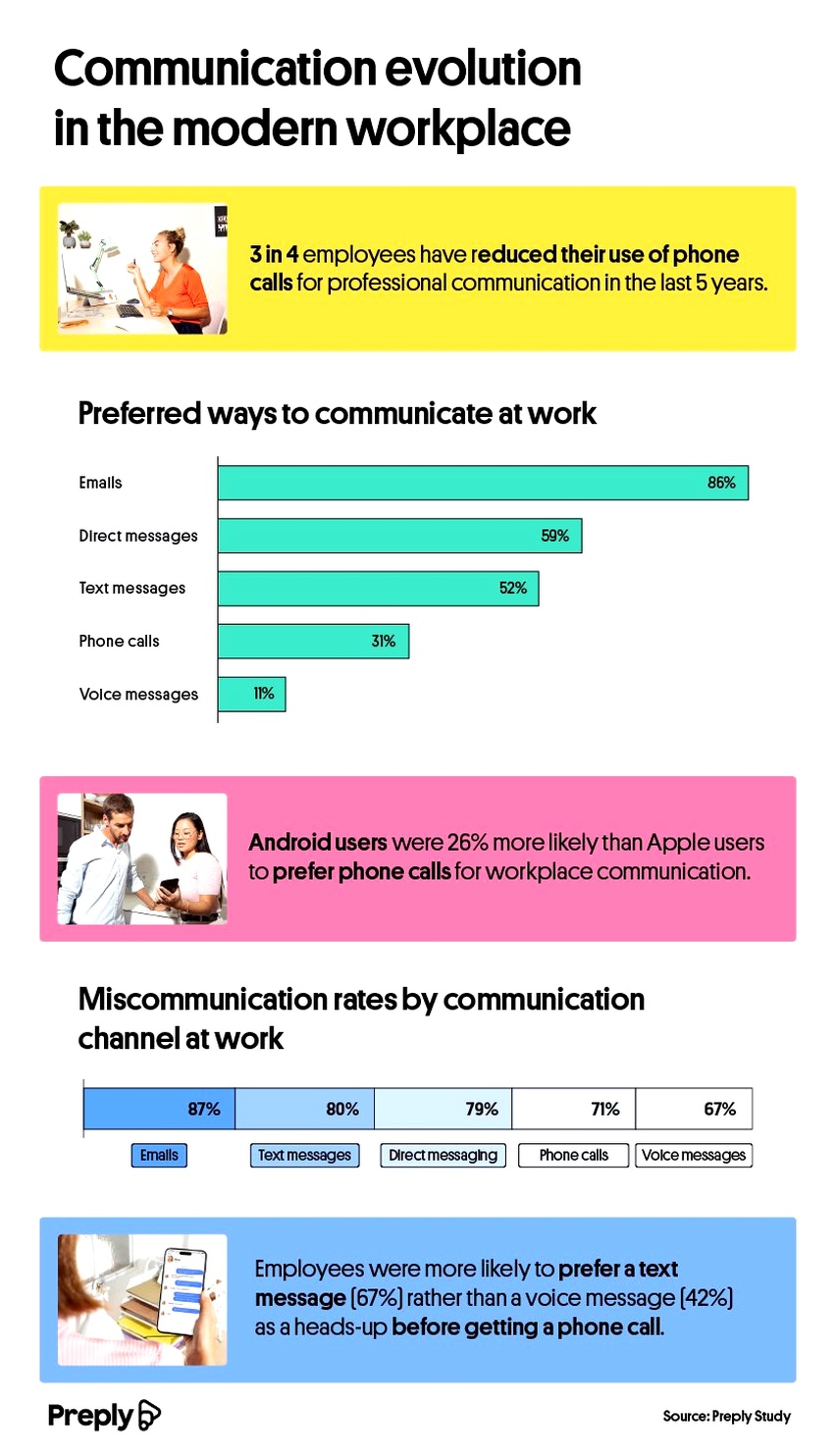
While email remains the top choice for communication among our survey respondents, nearly 90% of employees reported that it often results in misunderstandings at work. This may explain why 20% of baby boomers still rely on landlines in the office. In contrast, 54% of Gen Z employees noted they encountered miscommunications through voice messages, suggesting a generational divide in preferences for written versus audio communication in the workplace.
Communication preferences differ significantly among various demographics, yet our survey revealed some clear favorites: emails topped the list at 86%, followed by direct messages at 59% and texts at 52%. Interestingly, both Apple and Android users showed an equal tendency to use text messaging for work-related conversations. In contrast, voice messages fell out of favor, with only 11% of respondents opting for this method in the workplace.
Moreover, many individuals prefer a heads-up before receiving a surprise phone call from their boss. In fact, 67% of people would rather get a text message alerting them about the upcoming call, whether it’s from a supervisor or a colleague.
Bridging the communication gap between generations is crucial for employees of all ages, as it enhances their professional communication skills. This can involve perfecting email etiquette, improving verbal interactions, or mastering text messaging techniques. By refining these abilities, workers can reduce misunderstandings and foster a more collaborative and harmonious workplace.
If you frequently find yourself misunderstood at work, boosting your business communication skills through professional online tutoring could be the solution. Tailored lessons will equip you with the tools to communicate clearly and effectively, whether you’re writing emails, giving presentations, or engaging with colleagues from different backgrounds.
Phone calls: Welcome surprises or causes for concern?
In today’s world dominated by text-based communication, receiving a phone call from a boss or co-worker can be quite an experience. In this discussion, we’ll explore people’s feelings about work-related phone calls and voice messages, as well as their communication preferences beyond the office setting.
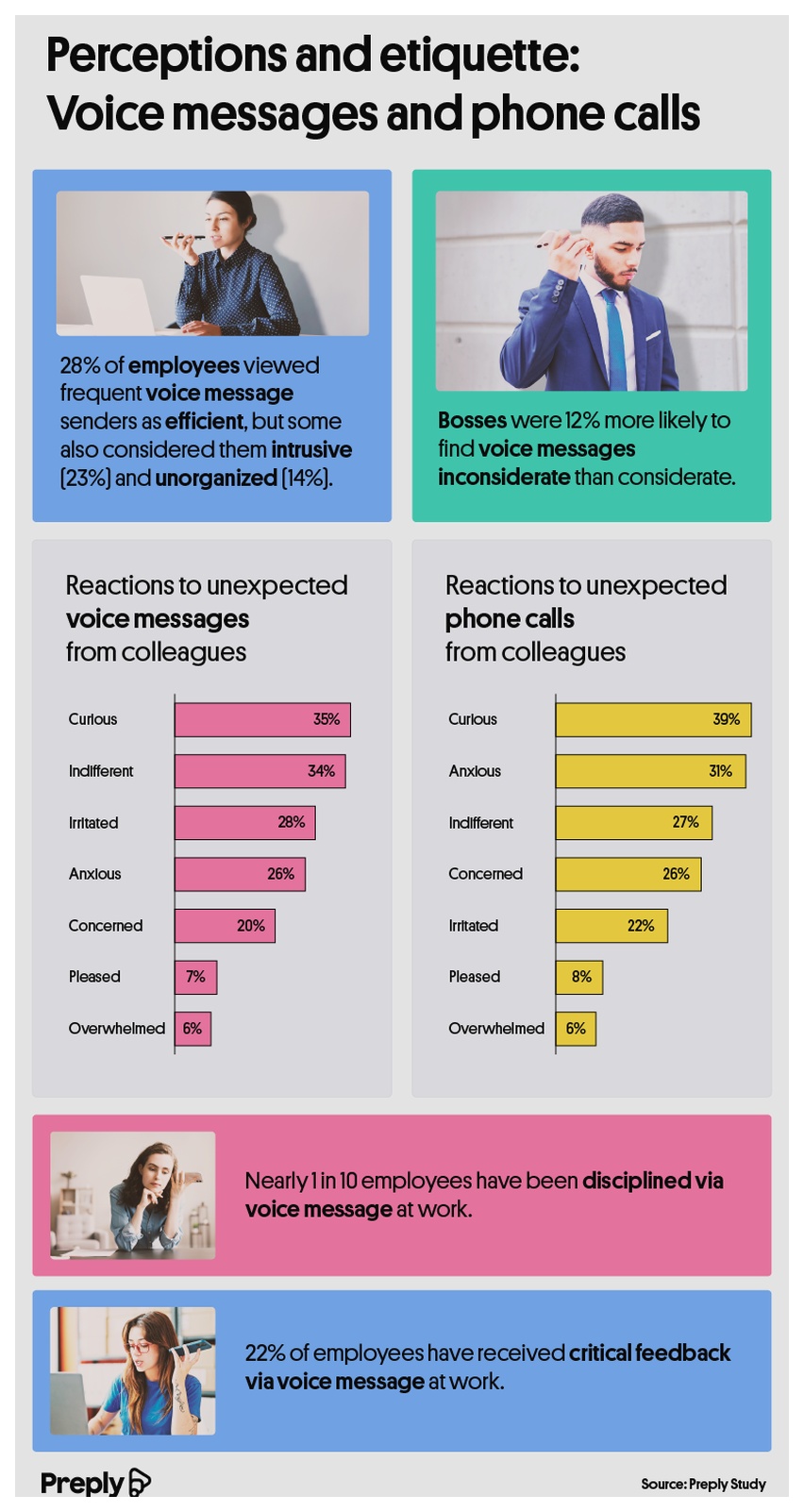
In the realm of communication, subtlety can often be overlooked in text and email, making verbal conversations a preferable option for many. This might explain why almost 10% of employees have faced work-related disciplinary actions communicated through voice messages. When employees use voice messages solely for serious or confidential discussions, it’s no surprise that more than 25% report feeling anxious when they receive unexpected voice messages from coworkers.
Nearly one-third of respondents reported feeling anxious when they received unexpected phone calls from colleagues. This sense of unease might explain why work-related calls are becoming increasingly rare; many people view them as somewhat antiquated. In fact, half of those surveyed believe voicemails are outdated in the workplace, and 40% admitted to skipping through or discarding work-related voicemails before fully listening to them.
Our research revealed intriguing differences in how employees prefer to handle work-related phone calls based on their devices. Notably, Android users were 17% more inclined to make calls during work hours compared to their Apple counterparts.
Having delved into workplace communication, let’s turn our attention to how individuals prefer to connect with their friends and family.
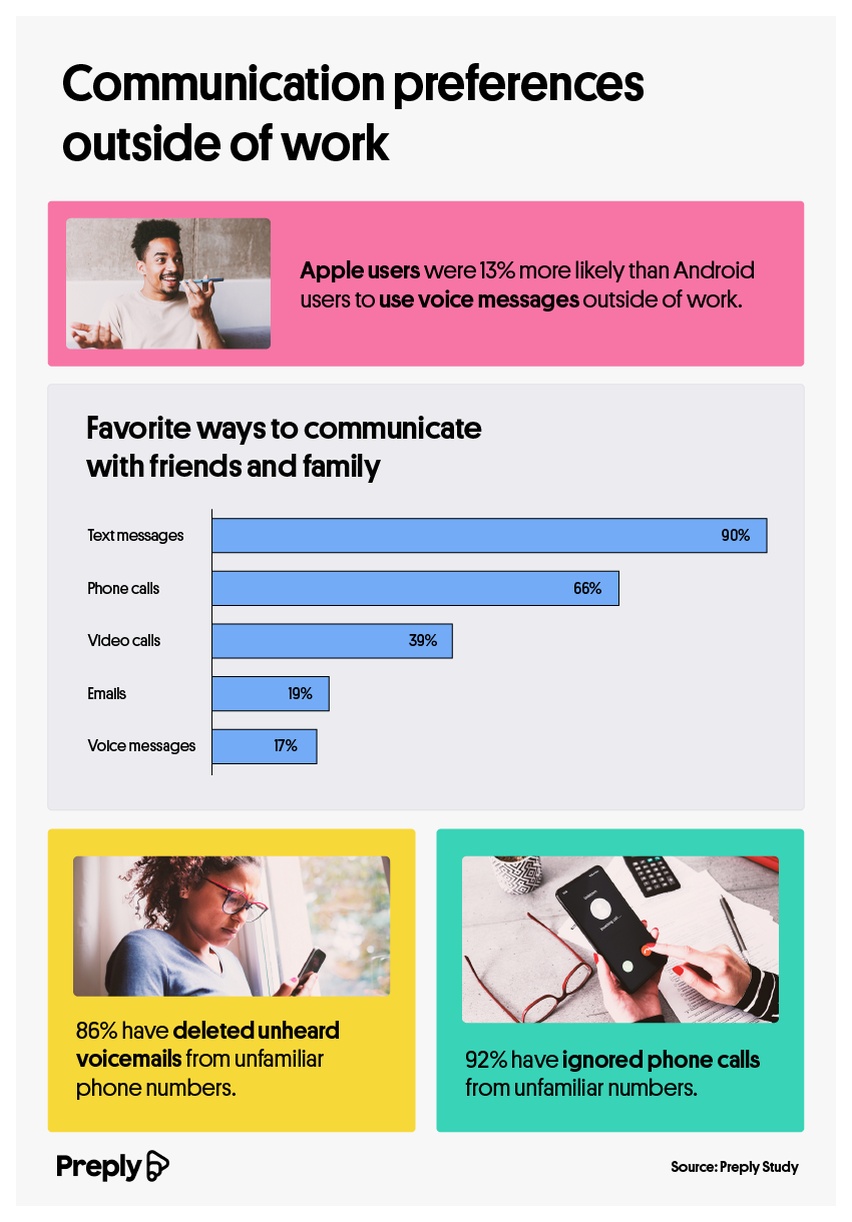
Texting has become the go-to method for friends and family, with a striking 90% of people favoring it for personal communication. While phone calls are more popular outside of work—preferred by 66% compared to 31% for texting—voice messages also see some usage, with 17% opting for them versus 11% for texting. Interestingly, despite the preference for calls among acquaintances, a significant 92% admit to ignoring calls from unfamiliar numbers. Additionally, 86% have deleted voicemails from unknown callers without even listening to them.
Our research revealed an intriguing generational divide regarding voice messages, often referred to as voice notes. Baby boomers tend to use voice messages primarily for professional communication, with 15% favoring this method. In contrast, Gen Z shows a strong preference for voice messages in personal conversations, with 21% opting for them. Interestingly, while video calls aren’t a top choice for work-related interactions, nearly 40% of respondents enjoy using them to connect with friends and family.
In the realm of personal communication, email is far less favored, with only 19% using it, compared to a significant 86% for work-related messages. Interestingly, Android users are 38% more inclined to connect with friends and family through email, while Apple users prefer video calls, being 26% more likely to use that method. This distinction may stem from the distinct communication features offered by each smartphone brand, which can influence users’ preferences for different modes of interaction.
Learn a language online with our free learning materials.
Learn English online
Learn French online
Adapting workplace communication to the digital age
In today’s digital landscape, the rise of remote work has opened up a multitude of communication channels in the workplace. Our research reveals that individuals have varied preferences and attitudes towards these methods, underscoring the importance of adopting a flexible and inclusive communication strategy.
The varying opinions and the unease surrounding specific types of messaging highlight the importance of adapting to the evolving dynamics of workplace communication. By tailoring communication strategies to meet the diverse needs and expectations of employees and colleagues, organizations can foster a more productive and positive work environment.
In today’s global workplace, effective communication across cultures is essential. Online language learning offers a fantastic opportunity to enhance your skills, especially when interacting with colleagues from diverse backgrounds. Our expert tutors provide personalized 1-on-1 sessions tailored to your needs, whether you’re looking for online Spanish classes or other language options. With our convenient and straightforward approach, elevating your language proficiency has never been easier, empowering you to thrive in a multilingual corporate environment.
Methodology
In our recent survey of 1,030 full-time employees across the United States, we delved into workplace communication preferences. Our diverse participant pool included 7% baby boomers, 23% Gen X, 62% millennials, and 8% Gen Z, allowing us to capture a wide range of perspectives.
Fair use statement
As organizations adapt their communication strategies, we encourage you to share the insights from this study with your audience for non-commercial purposes. Don’t forget to include a link back to this page, where your readers can explore our detailed findings and methodology.
Frequently Asked Questions
What percentage of employees experience anxiety from unexpected voice messages?
Over 1 in 4 employees feel anxious when receiving unexpected voice messages from their colleagues.
How often do employees believe emails lead to miscommunications?
Nearly 9 in 10 employees say email has led to miscommunications at work.
Which communication method is the most favored among employees?
Emails topped the list at 86%, followed by direct messages at 59% and texts at 52%.
What generational differences exist in communication preferences?
Baby boomers are more likely to send voice messages for professional communication, while Gen Z shows a preference for voice messages in personal conversations.
How do employees prefer to be alerted before a phone call?
67% of people would rather get a text message alerting them about an upcoming call from a supervisor or colleague.


