- Key takeaways
- Negative words parents have used with their children
- How language aligns with parenting styles
- Parental language practices over the years
- Navigate communication challenges with LingualNeeds
- Methodology
- Frequently Asked Questions
- What percentage of parents regret the language they have used with their children?
- How do negative words impact a child’s self-image?
- What is the significance of using empathetic language with children?
- What parenting styles are most favored among American parents?
- How do parents feel about the parenting styles of previous generations?
Raising a child involves navigating a myriad of challenging choices. From selecting the right educational path and setting appropriate rules to deciding on dinner options and choosing their wardrobe, each decision plays a crucial role in your child’s development.
A key element of effective parenting lies in choosing the right language when communicating with your children. The words you use in everyday conversations hold significant weight, impacting not only their understanding but also how you motivate or guide them in different activities.
In our research, we surveyed more than 1,400 parents throughout the United States to explore their communication styles with their children and the effects of those interactions. Discover the insights we gained about effective parental communication practices.
Key takeaways
- A significant 20% of parents say they regret language they have used with their children.
- A notable 43% are conscious of using gender-stereotyped language with their children.
- The majority (87%) say they have made threats to their child when they were in trouble.
- 43% of parents adjust their language when communicating with other people’s children.
- When reflecting on their childhood, 61% of Americans wish their parents used language in different ways with them.

Learn a language with personalised 1-on-1 classes with our expert tutors from all over the world
French lessons online
Spanish lessons online
Negative words parents have used with their children
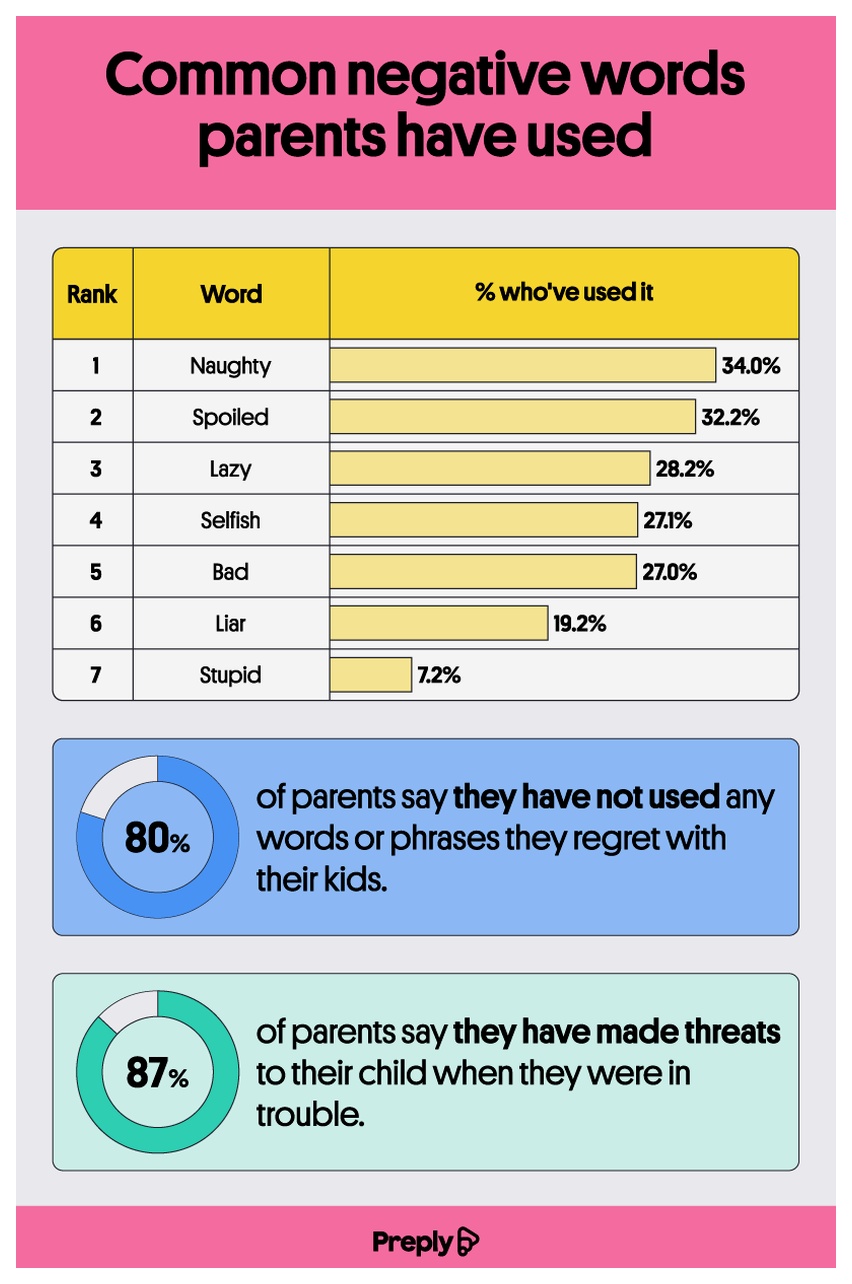
Many parents recognize that they often use negative labels when speaking to their children, such as “naughty,” “spoiled,” and “lazy.” What’s particularly noteworthy is that this choice of words can unintentionally shape how children view themselves, impacting their self-esteem and self-image.
Language expert Sylvia Johnson emphasizes the profound impact of our daily words on our self-image, our perceptions of others, and our overall worldview. She warns that negative language can damage relationships, diminish self-esteem, and foster a bleak outlook on life. Johnson urges us to be mindful of our word choices, particularly when communicating with vulnerable individuals, such as children.
Johnson emphasizes that offering gentle guidance and words of encouragement can significantly boost a child’s self-confidence, nurture healthy self-esteem, ignite their curiosity, and build resilience. In contrast, using harsh criticism or frequently pointing out their errors can instill a fear of failure, breed self-doubt, and stifle their creativity and enthusiasm for learning.
Moreover, using empathetic language is crucial. It means recognizing and valuing a child’s emotions, sharing our feelings in a positive way, and clearly communicating the reasons for our rules and expectations. This approach fosters understanding and strengthens connections.
Around 25% of parents acknowledge that they have made their child feel selfish or guilty, while nearly 20% admit to leading their child to believe they are dishonest. These statistics underscore the significant impact that the words and attitudes of parents can have on a child’s self-image.
Darcia Narvaez, an emerita psychology professor at the University of Notre Dame, emphasizes the crucial need for children of all ages to feel secure in their closest relationships. She highlights that studies show criticism and scolding can be forms of emotional abuse, leading to social stress that can have more detrimental long-term effects on a child’s well-being than physical abuse.
Narvaez highlights an important truth: children often can’t grasp that their parents’ harsh words stem from stress. She explains, “To a child, these words feel like a personal attack, damaging their self-confidence and inhibiting their natural spontaneity.”
Although a fleeting moment of “self-expression” might provide temporary relief for a parent, it often leaves lasting effects on the child. Narvaez cautions that when scolding becomes a regular occurrence, it can lead to the child being perpetually on edge, triggering a stress response that hinders their ability to think clearly, learn effectively, and connect with others.
Many parents often feel regret about their language choices. Our research reveals that 20% of parents wish they had chosen their words more carefully with their children, while 1 in 12 regrets swearing in front of them. Notably, 30% of parents reflect on the language they used to discourage certain behaviors, highlighting their awareness of the lasting effects words can have.
Language plays a crucial role in shaping children’s self-image, particularly through gender-specific phrases. Notably, 48% of parents with daughters are mindful of using words like “pretty” and “beautiful,” aiming to prevent an excessive emphasis on physical appearance in their daughters’ self-perception.
In a similar vein, 38% of parents with sons consciously choose to avoid terms like “strong” and “brave.” They feel that steering clear of these words helps to break down stereotypes associated with toughness and masculinity.
Surprisingly, a significant 80% of parents assert that they haven’t said anything they regret to their children. Yet, almost half of American parents—46%—admit to feeling overwhelmed by the advice on how to communicate effectively with their kids. This highlights a disconnect between confidence in communication and the challenges of navigating parenting advice.
How language aligns with parenting styles
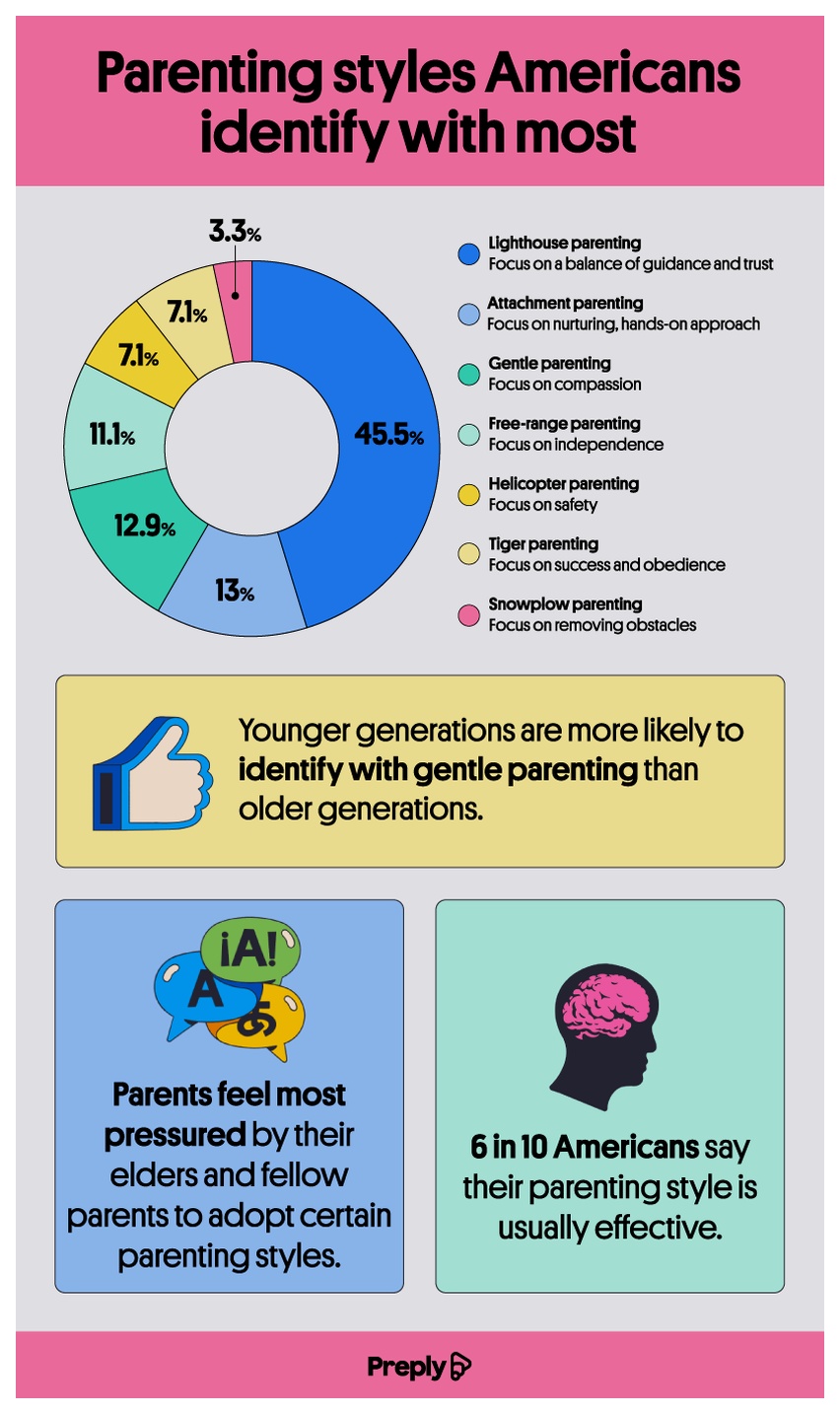
An eye-opening 87% of parents confess to using threats as a form of discipline for their children. In the United States, most parents identify their style as authoritative, while about 11% tend to adopt a more permissive approach. Notably, younger parents are increasingly embracing gentle parenting techniques, setting them apart from their older counterparts.
Parenting styles reveal a notable gender divide, with fathers more often embracing a tiger parenting approach than mothers. Interestingly, nearly 25% of American parents say their parenting methods are significantly different from those of their own parents.
Among American parents, the most favored parenting styles are lighthouse, attachment, and gentle parenting. In contrast, styles like tiger, snowplow, and free-range parenting are less commonly embraced. This trend suggests a growing preference for nurturing approaches over authoritarian ones, reflecting a shift in contemporary parenting values.
External influences significantly shape parenting decisions. In the United States, parents often feel the weight of expectations from both older generations and fellow parents. Additionally, media portrayals and insights from child development experts also exert influence; 32% of parents report feeling pressured by the media, while 25% cite experts as a source of parenting style expectations.
Narvaez emphasizes the importance of self-awareness for parents who often find themselves reacting with anger. She suggests that they should recognize their own stress responses and adopt calming techniques, such as pausing to count to ten before responding. Furthermore, she advocates for parents to explore non-violent communication methods, enabling them to manage their negative emotions and prevent projecting them onto their children.
Learn a language online with our free learning materials.
Learn English online
Learn French online
Parental language practices over the years
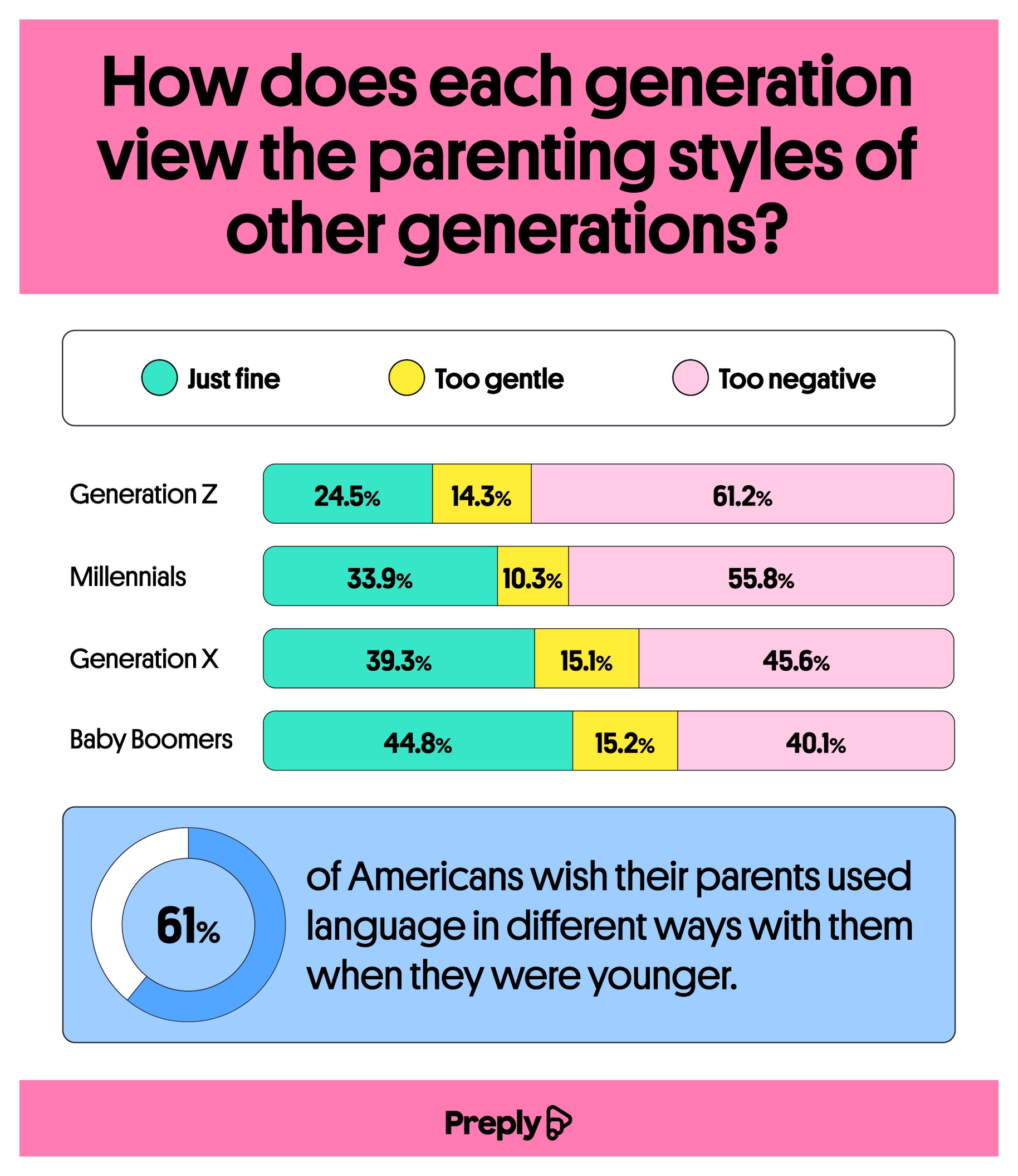
A significant 61% of Americans express a desire for their parents to have chosen different words while raising them. This feeling is particularly prevalent among Gen Z and millennials, who frequently perceive the parenting approaches of previous generations as excessively critical.
Research shows that men tend to mirror their own parents’ parenting styles more than women do. Notably, among the baby boomer generation, there’s a significant tendency to employ threats as a form of discipline.
Many parents embrace the idea of change, with almost 50% adjusting their parenting style upon discovering that their previous methods weren’t working. Additionally, a significant 61% of parents with multiple children customize their approaches to cater to each child’s distinct personality.
Many people feel that the parenting styles of previous generations were overly negative, with half of parents sharing this belief. This sentiment highlights a significant shift in modern parenting, where approaches are increasingly focused on understanding and personalization.
Johnson emphasizes the significance of selecting our words thoughtfully. He notes that children learn by observing, so when we model respectful, loving, and positive language in our interactions, we teach them to do the same.
Navigate communication challenges with LingualNeeds
Parenting can be a challenging journey, filled with complex decisions and uncertainties. While numerous resources are available to assist you, there’s no one-size-fits-all manual for perfect parenting. It’s completely normal to look for support, whether that comes from your own parents as role models or insights from child development specialists. Seeking guidance is a natural part of the process.
The language you choose when encouraging or disciplining your child plays a crucial role in their development. By mastering the subtleties of communication, you can ensure your children feel valued and understood, rather than overlooked. Your parenting style and the words you use can foster a deeper connection and promote a positive environment for growth.
Effective communication is filled with subtle nuances that vary across different audiences. Recognizing cultural differences and influences can significantly enhance your language skills. At LingualNeeds, we emphasize these intricacies, empowering learners to deepen their insights and navigate conversations with greater confidence and clarity.
Unlock your child’s potential in language learning with our dedicated private tutors! Whether your child needs an experienced English tutor or wants to explore Spanish classes with skilled teachers, we offer flexible scheduling to fit your family’s needs. Begin their exciting language journey today by booking a trial lesson with one of our talented tutors!
Methodology
In our comprehensive study, we gathered insights from 1,476 parents nationwide about their communication with their children, parenting approaches, and their views on modern parenting expectations. We explored whether they feel compelled to conform to specific parenting styles, the phrases they regret using, and other related topics. Our diverse group of respondents, aged 18 to 76, included 50% female, 49% male, and 1% nonbinary participants, providing a rich tapestry of perspectives on contemporary parenting.
Frequently Asked Questions
What percentage of parents regret the language they have used with their children?
20% of parents say they regret language they have used with their children.
How do negative words impact a child’s self-image?
Negative labels can shape how children view themselves, impacting their self-esteem and self-image.
What is the significance of using empathetic language with children?
Empathetic language recognizes and values a child’s emotions, fostering understanding and strengthening connections.
What parenting styles are most favored among American parents?
The most favored parenting styles among American parents are lighthouse, attachment, and gentle parenting.
How do parents feel about the parenting styles of previous generations?
Many people feel that the parenting styles of previous generations were overly negative, with half of parents sharing this belief.