- Key findings
- Americans feel that they should accommodate other languages
- Accommodation for voting
- Accommodation at public and private businesses
- The pros and cons of accommodating other languages
- Language accommodation is a political issue
- Younger generations are more willing to accommodate other languages
- Conclusion
- Frequently Asked Questions
- What role does language play in American society?
- What percentage of Americans believe the country should support multiple languages?
- How do younger generations view language accommodation compared to older generations?
- What are the concerns related to accommodating other languages in the U.S.?
- What is the significance of the Voting Rights Act regarding language accommodation?
Language plays a unique role in connecting and separating people. When individuals share a common language, it fosters a sense of identity and community, no matter where they are in the world. However, language differences can also create cultural barriers that divide groups. Taking the initiative to learn French online or any other foreign language can help bridge these divides and promote understanding. In the United States, these linguistic disparities can sometimes lead to clashes rooted in differing ideals.
America stands out as a vibrant tapestry of cultures and backgrounds, making it a distinctive global outlier. The Pew Research Center reports that the U.S. hosts more immigrants than any other nation, yet only 1 in 5 Americans speaks a language other than English. In contrast, countries like Russia and India boast over 20 official languages, while the U.S. has none. This raises an intriguing question: Should Americans embrace languages beyond English? To explore this, we surveyed over 1,000 Americans for their insights.
Key findings


Learn a language with personalised 1-on-1 classes with our expert tutors from all over the world
French lessons online
Spanish lessons online
Americans feel that they should accommodate other languages
Language often stirs strong feelings in the United States. Our survey reveals that a significant 75% of Americans advocate for an official language. However, there’s a notable shift in perspective, as 70% believe the country should also embrace and support a wider range of languages.
A recent survey revealed that 70% of Americans have lent a hand to non-native English speakers navigating their daily lives. Interestingly, 60% of those surveyed feel that these individuals can manage without speaking the language, thanks to the kindness of others and the presence of fellow non-native speakers throughout the country.

Accommodation for voting
The Voting Rights Act mandates that states offer voting materials in minority languages based on the latest Census data. Currently, this requirement applies specifically to American Indians, Asian Americans, Alaskan Natives, and Spanish-speaking citizens. Notably, a significant 70% of Americans believe that ballots and other voting resources should be available in multiple languages, along with services from government agencies.
Accommodation at public and private businesses
A significant 70% of Americans believe that essential services like public utilities should offer support in multiple languages. In contrast, only 40% think that this multilingual support is necessary in optional settings, such as restaurants. To promote greater language inclusivity, many individuals are embracing educational tools like online Spanish classes and virtual tutoring. These resources not only enhance language skills but also encourage cultural exchange and understanding.
The pros and cons of accommodating other languages

A significant 54% of respondents believe that embracing multiple languages can foster equality and equity among individuals in the United States. They argue that enhancing the American melting pot through linguistic diversity could be a powerful tool in the fight against discrimination and racism.
A significant portion of the population—33%—expressed concerns that multilingual programs could lead to higher taxes, while another worry was about unnecessary government expenditures. Additionally, 32% of respondents believed that accommodating languages beyond English might diminish national unity.
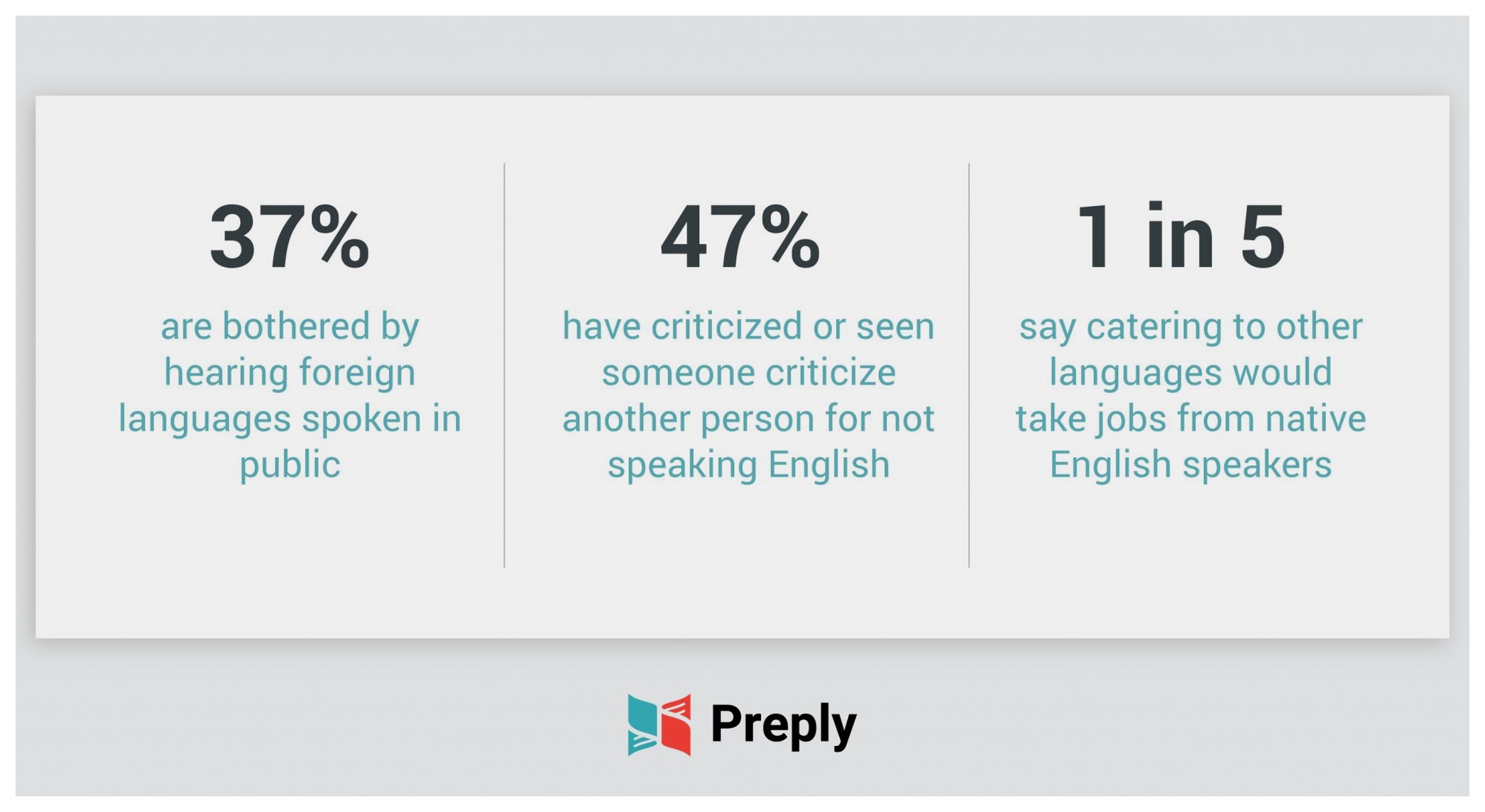
Almost 40% of people feel uncomfortable hearing languages other than English in public spaces. Moreover, nearly half have either criticized others for speaking a different language or witnessed such criticism firsthand.
Additionally, 20% of respondents expressed concern that accommodating other languages might disadvantage native English speakers, particularly by limiting job opportunities for Americans. Interestingly, more than 30% felt that countries where English isn’t the primary language should prioritize the needs of English-speaking tourists. This intriguing contrast led us to further examine the survey statistics.
Learn a language online with our free learning materials.
Learn English online
Learn French online
Language accommodation is a political issue
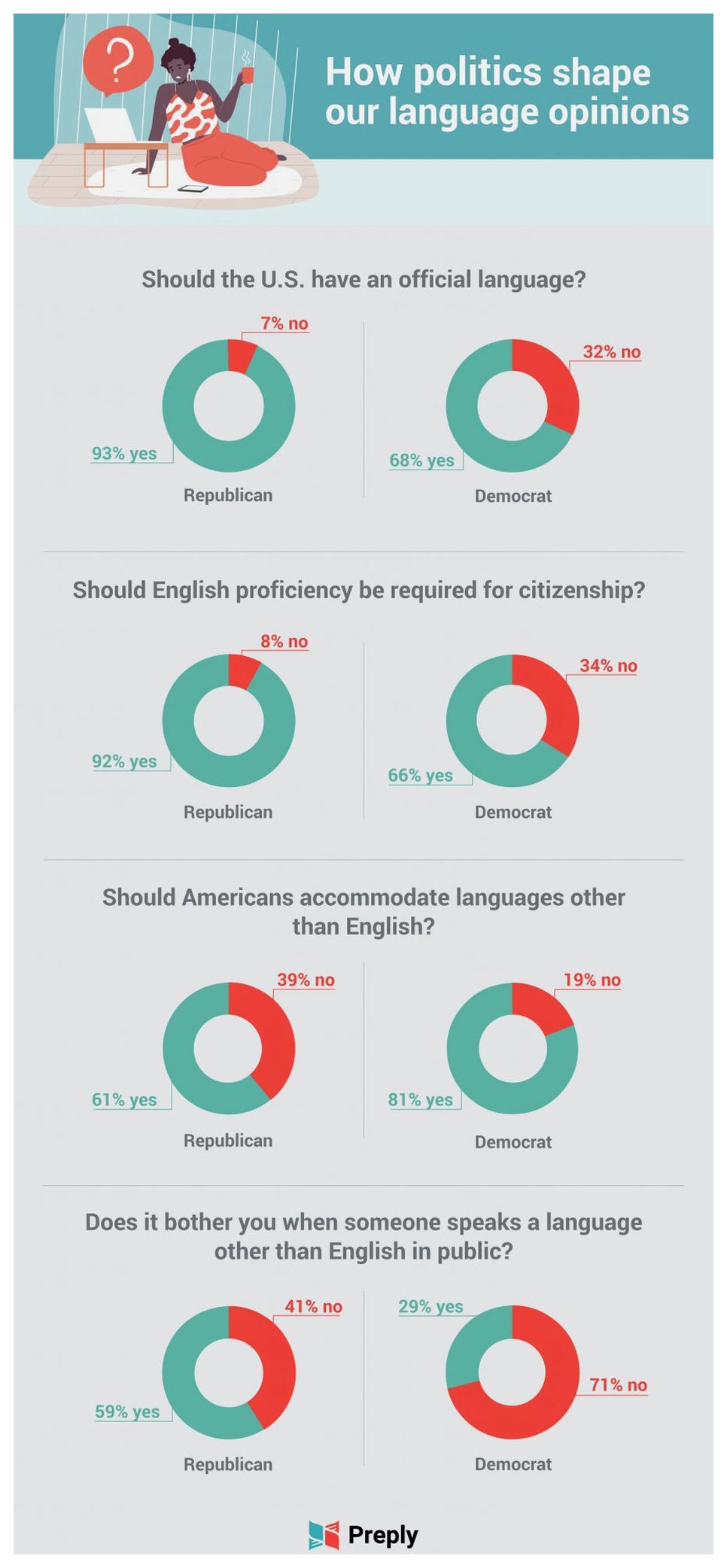
In contemporary America, political identity significantly shapes various aspects of daily life. A clear divide exists between the two major political parties, particularly in their perspectives on language use and its implications.
A striking 90% of Republicans believe the U.S. should designate an official language, insisting that mastering English and passing a test should be prerequisites for citizenship. In contrast, only 66% of Democrats share this view, highlighting how political affiliations can influence attitudes toward language and citizenship requirements.
Younger generations are more willing to accommodate other languages
A notable generational divide exists in attitudes toward non-English languages and speakers. Younger generations, particularly millennials, are more receptive to linguistic diversity, with 75% expressing openness to languages beyond English. In contrast, 60% of baby boomers share this welcoming perspective, highlighting a shift in acceptance across age groups.
These statistics reveal that while there are some variations across age groups, they are overshadowed by a significant political divide. Most people are willing to help non-English speakers, and over half are unbothered by others speaking languages other than English.
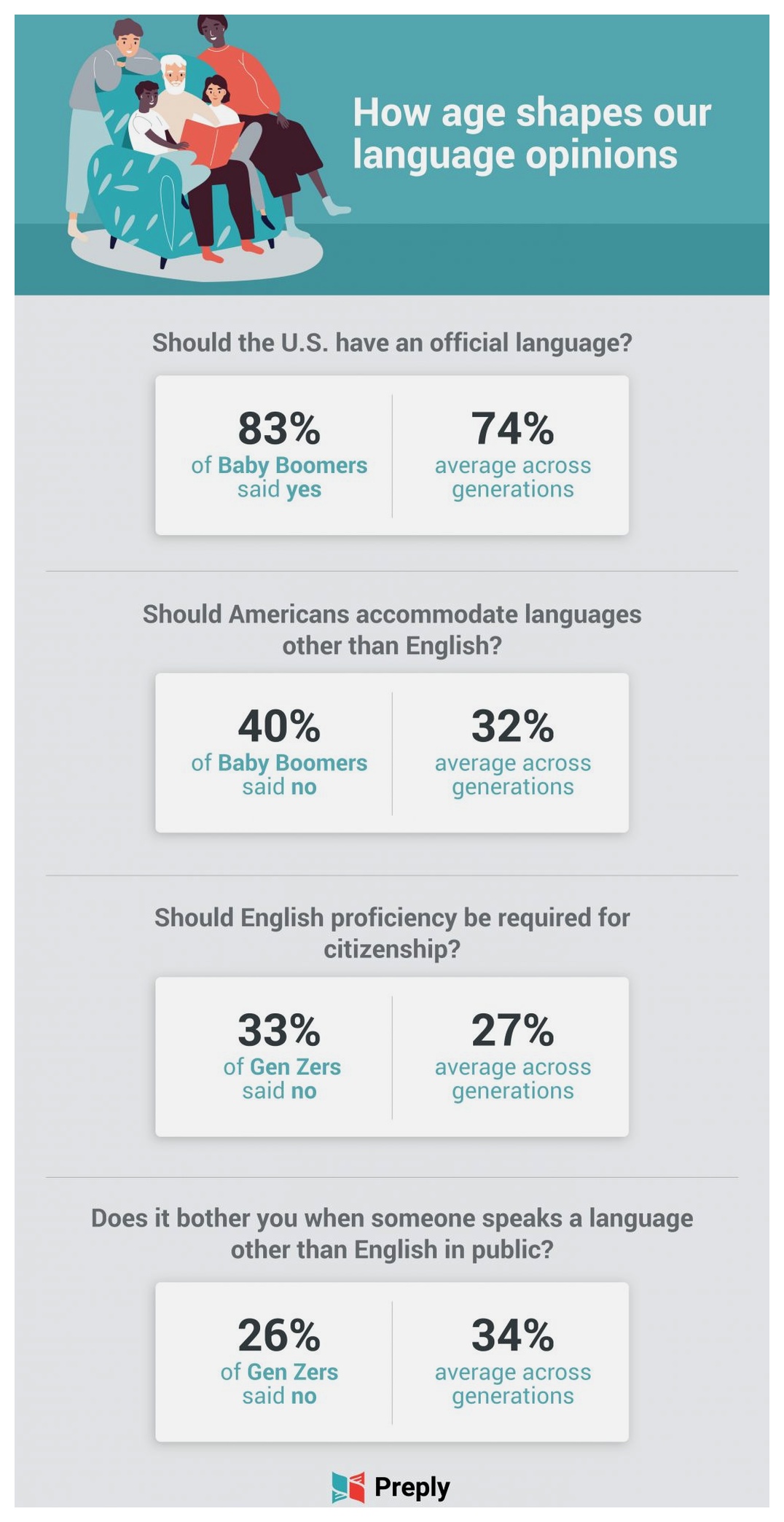
What insights can we draw from these findings? Simply put, older Republicans showed a greater tendency to oppose the accommodation of various languages, while younger Democrats were more supportive of it. However, regardless of age or political affiliation, more than half of those surveyed expressed a willingness to help non-English speakers and embrace their linguistic diversity.
This statistic highlights a growing preference among parents: over 40% of those surveyed expressed a desire for their children to attend bilingual or immersion language schools. The most sought-after languages in these programs are Spanish, French, and Mandarin Chinese, reflecting a strong interest in diverse linguistic skills.
You don’t need a formal school to dive into language learning—thanks to an array of apps and online resources, it’s now more enjoyable and accessible than ever! Take LingualNeeds, for instance. This platform connects learners with fluent teachers across various languages, including dynamic Japanese tutors. While many students on LingualNeeds focus on mastering English, a significant number are also exploring Spanish, Japanese, German, and a host of other languages.
Conclusion
Data from the United States Census Bureau reveals that 21.6% of Americans speak a language other than English at home, highlighting the nation’s rich cultural diversity. While many embrace the idea of the U.S. as a melting pot and support multilingualism, there remains a sense of unease around unfamiliar languages. In fact, nearly 40% of people express discomfort when they hear languages other than English in public, and almost half have witnessed or participated in criticism aimed at non-English speakers. To help bridge these cultural divides, a growing number of Americans are turning to digital platforms to learn new languages, with many even seeking out online German tutors to boost their language skills.
While many support catering to other languages, there’s continued room for growth and understanding of different languages and cultures.
Frequently Asked Questions
What role does language play in American society?
Language connects and separates people, fostering identity and community while also creating cultural barriers.
What percentage of Americans believe the country should support multiple languages?
70% of Americans believe the country should embrace and support a wider range of languages.
How do younger generations view language accommodation compared to older generations?
Younger generations, particularly millennials, are more receptive to linguistic diversity, with 75% expressing openness to languages beyond English.
What are the concerns related to accommodating other languages in the U.S.?
Concerns include potential higher taxes, unnecessary government expenditures, and the belief that it might diminish national unity.
What is the significance of the Voting Rights Act regarding language accommodation?
The Voting Rights Act mandates that states offer voting materials in minority languages for certain groups, reflecting the need for multilingual support in civic engagement.