
- Key findings
- What factors affect our first impressions at work?
- What influences our opinions in casual settings?
- What factors shape first impressions for different age groups?
- What factors affect our first impressions online?
- How many of your colleagues have you met?
- Conclusion
- Methodology
- Frequently Asked Questions
- What are the key factors influencing first impressions at work?
- How do casual settings affect our perceptions of others?
- What challenges do people face when forming first impressions online?
- How does age impact the factors that shape first impressions?
- What percentage of employees have never met their colleagues in person?
While we frequently hear the phrase “don’t judge a book by its cover,” first impressions tend to leave a lasting impact. Our perceptions of others shape our thoughts and feelings about them, often coloring our opinions in both positive and negative ways.
We set out to explore the complexities of first impressions. As a language-learning platform, our aim was to uncover the connection between effective communication and perceptions in various cultural and social contexts. By doing so, we hope to empower individuals to navigate new interactions with confidence.
To uncover the factors that shape our perceptions of others and the significance of these first impressions, LingualNeeds conducted a survey of over 1,500 Canadians. This research explores the nuances of how individuals make quick judgments in various contexts, including professional settings, casual interactions, and online environments.
Key findings
- Almost 9 in 10 people believe first impressions are important
- At work, the most important factors influencing first impressions are eye contact and facial expressions, personal hygiene, and punctuality
- In casual settings, the top factors are eye contact and facial expressions, humor, and personal grooming
- When meeting online, tone of voice, communication style, and punctuality are the key factors influencing first impressions
- Nearly 60% of women believe that a sense of humor influences their perceptions of others in casual environments.
- Only 36% of respondents said that online interactions provide them with enough information to form accurate first impressions
- 1 in 10 employees have never met at least one member of their close team in person.

Learn a language with personalised 1-on-1 classes with our expert tutors from all over the world
French lessons online
Spanish lessons online
What factors affect our first impressions at work?
First impressions play a crucial role in various situations, and our research underscores this fact. An impressive 87% of Canadians recognize the significance of first impressions, while a mere 2% completely disregard their importance. This highlights just how impactful those initial moments can be in shaping perceptions.
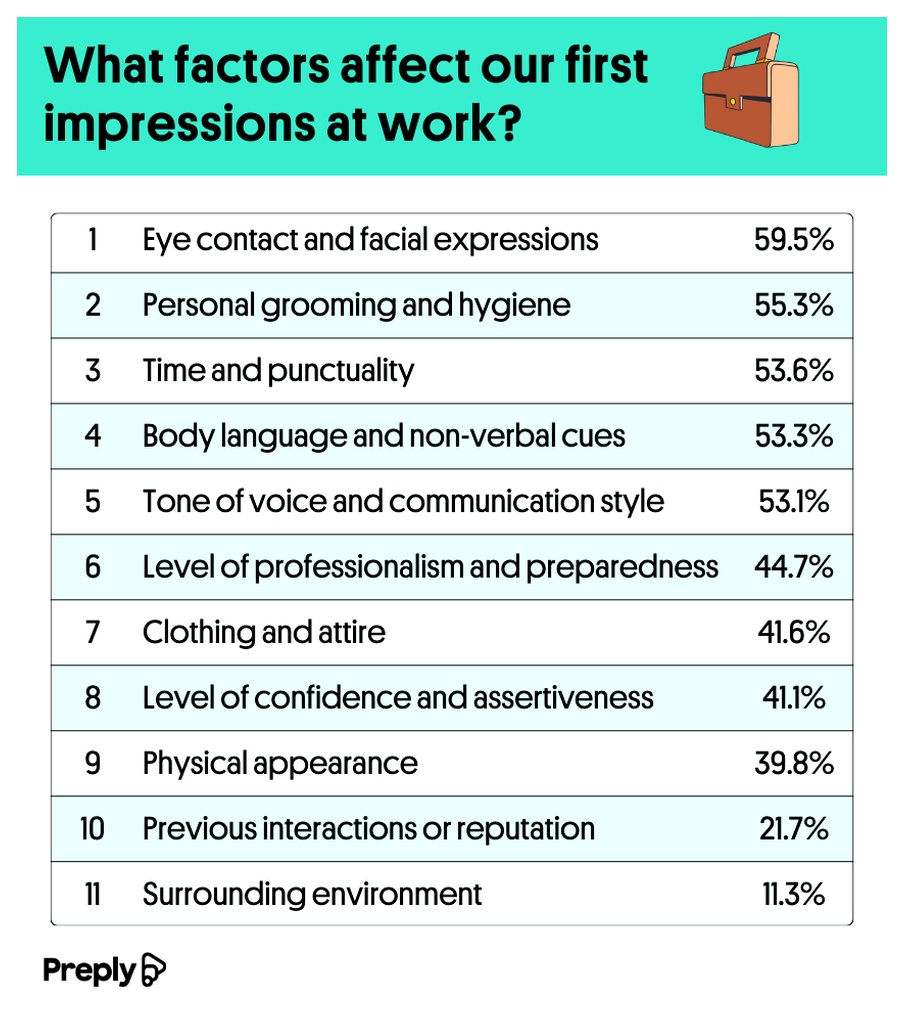
Creating a memorable positive impression is crucial in professional environments. When surveyed about what influences their first impressions of colleagues, participants highlighted eye contact and facial expressions as the most significant factors. Notably, three out of five respondents acknowledged that these nonverbal cues significantly shape their opinions of others.
The study revealed that personal grooming and punctuality are crucial for making a good first impression, with over half of the respondents agreeing on both aspects. Interestingly, 61% of women identified personal hygiene as a key factor in their initial assessments, ranking it as the second most important criterion. In contrast, only 49% of men shared this view. Additionally, 57% of women recognized the significance of body language and non-verbal cues, while just 49% of men felt the same way.
The majority agreed that body language, non-verbal signals, tone, and communication style play crucial roles in effective interaction.
Although there is a strong message urging people to refrain from judging others based on their looks, nearly 40% of respondents admitted that physical appearance and clothing do influence their perceptions.
What influences our opinions in casual settings?
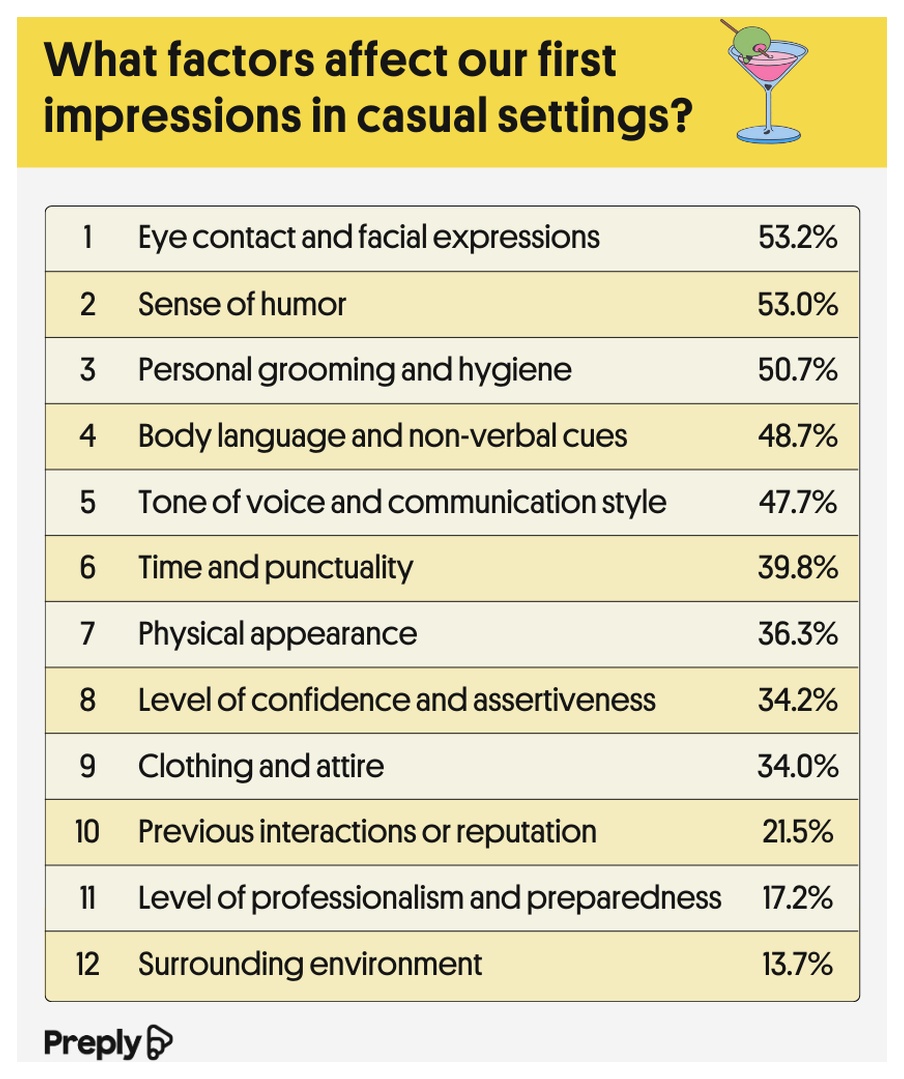
The dynamics of our relationships at work and outside of work vary significantly, shaping our expectations and assumptions about others. Yet, some behaviors transcend these boundaries and are crucial in both environments. For instance, eye contact and facial expressions play a vital role in shaping impressions, whether in casual or professional interactions. Additionally, personal grooming and hygiene consistently rank among the top three factors influencing how we perceive others in both contexts.
In informal environments, a person’s sense of humor emerges as the second most influential trait overall and holds the top spot among women. Interestingly, being late is more easily overlooked in these casual contexts, placing it much lower on the importance scale at number six.
While the significance of clothing and appearance has somewhat lessened, over a third of respondents still acknowledge that they make judgments based on these aspects.
Learn a language online with our free learning materials.
Learn English online
Learn French online
What factors shape first impressions for different age groups?
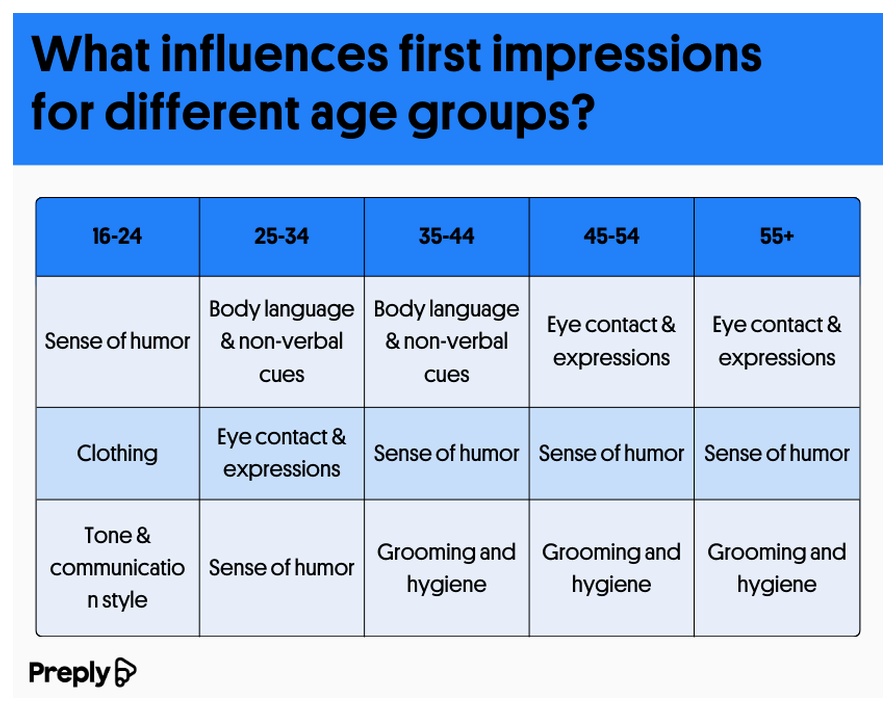
We delved into the data to explore how different generations are influenced by various factors when socializing outside of work. Notably, a sense of humor ranked among the top three priorities for all age groups, but for Gen Z (ages 16-24), it emerged as the most crucial element. This younger demographic also placed a high value on clothing and attire, while older generations were less swayed by fashion-related judgments.
What factors affect our first impressions online?
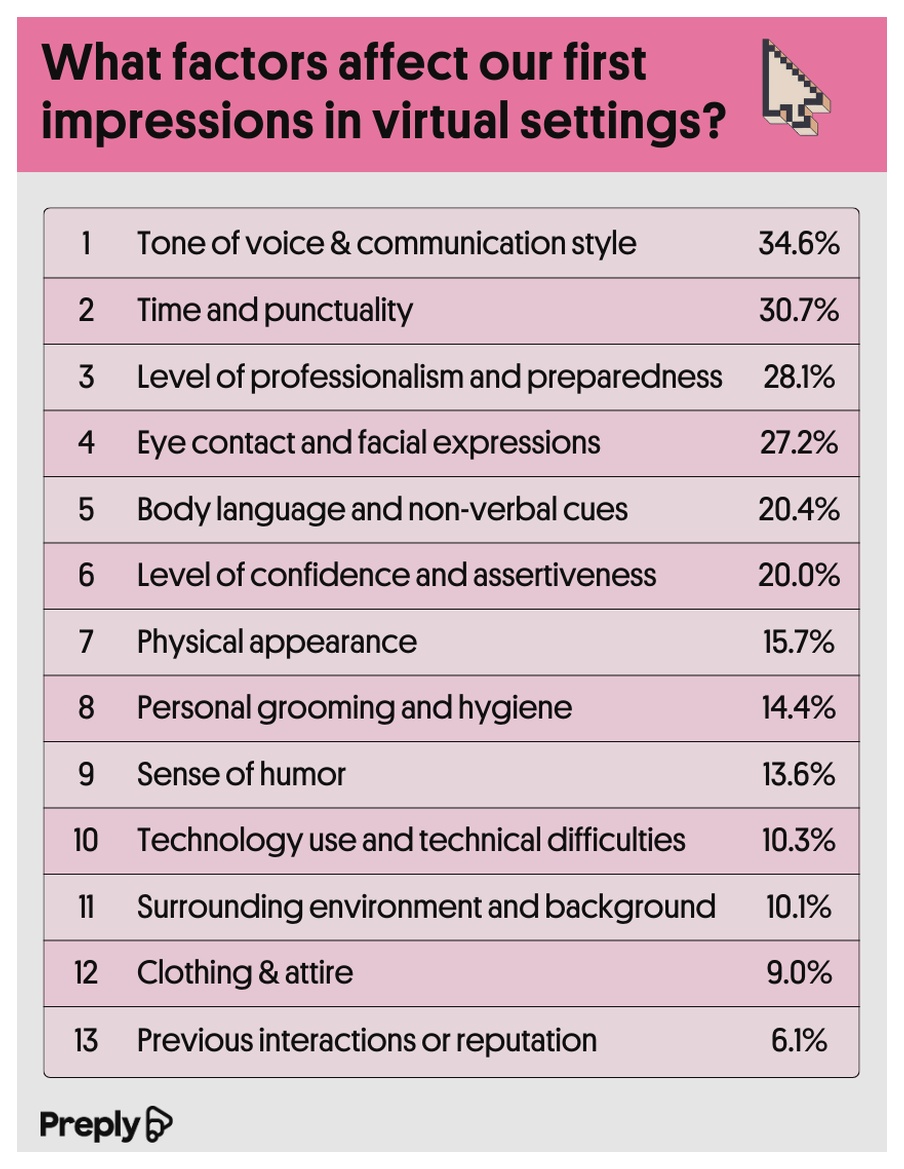
Creating first impressions online presents distinct challenges. With limited visual cues to assess someone, we must prioritize different indicators. Surprisingly, facial expressions are not the primary focus anymore; instead, tone of voice and communication style have emerged as key factors, with 35% of respondents emphasizing their importance.
Next in importance is punctuality, valued at 31%. Timeliness is crucial; no one enjoys waiting for a meeting to start. Additionally, professionalism and preparedness play a vital role, far outweighing other considerations in creating a productive environment.
In both professional and casual face-to-face interactions, prior experiences and reputations play a crucial role—twice as significant as in virtual environments. This suggests that online meetings can serve as a clean slate for participants, offering a unique advantage in professional contexts.
The findings indicate that forming first impressions can be challenging in virtual settings. Only 36% of participants felt that online interactions offered sufficient information for making accurate assessments. This could explain why fewer individuals recognize specific factors that impact their virtual first impressions compared to in-person meetings.
Making judgments about individuals met online can be challenging, which is why over half of people (51%) report that their perceptions improve after meeting face-to-face. Conversely, 11% feel that their impressions decline upon in-person interaction. Only 20% of individuals are able to accurately gauge someone’s character based on online encounters, with their opinions remaining consistent when they finally meet offline.
How many of your colleagues have you met?
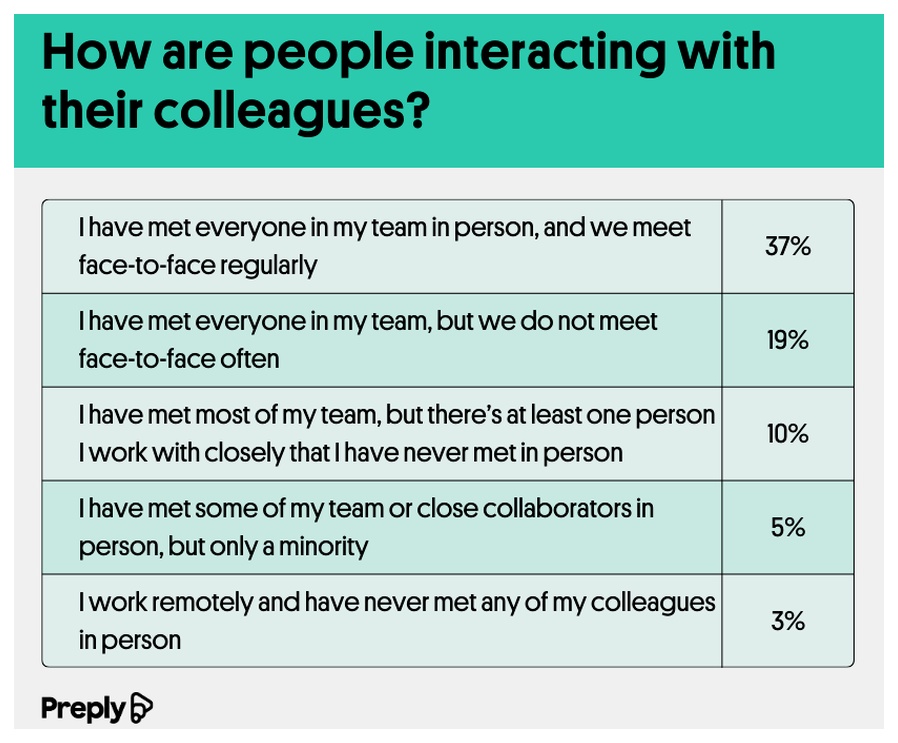
Creating accurate first impressions during virtual meetings can be quite tricky. As remote work becomes more common, it may hinder the ability to forge meaningful connections between individuals.
In today’s world, where hybrid and remote work is becoming the norm, first impressions in virtual interactions have never been more crucial. Our survey reveals that a significant 3% of employees have never met any of their colleagues face-to-face, while 1 in 10 team members work alongside someone they’ve never encountered in person. This highlights the importance of making a strong digital connection right from the start.
Conclusion
LingualNeeds delves into the intriguing factors that shape first impressions, revealing the distinct dynamics that come into play when meeting someone online versus in-person. Our exploration underscores the significance of eye contact, facial expressions, and the enduring impact of physical appearances. These initial perceptions play a crucial role in forming both social and professional relationships, setting the stage for future interactions.
In today’s digital age, where many of our interactions occur online—both professionally and personally—making a strong first impression in virtual meetings is more crucial than ever. Understanding the key elements that shape these impressions can empower you to navigate these interactions with confidence and success.
Effective communication hinges on both verbal and nonverbal cues, which play a crucial role in various interactions. These elements consistently rank among the top five factors in all contexts. To enhance your communication skills and make a positive impression the next time you meet someone new, consider seeking a private English tutor in Canada. This can be an excellent way to elevate your proficiency and confidence in English.
If you’re aiming to thrive in a Francophone environment or broaden your social network, enhancing your French language skills can be incredibly beneficial. Consider taking conversational French lessons with a native speaker to boost your confidence and make a positive first impression in a new language.
Methodology
Between January 30 and February 2, 2024, we conducted a survey involving 1,518 Canadian residents, all of whom had lived in Canada for at least a year. This research was carried out by Censuswide to gather valuable insights into the perspectives of Canadians.
We explored participants’ views on the significance of first impressions during initial encounters, examining the key factors that shape these impressions across professional, casual, and virtual environments. Additionally, we inquired whether they think online interactions offer sufficient insights for forming accurate impressions and how their perceptions of individuals change after meeting them face-to-face for the first time.
Finally, we asked about participants’ work situation, regarding how often they see people in their team face-to-face.
Frequently Asked Questions
What are the key factors influencing first impressions at work?
The key factors include eye contact, facial expressions, personal hygiene, and punctuality.
How do casual settings affect our perceptions of others?
In casual settings, eye contact, facial expressions, humor, and personal grooming are the top factors influencing perceptions.
What challenges do people face when forming first impressions online?
People face challenges due to limited visual cues, relying more on tone of voice and communication style.
How does age impact the factors that shape first impressions?
Younger generations prioritize a sense of humor and clothing, while older generations are less influenced by fashion-related judgments.
What percentage of employees have never met their colleagues in person?
3% of employees have never met any of their colleagues face-to-face.