- You’ll find the least linguistic obstacles in…
- Where you’ll find the bigger linguistic hurdles
- Frequently Asked Questions
- Why is learning the local language important when traveling?
- Which country is considered the easiest for language learners in Europe?
- What is the average cost of language lessons in Portugal?
- Which country has the most dialects and accents?
- What methodology was used in the analysis of language challenges across European countries?
Whether you’re exploring a new country or planning a long-term relocation, make sure to add “learn the basics of the local language” to your travel prep list. Mastering a few key phrases can enhance your experience and help you connect with the culture.
Learning a new language is often seen as a valuable perk of traveling to a new destination or relocating to a different country. Surprisingly, nearly half of Brits—48%—do not take the time to learn even the basics of the local language before their visit.
As international travel experiences a resurgence following the pandemic and remote work gains traction, LingualNeeds has conducted an analysis of 29 European countries. Their research identifies which destinations pose the greatest linguistic challenges for visitors and expatriates, helping travelers navigate the complexities of language integration.
By considering a country’s native languages, accents, and dialects, along with its English proficiency (as measured by the EF EPI score) and the average cost of language lessons, we present our comprehensive ranking of the most tourist-friendly and expat-friendly countries.
You’ll find the least linguistic obstacles in…
At the top of the list for ease of learning is Romania, which features just three official languages: Romanian, Hungarian, and German. The country boasts the fewest accents and dialects, primarily categorized into Wallachia, Moldavia, and Banat. While Romania holds a mid-range position in its English Proficiency Index (EPI) score, it stands out for affordability, with private Romanian lessons averaging just £12.96—making it the third cheapest option available.
Following in second and third places are Ireland, Portugal, and Serbia - the latter two ranking joint third.
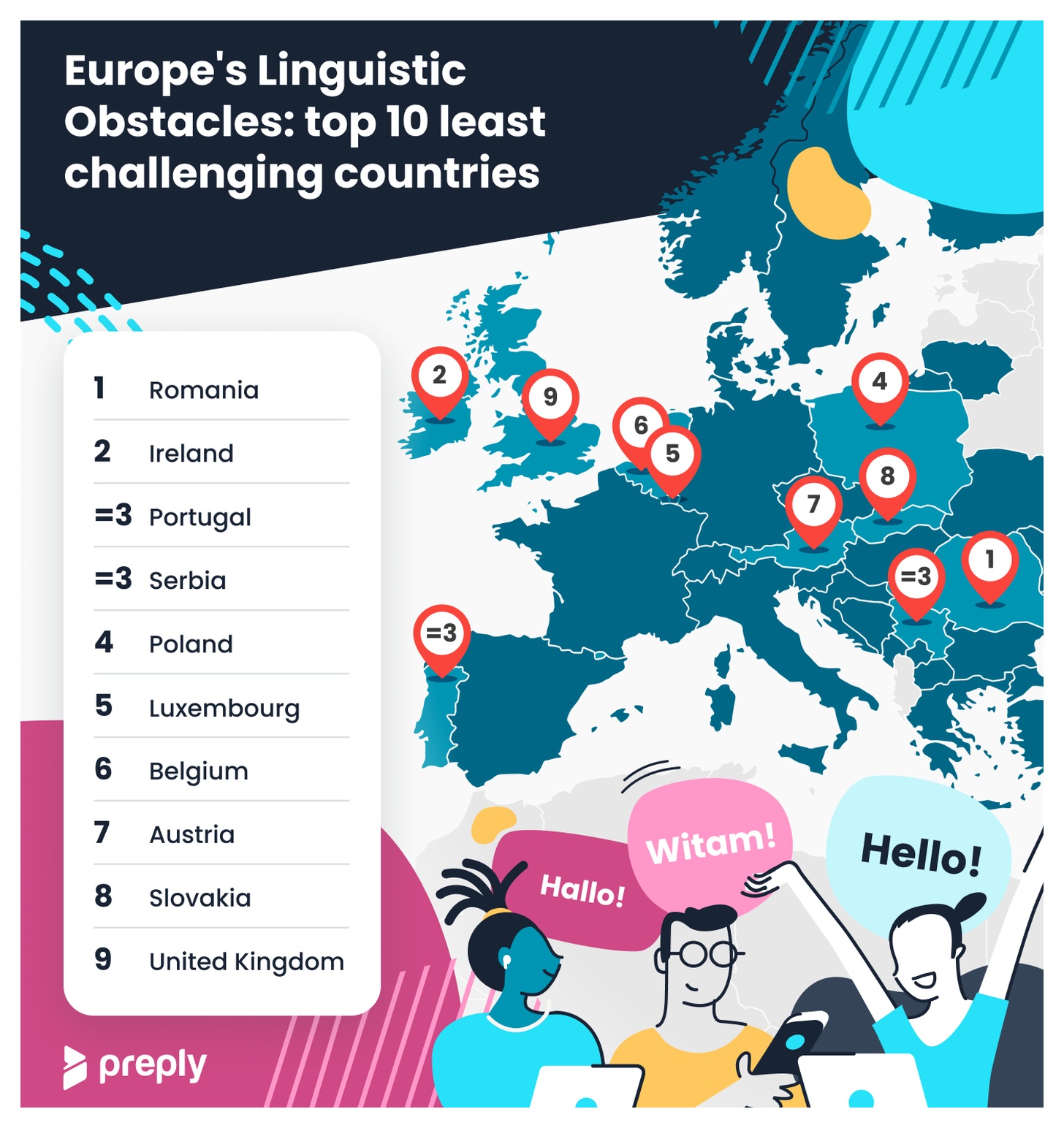
Gaelic is Ireland's sole indigenous language besides English, featuring four distinct regional dialects: Irish English, Ulster, Dublin, and South-West Ireland. While Ireland boasts the highest English Proficiency Index (EPI) score, tied with the UK, those interested in learning Gaelic should anticipate an average cost of £20.09 for resources.
Portugal proudly holds the third spot globally, thanks in part to its sole official language: Portuguese. However, newcomers and travelers will encounter a rich tapestry of ten distinct regional dialects. In terms of English proficiency, Portugal shines as the seventh most skilled country in Europe. Additionally, it ranks among the top ten most affordable destinations for language lessons, with an average cost of just £18.31.
Tied for third place, Serbia stands out for its affordable language lessons, averaging just £15.68. The country boasts two official languages: Serbian, which is the primary language, and Albanian. It recognizes a total of eight accents and dialects, including Shtokavian, Eastern Herzegovinian, and Šumadija–Vojvodina. However, when considering all four evaluation factors, Serbia ranks lowest in the EPI score, coming in at thirteenth out of 29 European countries assessed.

Learn a language with personalised 1-on-1 classes with our expert tutors from all over the world
French lessons online
Spanish lessons online
Where you’ll find the bigger linguistic hurdles
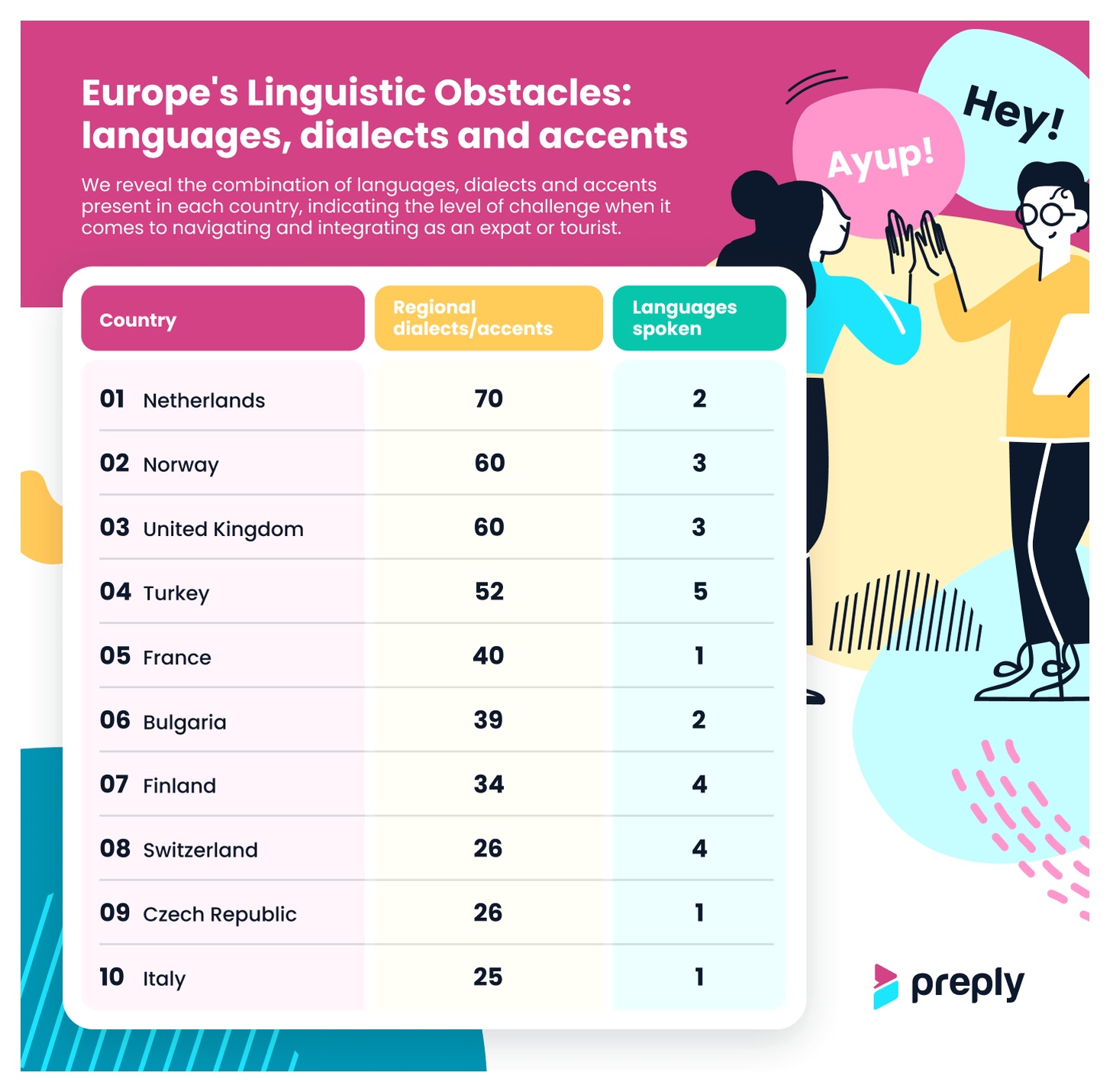
The Czech Republic stands out as the most linguistically challenging country in the world. While Czech is the sole official language, the nation boasts an impressive 26 dialects and accents that add to its complexity. For those seeking private language lessons, be prepared for an average cost of around £63.
The Czech Republic is joined by France and Switzerland in the top three ‘most challenging’ countries for language learners. France, known for its rich tapestry of 40 regional dialects and accents, has an average cost of £22.49 for language lessons, contributing to its low EPI score. Meanwhile, Switzerland, with its four official languages—German, French, Italian, and Romansch—struggles with English proficiency, placing it toward the bottom of the rankings.
Did you know that one country boasts an astonishing variety of accents and dialects? Our research uncovered an incredible total of 70 distinct regional variations! Can you guess which country holds this remarkable linguistic diversity?
If you guessed The Netherlands, you're spot on! It's ranked first, while Norway and the UK (surprisingly!) share the second spot, followed closely by Turkey in third.
When you visit or relocate to a new country, understanding the local languages and dialects can greatly enhance your experience and ease your integration. You'll encounter regional variations in English proficiency, primary languages, pronunciation, and vocabulary. For instance, consider the diverse terms used across the UK for a simple "bread roll." In London, you might ask for a "bread roll," while in Newcastle, it's often called a "teacake." In Glasgow, locals refer to it as a "rowie," and in the Midlands, you may hear it called a "cob." Familiarizing yourself with these differences not only enriches your interactions but also helps you connect with the local culture.
**Methodology:** Our study focuses on European countries, analyzing key elements such as the official languages spoken, the number of recognized regional accents, English proficiency scores, and the average hourly cost of online language lessons in the country's primary language. We gathered data from various sources, including nationsonline.org for language information, Wikipedia for accents and dialects, the EF English Proficiency Index for English proficiency scores, and LingualNeeds.com for average lesson costs.
Frequently Asked Questions
Why is learning the local language important when traveling?
Learning the local language enhances your experience and helps you connect with the culture.
Which country is considered the easiest for language learners in Europe?
Romania is ranked as the easiest country for language learners due to its few official languages and dialects.
What is the average cost of language lessons in Portugal?
The average cost of language lessons in Portugal is £18.31.
Which country has the most dialects and accents?
The Czech Republic has the most linguistic challenges, featuring 26 dialects and accents.
What methodology was used in the analysis of language challenges across European countries?
The study analyzed official languages, regional accents, English proficiency scores, and the average cost of online language lessons.