- Key takeaways
- The states with the most room for language habit improvements
- The most common filler words used among Americans
- The most common speech habits in the U.S.
- The impacts of Americans’ bad speech habits
- Practice better speech habits with LingualNeeds
- Methodology
- Frequently Asked Questions
- What are common speech habits that Americans wish to change?
- Which states have the most room for improvement in language habits?
- What are the most frequently used filler words among Americans?
- How can individuals improve their speech habits?
- What role do relationships play in improving language skills?
It’s common for individuals to unconsciously develop speech habits that they didn’t mean to adopt. Whether it’s relying on filler words or speaking at a rapid pace, these tendencies can slip into our conversations without us realizing it. Even if you don’t have a strict grammarian nearby, you might still feel self-conscious or embarrassed about the unique quirks in your speech.
At LingualNeeds, we recognize your aspiration to enhance your language skills while celebrating the unique communication styles that set you apart. Our conversational English lessons, led by experienced tutors, are designed to help you achieve your language goals confidently and effectively. Join us to unlock your potential!
In this study, we aimed to uncover the habits that Americans are eager to let go of, as well as those they are adopting. To achieve this, we conducted a nationwide survey that explored their use of filler words, various speech patterns, and unique quirks.
We assigned points to responses that demonstrated a commitment to enhancing language skills, resulting in an overall score ranging from 0 to 100. This score highlights where Americans have the greatest opportunities for improvement. Continue reading to discover how your state compares to others!
Key takeaways
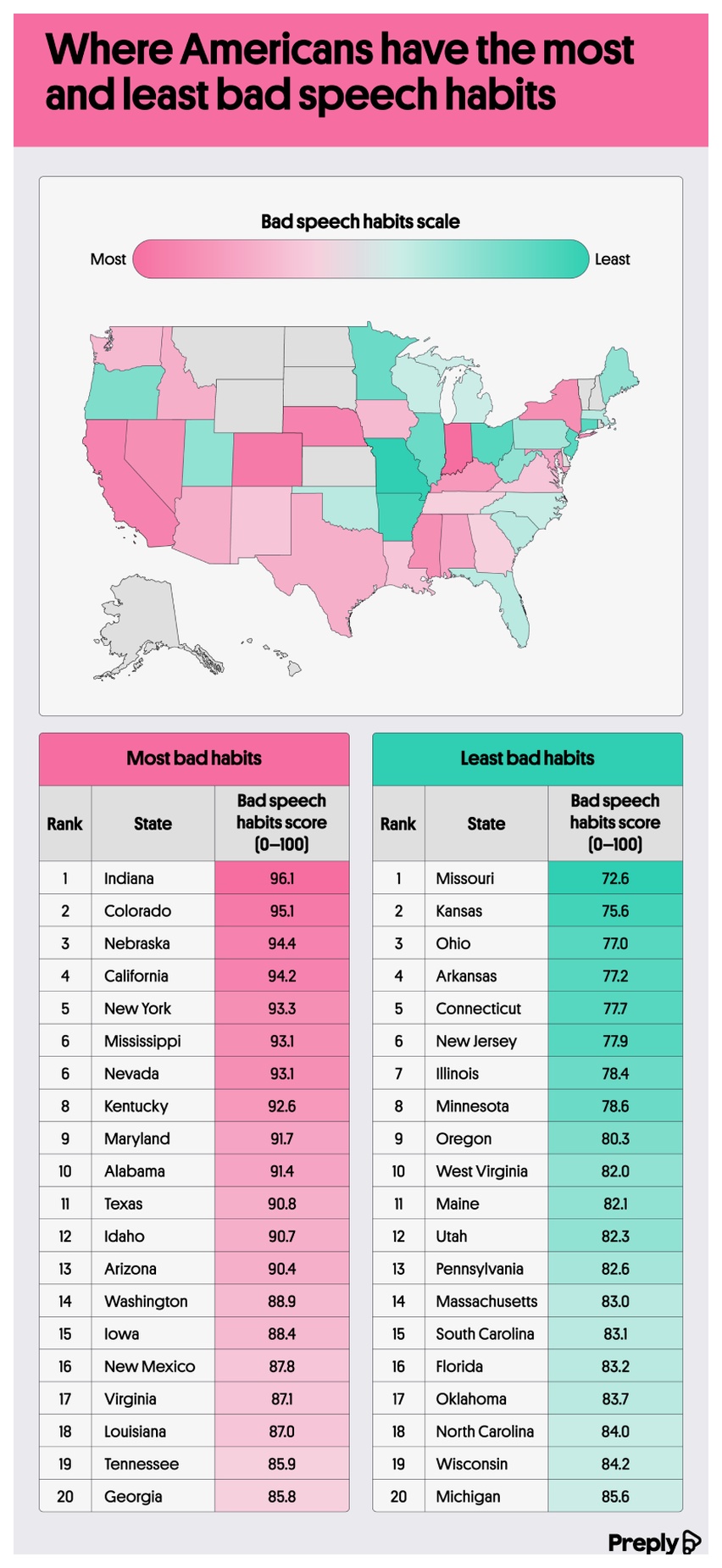
- Residents in Indiana, Colorado, and Nebraska had the most bad habits when speaking.
- “Like” was the most common filler word used among Californians.
- “Um,” “so,” and “like” were the most common filler words Americans use.
- Americans express the greatest shame about their use of filler words and mispronunciation of certain words in speech.
- The people who most often correct grammar and pronunciation are romantic partners, friends, and parents.
- Half of individuals who have lived abroad have not attempted to alter their accent or dialect.

Learn a language with personalised 1-on-1 classes with our expert tutors from all over the world
French lessons online
Spanish lessons online
The states with the most room for language habit improvements
Many Americans share common speech habits that they wish to change, such as speaking too quickly—something 43% of people do—or frequently using filler words like “um,” which affects 66% of individuals. The encouraging news is that it’s never too late to enhance your language skills and refine your speaking habits.
In 2024, Indiana residents are setting the trend for poor speech habits. The most prevalent issues include difficulty finding the right words to express themselves and an excessive reliance on the word “sorry.”
Although these habits may initially seem detrimental, they are actually aspects of speech that can be modified. Language expert Sylvia Johnson emphasizes that with practice and increased awareness, enhancing our language habits is not only achievable but also a worthwhile endeavor.
Johnson suggests that you record yourself speaking and then listen to the playback. She emphasizes that if you want to enhance your vocabulary, engaging in word games, completing crosswords, and reading can all offer fresh ways to articulate your thoughts.
Over-apologizing is a common issue, according to Johnson. To break this habit, she recommends substituting “sorry” with alternative phrases. For example, instead of saying, “Sorry I’m late,” try expressing gratitude by saying, “Thank you for your patience.” This simple shift can make a big difference in how you communicate.
Claiming the second spot with an impressive score of 95 out of 100 is Colorado. Like their counterparts in Indiana, many Coloradans occasionally struggle to find the perfect word. Interestingly, a notable communication habit among residents of the Centennial State is speaking at a rapid pace.
Johnson emphasizes that speaking too quickly often leads to the overuse of filler words. By taking our time and slowing down, we create space to choose our words more carefully, which helps minimize those unnecessary fillers.
Whether you’re delivering a presentation at work or enjoying lunch with friends, speaking in front of others can be intimidating. This anxiety and sense of vulnerability often lead us to rush our words as a way to get through the moment.
The next time you catch yourself speeding through a conversation, take a moment to pause and breathe. This simple act can help you calm your mind and curb the impulse to rush your words. Interestingly, Nebraska ranks third with a score of 94 out of 100, sharing the same two most prevalent language habits as Colorado.
Conversely, certain states boast residents who exhibit greater confidence in their language skills and are less prone to poor speech habits. Notably, Missouri, Kansas, and Ohio stand out as the frontrunners in fostering better communication practices.
Our study revealed that Missouri residents take great pride in their accents, showcasing a strong connection to their regional identity. Conversely, individuals from the South, particularly those in Mississippi, Kentucky, and Alabama, are more likely to feel self-conscious about their speech patterns and dialects. This highlights a fascinating contrast in how different regions perceive their linguistic heritage.
The most common filler words used among Americans
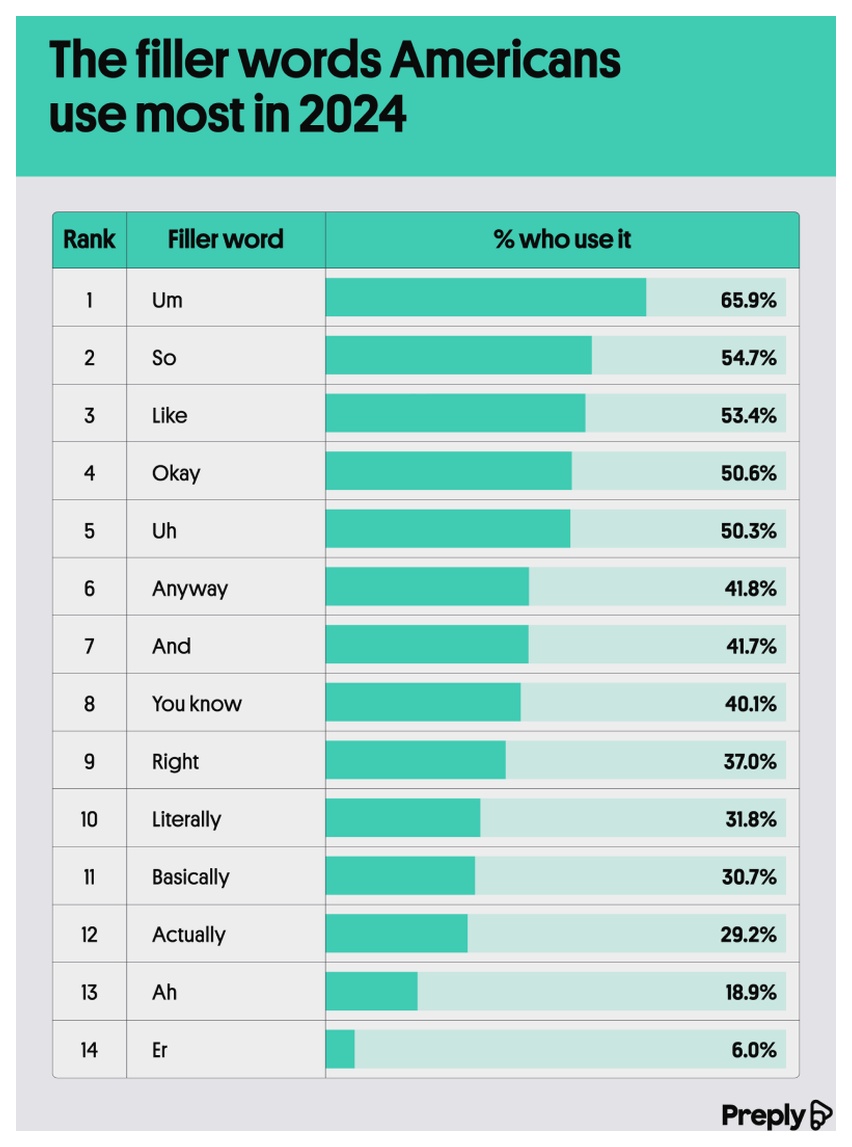
Filler words like “um,” “ah,” and “uh” frequently pop up in our conversations, often as we take a moment to gather our thoughts or search for the perfect word. But there’s no need for embarrassment; in fact, a staggering 98% of Americans admit to using these words regularly while speaking.
As part of our ongoing exploration of Americans’ language habits, we set out to identify the most commonly used filler words across the country, as well as the top filler word in each state. Our findings revealed that “um,” “so,” and “like” stand out as the most frequently heard fillers in everyday conversations.
Johnson emphasizes the importance of embracing pauses in conversation instead of filling silence with fillers like “um,” “like,” or “so.” These moments of silence can enhance communication by allowing your audience to digest your message more effectively.
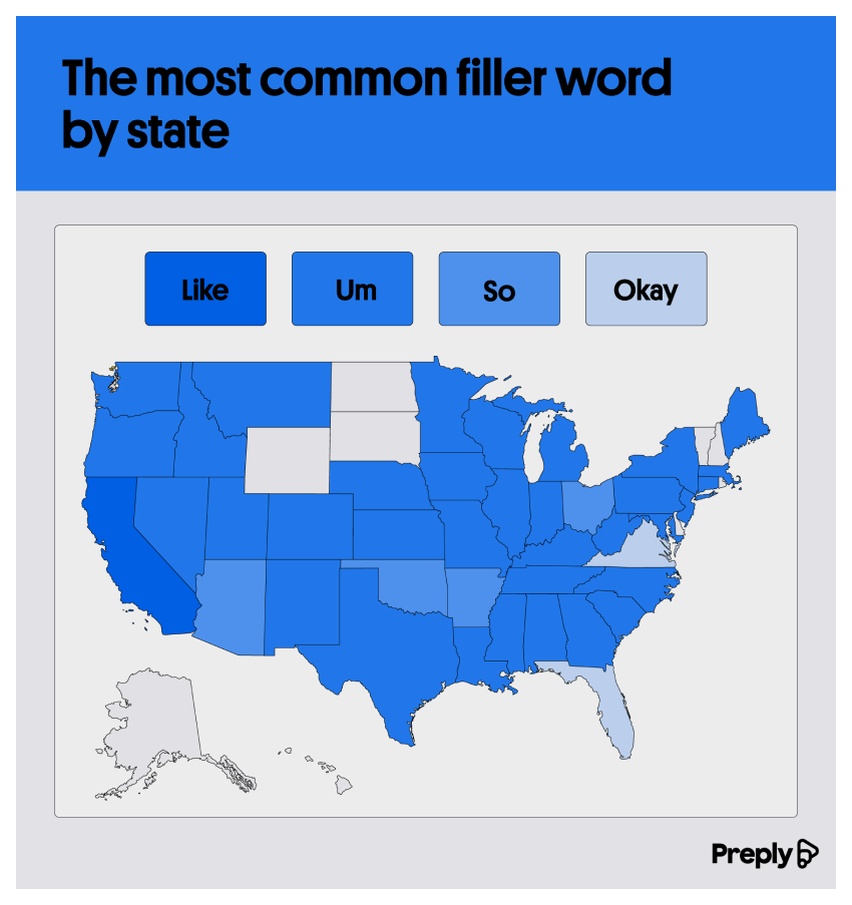
The word “um” tops the list as the most frequently used filler, appearing in 34 states. Following closely is the word “so,” which is particularly popular among residents of Arizona, Arkansas, Ohio, and Oklahoma.
As we explore the findings, it turns out that “okay” tops the list as the most frequently used filler word among residents of Florida and Virginia. Interestingly, Californians distinguish themselves as the sole state where “like” reigns supreme in everyday conversations.
Beyond analyzing state-by-state data, we explored how different generations utilize filler words in their conversations. Interestingly, Gen Z is the most frequent user of “like,” while millennials and Gen X tend to rely on “um.” Meanwhile, baby boomers often default to “okay” as their go-to filler.
Learn a language online with our free learning materials.
Learn English online
Learn French online
The most common speech habits in the U.S.
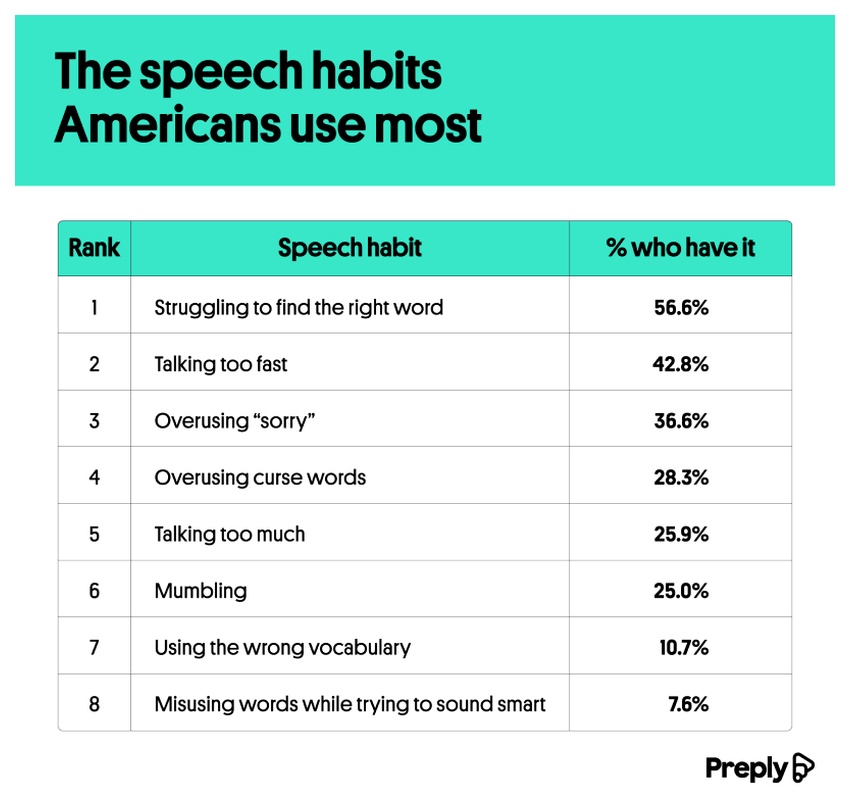
Filler words are a prevalent speech habit among Americans, prompting us to categorize them separately in our survey. It’s important to note that these aren’t the only habits people are eager to eliminate.
To deepen our insight into American speech patterns, our team examined additional habits that can be equally frustrating and widespread. Among the most common issues is the difficulty many people face when trying to find the perfect word to express their thoughts.
Next on the list are the tendencies to speak too quickly and to excessively say “sorry,” which rank second and third, respectively. In fourth place, we find another common habit: the frequent use of curse words, highlighting a different aspect of word overuse in conversations.
Ranking fifth, with one in four people admitting they do it, is talking too much. While it’s natural to get enthusiastic when chatting with friends or family, it’s essential to create space for them to share their thoughts and engage in the conversation too.
Mumbling ranked sixth among the most common speech habits, often stemming from anxiety or a lack of confidence. However, when it comes to annoying speech habits, Americans placed mumbling in a surprising second place.
It’s frustrating when someone mumbles and you can’t catch what they’re saying, but keep in mind that they’re probably not trying to keep their words from you. Instead of letting irritation build, stay engaged and politely ask them to repeat themselves. This simple approach can foster better communication and understanding.
Not every speech habit or quirk is something people want to eliminate; in fact, many individuals celebrate their unique qualities. Our research revealed that this is particularly true for those with accents or regional dialects, with over 80% of respondents expressing pride in their linguistic identity.
Relocating to a new place can be challenging, particularly when the local language differs from your own. However, our research reveals that among those who have lived abroad, 50% proudly maintain their distinctive way of speaking without attempting to adapt. This highlights their commitment to celebrating their individuality in a diverse world.
The impacts of Americans’ bad speech habits
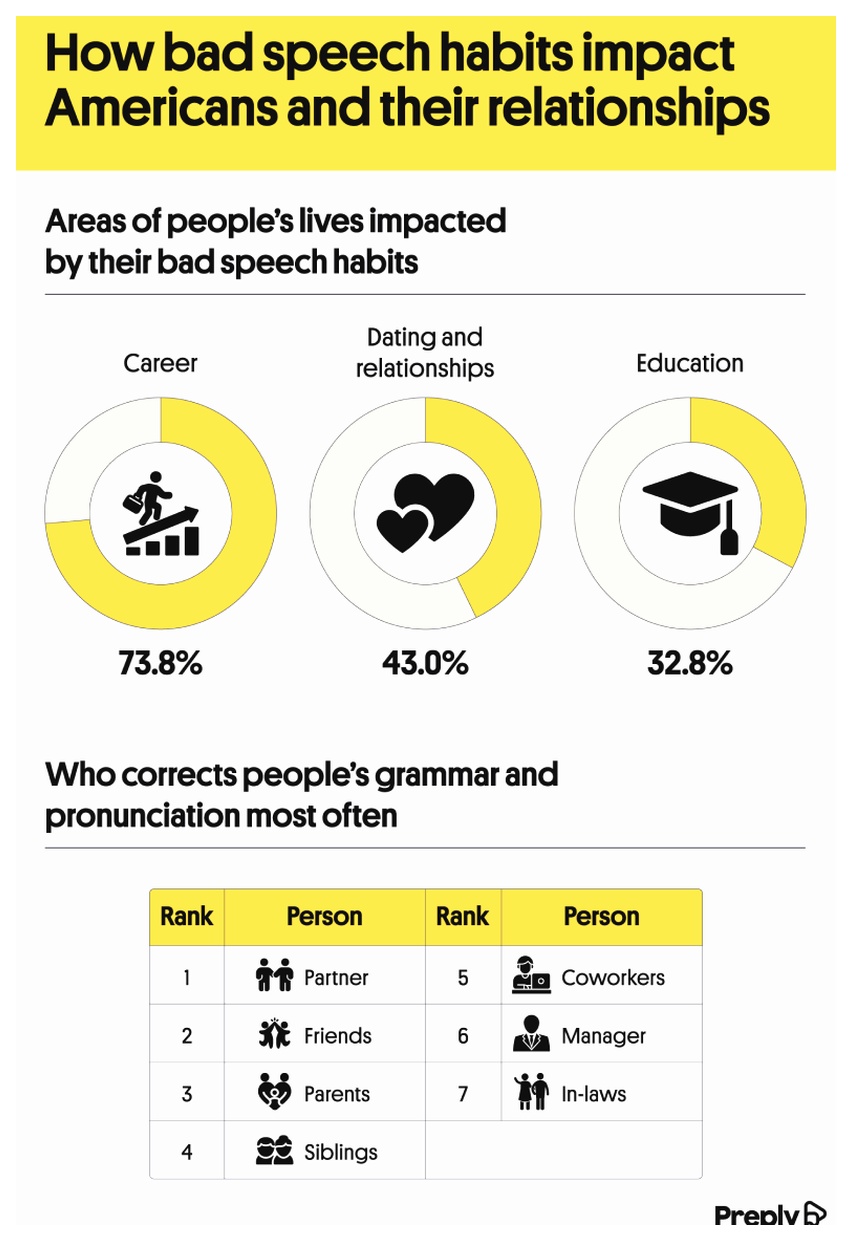
In our final area of research, we aimed to explore the influence of speech habits on individuals and their daily lives. Many participants reported that these habits have significantly affected their careers, highlighting the profound impact communication can have on professional success.
Our tutors are here to help you enhance your vocabulary and provide insightful feedback, empowering you on your language-learning journey and boosting your confidence in the workplace.
Many Americans believe their speech habits significantly affect their dating and relationships. The ongoing discussions around “red flags” and “beige flags” can make it challenging to feel confident while searching for a romantic partner, especially if they struggle with certain language habits.
Certain relationships can greatly enhance your language learning journey. Our research shows that romantic partners, friends, and parents are the primary individuals who help by correcting grammar and pronunciation. These connections not only provide support but also foster improvement in your language skills.
While acting with good intentions can certainly be beneficial, partnering with a language expert can significantly enhance your speech habits. Johnson emphasizes that “Improving speech is a journey, not a quick fix. Be patient with yourself and take time to celebrate every bit of progress, no matter how minor it may seem!”
Practice better speech habits with LingualNeeds
Communication plays a vital role in our daily lives, whether we’re checking in with clients at work or sharing a laugh with friends and family. As we grow, our language habits evolve, but it can be challenging to determine which habits to embrace and which to let go of in order to improve our communication skills.
At LingualNeeds, we embrace the unique characteristics of everyone’s speech. However, we recognize that you may want to refine certain habits for clearer communication. That’s why our dedicated team of tutors is here to support you in achieving your language goals.
Jumpstart your journey today by enhancing your vocabulary with online English lessons, and say goodbye to the frustration of searching for the perfect word. If you’re not ready to break old habits, why not explore the exciting opportunity of learning a new language with Spanish classes?
No matter what your language-learning aspirations are, the dedicated team at LingualNeeds is ready to support you every step of the way. Whether you’re looking to break old habits, expand your vocabulary, or master Spanish, our experienced tutors are here to guide you on your journey.
Methodology
In this research, we conducted a nationwide survey of Americans from all 50 states to uncover the regions with the best and worst language habits. We explored various aspects of communication, including the frequency of filler words, common linguistic mistakes, and who in their lives holds them accountable for grammar and pronunciation.
To identify where Americans can improve their communication skills, we analyzed responses for the use of filler words, poor communication habits, and efforts to conceal undesirable behaviors. We assigned points for these factors, calculated average scores for each state, and adjusted them on a scale from 0 to 100—where 100 indicates the greatest potential for growth. Ultimately, we ranked the states based on these scores.
Frequently Asked Questions
What are common speech habits that Americans wish to change?
Common speech habits include speaking too quickly, frequently using filler words like ‘um,’ and excessive apologizing.
Which states have the most room for improvement in language habits?
Indiana, Colorado, and Nebraska had the highest scores indicating poor speech habits.
What are the most frequently used filler words among Americans?
The most common filler words are ‘um,’ ‘so,’ and ‘like,’ with ‘um’ being the most prevalent.
How can individuals improve their speech habits?
Individuals can improve by practicing pausing, recording their speech, and engaging in word games to enhance vocabulary.
What role do relationships play in improving language skills?
Romantic partners, friends, and parents often help correct grammar and pronunciation, providing support for language improvement.