- Key takeaways
- Savoring the syllables
- Deck the halls with festive language
- Wrapping up the phonetics of the season
- Methodology
- Fair use statement
- Frequently Asked Questions
- How do most Americans pronounce Thanksgiving?
- What is the preferred pronunciation of Hanukkah among Americans?
- What do Americans generally prefer to call stuffing or dressing?
- How do Americans pronounce the word pecan?
- What are the top two pronunciations for Christmas according to the survey?
Alongside the joy and generosity of the holiday season, lively discussions often emerge around the pronunciation of festive terms. Words like “caramel” and “Hanukkah” can sound quite different depending on where you’re from, leading to spirited debates that reflect our diverse regional dialects and cultural heritages.
To explore this intriguing phenomenon, LingualNeeds conducted an engaging survey of 1,000 Americans, aiming to reveal the most popular pronunciations of holiday-themed words.
Key takeaways
- Nearly 50% of Americans pronounce Thanksgiving as THANGS-giv-ing.
- Almost 4 in 5 Americans pronounce Christmas as KRIS-mas.
- Over 4 in 5 Americans pronounce Hanukkah as HAH-nuh-kuh.
- Nearly 40% of Americans pronounce pecan as PEA-can.
- Almost 90% of Americans pronounce cranberry as CRAN-bear-ee.
- Nearly 80% of Americans prefer to call it stuffing, while just over 20% say it’s dressing.

Learn a language with personalised 1-on-1 classes with our expert tutors from all over the world
French lessons online
Spanish lessons online
Savoring the syllables
Let’s dive into the delightful—and occasionally perplexing—world of holiday treats by exploring how people pronounce a range of festive foods and drinks.
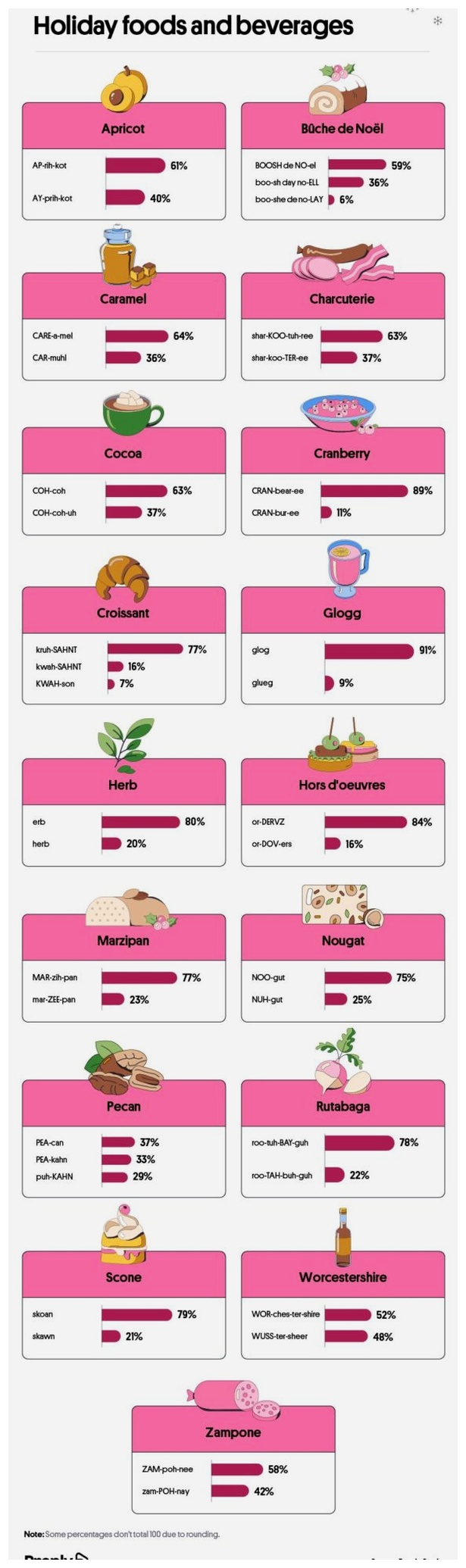
Listed below are Americans’ top favored pronunciations for these holiday-specific words:
- Apricot: AP-rih-kot
- Bûche de Noël: BOOSH de NO-el
- Caramel: CARE-a-mel
- Charcuterie: shar-KOO-tuh-ree
- Cocoa: COH-coh
- Cranberry: CRAN-bear-ee
- Croissant: kruh-SAHNT
- Glogg: glog
- Herb: erb
- Hors d’oeuvres: or-DERVZ
- Marzipan: MAR-zih-pan
- Nougat: NOO-gut
- Pecan: PEA-can
- Rutabaga: roo-tuh-BAY-guh
- Scone: skoan
- Worcestershire: WOR-ches-ter-shire
- Zampone: ZAM-poh-nee
Shifting from how we say holiday words, here’s what Americans prefer to call some favorite items and traditions.
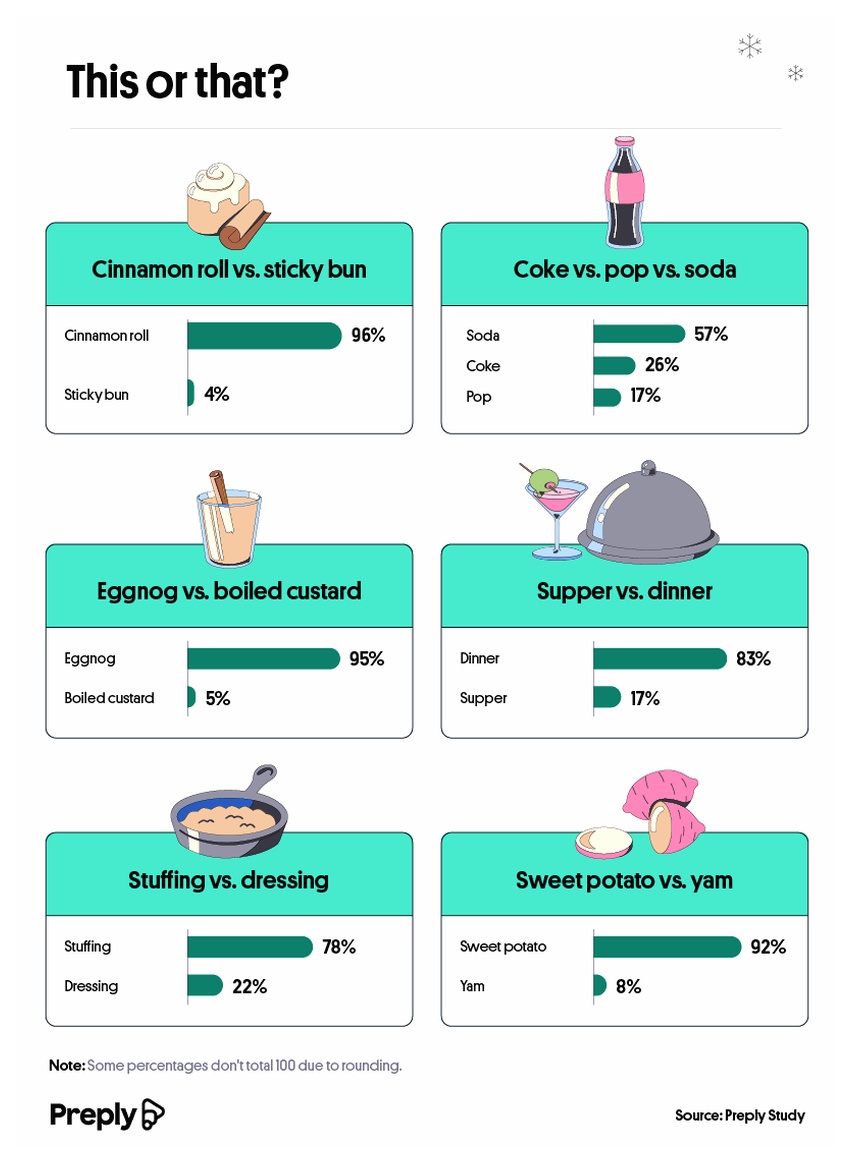
As for the head-to-head debates, Americans declare the following the winning terms:
- Cinnamon roll vs. sticky bun: Cinnamon roll
- Coke vs. pop vs. soda: Soda
- Eggnog vs. boiled custard: Eggnog
- Supper vs. dinner: Dinner
- Stuffing vs. dressing: Stuffing
- Sweet potato vs. yam: Sweet potato
If you’re looking to enhance your English pronunciation or dive into a new language, online tutoring services are a fantastic resource. They can boost your communication skills, making holiday gatherings—and everyday conversations—more enjoyable and effective!
Deck the halls with festive language
As we conclude our study, let’s explore how individuals express the names of holiday events, highlighting the rich diversity of seasonal joy and traditions that people celebrate.

The most-preferred pronunciations for the following terms are:
- Thanksgiving: thanks-GIV-ing
- Christmas: KRIS-mas
- Hanukkah: HAH-nuh-kuh
- New Year: New Year (not New Years)
- Yule: yool
- Aunt: ant
- Route: root
- Bouquet: boo-KAY
- Frankincense: fran-KIN-sense
- Envelope: EN-ve-lope
- Menorah: meh-NOR-uh
- Mistletoe: MIS-ul-toh
- Poinsettia: poin-SET-uh
- Reindeer: RAIN-deer
- Tinsel: TIN-sel
- Vase: vayz
Learn a language online with our free learning materials.
Learn English online
Learn French online
Wrapping up the phonetics of the season
Words like “pecan pie” and “poinsettia” do more than just fill the air; they embody our heritage and diverse cultural backgrounds that shape the holiday season. The way we pronounce these terms reveals the rich tapestry of our experiences and invites us to dive deeper into the fascinating stories they tell. Embracing these holiday sounds allows us to appreciate the unique nuances of language and tradition in America.
As LingualNeeds works to connect linguistic and cultural gaps, we invite learners and language enthusiasts to delve into the origins of holiday term variations. We believe this exploration will deepen your understanding and inspire you to further investigate the ways language influences our experiences.
Where will your passion for language lead you next? Consider diving into online French lessons, where you’ll master the authentic pronunciations of delightful words like “charcuterie” and “Bûche de Noël.” Impress your friends at your next holiday gathering with your newfound skills!
Methodology
LingualNeeds conducted an engaging survey with 1,000 Americans to uncover the most frequently used pronunciations of holiday-related words. The respondents, averaging 40 years old, included a balanced mix of participants: 51% male and 49% female. In terms of generational representation, the survey comprised 9% baby boomers, 24% Gen X, 58% millennials, and 9% Gen Z, providing a comprehensive view of diverse perspectives.
Fair use statement
Holiday-themed words frequently spark lively debates over pronunciation, shaped by regional accents and cultural differences. If this subject piques your audience’s interest, you’re welcome to share our findings for non-commercial use. We simply request that you include a link back to this page, allowing others to access the complete context and insights from our research.
Frequently Asked Questions
How do most Americans pronounce Thanksgiving?
Nearly 50% of Americans pronounce Thanksgiving as THANGS-giv-ing.
What is the preferred pronunciation of Hanukkah among Americans?
Over 4 in 5 Americans pronounce Hanukkah as HAH-nuh-kuh.
What do Americans generally prefer to call stuffing or dressing?
Nearly 80% of Americans prefer to call it stuffing, while just over 20% say it’s dressing.
How do Americans pronounce the word pecan?
Nearly 40% of Americans pronounce pecan as PEA-can.
What are the top two pronunciations for Christmas according to the survey?
Almost 4 in 5 Americans pronounce Christmas as KRIS-mas.