- The meaning of etiquette
- Is etiquette the same everywhere?
- The European Etiquette Guide
- Key Findings:
- 89% of countries agree that you should take your shoes off when entering someone else’s house
- In which countries would you keep your shoes on and why?
- Still not sure?
- 85% of countries wouldn’t make the first move when it comes to giving two kisses to say hello
- Why does it seem that no one wants to kiss on the cheek anymore?
- Finland is the only country that turned down the idea of bringing a gift when visiting a friend
- One-third believe that gifts should be saved for special occasions
- Is it impolite to not bring a gift?
- “Why It’s Considered Polite to Finish Your Meal When Dining at Someone Else’s Home”
- What if I can’t finish the whole meal?
- “Do You Prefer Arriving Early, On Time, or Fashionably Late to Social Events?”
- Not even the fashion capital believes in being “fashionably late”
- Sometimes you just can’t help being late – and that is ok
- What more can I do to make people feel comfortable in my presence?
- Frequently Asked Questions
- What is the significance of etiquette in social interactions?
- How does etiquette vary across different cultures?
- Why is it important to remove shoes when visiting someone’s home?
- What do most countries think about gift-giving when visiting friends?
- What is the general consensus on punctuality in social settings?
Etiquette plays a vital role in social interactions, yet it varies significantly from one country to another. To explore this fascinating topic, we gathered insights on various gestures, aiming to identify which ones are deemed essential, which are optional, and how their significance changes across cultures.
The hashtag #etiquette has captivated audiences on TikTok, amassing a staggering 3 billion views as users explore quick, informative videos filled with tips and tricks to enhance their social skills and strengthen personal relationships. Additionally, the demand for etiquette knowledge is on the rise, with online searches for “how to have good etiquette” surging by 95% over the past year, highlighting the increasing importance of this essential skill.
At LingualNeeds, we’re passionate about understanding the nuances of language and etiquette around the globe. To explore how etiquette differs from one country to another, we surveyed more than 1,600 individuals across 27 nations. The insights gathered have led to the creation of our comprehensive European Etiquette Guide, designed to help you confidently navigate social interactions in various cultural contexts!
The meaning of etiquette
Etiquette is your key to leaving a memorable and positive impression. Contrary to popular belief, it’s not determined by your social class or education; rather, it stems from kindness, empathy, and respect for those around you.
Etiquette revolves around thoughtful, small gestures that can significantly influence how others feel and view your character. Whether in the workplace, at home, or during social interactions, practicing good etiquette is essential for fostering positive relationships and creating a respectful environment.
Mastering a new language not only opens doors to communication but also enhances your social skills. By understanding the etiquette and nuances of another culture, you show respect and consideration for those you meet, enriching your interactions and fostering deeper connections.

Learn a language with personalised 1-on-1 classes with our expert tutors from all over the world
French lessons online
Spanish lessons online
Is etiquette the same everywhere?
From an early age, many of us learn the importance of good etiquette. However, these social norms can differ significantly from one country to another. When traveling internationally, it’s essential to navigate these diverse customs to ensure that those we interact with feel respected and valued. This cultural shift can sometimes turn simple interactions into challenging situations, making socializing abroad a bit nerve-wracking.
The European Etiquette Guide
Don’t fret – knowledge is your greatest ally! We’ve explored the concept of etiquette across various European countries, and here’s what we discovered:
Key Findings:
- Most countries (24 out of 27) reported that they consistently remove their shoes when visiting others’ homes.
- Data revealed that individuals aged 18-34 typically remove their shoes upon entering a home, while those aged 35-54 prefer to do so only when asked by the host.
- In 23 out of 27 countries, cheek kissing as a greeting occurs only if initiated by the other person.
- More than 50% of surveyed countries consider bringing a gift when visiting a friend’s home as a common practice.
- One-third of countries reserve gift-giving for special occasions, with Finland being the only nation where most people never bring gifts when visiting friends.
- All countries agreed that they would always finish their food as a sign of respect.
- A survey of 27 countries revealed that 23 prefer punctuality when attending events or meeting friends, with no country favoring the idea of arriving fashionably late.
- 35% of men prefer to arrive early, compared to just 27% of women, who typically choose to arrive on time.
Learn a language online with our free learning materials.
Learn English online
Learn French online
89% of countries agree that you should take your shoes off when entering someone else’s house
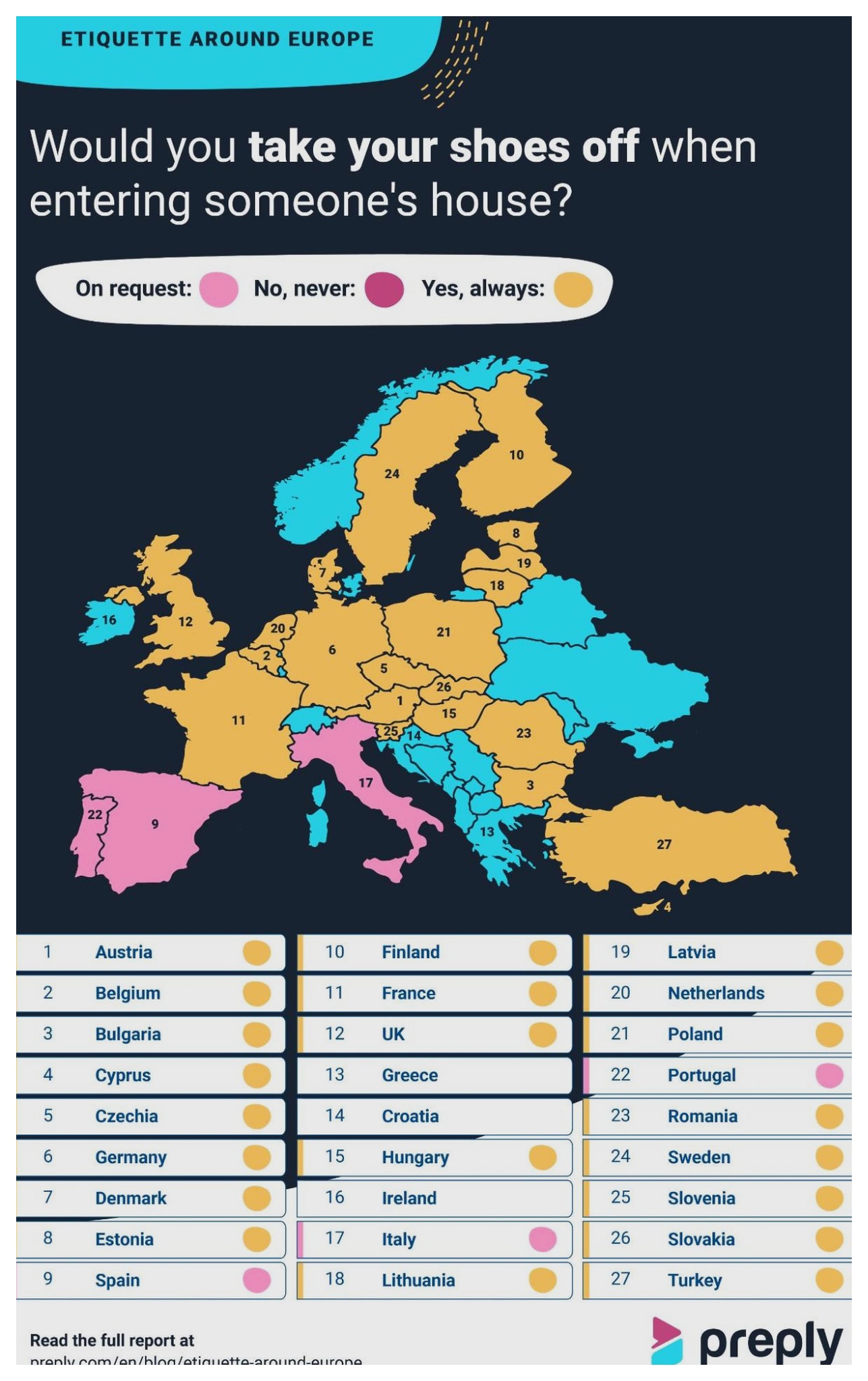
When visiting someone’s home, removing your shoes at the entrance is a thoughtful gesture that demonstrates respect for your host’s space. This simple act helps keep their floors clean by preventing dirt and debris from outside from being tracked in. Additionally, going barefoot conveys a sense of ease and comfort in your host’s presence, fostering a welcoming atmosphere and ensuring your visit starts off on a positive note!
In our survey of 27 countries, an overwhelming 24, including Denmark, Finland, and Lithuania, reported that they consistently remove their shoes when visiting someone else’s home. This highlights a strong cultural norm around maintaining cleanliness and respect in personal spaces.
In Sweden, every respondent expressed that they always remove their shoes upon entering a home, with one TikTok comment highlighting that “this is a must” in Swedish culture.
In Poland, a striking 82% of people believe that shoes should always be removed upon entering a home. One commenter emphasized this cultural norm, stating, “In Poland, keeping your shoes on is considered very disrespectful, and if you do, you’re likely to be asked to take them off.”
In which countries would you keep your shoes on and why?
Spain, Italy, and Portugal have a unique perspective when it comes to footwear at home, with most residents opting to keep their shoes on. In these sunny locales, carpets—often difficult to clean and prone to staining—are less prevalent than in cooler regions like the UK, where warmth is a priority. Additionally, the warm climate encourages the use of sandals and flip-flops, which are not only more comfortable but also ideal for indoor wear, unlike heavier boots and trainers.
Still not sure?
If you’re uncertain about the host’s preferences, a quick look at their shoes by the door can provide some clues. Feel free to ask them directly as well—it’s a great way to ensure you’re aligned with their style!
85% of countries wouldn’t make the first move when it comes to giving two kisses to say hello

To kiss or not to kiss? This age-old question often arises in social settings. In many cultures, particularly in Europe, cheek kissing is a popular and friendly form of greeting that fosters connection and warmth.
In some cultures, this gesture is seen as a warm expression of compassion and friendliness, while in others, it can be viewed as inappropriate or even pretentious.
Interestingly, a significant majority of 23 out of 27 countries agreed that they would only offer two cheek kisses as a greeting if the other person made the first move.
Denmark, Estonia, Sweden, and Slovenia all stood firm in their decision, firmly responding “no” to the suggestion of greeting someone with two kisses on the cheek. As a result, not a single country chose to embrace this custom.
Why does it seem that no one wants to kiss on the cheek anymore?
These findings might come as a surprise to many, but it’s crucial to recognize that the Covid pandemic has significantly impacted traditional greetings. Heightened awareness of the risks associated with close contact has prompted people to adopt new ways of saying hello.
Finland is the only country that turned down the idea of bringing a gift when visiting a friend
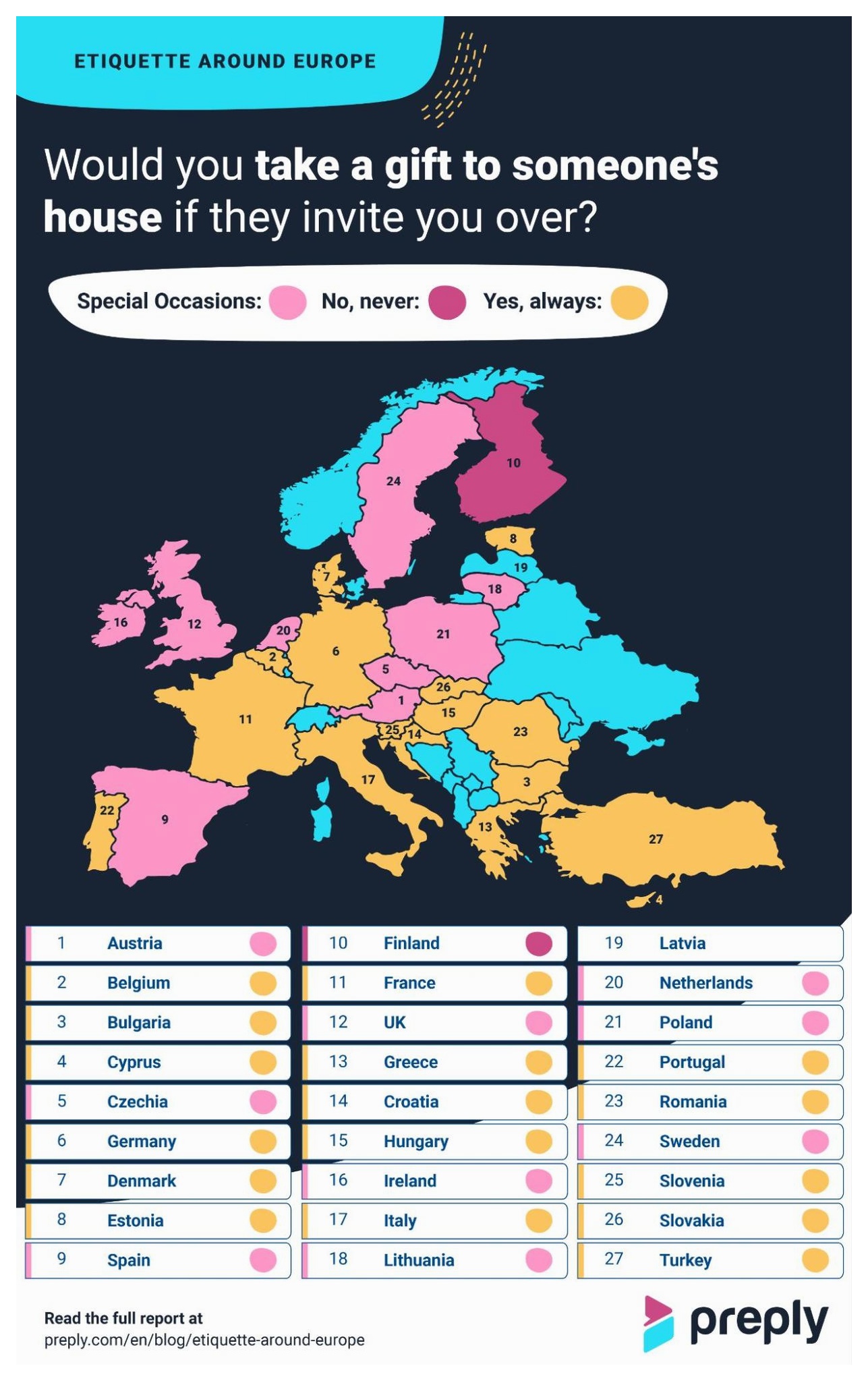
Bringing a gift when visiting someone’s home is a thoughtful way to express your appreciation and acknowledge their hospitality. It’s a simple yet meaningful gesture that strengthens friendships and shows gratitude for their kindness.
Don’t stress—your friends aren’t expecting extravagant gifts like a diamond necklace! Instead, consider giving something thoughtful yet simple, like a bottle of wine to share or a lovely bouquet to brighten their home.
One-third believe that gifts should be saved for special occasions
The data reveals that 17 out of 27 countries consider it a common practice to bring a gift when visiting a friend’s home.
In nine countries, including Austria, the United Kingdom, and Spain, most people indicated a preference for celebrating special occasions with gifts rather than giving them casually.
Finland stands out as the only country where most people believe that bringing a gift when visiting a friend is unnecessary.
Is it impolite to not bring a gift?
While the gesture of bringing a gift each time you meet someone is thoughtful, it can quickly become an expensive habit. Especially in light of the economic challenges faced by many countries today, it’s perfectly reasonable to forgo a gift on occasion.
Married individuals are 12% more likely to give gifts compared to their single counterparts, highlighting how a shared income and support from a partner can make gifting more accessible and appealing.
Furthermore, 45% of respondents reported having a lower income, while 40% identified as middle income. This suggests that purchasing gifts may not be a top financial priority for many in these groups.
“Why It’s Considered Polite to Finish Your Meal When Dining at Someone Else’s Home”

When dining at someone else’s home, finishing your plate is an important aspect of good etiquette. It reflects your appreciation for the meal and acknowledges the effort and care that the host invested in preparing it. This gesture not only conveys that you enjoyed the food but also honors the time and love that went into creating it.
In our survey of various countries, we found a strong consensus on dinner table etiquette: most respondents believe it’s respectful to finish every bite of food. Interestingly, the data revealed a gender difference; 82% of men reported always finishing their meals, compared to 75% of women. The latter group often opted for the response that they leave some food on their plate to avoid appearing greedy.
What if I can’t finish the whole meal?
It’s understandable that finishing every bite of a meal can be challenging, especially with generous portions and diverse taste preferences. However, research indicates that completing your plate is a gesture of appreciation in many cultures worldwide. So, the next time you’re a guest at someone’s home, remember to embrace this considerate dining etiquette!
“Do You Prefer Arriving Early, On Time, or Fashionably Late to Social Events?”

Arriving at a social event can significantly impact how guests and hosts perceive you. In fact, interest in the question, “Is it better to arrive on time, early, or late?” has surged by 39% worldwide over the past year. Let’s explore the nuances of event timing…
- Arriving early demonstrates your commitment to the event and allows you to assist the host with final preparations. However, ensure you wait until the host is ready for your arrival, as they may be occupied.
- Punctuality demonstrates respect for your plans and shows enthusiasm to see your friend.
- Arriving fashionably late can allow guests to settle in and avoid awkward moments, but it may also upset the host, making them feel undervalued or that you lack interest in their event.
Not even the fashion capital believes in being “fashionably late”
A significant majority of respondents, including those from Belgium, Ireland, and Turkey, agree that arriving at the scheduled time is the best approach, with 23 out of 27 countries in consensus. Notably, Greece strongly supports this viewpoint, with an impressive 78% of its respondents favoring punctuality.
Four countries—Czechia, Germany, Poland, and the fashion capital, France—boldly rejected the notion of being fashionably late, with most citizens favoring the idea of arriving ahead of time.
Our research into relationship status revealed an interesting trend: singles were twice as likely to arrive late. This pattern might indicate a sense of nervousness or discomfort, as they often lack a partner to chat with while waiting for other guests.
Sometimes you just can’t help being late – and that is ok
Regardless of where you are in the world, punctuality is a cornerstone of good etiquette. Arriving early or on time demonstrates respect for your friends and their time. However, we recognize that life can get hectic, particularly for parents—47% of our respondents have kids, and juggling multiple responsibilities can make timely departures challenging. If you anticipate being late, it’s essential to inform the host. This simple gesture shows you care, even when circumstances are difficult.
What more can I do to make people feel comfortable in my presence?
How can I create a welcoming atmosphere for those around me? If you’re preparing to explore a new country, engaging with locals is the most effective way to immerse yourself in its culture. Our tutors are here to guide you through this journey, offering language lessons that unlock deeper cultural understanding. Whether you’re looking for Italian lessons to grasp social customs, French classes to fit in effortlessly in France, or online German courses to navigate the intricacies of German business etiquette, we provide the tools you need for an enriching travel experience and lifelong learning.
Frequently Asked Questions
What is the significance of etiquette in social interactions?
Etiquette is essential for leaving a positive impression and is based on kindness, empathy, and respect.
How does etiquette vary across different cultures?
Etiquette practices can differ significantly from one country to another, influencing how social interactions are perceived.
Why is it important to remove shoes when visiting someone’s home?
Removing shoes is a respectful gesture that helps maintain cleanliness and fosters a welcoming atmosphere.
What do most countries think about gift-giving when visiting friends?
Most countries consider bringing a gift when visiting a friend’s home as a common practice, except for Finland where it is often deemed unnecessary.
What is the general consensus on punctuality in social settings?
A significant majority of countries agree that punctuality is important, with most preferring to arrive on time rather than fashionably late.