- The most popular slang terms in Canada
- The most popular Canadian slang terms in every province
- Most popular slang terms in major Canadian cities
- The most popular relationship slang terms in every province
- Most popular relationship slang terms in major Canadian cities
- The most popular food slang terms in every province
- Most popular food slang terms in major Canadian cities
- Conclusion
- Methodology
- Fair Use
- Frequently Asked Questions
- What is the significance of slang in everyday communication?
- Why is it important to learn slang in language classes?
- What are some examples of popular Canadian slang terms?
- How do regional differences affect the use of slang in Canada?
- What is poutine and why is it significant in Canadian slang?
Slang plays a vital role in our everyday communication. While it’s often shunned in formal writing, it holds just as much significance—if not more—than standard vocabulary. Slang adds flavor and personality to our conversations, reflecting cultural nuances and fostering connections between people.
Slang is inherently informal and often lacks clear meanings, making it a vital tool for indicating group membership. If you’re familiar with the latest lingo, you’re part of the in-crowd; if not, you might feel excluded. This is why taking language classes that incorporate slang is essential—it’s not just about mastering formal vocabulary, but also about understanding the cultural nuances that come with everyday speech.
Have you ever heard the terms “Canuck,” “Timmies,” or “loonie”? If you’re puzzled, you’re not alone! These are just a few of the most cherished slang expressions in Canada, and we’re here to break them down for you.
Canadian slang isn’t as foreign to outsiders as one might think. Terms like “bae,” “sneaky link,” and “ick” are widely used in various English-speaking countries, making them familiar to many readers. In our research, we categorized slang terms based on their contexts; for instance, the dating-related terms mentioned earlier contrast with others like “poutine,” which is all about delicious Canadian cuisine.
Understanding Canadian slang is essential for anyone looking to communicate like a true local, regardless of its origins. But which slang terms are the most widely used, and in which regions can you find them?
Our team gathered over 120,000 tweets from all over Canada and conducted extensive data analysis to uncover key insights. Whether you’re a Canadian looking to enhance your vocabulary or a future visitor aiming to impress locals with your savvy slang, keep reading to explore the trending slang terms across the country and the specific regions where they’re most commonly used.
The most popular slang terms in Canada
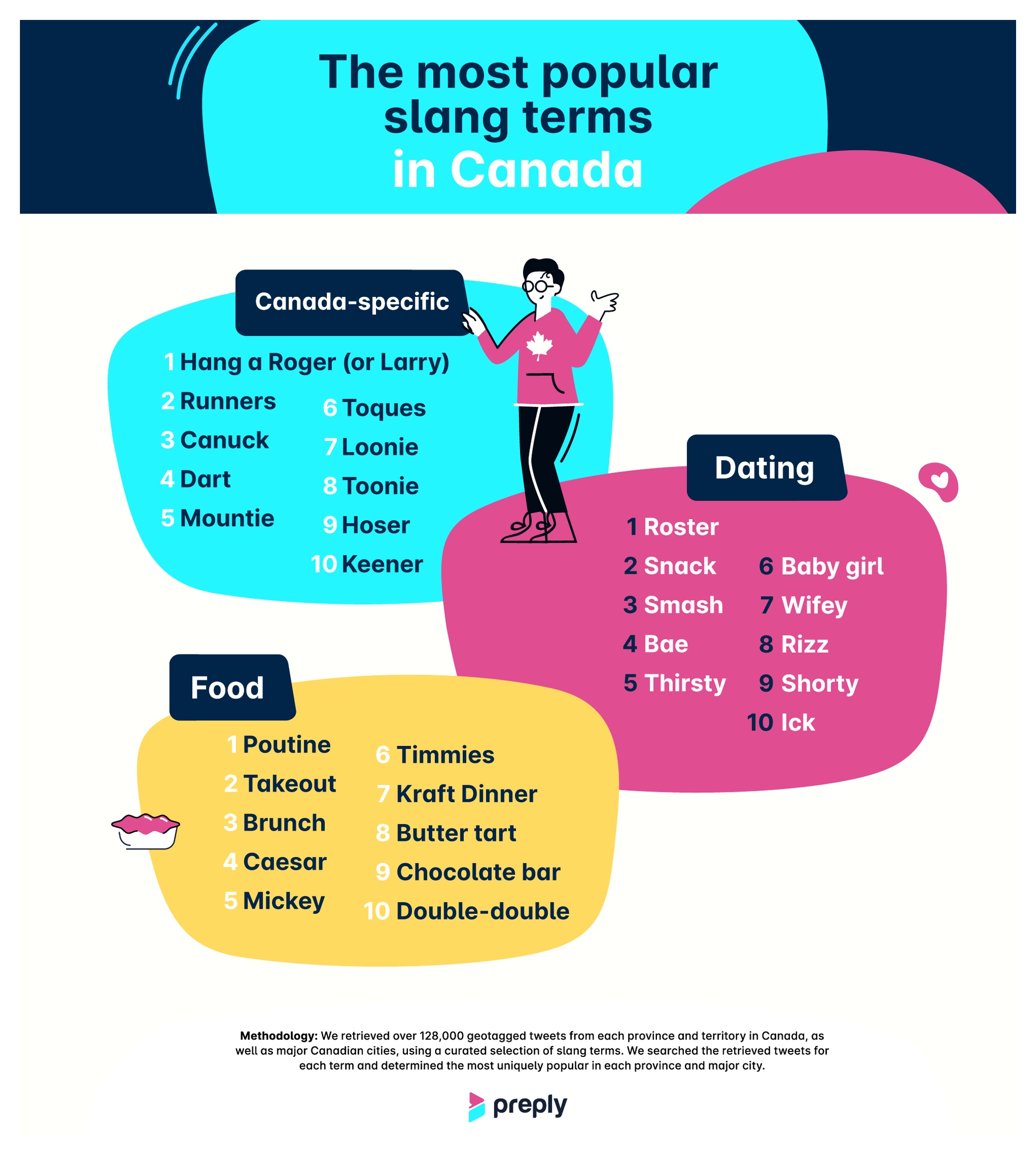
Heading out to grab some darts? Slip on your running shoes, bundle up in your mackinaw, and don your toque. Don’t forget to bring along some loonies and toonies, and make your way a few kilometers to the store!
While it may be rare to encounter so much slang crammed into just a few sentences, it highlights the importance of understanding key terms. Mastering these phrases allows you to communicate like a true Canuck, embracing the essence of Canadian culture.
Let’s kick things off with a fun fact: the term “dart” is Australian slang for a cigarette. This catchy nickname eventually made its way into Canadian vernacular, highlighting the playful evolution of language across cultures.
As you prepare to head out for a game of darts, don’t forget to dress appropriately for the unpredictable Canadian weather. First on your list should be your “runners,” which are simply your running shoes. But what about the other essentials? A “Mackinaw” is a thick, woolen plaid jacket that will keep you warm, while “toques” are cozy knit winter hats, similar to beanies. Gear up and stay stylishly protected from the chill!
Remember to bring your cash! In Canada, “loonies” and “toonies” are the nicknames for the one-dollar and two-dollar coins. You’re almost at your destination—the store is just a short distance away, only a couple of kilometers. Keep in mind that you may need to make a right or left turn, affectionately referred to as “hanging a Roger or Larry.” This fun slang was the most popular term we found in our study!
While we’ve covered the most common general terms, let’s dive into some more specific ones. For instance, if you’re looking to spend your loonies and toonies on a meal, what options do you have?
It’s no surprise that “poutine” stands out as the quintessential food slang term, especially considering its iconic status in Canadian cuisine. This delectable dish features thick-cut fries smothered in rich gravy and topped with gooey cheese curds—truly a comfort food triumph!
You might recognize some common terms like “takeout,” “brunch,” and “chocolate bar,” but did you know that “chocolate bar” actually encompasses all candy bars? Slang can be quite perplexing! For instance, in Canadian slang, a “Caesar” isn’t just a salad; it’s a Bloody Mary made with Clamato instead of traditional tomato juice. Additionally, “Mickey” doesn’t refer to McDonald’s—it’s the term used for a 13 oz. bottle of liquor.
Don’t overlook “Timmies,” the beloved nickname for Tim Hortons, one of Canada’s top coffee chains. Known for its cozy atmosphere and delicious menu, Timmies is a go-to spot for locals, who often order a “double-double”—a classic coffee with two creams and two sugars.
While we’ve explored the world of the stomach, let’s turn our attention to the heart! When it comes to dating slang, many terms mirror those used in the U.S. One of the most common is “roster,” which denotes the list of individuals someone is dating. Other popular terms include “snack,” “smash,” “bae,” “thirsty,” and “rizz,” the latter gaining traction thanks to an American streamer. These expressions add a playful flair to the dating scene!

Learn a language with personalised 1-on-1 classes with our expert tutors from all over the world
French lessons online
Spanish lessons online
The most popular Canadian slang terms in every province
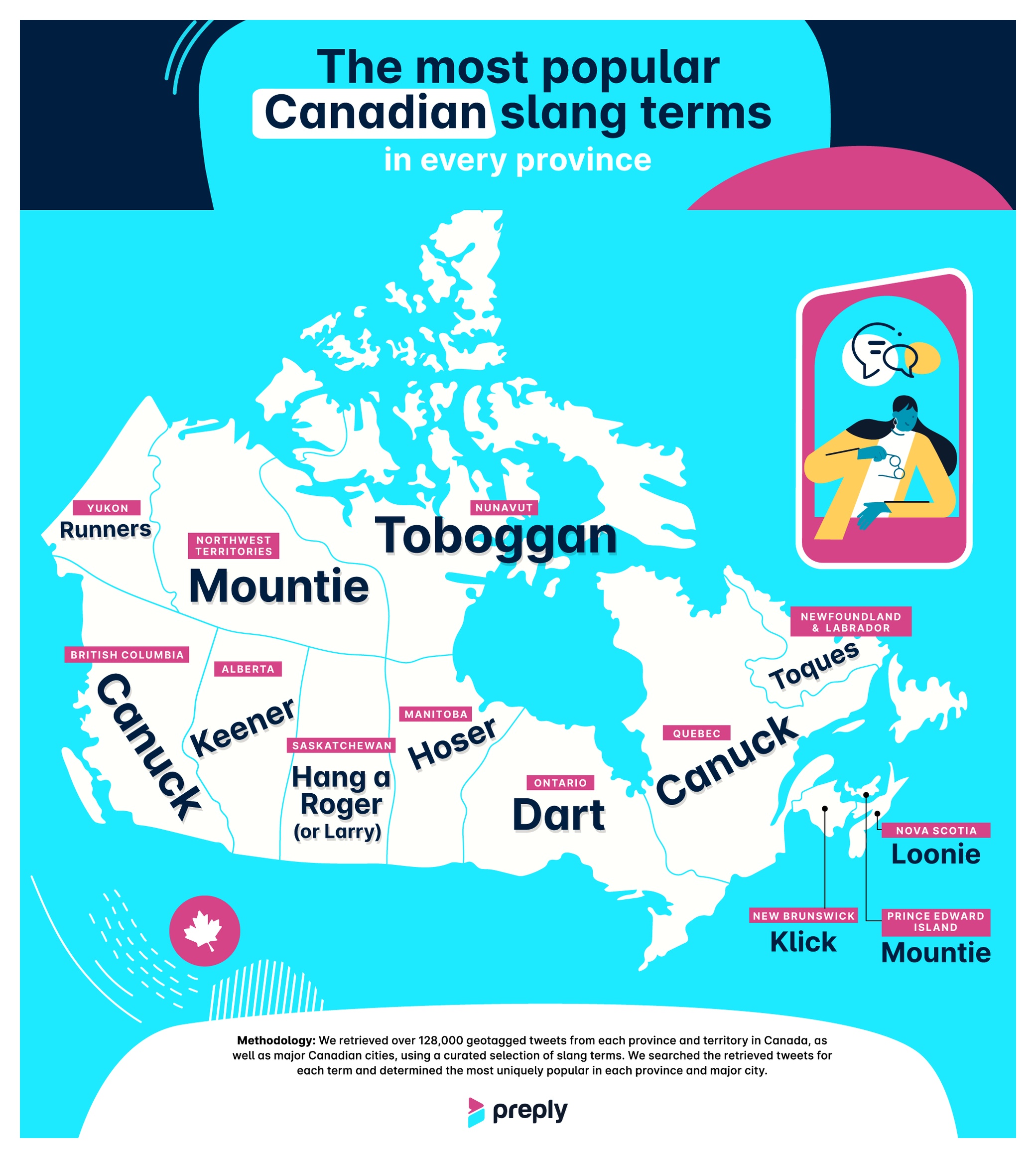
Canadian provinces are known for their strong sense of independence and unique regional identities. Each province boasts its own popular slang, so it’s important to know the local lingo—using Ontario slang in Alberta could leave you feeling out of place! If you’re heading to Quebec, where French is the sole official language, brushing up on your French through online lessons can make your visit much more enjoyable.
The slang term “Canuck” reigns as the most widely used expression in both Quebec and British Columbia. Meanwhile, “Mountie,” a colloquial term for a member of the Royal Canadian Mounted Police, enjoys popularity across several provinces, particularly in the Northwest Territories and Prince Edward Island.
Most popular slang terms in major Canadian cities
- Toronto: Dart
- Montreal: Hang a Roger (or Larry)
- Calgary: Canuck
- Ottawa: Hoser
- Edmonton: Mackinaw
- Winnipeg: Kerfuffle
- Mississauga: Keener
- Vancouver: Mountie
- Brampton: Runners
- Hamilton: Loonie
- Surrey: Canuck
- Quebec City: Dart
- Halifax: Runners
- Laval: Toonie
- London: Toboggan
The most popular relationship slang terms in every province
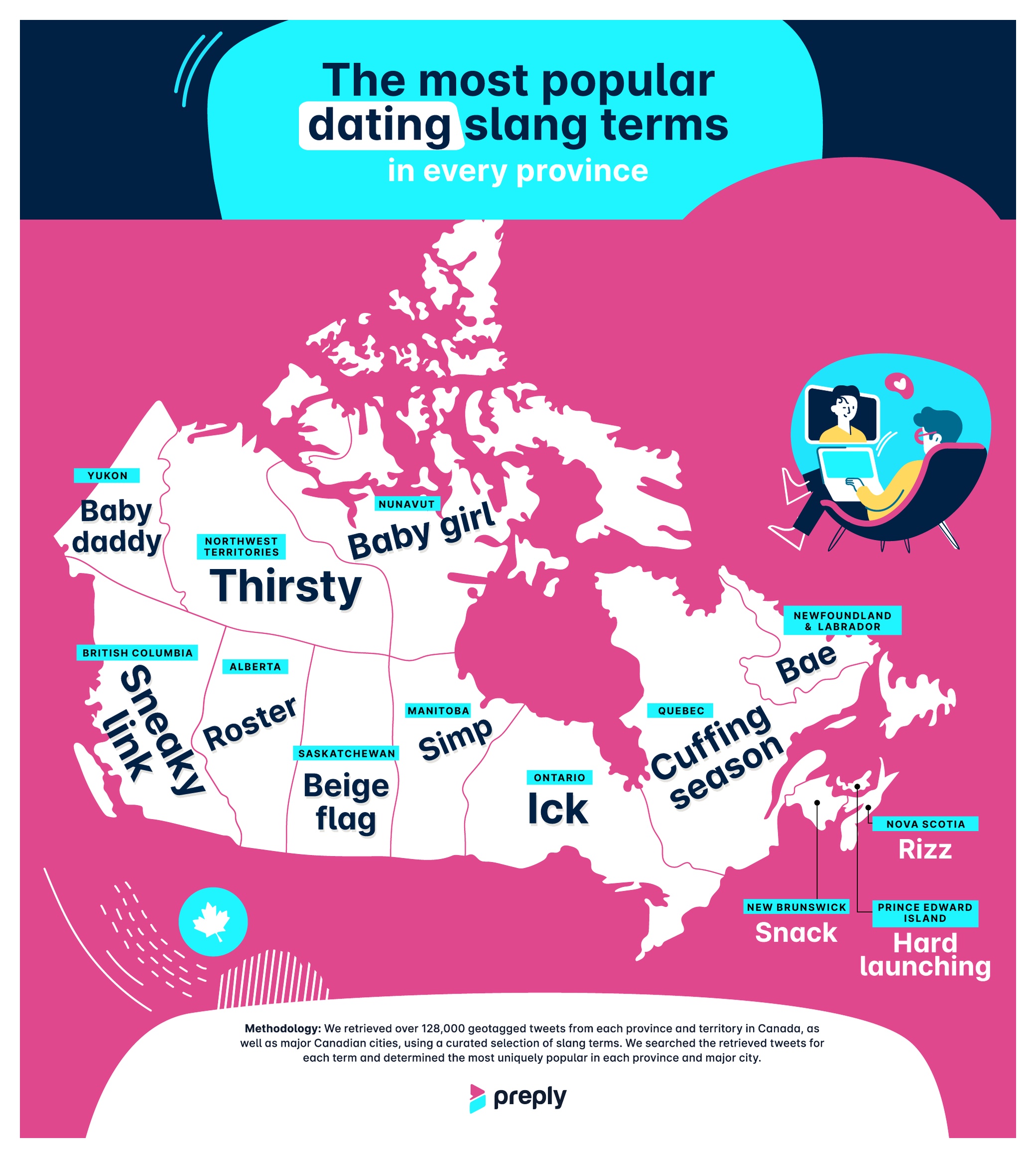
Love can catch you by surprise at any moment! Whether you’re in bustling Toronto or the serene landscapes of British Columbia, it’s important to use the right language when talking about romance. Embrace the local lingo to truly connect with others in matters of the heart across Canada.
In Prince Edward Island and Quebec, romance is thriving! The trending phrases in these regions are “hard launching,” which refers to the bold act of publicly declaring a romantic relationship on social media, and “cuffing season,” the winter period when many people are inclined to settle down and start new relationships.
In contrast, Saskatchewan and Ontario face some challenges in the dating scene. In Saskatchewan, the term “beige flag” describes those quirky traits in a potential partner that might not be dealbreakers but still raise eyebrows. Meanwhile, Ontario’s singles are grappling with the concept of “ick,” which refers to traits that can suddenly make an otherwise appealing person unappealing.
Most popular relationship slang terms in major Canadian cities
- Toronto: Baby girl
- Montreal: Thirsty
- Calgary: Wifey
- Ottawa: Snack
- Edmonton: Hubby
- Winnipeg: Roster
- Mississauga: Bar
- Vancouver: Boo
- Brampton: Smash
- Hamilton: Thirsty
- Surrey: Snack
- Quebec City: Ick
- Halifax: Roster
- Laval: Hubby
- London: Wifey
Learn a language online with our free learning materials.
Learn English online
Learn French online
The most popular food slang terms in every province
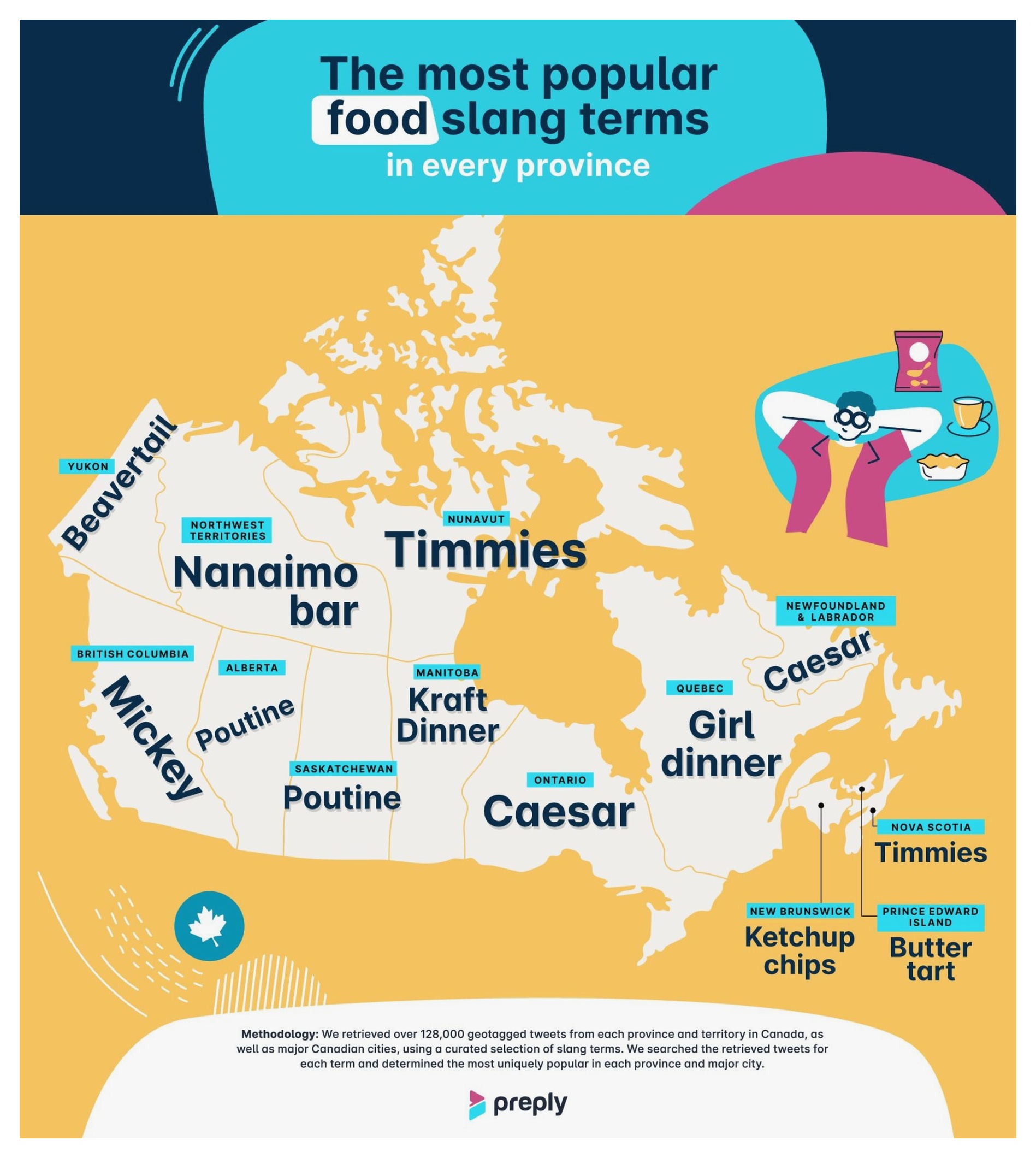
We’ve highlighted the immense popularity of poutine, which stands out as Canada’s favorite food slang term. It ranks at the top in both Alberta and Saskatchewan. Meanwhile, Tim Hortons, affectionately known as Timmies, claims the number one spot in Nova Scotia and Nunavut, showcasing its strong presence across the country.
If cheese curds and gravy aren’t to your taste, why not give ketchup chips a shot? This iconic snack holds the title for the most beloved food slang term in New Brunswick, making it a must-try for anyone exploring local flavors!
Most popular food slang terms in major Canadian cities
- Toronto: Mickey
- Montreal: Beavertail
- Calgary: Caesar
- Ottawa: Double-double
- Edmonton: Takeout
- Winnipeg: Brunch
- Mississauga: Butter tart
- Vancouver: Kraft Dinner
- Brampton: Takeout
- Hamilton: Brewski
- Surrey: Poutine
- Quebec City: Timmies
- Halifax: Brunch
- Laval: Mickey
- London: Caesar
Conclusion
Armed with your newfound understanding of Canadian slang, you’ll be ready to impress even the most seasoned Canucks. Who knows, they might just dub you a “keener” for your impressive knowledge!
Why limit yourself to just Canada? Broaden your linguistic horizons by exploring slang from around the world! Check out our comprehensive guide to UK slang, or immerse yourself in the vibrant expressions of Australian English with our detailed breakdown of Aussie colloquialisms.
Remember, the best way to master slang, like any other aspect of language, is to immerse yourself and practice!
Methodology
Our team has curated an engaging list of popular Canadian slang, divided into three categories: food-related terms, dating and relationship lingo, and other unique expressions. To create this comprehensive resource, we analyzed over 128,000 geotagged tweets from every province and territory, as well as major cities across Canada. After filtering out duplicates and tweets in languages other than English, we scoured the remaining tweets to identify the most distinctive slang terms that resonate within each region and city.
Fair Use
Want to share this data or utilize the infographics? Feel free to use them for any non-commercial purposes! Just remember to include a link back to this page for proper citation.
Frequently Asked Questions
What is the significance of slang in everyday communication?
Slang adds flavor and personality to conversations, reflecting cultural nuances and fostering connections.
Why is it important to learn slang in language classes?
Understanding slang is essential for mastering informal vocabulary and cultural nuances in daily speech.
What are some examples of popular Canadian slang terms?
Examples include ‘Canuck,’ ‘Timmies,’ and ‘loonie,’ which reflect Canadian culture and everyday life.
How do regional differences affect the use of slang in Canada?
Each province has its own popular slang, making it important to know local terms to avoid feeling out of place.
What is poutine and why is it significant in Canadian slang?
Poutine is a popular food slang term in Canada, known for its thick-cut fries, gravy, and cheese curds, representing Canadian cuisine.