- Frequently Asked Questions
- How has the English language evolved since the Anglo-Saxon period?
- What is the difference between Old English and Early Modern English?
- How did pronunciation change during the 16th and 17th centuries?
- Why are words like ‘beet’ and ‘beat’ pronounced similarly today?
- How does Shakespeare’s English compare to modern American English?
Languages are constantly evolving, and English is no exception. Since the Anglo-Saxons settled in Britain around 1500, the language has undergone significant transformations. Join me as we explore the fascinating journey of English, focusing on how its pronunciation has shifted from the time of Shakespeare to the present day.
Imagine dropping a group of North American tourists into the bustling streets of Winchester circa 900 AD. Unless they had a grasp of Old English, they would struggle to communicate with the locals. Fast forward to today, and if you asked people in modern New York or London to identify the language of an original Anglo-Saxon chronicle, many would likely fail to recognize it as English. This illustrates just how much the English language has evolved over the centuries.
Watch the following video to understand why.

The Development of the Language and English Pronunciation
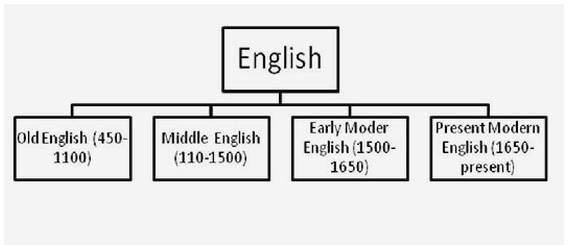
The conquest of England by the Normans marked a pivotal moment in the evolution of the English language, leading it toward a shape we can somewhat recognize today—though it would still pose challenges for modern speakers. By the time of Shakespeare (1564-1616), English had evolved into a form closer to what we know now. Notable works from this era, such as the Book of Common Prayer (1549) and the King James Bible (1611), are relatively accessible for contemporary English speakers. While this period is often mistakenly referred to as “Old English,” it is more accurately termed “Early Modern English.”
Spelling and Pronunciation
While Early Modern English may appear similar to contemporary English in writing, significant shifts in pronunciation occurred during the 16th and 17th centuries. These changes played a crucial role in shaping the diverse ways English is spoken globally today. Primarily, these alterations affected vowel sounds, but there were also notable modifications in consonant pronunciations.
As a rule, there is a closer correlation between spelling and pronunciation in earlier forms of English.
The Origin of Homonyms
As an English student, you might find it intriguing that the words “beet” and “beat” are pronounced identically, despite their different spellings. This can be puzzling, as one would expect distinct pronunciations for distinct words. Interestingly, during the Early Modern English period, these two words were pronounced differently.
Historically, the “ea” in “beat” was pronounced similarly to the “a” in “make,” while “beet” retained its current pronunciation. Over time, however, the pronunciation of “ea” in “beat” evolved, leading to a merging of the two vowel sounds we recognize today.
Since that period, various long vowel sounds have evolved significantly. For instance, the vowel in “name” once resembled the “e” in “men.” Similarly, the “ow” in “how” was pronounced closer to the interjection “oh,” making it sound like “hoe” in Early Modern English.
Pronunciation of Consonants
During Shakespeare’s era, consonant pronunciation varied significantly from today. In contemporary English, certain consonants like “t,” “s,” and “c” are frequently articulated as if they were spelled with “sh” and “ch.” For instance, consider how we pronounce “Christian,” “Russian,” and “Dacia.”
In Early Modern English, consonants were pronounced consistently. For example, the “s” in “Russia” sounded just like the “s” in “bus,” and the “t” in “Christian” was pronounced as it is in “Christ.” This clarity in pronunciation helped maintain the distinct sounds of words during that period.
Since that time, the letters t, s, and c take on a softer sound when followed by the letter i. To pronounce them as they were in Shakespeare’s era, simply articulate them exactly as they are spelled.
Shakespeare’s English resembles American English
One key aspect of pronunciation in Shakespeare’s time was the consistent articulation of the letter “r.” Unlike today, where it can be silent, especially in certain dialects, every “r” was pronounced clearly. However, by the 18th century, southern British English began to drop the “r” sound at the end of words, marking a significant shift in how the language was spoken.
Many people today believe that Shakespeare’s English is akin to modern British English and often assume that the pronunciation of the letter “r” was absent during his time. In reality, “r” was very much pronounced in Early Modern English.
The pronunciation of American English is, in fact, closer to the pronunciation in Shakespeare’s time than is British English.
Trevor Nunn, a prominent figure at the Royal Shakespeare Company, expressed his desire to incorporate American actors into Shakespearean productions, emphasizing the unique dynamic their accents bring to the language. While some may scoff at this concept, Nunn argues that the contemporary American accent actually bears a striking resemblance to the speech patterns of Shakespeare’s time.
Below is a video of Ben Crystal reading Shakespeare’s Sonnet 116, both in modern and original forms, for comparison:
Have you explored the world of Shakespeare? What’s your favorite play or sonnet? If diving into his texts feels daunting, consider listening to audiobooks of his works instead. They offer a fantastic way to enhance your listening skills while immersing yourself in his timeless stories.
Frequently Asked Questions
How has the English language evolved since the Anglo-Saxon period?
The English language has undergone significant transformations since the Anglo-Saxon period, evolving from Old English to Early Modern English and beyond, with notable changes in pronunciation and vocabulary.
What is the difference between Old English and Early Modern English?
Old English refers to the earliest form of the language spoken until around 1150, while Early Modern English, which emerged around the late 15th century, is more accessible to contemporary speakers and includes works like the King James Bible.
How did pronunciation change during the 16th and 17th centuries?
During the 16th and 17th centuries, significant shifts in pronunciation occurred, particularly affecting vowel sounds and some consonant pronunciations, leading to the distinct ways English is spoken today.
Why are words like ‘beet’ and ‘beat’ pronounced similarly today?
These words were pronounced differently during the Early Modern English period, but over time, the pronunciation of ‘beat’ evolved to merge with that of ‘beet,’ leading to their current identical pronunciation.
How does Shakespeare’s English compare to modern American English?
Shakespeare’s English is considered to have a pronunciation closer to modern American English than to contemporary British English, particularly in the consistent articulation of the letter ‘r’.