- The art of Italian hand gestures
- Types of Italian hand gestures
- 1. What do you want? (Che vuoi?)
- 2. My goodness, how good! (Mamma mia, che buono!)
- 3. I don’t care. (Non mi interessa.)
- 4. I don’t have any. (Non ce n’è./Non ce l’ho.)
- 5. OK!
- 6. Come here! (Vieni qui!)
- 7. What a stench! (Che puzza!)
- 8. Somewhat/So-so (Così così)
- 9. I’m hungry. (Ho fame.)
- 10. I did not hear well. (Non ho capito bene./Non ho sentito bene.)
- The role of Italian gestures in conversation
- Misinterpretations and cultural sensitivity of Italian gestures
- Practical tips for learning Italian gestures
- Observe and learn
- Practice in front of a mirror
- Use gestures sparingly
- Respect regional differences
- Conclusion
- Frequently Asked Questions
- What are Italian hand gestures?
- How can I learn Italian hand gestures effectively?
- What does the gesture ‘Mamma mia, che buono!’ mean?
- Are there regional differences in the meanings of Italian gestures?
- Why is understanding Italian gestures important for communication?
Italian hand gestures are not merely lively expressions; they are a vital element of Italy’s rich cultural tapestry. In this article, we will delve into the intriguing realm of Italian hand gestures, uncover their meanings, and examine the significant role they play in enhancing communication in Italy.
The art of Italian hand gestures
Imagine yourself in a lively Italian café, where the air buzzes with animated conversations. Here, you’ll quickly realize that words alone can’t convey the richness of the discussions. Italians are famous for their expressive hand gestures, which, combined with colorful slang, breathe life into their storytelling and enhance the overall experience.
Italian gestures are more than just random movements; they form a rich non-verbal language that amplifies the meaning behind spoken words. Whether you’re planning a trip to Italy or simply curious about its vibrant culture, learning these gestures can significantly enrich your communication and foster a deeper connection with the Italian way of life.
Types of Italian hand gestures
Explore the fascinating realm of Italian hand gestures, where each gesture carries its own distinct charm and significance. As you discover these expressive movements, keep in mind that their meanings can vary across different regions of Italy. Understanding the context is key to accurately interpreting the intended message behind each gesture.
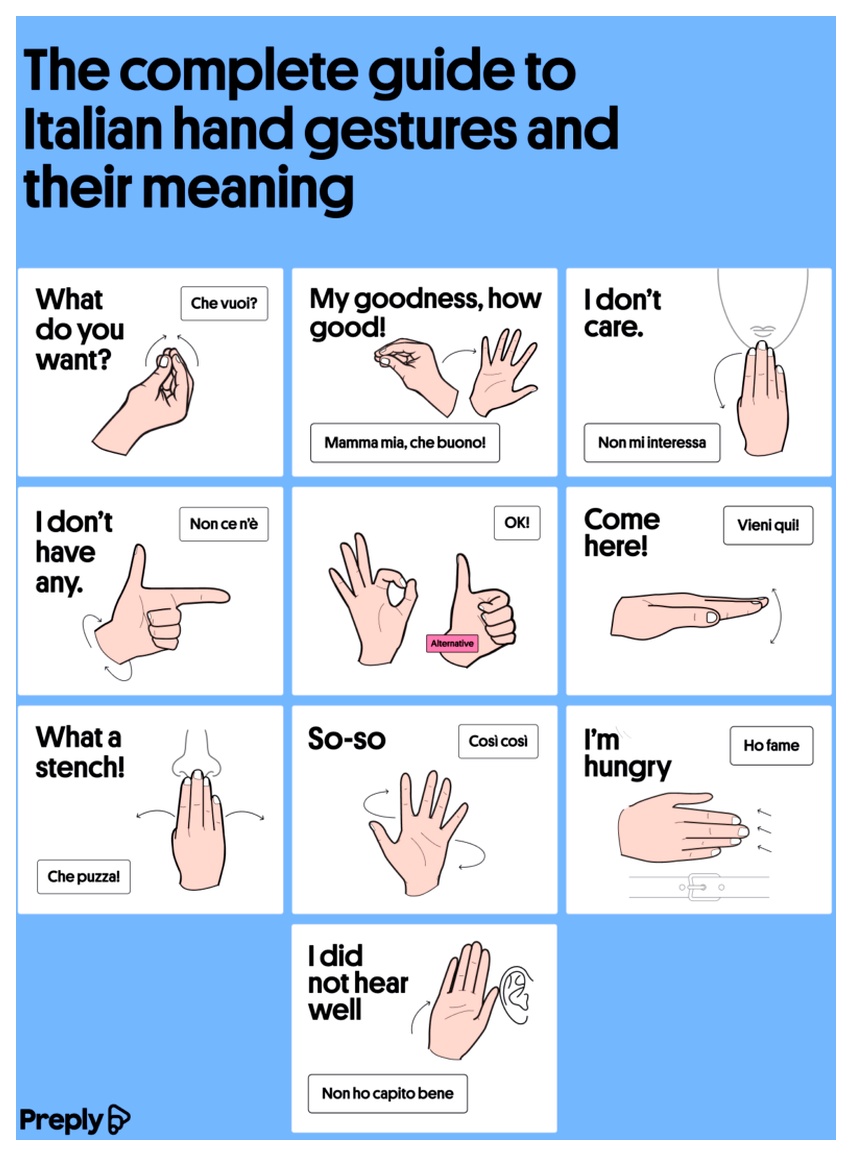
1. What do you want? (Che vuoi?)
In Italy, when someone pinches their fingers together and gestures quickly with one hand, they are expressing the phrase “ma che vuoi?” which translates to “What do you want?” This lively gesture often reflects feelings of exasperation or frustration, amplifying the annoyance behind their inquiry.
Depending on the context, this gesture can also mean “What are you doing?” or “What’s going on?”
2. My goodness, how good! (Mamma mia, che buono!)
Kiss your fingertips and flick them outward—this timeless Italian gesture is a delightful way to express that a dish is not just good, but truly exceptional. Italians often use this sign to convey their appreciation for a delicious meal, frequently pairing it with the enthusiastic phrase, “Mamma mia, che buono!” which translates to “My goodness, how good!”
In Italy, it’s common for children to express delight by saying “che buono!” while playfully pointing their index finger to the center of their cheek and wiggling it, mimicking the motion of turning a screw. This charming gesture adds a unique touch to their expression of enjoyment!
3. I don’t care. (Non mi interessa.)
Place your hand on your chin and push it forward. This simple gesture conveys a sense of mindlessness and complete disinterest. It’s a straightforward and widely recognized expression!
4. I don’t have any. (Non ce n’è./Non ce l’ho.)
Extend your index finger and thumb to create a gun shape. Next, gently rotate your wrist from side to side in a smooth, rhythmic motion. This gesture signifies that you do not possess what has been requested.
5. OK!
Create a circle by bringing your index finger and thumb together, while keeping your other fingers extended upward. Great job! You’ve nailed the gesture! 👌
As an alternative, you can point the thumb upward while keeping the other fingers closed. 👍
6. Come here! (Vieni qui!)
To invite someone to come closer, extend your hand with your palm facing down and gently move it up and down. This simple gesture effectively signals your desire for them to approach you.
7. What a stench! (Che puzza!)
When you encounter an unpleasant odor, simply wave your hand in front of your nose while moving it side to side. Pair this gesture with a look of disgust, and it will be clear to everyone around you that you’re not pleased with the scent.
8. Somewhat/So-so (Così così)
When someone inquires about your well-being and you respond with “così così” (meaning “so-so”), or if you want to convey uncertainty in response to a question, you can simply hold your hand open and gesture it side to side. This expressive movement effectively communicates your mixed feelings or indecision.
9. I’m hungry. (Ho fame.)
When your stomach starts to growl, try this simple technique: extend your hand with fingers together and flat, then gently tap it rhythmically at the level of your stomach. This can help soothe your hunger pangs!
10. I did not hear well. (Non ho capito bene./Non ho sentito bene.)
If you find yourself struggling to hear or comprehend something, simply raise your hand and bring it near your ear. This gesture signals to the person you’re conversing with that you’d like them to repeat what they just said.
The role of Italian gestures in conversation
To truly appreciate Italian hand gestures, you must see them in action. Italians seamlessly weave these expressive gestures into their conversations, using them to clarify points, emphasize their words, and convey a range of emotions.
Picture a vibrant debate unfolding among friends in a bustling Italian piazza. Their animated gestures enhance the conversation, adding a dynamic visual element that captivates onlookers. Even if you don’t grasp the language, their expressive movements allow you to grasp the essence of the discussion effortlessly.
Misinterpretations and cultural sensitivity of Italian gestures
While Italian gestures are a charming aspect of the culture, they can lead to misunderstandings for outsiders.
Take the cornagesture, for instance: it involves extending the index and pinky fingers while keeping the other fingers tucked in (🤘). While it might resemble a peace sign, its meaning is quite different. This gesture suggests that someone has been betrayed by their partner. In certain regions of Italy, this topic can be particularly sensitive, so it’s wise to use this gesture with caution.
Understanding cultural sensitivity is essential when using Italian hand gestures, particularly in formal situations. It’s important to avoid using gestures without knowing their meanings, as this could lead to unintentional miscommunication.
Practical tips for learning Italian gestures
If you’re excited to master authentic Italian hand gestures, here are some helpful tips to kick off your journey:
Observe and learn
Spend time with Italians, observe their gestures, and ask questions about their meanings.
Practice in front of a mirror
Practice the most common gestures in front of a mirror to get the hang of them.
Use gestures sparingly
Remember that less is often more. Don’t overdo it; use gestures to enhance your communication.
Respect regional differences
Keep in mind that gestures can vary significantly in meaning across different regions of Italy. To communicate effectively, choose gestures that are appropriate and easily understood in your specific location.
Conclusion
Italian hand gestures are a fascinating and integral aspect of everyday life in Italy. They add vibrancy, emotion, and cultural depth to conversations. As you journey through this stunning country, take a moment to observe and learn these expressive gestures. Embracing them will enhance your communication skills and foster a deeper connection with Italian culture.
On your next trip to Italy, pay attention not only to the words spoken by the locals but also to the expressive gestures they make—each movement tells a vivid story. If you’re keen to explore Italian language and culture further, why not enhance your experience by taking online Italian lessons with LingualNeeds?
Embrace the beauty of Italian hand gestures, and let them enhance your experience of Italy.
Buon viaggio! (“Have a good trip!”)
Frequently Asked Questions
What are Italian hand gestures?
Italian hand gestures are expressive movements used in communication that convey emotions and meanings, often enhancing conversations.
How can I learn Italian hand gestures effectively?
You can learn Italian hand gestures by observing Italians, practicing in front of a mirror, and asking questions about their meanings.
What does the gesture ‘Mamma mia, che buono!’ mean?
This gesture involves kissing your fingertips and flicking them outward, expressing that a dish is exceptionally good.
Are there regional differences in the meanings of Italian gestures?
Yes, the meanings of Italian gestures can vary significantly across different regions of Italy, making context essential.
Why is understanding Italian gestures important for communication?
Understanding Italian gestures is important because they add depth and clarity to conversations, helping to convey emotions and intentions.