- Where in the UK is home to the most slang?
- Which UK cities are home to the most slang addresses?
- Which UK cities are home to the most slang business names?
- What are the most iconic slang words in UK cities?
- Conclusion
- Frequently Asked Questions
- Which UK city has the most slang-infused street names?
- What are some examples of slang terms found in Leeds?
- Which cities are tied for second place in slang street names?
- How does London rank in terms of slang business names?
- What is a popular slang term from Birmingham?
Where in the UK is home to the most slang?
Slang is deeply woven into the fabric of British culture, reflecting the dynamic and ever-changing nature of language. But have you ever wondered about the origins of various slang terms across the UK? Let’s explore the regional roots of these colorful expressions!
Slang terms are often deeply embedded in specific social groups, making them feel like a whole new language to outsiders. Understanding these expressions can be a challenge, as they carry unique meanings and nuances within their communities.
Slang words are an integral part of our daily lives, weaving their way into conversations, texts, and Instagram messages. They reflect the social and cultural events we experience. Interestingly, slang also permeates our surroundings, influencing the names of streets and businesses nationwide, showcasing its pervasive presence in our culture.
To delve deeper into this fascinating phenomenon, we examined the UK’s most populated cities to identify where slang is most commonly found, particularly in street names and business names. We cross-referenced our findings with popular slang terms from Oxford Royale and Green’s Dictionary. Additionally, we highlighted some of the most iconic slang words from various cities throughout the UK.
Which UK cities are home to the most slang addresses?
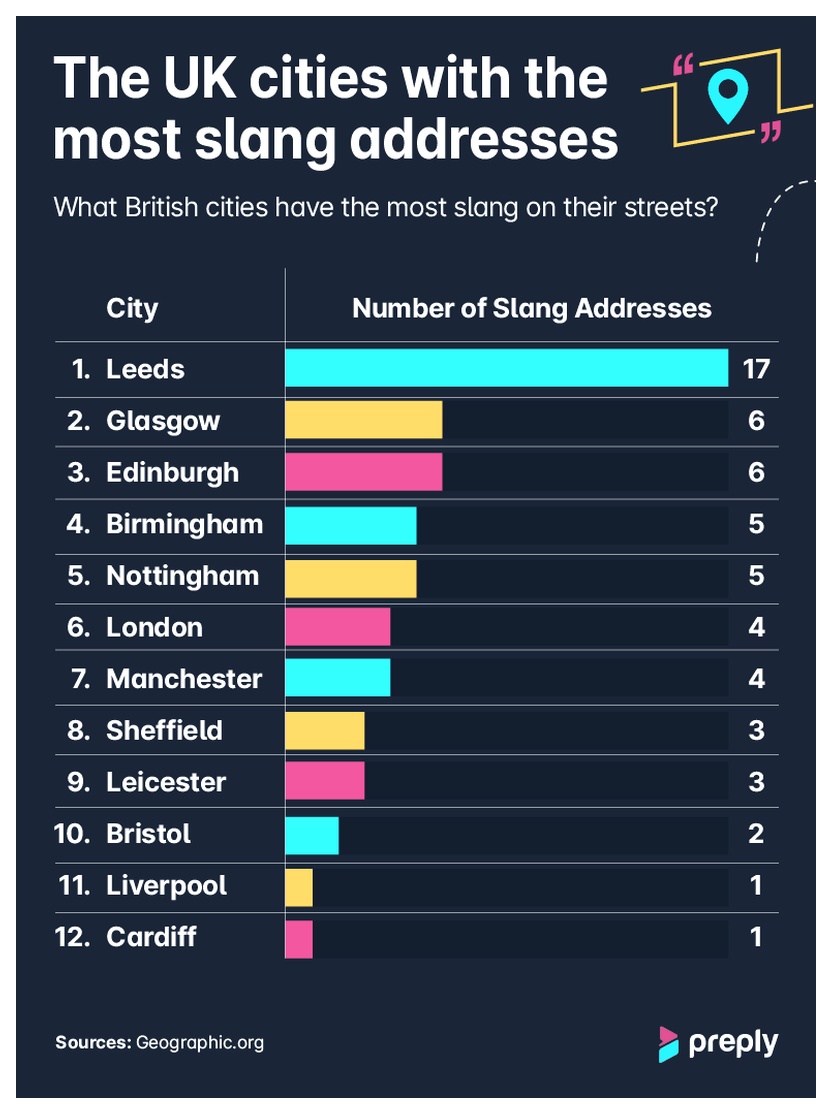
Curious about the birthplace of slang in the UK, we investigated which cities boast the highest number of slang-infused street names. Our research aimed to uncover the vibrant locations that reflect this unique aspect of British culture.
Leeds topped the list with an impressive 17 addresses featuring slang terms. Among them is Balm Place, located at LS11 9PF. In slang, “balm” refers to being drunk or intoxicated, sparking curiosity about whether this spot lives up to its lively name!
Butt Lane, located at LS12 5AY, may not have the charm of other street names, but it certainly has its own quirky appeal. The term ‘Butt’ is regional slang for someone’s backside, likely providing a chuckle for Leeds postal workers. With such a variety of amusing street names, Leeds earned a perfect score of 10/10 in our report.
Tied for second place, Glasgow and Edinburgh each boast six streets with quirky slang names, earning them a solid score of 8/10 in our report. In Glasgow, you’ll find the charming Duffus Terrace, while Edinburgh features the unique Latch Park, located at EH13 0FD.
In both cities, the terms ‘duffus’ and ‘latch’ serve as mild insults. However, in Edinburgh, ‘latch’ can also carry a positive connotation, meaning to acquire or obtain something, depending on the context.

Birmingham secured a spot on the list with five unique slang addresses, including Cuckoo Road (B7 5SE) and Camp Lane (B21 8JE). These playful names contributed to the city’s notable score of 6/10. Here, ‘camp’ describes someone who is flamboyant and whimsical, while ‘cuckoo’ hints at quirky or erratic behavior.

Learn a language with personalised 1-on-1 classes with our expert tutors from all over the world
French lessons online
Spanish lessons online
Which UK cities are home to the most slang business names?
When it comes to naming their businesses, many founders are eager to embrace slang to create unique and memorable brands. Our research shows that London leads the pack, boasting an impressive average score of 89.1/100 for slang-inspired business names.
London boasts an impressive 181 companies with “mint” in their names and 12 that include “cuppa.” Given its massive population of 9,541,000 and a diverse array of businesses, it’s no wonder that the capital leads the way in this unique naming trend.
Ranked second, Manchester boasts an impressive overall score of 65.6 out of 100. Notably, the city features four businesses that incorporate the word “cracking” in their names, along with eleven that proudly use the term “proper.”
One business stood out with the iconic Mancunian slang term “buzzin'” in its name. Interestingly, London also featured two establishments that embraced this lively word.
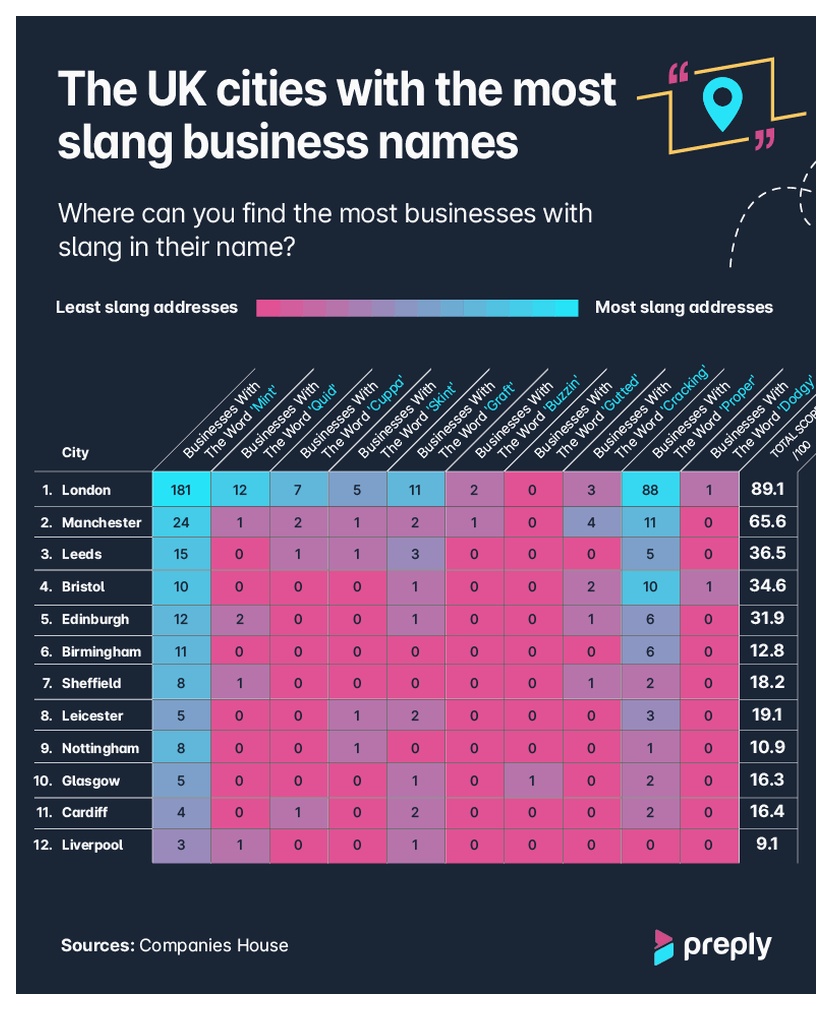
Leeds secured third place with an overall score of 36.5, demonstrating a notable decrease in the use of slang business names compared to London and Manchester. This trend may stem from Leeds having fewer businesses than its larger counterparts.
In the vibrant city of Yorkshire, five businesses proudly featured the word “proper” in their names, while three companies embraced the term “graft.” Notably, an impressive 15 establishments included “mint” in their branding, showcasing the city’s diverse entrepreneurial spirit.
What are the most iconic slang words in UK cities?
In the UK, some slang terms are deeply intertwined with specific cities, reflecting the unique culture and identity of their residents. These expressions have evolved over decades, becoming as integral to the urban landscape as the people themselves.
We explored the bustling cities of Britain and uncovered the most iconic slang phrases that are intricately woven into their vibrant cultures.
Located in the heart of the UK, Birmingham is a vibrant hub of unique slang, and one term you’re likely to hear is “babby.” Often shortened to “bab,” it may sound like a reference to a baby, but in Birmingham, it’s actually a term of endearment for someone you hold dear.
The term “babby” can carry romantic undertones, but it is equally often used to express platonic affection for someone you care about deeply.
Birmingham boasts some unique slang that adds flavor to its local culture. One standout term is “bostin,” which originally described the act of breaking or destroying something. Today, however, it has flipped to convey a sense of excellence, meaning something is particularly great or enjoyable. Another popular word is “mooch,” which refers to aimlessly browsing or exploring a place without a specific goal in mind. These terms reflect the evolving nature of language in the city.
Traveling down the M5 motorway toward Bristol, you’ll encounter some unique slang that might puzzle outsiders. Take the term “drive,” for instance. In Bristolian slang, it refers specifically to someone who drives a taxi or a bus, while the rest of the UK typically uses “driver” for that role.
Interestingly, the term ‘duck’ goes beyond just describing a feathered creature; it’s often used as a term of affection for a close friend or loved one. On the other hand, the slang ‘keener’ is more direct, referring to someone who is clever and enthusiastic—essentially, a person eager to learn and engage.
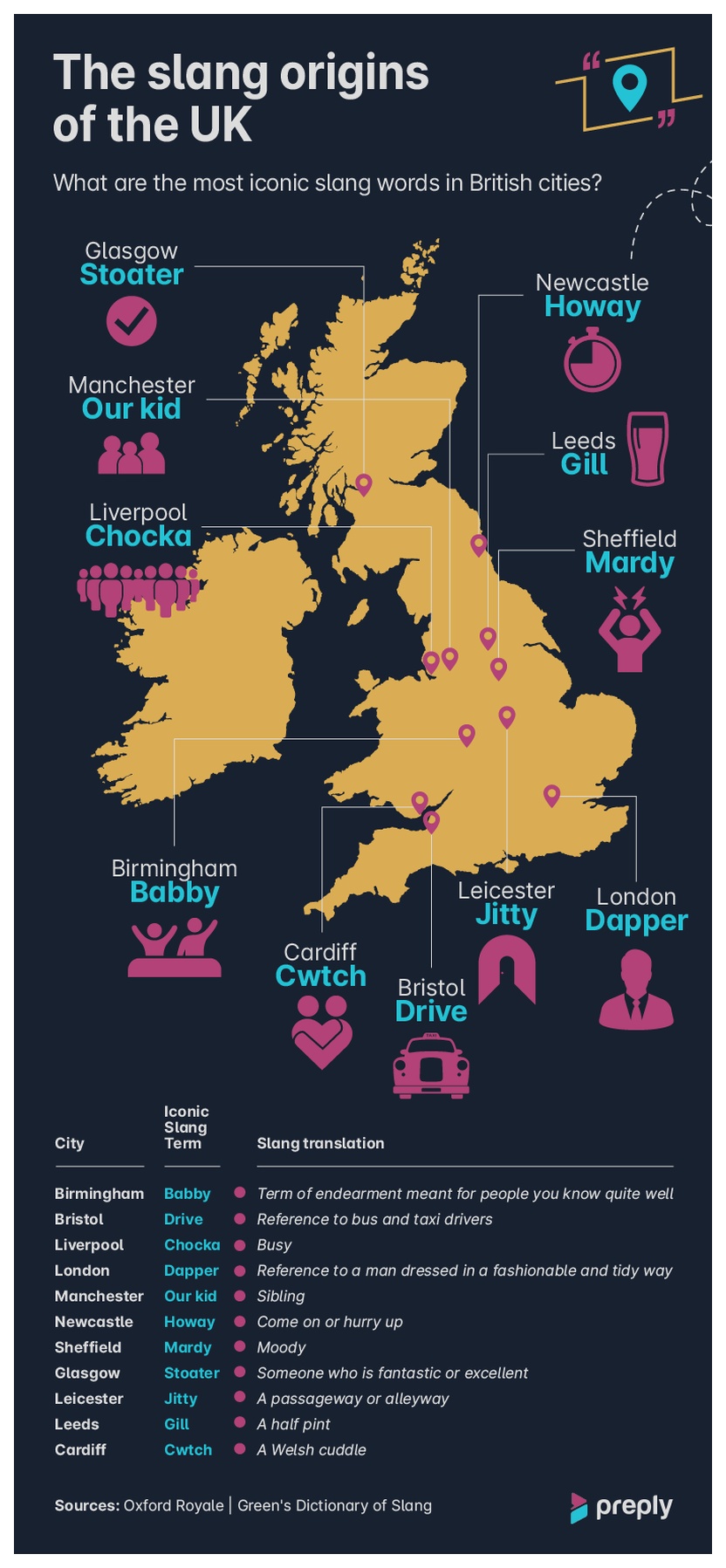
Liverpool boasts a rich array of slang, including the well-known term ‘chocca.’ Locals use this word to describe a place that is bustling or crowded. It’s a fun abbreviation of the more common term ‘chockablock,’ which has nautical roots; it originally referred to the moment when the ropes on a boat are pulled taut, causing the wooden blocks to come together.
In Liverpool, you’ll often encounter some intriguing slang terms. For instance, “webs” refers to trainers or running shoes, while “la” is a casual term used to address a young man. Additionally, the word “devoed” is a shorthand for feeling greatly upset, derived from “devastated.” These expressions add a unique flavor to the local dialect!
London, the UK’s largest and most populous city, serves as a vibrant melting pot of slang. As people from diverse backgrounds converge here, they contribute to the ever-evolving language, resulting in a rich tapestry of slang that reflects the city’s dynamic culture.
A popular piece of London slang, “dapper,” refers to someone who is dressed in a sharp and stylish manner. While it originated in the capital, this term has since spread across the UK, showcasing a flair for elegance in fashion.
While some London slang, like ‘dapper,’ has stood the test of time, many modern expressions are gaining traction. For instance, ‘dun that’ means to disregard or forget something, while ‘skeen’ describes someone acting in a sly or underhanded manner. These contemporary terms showcase the evolving nature of London’s vibrant linguistic culture.
Liam and Noel Gallagher, two of Manchester’s most renowned figures, have played a pivotal role in popularizing a distinctive piece of local slang: “our kid.” As the frontmen of the legendary Britpop band Oasis, the brothers frequently used this term in interviews throughout their tumultuous careers, helping to elevate its status to global recognition.
It’s interesting to note that, despite their very public fallout, the term “our kid” has evolved into a term of endearment. It’s often used to express a brotherly bond with someone you feel a close connection to.
Mancunian slang is rich with unique terms that capture the local flavor. For instance, “barm” refers to a bread roll, while “scran” encompasses all types of food. Meanwhile, the term “hanging” expresses anything from mildly unpleasant to downright disgusting. These words reflect the vibrant culture and culinary scene of Manchester!
Newcastle has long been a vibrant presence on UK television, from the beloved show Byker Grove to the reality phenomenon Geordie Shore, showcasing its unique culture and slang to a wider audience. Among the most famous—and often perplexing—terms from this lively city is “howay.” This versatile word, infused with the cheerful Geordie accent, can convey different meanings such as “go away,” “hurry up,” or even “okay,” all depending on the context.
In Newcastle, locals frequently use the affectionate slang term “pet” to express warmth or fondness. The word “deek” invites someone to take a look at something, while the intriguing phrase “geet walla” refers to something particularly large.
As we’ve discovered, music significantly influences the popularity of a city’s slang, and Sheffield’s very own Arctic Monkeys may have elevated the term “mardy” to iconic status.
The term, often used with a touch of affection to refer to someone who’s easily irritated or tends to complain, gained popularity through a song title by a globally renowned band. This catchy tune also introduced listeners to a bit of Sheffield slang, showcasing the band’s cultural influence.
Sheffield boasts some unique slang that might puzzle those from elsewhere in the UK. For instance, while ‘spice’ typically refers to cooking flavorings, in Sheffield, it’s a term for sweets or candy. Additionally, ‘lug oil’ is a playful way to refer to ears, and ‘laik’ means to play outside. These local expressions add a distinctive flavor to the city’s culture!
Glasgow, a vibrant port city, has welcomed diverse cultures and people from around the globe, shaping its unique slang over time. One of the most distinctive terms you’ll hear along the Clyde is “stoater.” While it may sound like a reference to someone who cares for furry animals, it actually signifies something or someone that is truly fantastic or exceptional.
Glaswegian slang can be quite puzzling! Take the term ‘dinghy,’ for instance—it doesn’t refer to a small boat but means to ignore someone or something. Then there’s ‘coupon,’ which is used to describe a person’s face rather than a discount voucher. And when you hear ‘roaster,’ don’t think of a coffee maker; it actually refers to someone acting foolishly or behaving in an objectionable manner.
In Leicester, the term ‘jitty’ is a popular piece of local slang. While it might sound like it refers to a small landing by the water, it actually describes the narrow alleyways or side paths that connect two main streets. So next time you’re walking through Leicester, keep an eye out for these hidden passageways!
In Leicester, a city in England, you may hear the quirky slang term “wannacroggeh,” which refers to giving someone a ride on a bicycle with the passenger perched on the handlebars—an expression that sounds straight out of a fantasy novel! Adding to the local lexicon, the word “cob” takes on a unique meaning here; while many across the UK recognize it as a type of bread roll, in Leicester, it describes a feeling of being upset or angry.
While exploring Leeds, you might overhear locals requesting a “gill.” Contrary to what it might sound like, this term isn’t related to fish. In Leeds slang, a “gill” refers to half of something, and it’s frequently used in the city’s pubs and bars when patrons prefer a smaller serving than a full pint of beer.
In Cardiff, approximately 16% of the population speaks Welsh, yet English remains the predominant language. Interestingly, one of the city’s most beloved slang terms among English speakers has Welsh roots: “cwtch,” pronounced “cutch.” This delightful word refers to a warm, affectionate cuddle or embrace, perfectly capturing the spirit of Welsh hospitality.
In Cardiff slang, the term “but” takes on a unique meaning—it’s not a reference to someone’s backside or an ending point. Instead, it’s a term of endearment, much like calling someone a buddy or pal.
In Cardiff slang, the term “chopsy” might sound like it refers to a turbulent body of water, but it actually describes someone who talks incessantly or struggles to stay quiet.
Learn a language online with our free learning materials.
Learn English online
Learn French online
Conclusion
British slang is a vibrant tapestry that varies from city to city, showcasing the distinct cultures of each region. This playful language not only enriches everyday conversations but also finds its way into street names and business titles, adding character and local flavor to urban life.
Leeds has claimed the top spot with an impressive 17 street names influenced by slang, featuring quirky examples like “Balm Place,” which refers to being intoxicated, and “Butt Lane,” a playful nod to the rear end. Close behind, both Glasgow and Edinburgh share second place, each boasting six slang-inspired street names.
When it comes to business names, London takes the lead with 181 companies incorporating “mint” and 12 using “cuppa.” Manchester follows closely, showcasing names that include “cracking” and “proper.” Meanwhile, Leeds rounds out the top three, with businesses that embrace “mint” and “graft” in their titles.
Slang serves as a vibrant mirror of a city’s unique personality, shaped by its inhabitants and historical background. It showcases the rich linguistic diversity found across Britain. Dive deeper into the fascinating relationship between language and culture with platforms like LingualNeeds and the English lessons we provide.
Methodology
The team at LingualNeeds have produced the UK slang index by looking at the following factors:
- Top UK Cities with the Most Slang Addresses: A filtered list from Geographic.org showcasing UK addresses containing slang terms.
- Top UK Cities with Slang Business Names: We analyzed 10 popular UK slang terms and searched Companies House to find businesses featuring these words.
- Explore the slang origins of the UK by referencing sources like Oxford Royale and Green’s Dictionary of Slang to uncover the most popular slang terms used in UK cities and their meanings.
Frequently Asked Questions
Which UK city has the most slang-infused street names?
Leeds has the most slang-infused street names, with an impressive 17 addresses featuring slang terms.
What are some examples of slang terms found in Leeds?
Examples of slang terms in Leeds include ‘Balm Place,’ which refers to being drunk, and ‘Butt Lane,’ referring to someone’s backside.
Which cities are tied for second place in slang street names?
Glasgow and Edinburgh are tied for second place, each having six slang-infused street names.
How does London rank in terms of slang business names?
London ranks first for slang business names, boasting an impressive average score of 89.1 out of 100.
What is a popular slang term from Birmingham?
A popular slang term from Birmingham is ‘babby,’ which is a term of endearment for someone you hold dear.