- List of the nationalities (with their country and language)
- Download a list of countries & nationalities for free
- How to write nationalities in English
- Frequently Asked Questions
- What is the difference between nationality and place of origin?
- How do you ask someone about their nationality in a casual conversation?
- What are some common endings to identify nationalities in English?
- How should nationalities and languages be written in English?
- What is a helpful tip for learning about nationalities and countries?

The term “nationality” isn’t commonly used in casual conversations. Instead, it tends to appear more frequently in formal contexts, such as immigration papers or travel documents.
Almost no one will ask “What is your nationality” in a normal conversation.
Instead, you might hear “Where are you from?” or “Where do you come from?”
You can answer this way: “I’m (Ukrainian, American, Mexican, etc.).”
Or: “I am from (Ukraine, America, Poland, etc.).”
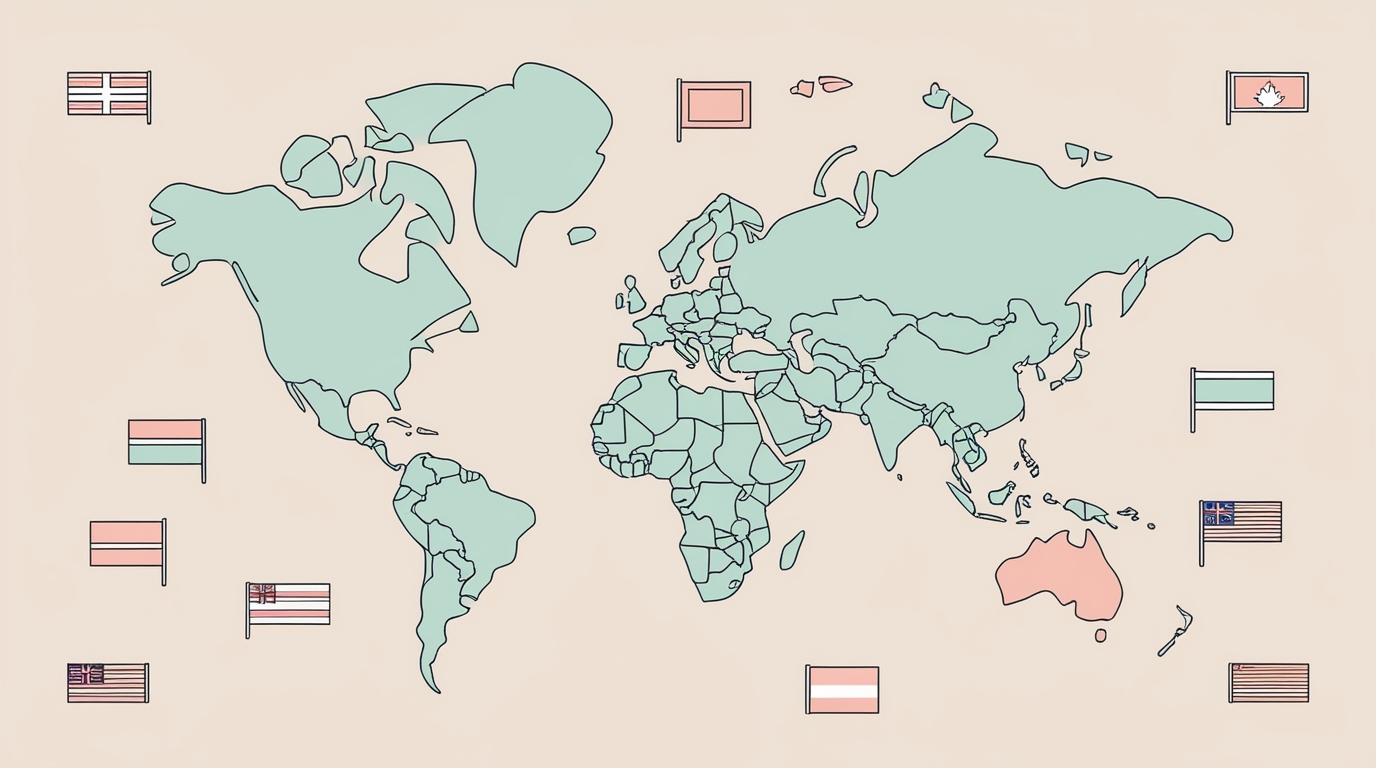
Join us today as we explore the fascinating world of nationalities in English! Discover the names of different nationalities, the countries they come from, and the languages spoken in those regions. Let’s dive in!
Enhancing your vocabulary is not only rewarding but also engaging. It empowers you to articulate your thoughts more clearly, tackle challenges effectively, and deepen your understanding of the language.
List of the nationalities (with their country and language)
| Nationality | Country | Language |
| British | United Kingdom | English |
| Scottish | Scotland | English/Gaelic |
| Irish | Northern Ireland | English |
| Welsh | Wales | English/Welsh |
| Danish | Denmark | Danish |
| Finnish | Finland | Finnish |
| Norwegian | Norway | Norwegian |
| Swedish | Sweden | Swedish |
| Swiss | Switzerland | German/French/Italian |
| Estonian | Estonia | Estonian |
| Latvian | Latvia | Latvian |
| Lithuanian | Lithuania | Lithuanian |
| Austrian | Austria | German |
| Belgian | Belgium | French/Flemish |
| French | France | French |
| German | Germany | German |
| Italian | Italy | Italian |
| Dutch | Netherlands | Dutch |
| American | United States | English |
| Canadian | Canada | English/French |
| Mexican | Mexico | Spanish |
| Ukrainian | Ukraine | Ukrainian |
| Russian | Russia | Russian |
| Belarusian | Belarus | Belarusian |
| Polish | Poland | Polish |
| Czech | Czech Republic | Czech |
| Slovak/Slovakian | Slovakia | Slovakian |
| Hungarian | Hungary | Hungarian |
| Romanian | Romania | Romanian |
| Bulgarian | Bulgaria | Bulgarian |
| Greek | Greece | Greek |
| Spanish | Spain | Spanish |
Download a list of countries & nationalities for free
How to write nationalities in English
In English, the names of countries, nationalities, and languages always start with a capital letter. Identifying nationalities can be tricky, but there are some common endings to look out for, such as -ese, -ian, and -ish. Interestingly, the adjective for a nationality often matches the name of the language spoken in that country.
Here are some more examples of how you would speak and write nationalities in English:
- Using the country: “I live in Spain.“
- Using the adjective: “I love Spanish food.”
- Describing origins: “I am Spanish” – “I am from Spain” – “He is a Spanish person”
- Using the language: “I speak Spanish”
- Describing cultures: “The Spanish love to party!”

As you practice English more, you’ll naturally start to learn the names of various nationalities and countries. One of the wonderful aspects of English is its global reach; it’s one of the most widely spoken languages in the world. This provides you with the opportunity to discover and connect with diverse names of nationalities, countries, and languages from people around the globe. Remember, the key to success is to keep practicing and never give up!
Need help staying motivated to learn English online?
Try using this language study planner!
Frequently Asked Questions
What is the difference between nationality and place of origin?
Nationality refers to the legal relationship between an individual and a state, while place of origin is where a person comes from.
How do you ask someone about their nationality in a casual conversation?
Instead of asking ‘What is your nationality?’, you can ask ‘Where are you from?’.
What are some common endings to identify nationalities in English?
Common endings include -ese, -ian, and -ish.
How should nationalities and languages be written in English?
They should always start with a capital letter.
What is a helpful tip for learning about nationalities and countries?
Practicing English consistently will help you learn the names of various nationalities and countries.