
The English language boasts an astonishing vocabulary, with countless words at our disposal. Even more fascinating is the abundance of synonyms available for each term, enriching our ability to express ourselves.
How can you know which synonym to use? Is there a clear distinction between words and their synonyms?
Keep reading, and you’ll find the answers to these questions…
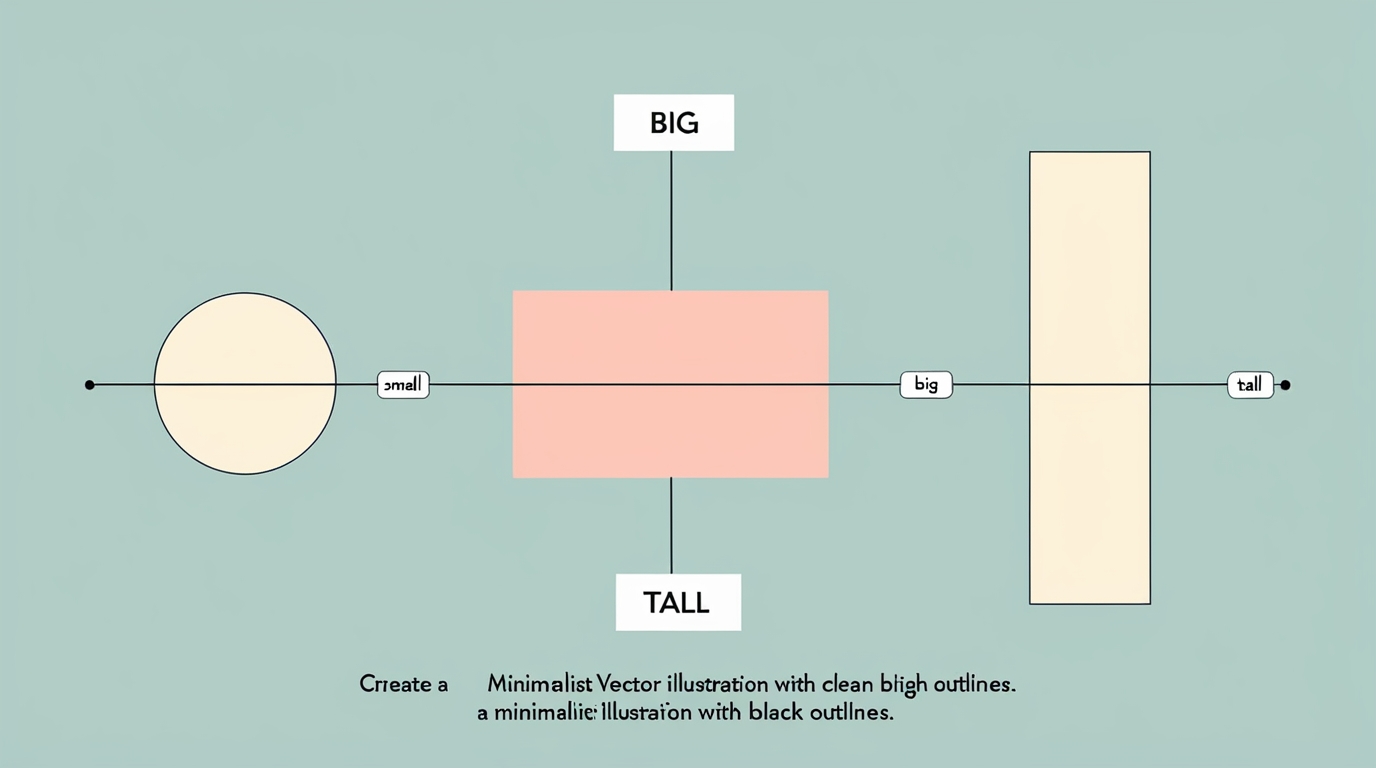
Today, we’ll explore the subtle distinctions between English synonyms such as small and little, big and large, as well as tall and high. Understanding these nuances can enhance your language skills and improve your communication!
Regrettably, the meanings of these words are not clearly defined. While they can often be used interchangeably, there are many instances where their specific meanings differ.
It’s essential to stay attuned to the context and trust your instincts. If a phrase feels off or doesn’t resonate, take a moment to pause and reevaluate. This intuitive check can help ensure your message is clear and effective.
In everyday conversation, people often substitute the adjective “small” for “little” or “big” for “large,” without giving much thought to the distinctions. Despite these variations, the intended meaning remains clear to listeners.
But we want to speak English correctly, don’t we?
Small vs. Little
The adjective small refers to the size, dimensions (physical) and intensity.
For example: a small bag, small eyes, a small voice (which means a quiet voice).
The adjective little refers to a figure, amount (for uncountable nouns), and also acts as a comparative adjective.
For example: a little dog, a little juice, a little tired.
It’s important to note that “little” and “small” aren’t always interchangeable; using one in place of the other can completely change the meaning.
You can say: A small amount of something = a little, a few of something (for countable nouns.)
For example: I’ve got a small amount of money now. = I’ve got a little money now.
Big vs. Large
Many people think that the adjective large is an abstract synonym for big.
In fact, they are both used very frequently.
The only difference is that large is used to describe size, and big is sometimes used to discuss degree of importance.
For instance, when we refer to a “large boss,” we’re often talking about someone who is physically big, strong, or even overweight. On the other hand, the term “big boss” typically denotes a person in a high-ranking position within a company, such as a manager, department head, or president.
Can you see the difference?
Also: big brother = older brother, large brother = bigger than you.(in size)
Tall vs. High
The adjective “tall” specifically describes physical height, referring to how tall someone or something is. In contrast, “high” indicates a relative position, suggesting that something is above the average height or measurement.
For instance, a tall man refers to someone whose height exceeds the average. High ground describes an area that stands above sea level compared to its surroundings. High ideas signify ambitious or innovative concepts, while a high position denotes a role in society or a company that is elevated above most others.
If you are speaking about the height of something, you can use either adjective:
- The door is 6 feet high. = The door is 6 feet tall.
- He is 6 feet tall. = He is 6 feet high.
This depends on the context. Usually, when speaking about the height of a person, use tall.
If you’re uncertain about which word to choose, consult a dictionary for definitions and explore synonyms to find the perfect fit.
Of course, the best way to develop your “inner sense” is to read in English.
Absolutely, reading is a fantastic way to enhance your English vocabulary. This is because literary works undergo meticulous scrutiny, starting with the author and continuing through the editor’s careful review.
The more you immerse yourself in this type of literature, the clearer it becomes which English words are most appropriate for different contexts.
So, my friends, don’t read just blogs. Read fictional literature as well.
Frequently Asked Questions
What is the difference between ‘small’ and ‘little’?
‘Small’ refers to size and dimensions, while ‘little’ refers to a figure or amount, and can also be a comparative adjective.
When should I use ‘big’ instead of ‘large’?
‘Big’ is often used to discuss degree of importance, while ‘large’ describes size. For example, ‘big boss’ means a high-ranking person.
How can I determine whether to use ‘tall’ or ‘high’?
‘Tall’ specifically describes physical height, while ‘high’ indicates a relative position or elevation above average.
Can ‘small’ and ‘little’ be used interchangeably?
No, they aren’t always interchangeable; using one in place of the other can change the meaning.
What is a good way to improve my understanding of English synonyms?
Reading literature can enhance your vocabulary and help you understand the appropriate use of different words in context.