- Basics of colors in German
- Primary colors
- Secondary colors
- Tertiary colors
- Other colors in German
- Describing colors in German
- Idioms and expressions involving colors
- Common phrases using colors
- Colors in idioms
- Colors in German proverbs
- Conclusion
- Frequently Asked Questions
- What does the term ‘blau’ mean in German?
- How do you say ‘yellow’ in German, and what does it symbolize?
- What is the significance of the phrase ‘grünes Licht’ in German?
- What does ‘im roten Bereich’ signify in a conversation?
- How can I enhance my color vocabulary in German?
Did you know that in German, when someone calls you “blau” (blue), they’re not referring to your clothing? Instead, they’re likely suggesting that you’ve indulged in a bit too much to drink!
Colors in German aren’t just hues; they come with fun stories and meanings of their own.
In this guide, we’ll:
- Discover essential German color vocabulary, including basic terms like “rot” (red) and “gelb” (yellow), along with more complex shades.
- Teach you playful German idioms that colorfully describe feelings and situations.
- Explore how colors are woven into daily conversations with proverbs and jokes.
Prepare yourself for an exciting journey where you’ll unlock the ability to engage in vibrant conversations in German by the end!
Basics of colors in German
In this section, we’ll dive into the essential German color names and share intriguing facts about each one. Get ready to enrich your color vocabulary with some vibrant German flair—let’s jump in!
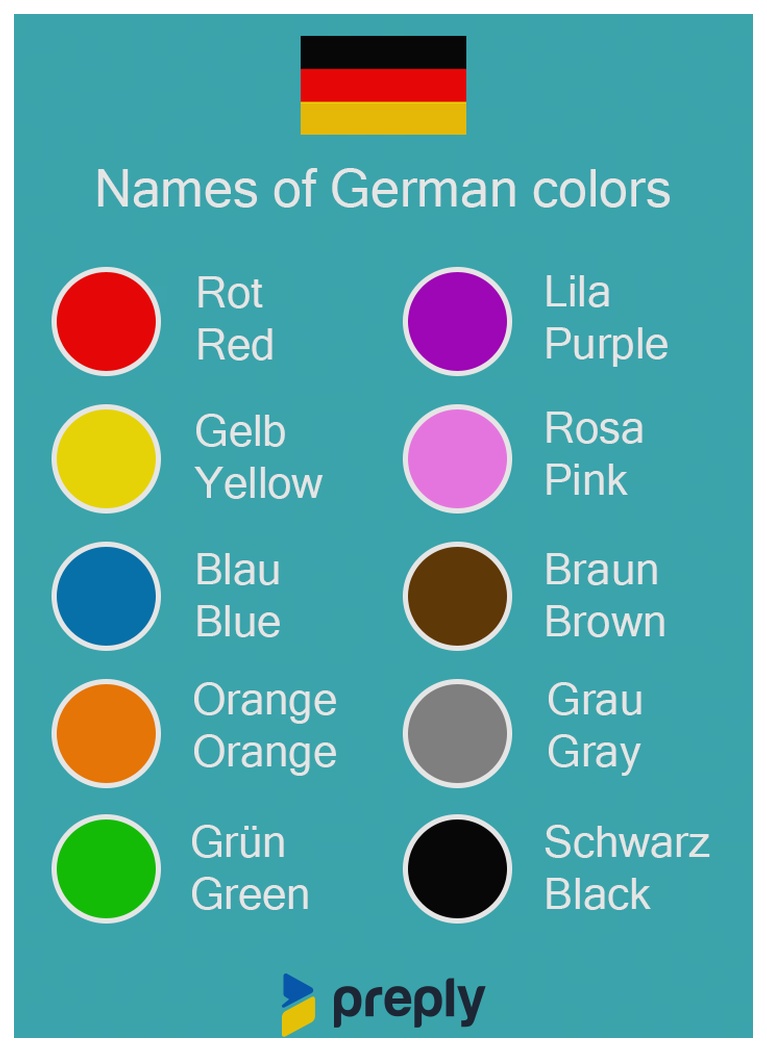
Primary colors
- “Red Roses in Germany: In Germany, red roses are a popular gift not only on Valentine’s Day but also on International Women’s Day (Frauentag). Additionally, the red traffic light is strictly observed, with pedestrians rarely crossing when the light is red.”
- “Gelb” (Yellow) – In Germany, yellow symbolizes not only the color but also envy. The phrase “gelb vor Neid” translates to “yellow with envy,” indicating intense jealousy.
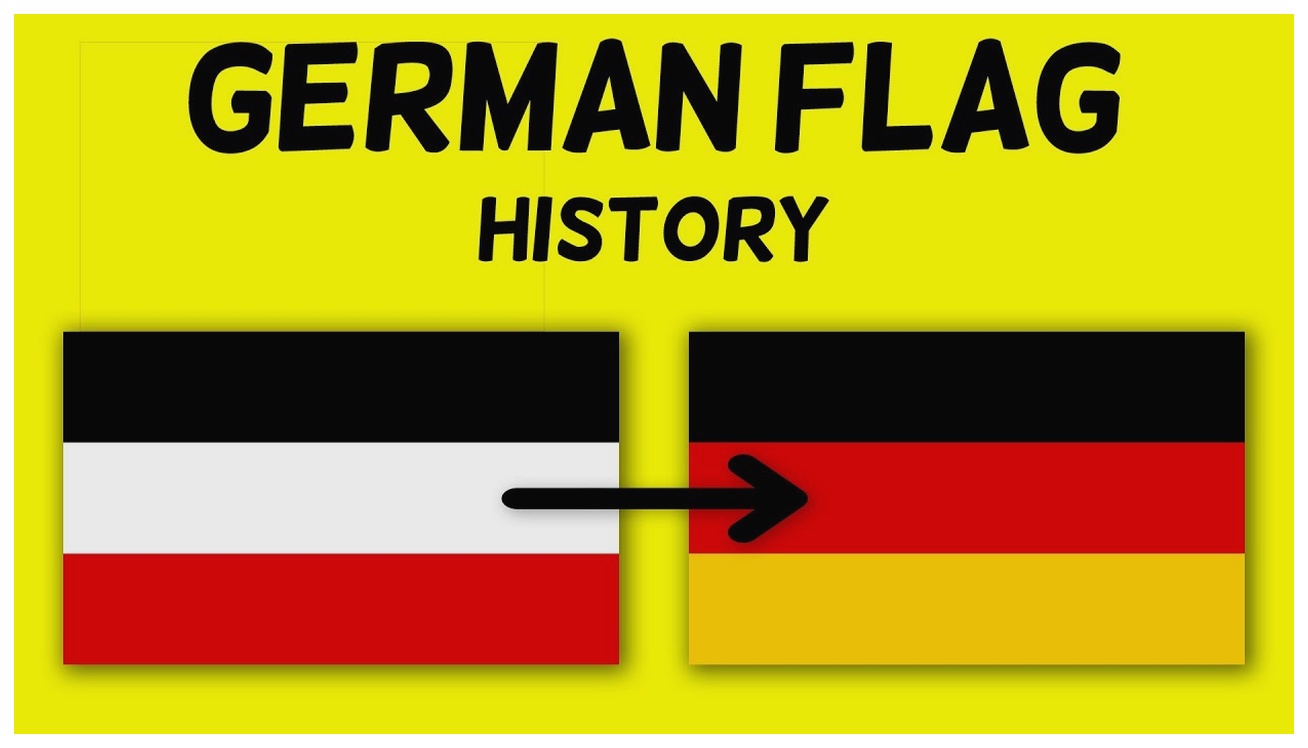
Did you know that the German flag originally featured red, white, and black? It wasn’t until 1919, after World War I, that Germany added yellow to create the tricolor we recognize today. This change was introduced by the Weimar Republic, and since then, these vibrant colors have proudly represented Germany!
- “Blau” (blue) in Germany refers to being drunk rather than sad. Additionally, the term “blauer Montag” (blue Monday) signifies taking Monday off, usually after a weekend of excessive partying.
Secondary colors
- **”Orange” (orange)** – In German, “orange” is spelled the same as in English, differing only in pronunciation with a distinct raspy “r.” Both the color and the fruit share the same name, but remember to capitalize “Orange” when referring to the fruit, as it is a noun.
- **Green (“Grün”)** – In Germany, the phrase “Einen grünen Daumen” reflects the nation’s affinity for nature and gardening. The term also denotes the prominent political party, “Die Grüne,” dedicated to environmental protection. Germany excels in sustainability, renewable energy, recycling, and efficient public transport systems.

- “Lila” (purple) is thought to be derived from French, whereas “violett” originates from the Latin term “violetta.” Historically, purple was linked to power and royalty due to the high cost of purple dye production in medieval times.
Tertiary colors
- “Rosa” (Pink) – The term “rosa” originates from the Latin “roseus,” which translates to rosy or pink. In Berlin, Rosa-Luxemburg-Platz, named after a notable socialist revolutionary, is a popular destination for color lovers.
- “Braun” (brown) – More than just a color, Braun is a renowned German brand established over a century ago in Frankfurt. Famous for its high-quality electronics, Braun is celebrated for its minimalist designs that have inspired brands like Apple.
- **Grau (Grey)** – In Germany, “graue Maus” (grey mouse) describes someone who is inconspicuous, shy, or plain, similar to the English term “wallflower.”
Other colors in German
- “Schwarz” (black) – Discover the enchanting Black Forest (“Schwarzwald”) in southwestern Germany, a region rich in folklore that inspired the famous Black Forest cake (“Schwarzwälder Kirschtorte”).
- “Weiß” (white) – The German word “Weiß” meaning white is etymologically linked to the English word “wise,” both stemming from ancient languages. This connection highlights the association of white objects with wisdom and intelligence.
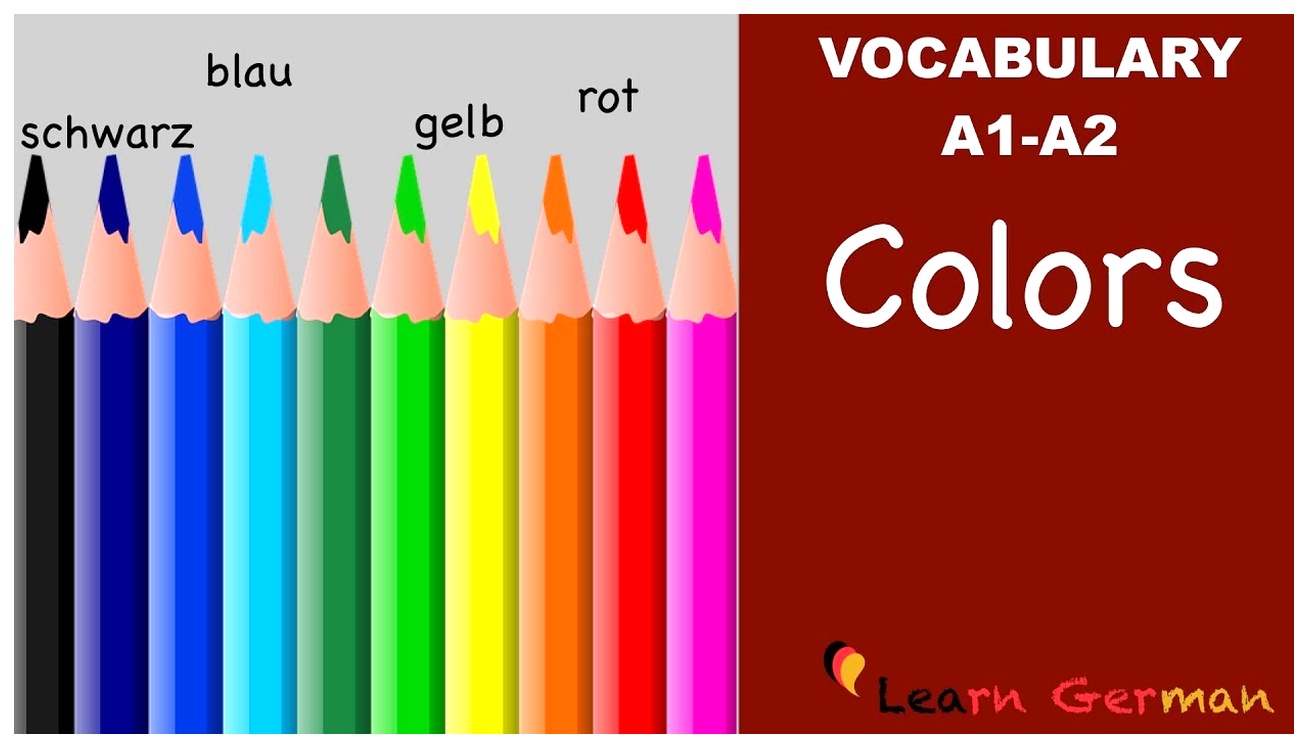
Describing colors in German
To paint a vivid picture with your words in German, it’s essential to know how to describe colors.
To enhance your descriptions in German, consider using these effective adjectives. Keep in mind that when you’re communicating in German, these adjectives should always come before the color they modify for clarity and precision.
- **Hell (Light)**: Use “hell” with any color to indicate a lighter shade. In writing, combine the adjective with the color name, such as “hellgrün” for light green.
- “Dunkel” (dark) – Use the prefix “dunkel” to emphasize a color’s deep shade. Additionally, “dunkel” refers to a German beer variety characterized by its rich hues, including amber and deep brown, commonly known as “dunkelbraun.”
- “Matt” (Dull) – The term “matt” refers to a muted or non-shiny color finish. For example, the phrase “mattgrün” describes a dull green shade.
- “Bunt” (colorful) – The term “bunt” translates to colorful in German. For example, to describe a colorful scarf, you would say “ein bunter Schal.”
Armed with these vibrant descriptors, you’re ready to discuss colors in German with style! But why limit yourself to just that?
If you’re ready to take your German skills to the next level, look no further than LingualNeeds’s online classes. Here, we offer a unique learning experience led by native German-speaking experts who customize each lesson to fit your specific needs. With our personalized approach, you can expect genuine progress that you can see and measure!
Here’s the exciting part: You can achieve your German fluency goals without breaking the bank! With LingualNeeds, you’ll experience exceptional education that’s also budget-friendly. Are you ready to embark on your German learning journey? Start with LingualNeeds today!
Idioms and expressions involving colors
In German, colors go beyond mere decoration; they convey rich stories and emotions. Phrases like “grünes Licht” for “go” or “im roten Bereich” to indicate financial trouble show how colors add vibrancy and significance to everyday conversations.
Join us as we explore vibrant sayings, discover the intriguing meanings behind colorful phrases, and delve into timeless tales conveyed through colorful proverbs. Are you ready to brighten up your German vocabulary? Let’s dive in!
Common phrases using colors
German, like many languages, incorporates colors into everyday expressions, enriching communication with vivid imagery and depth. Let’s delve into the meaning behind some of these colorful phrases and discover their significance in everyday conversation.
- “Grünes Licht geben” – To give the green light (Literally: “Give green light”)
- “Ins Schwarze treffen” – To get something exactly right or to nail something (Literally: “To hit into the black”)
- “Rote Zahlen schreiben” – To be in the red, financially speaking (Literally: “Write red numbers”)
- “Weißer Rabe” – Something or someone very rare or unique (Literally: “White crow”)
- “Schwarzsehen” – Being pessimistic or expecting the worst (Literally: “See black”)
Colors in idioms
Colors do more than just beautify our words; they also hold symbolic significance that can express profound emotions and situations. Consider the following examples:
- “Grün hinter den Ohren” – Being naive or inexperienced (Literally: “Green behind the ears”)
- “Blau sein” – To be drunk (Literally: “To be blue”)
- “Das Gelbe vom Ei” – The best part of something (Literally: “The yellow of the egg”)
- “Im grünen Bereich” – Said when everything is okay or under control (Literally: “In the green area”)
- “Rosa Brille” – Viewing the world optimistically (Literally: “Pink glasses”)
If you’re captivated by these idioms, there’s a whole world waiting for you to discover! Dive deeper into the intriguing realm of German expressions with our extensive guide on German idioms. This resource is not just informative; it’s an exhilarating adventure through the beauty of language.
Colors in German proverbs
Germany is rich in traditional sayings, many of which incorporate colors to convey unique narratives. These vibrant expressions offer valuable insights into the German mindset and emotions. Join us as we delve into these fascinating tales and uncover their meanings!
- “Alles in Butter” – Everything is fine. (Literally: “Everything in butter”)
- “Da beißt die Maus keinen Faden ab” translates to “There’s no denying or changing a fact,” emphasizing the inevitability of certain truths.
- “Eine weiße Weste haben” – To have a clean record (Literally: “To have a white vest”)
- “Sich grün und blau ärgern” – To be extremely upset (Literally: “To annoy oneself green and blue”)
- “Ein blaues Wunder erleben” – To get a nasty surprise (Literally: “To experience a blue miracle”)
Having explored these vibrant expressions and sayings, you can see how Germans infuse a splash of color into their everyday conversations and insights.

Conclusion
Having delved into the rich tapestry of German colors and their fascinating narratives, we hope you now have a greater appreciation for the language. Each hue represents more than just a term; it offers a glimpse into German culture, humor, and history. The next time you encounter a color or hear a related phrase, remember that there’s a story behind it. Continue your exploration, and let the vibrant colors of the German language enrich your linguistic adventure!
Are you eager to dive deeper into the world of German beyond just colors? Discover LingualNeeds, an exceptional platform that truly sets itself apart. With nearly 1,000 dedicated online German tutors, LingualNeeds offers much more than standard tutorials; each lesson is tailored specifically to meet your individual learning needs.
No matter if you’re a complete beginner, seeking to perfect your business German, or interested in mastering specific dialects, we’ve got you covered. With LingualNeeds’s clear pricing policy, you can rest assured that you’re getting exceptional value for your investment. Experience a fresh approach to learning and watch as LingualNeeds brings the German language to life for you!
Frequently Asked Questions
What does the term ‘blau’ mean in German?
‘Blau’ refers to being drunk rather than sad.
How do you say ‘yellow’ in German, and what does it symbolize?
‘Yellow’ is ‘gelb’ in German, and it symbolizes envy.
What is the significance of the phrase ‘grünes Licht’ in German?
‘Grünes Licht’ means to give the green light, indicating approval to proceed.
What does ‘im roten Bereich’ signify in a conversation?
‘Im roten Bereich’ indicates being in financial trouble.
How can I enhance my color vocabulary in German?
You can enhance your color vocabulary by learning essential terms, idioms, and expressions related to colors.