- Types of Adjectives: Objective and Subjective
- Adjectives, as a Rule, Are Placed before the Noun in the Following Order
- Frequently Asked Questions
- What is the correct order for using adjectives in English?
- What are the two primary categories of adjectives?
- How should adjectives describing color be connected in a sentence?
- Can the sequence of adjectives vary in English?
- What is an example of an objective adjective?
In English, it is normal to use more than one adjective before a noun.
For example, “My parents live in a nice new house” or “In the kitchen, there is a beautiful large round wooden table.”
Many English learners struggle with arranging adjectives correctly, particularly when they need to use three or more. Understanding the right order can be challenging but is essential for clear and effective communication.
Today I suggest that we discuss and finally memorize the correct procedure for using adjectives in the English language.
Types of Adjectives: Objective and Subjective
The English language is notorious for its exceptions and evolving rules. Despite this complexity, there are specific guidelines that dictate the order of adjectives, ensuring that each one is positioned correctly in relation to the noun it describes.
It’s important to note that adjectives fall into two primary categories: objective adjectives, which convey factual information, and subjective adjectives, which reflect personal opinions. Understanding this distinction can enhance your grasp of language and improve your communication skills.
The words in this first category deliver objective facts that are indisputable. They convey concrete details such as size, color, age, and more, leaving no room for debate.
In contrast, the adjectives in the second group convey an individual’s perception of an object, whether it’s a person or an item, along with their personal opinions about it.
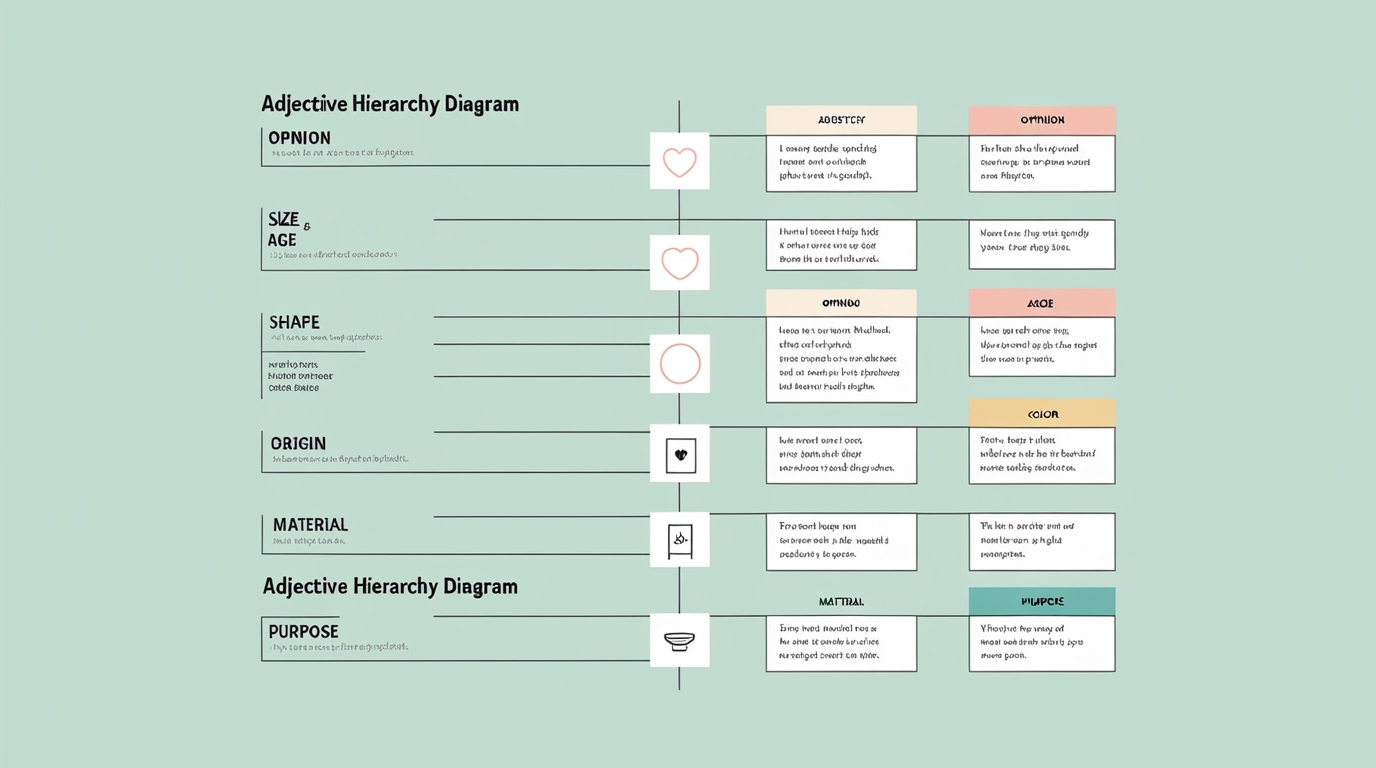
Adjectives, as a Rule, Are Placed before the Noun in the Following Order
- Subjective (opinion) – an expensive antique table; a delicious spicy soup
- Objective (fact) – description of physical properties
- a big English sheepdog
- a handsome tall young man
- a large round table
- my beautiful new wardrobe
- a small red bag
When the sentence has two or more adjectives that describe a colour, we must use the conjunction and:
- a black and blue dress
- yellow, white and green socks
Certain conventions dictate the order of adjectival colors. For instance, we typically say “black and white” rather than “white and black,” and the familiar phrase “red, white, and blue” follows a specific sequence as well.
- Objective (factual): ancestry – an old Ukrainian song; the latest British film.
- Objective (factual): material – a large wooden desk; an expensive oval antique silver mirror.
- Objective (factual): identity – a beautiful old Italian touring car; several young American baseball players.
In English, the sequence of adjectives may vary, but I’ve outlined the standard conventions that are typically followed.
These categories are offered as a guide. They are not carved in stone.
You can check how well you understand this information here:
Adjective Order Quiz
Frequently Asked Questions
What is the correct order for using adjectives in English?
Adjectives should be placed in the order of subjective (opinion) followed by objective (fact).
What are the two primary categories of adjectives?
The two primary categories of adjectives are objective adjectives, which convey factual information, and subjective adjectives, which reflect personal opinions.
How should adjectives describing color be connected in a sentence?
When describing colors with two or more adjectives, they should be connected using the conjunction ‘and’.
Can the sequence of adjectives vary in English?
Yes, while there are standard conventions for adjective order, the sequence may vary and is not strictly fixed.
What is an example of an objective adjective?
An example of an objective adjective is ‘large’ as in ‘a large wooden desk’.