- English – “I Love You”
- Spanish – “Te Amo” or “Te quiero”
- Pig-shaped gifts and celebrating friendship: Valentine’s traditions across Europe
- “I love you” across Asia: Mass Marriages
- Africa: Heart on their sleeve
- Frequently Asked Questions
- How do different countries express ‘I love you’?
- What are common Valentine’s Day gifts in various cultures?
- How do Valentine’s Day celebrations differ in Spain and Argentina?
- What is a unique Valentine’s Day tradition in South Korea?
- What is the significance of the phrase ‘Ek het jou lief’ in South Africa?
Love is a universal language that everyone speaks, but how do countries actually put this feeling into words?
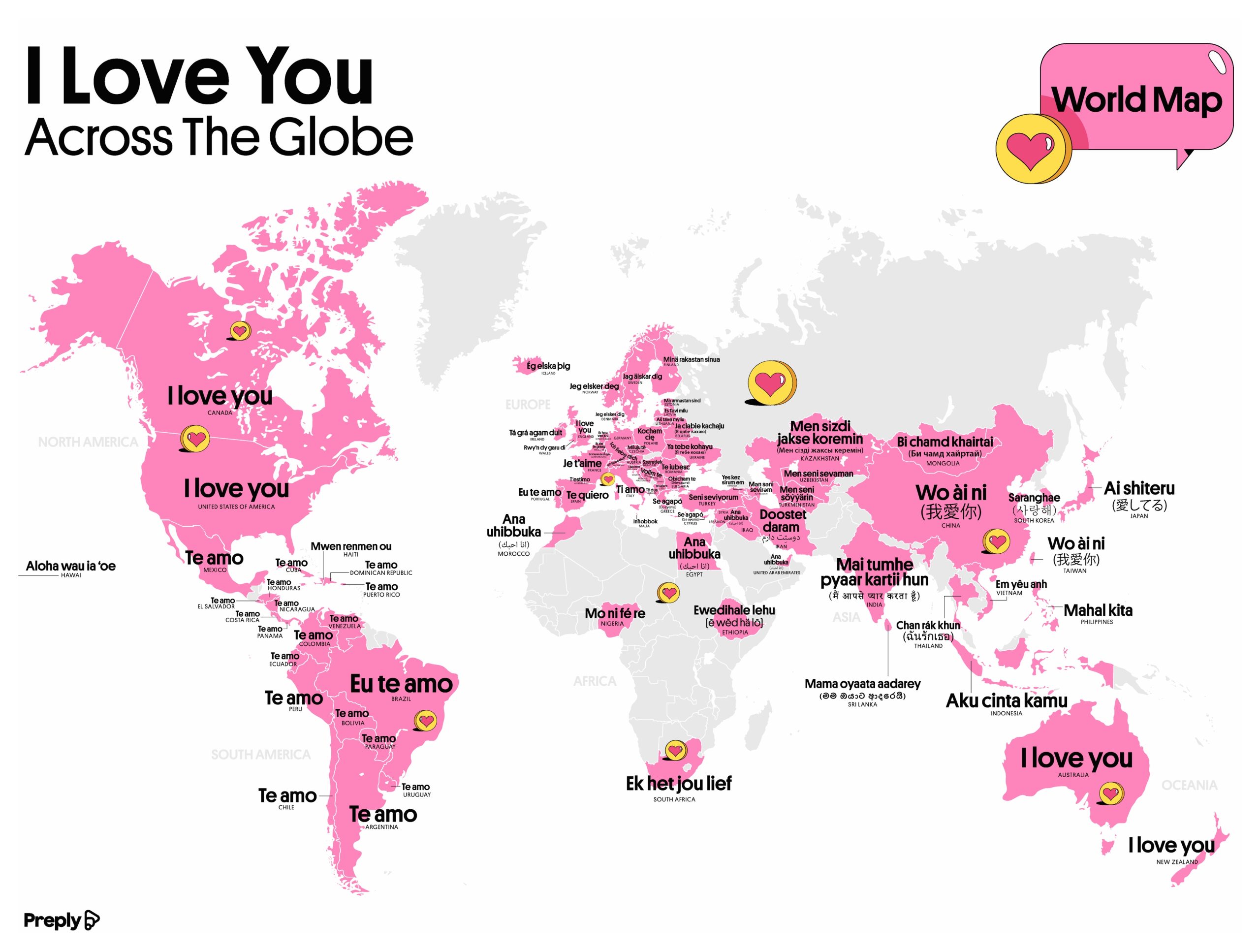
At AtLingualNeeds, we’ve delved into the art of saying “I love you” in more than 60 languages from across the globe. Whether you’re gearing up for an international adventure or looking to delight a loved one with a heartfelt surprise, you’ll always find the perfect way to convey your feelings.
Valentine’s Day is widely celebrated as a time for expressing love, but its customs, traditions, and even the date can differ significantly across the globe. From unique rituals to various ways of showing affection, this special day reflects the rich diversity of cultures and their interpretations of romance.
Our native speakers will empower you to express your love in various languages while also enlightening you about the unique celebrations of love across different cultures worldwide.
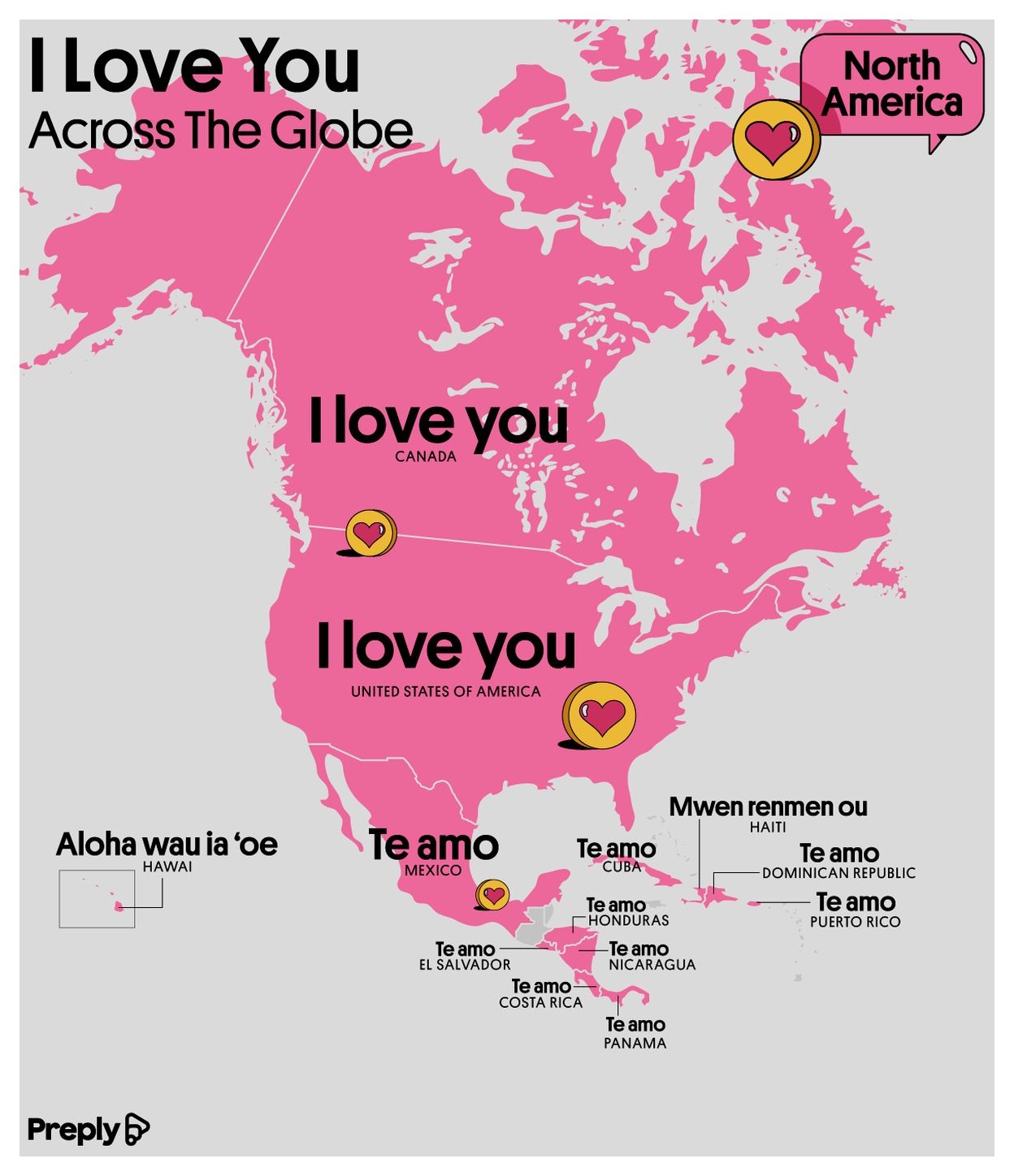
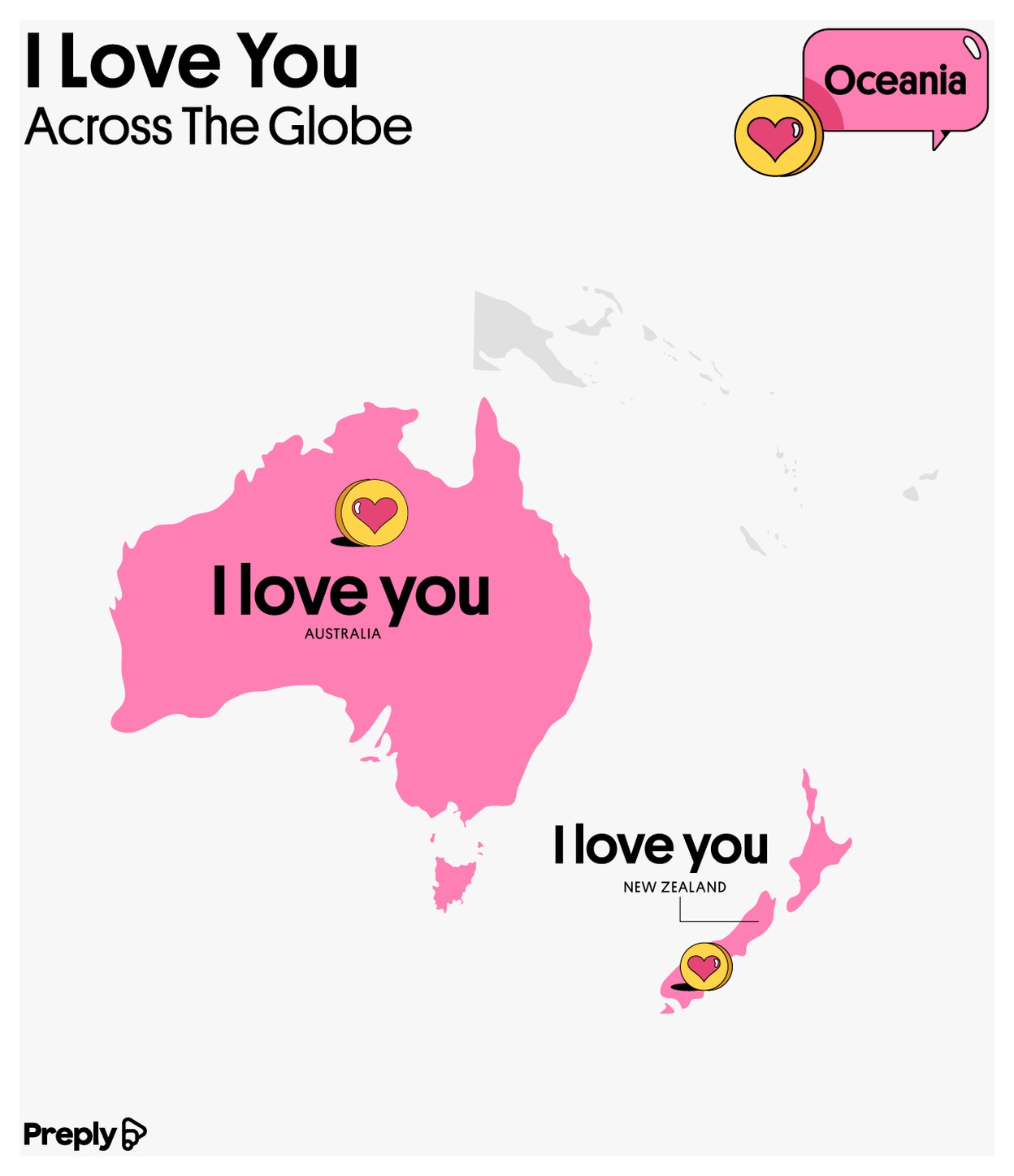
English – “I Love You”
In English-speaking countries like the UK, USA, New Zealand, Australia, and Canada, the phrase “I love you” is the heartfelt expression used to convey deep affection for someone special.
On Valentine’s Day, celebrated annually on February 14th, many countries embrace the spirit of romance by exchanging heartfelt gifts and enjoying intimate dinners. Common tokens of affection include delightful chocolates, thoughtful cards, beautiful jewelry, and classic roses, which are particularly popular for expressing love.
Roses have a timeless connection to love and romance, which is why they are a beloved choice for Valentine’s Day gifts. This tradition dates back to ancient Rome, where roses adorned both religious and secular festivities. Among them, the red rose holds a special significance, symbolizing love and desire. In fact, the Society of American Florists reports that over 250 million roses are cultivated specifically for Valentine’s Day, with red roses making up the vast majority.

Learn a language with personalised 1-on-1 classes with our expert tutors from all over the world
French lessons online
Spanish lessons online
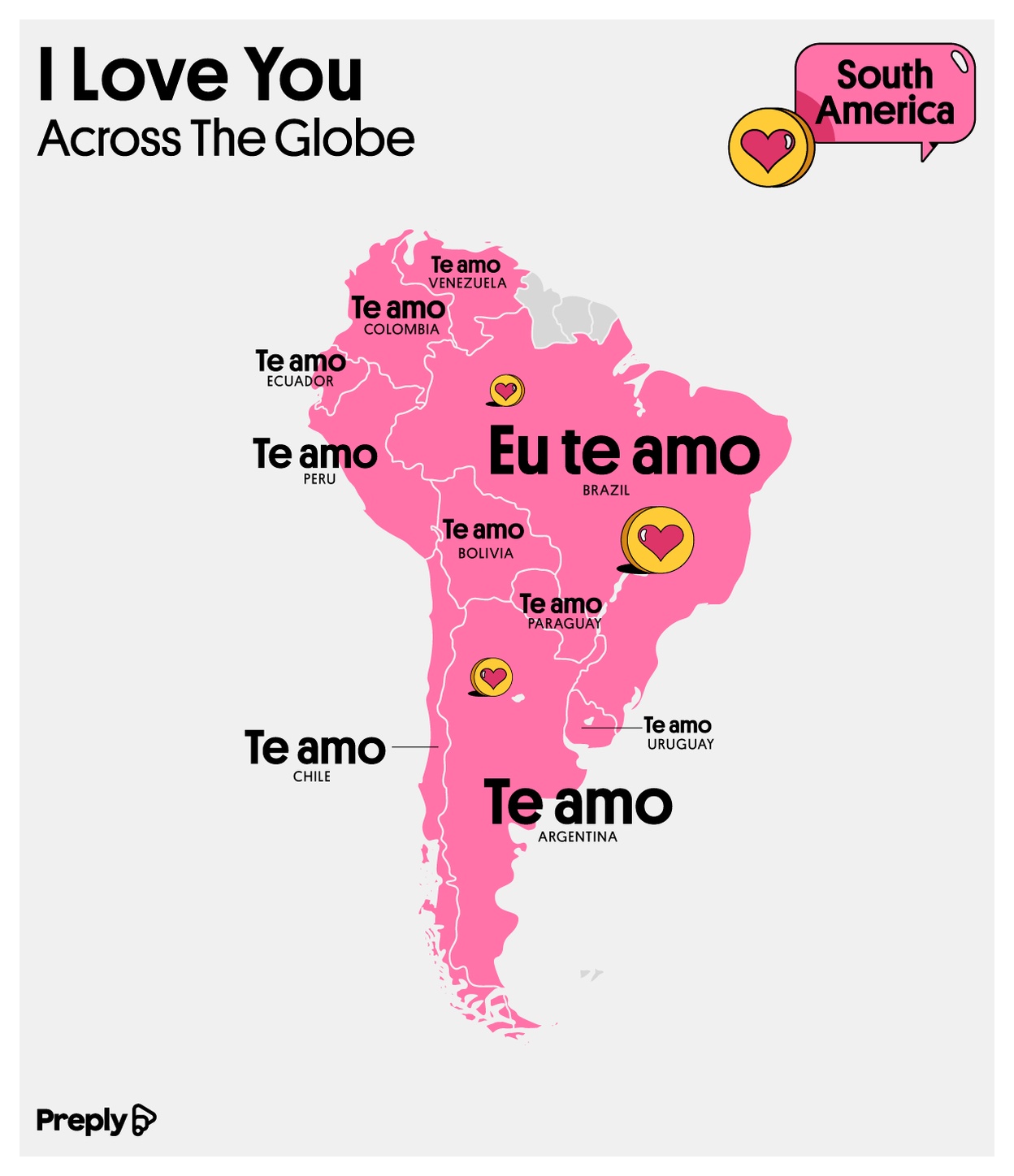
Spanish – “Te Amo” or “Te quiero”
In Spanish-speaking countries, expressing love typically involves two phrases: “Te quiero” (pronounced: teh kee-er-oh), which conveys a warm affection, and “Te amo” (pronounced: teh ah-moh), used for deeper romantic love.
Both expressions convey romantic love, but they vary in intensity and context. “Te quiero” is commonly used in everyday conversations and carries a lighter, more casual sentiment. In contrast, “Te amo” is reserved for special moments and signifies a deeper, more profound love.
Valentine’s Day, known as “Día de San Valentín” in Spanish, is celebrated in Spain on February 14th, just like in many countries worldwide. This special day provides couples with the perfect opportunity to share their love and affection. Many express their feelings through heartfelt love letters or poetry. Additionally, giving a book as a gift is a cherished symbol of love in Spain, making the day even more meaningful.
In Argentina, Valentine’s Day is celebrated with a familiar charm, but the excitement doesn’t stop there! They also have a unique celebration called ‘Semana de la Dulzura’ or Sweetness Week, which occurs in July. During this delightful week, people express their love and affection by exchanging candies and sweet treats, making it a heartwarming time filled with sugary surprises!
In Peru, instead of the usual roses in western countries, they exchange their native orchids on Valentine’s Day.
In Guatemala, Valentine’s Day is a vibrant celebration marked by the lively ‘Old Love Parade’ in Guatemala City. This unique event features older participants who don colorful costumes and ride festive floats, all in honor of love. It’s a heartwarming spectacle that brings the community together to celebrate romance and affection!
In both the Dominican Republic and El Salvador, Valentine’s Day features a delightful gift exchange tradition known as ‘Amigo Secreto,’ reminiscent of the popular Secret Santa. This fun custom allows friends and loved ones to surprise each other with thoughtful presents, adding a unique twist to the celebration of love and friendship.
Pig-shaped gifts and celebrating friendship: Valentine’s traditions across Europe
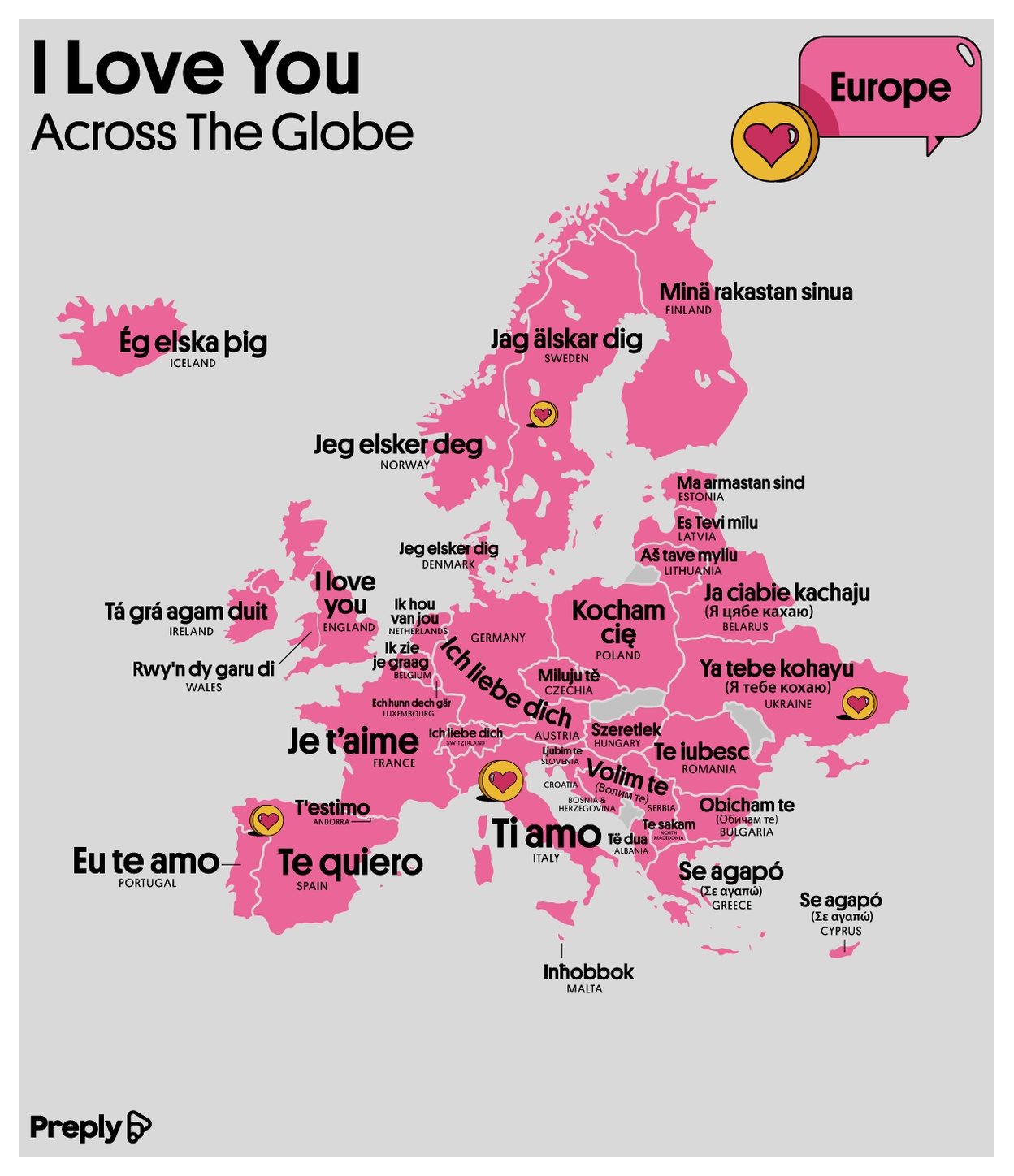
- Estonia – Ma armastan sind
- Finland – Minä rakastan sinua
- France – Je t’aime
- Germany – Ich liebe dich
- Austria – Ich liebe dich
- Greece – Σε αγαπώ (Se agapó)
- Denmark – Jeg elsker dig
- Netherlands – Ik hou van jou
- Wales – Rwy’n dy garu di
In Estonia, expressing your love is as simple as saying “ma armastan sind,” while in Finland, you would say “Minä rakastan sinua.” Interestingly, Valentine’s Day in both countries goes beyond romance; it’s a heartfelt celebration of love shared among family and friends.
In addition to the traditional Valentine’s Day, Wales honors ‘Dydd Santes Dwynwen’ on January 25th, celebrating Saint Dwynwen, the patron saint of lovers. On this special day, it’s customary for men to present hand-crafted wooden spoons to the women they adore, symbolizing love and affection.
In Germany, expressing love is as simple as saying, “Ich liebe dich.” On Valentine’s Day, the air is filled with romance as couples exchange delightful gifts like ginger cookies and charming pig-shaped chocolates. These treats are not just tasty; in German culture, pigs are considered symbols of good luck, making them a perfect romantic gesture!
In France, Valentine’s Day is exclusively reserved for couples in romantic relationships, who celebrate by exchanging gifts and enjoying special dates together. Interestingly, the tradition of sending Valentine’s Day cards may have originated from a French duke who, during his imprisonment, penned heartfelt poems and love letters to his wife.
Learn a language online with our free learning materials.
Learn English online
Learn French online
“I love you” across Asia: Mass Marriages
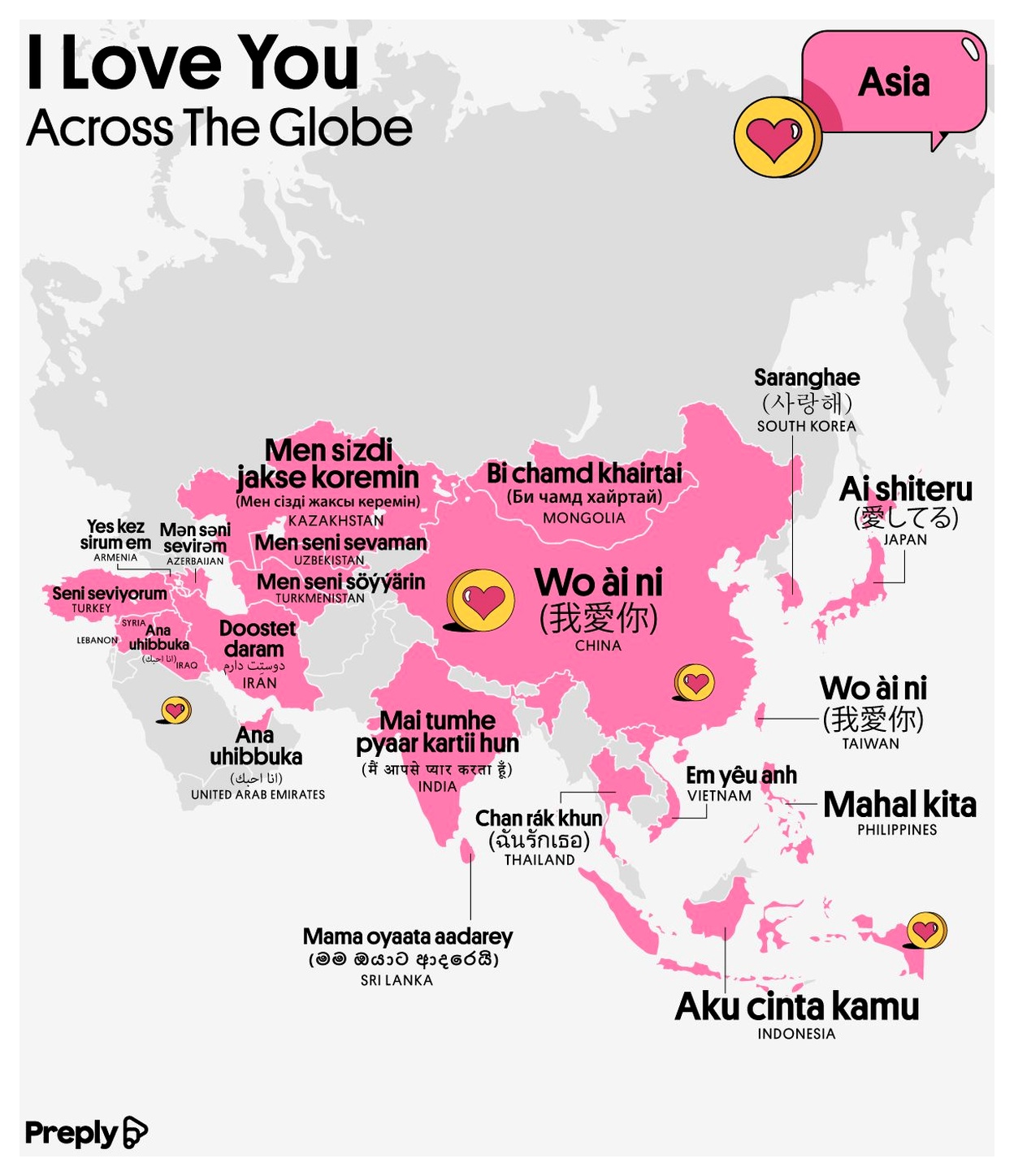
- Japan – 愛してる (Ai shiteru)
- South Korea – 사랑해 (Saranghae)
- China & Taiwan – 我愛你 (Wǒ ài nǐ)
- Vietnam – Em yêu anh (Em yew anh)
- Thailand – ฉันรักเธอ (chǎn rák khun)
- Philippines – Mahal kita
In South Korea, China, Taiwan, Vietnam, and Japan, Valentine’s Day flips the traditional Western script, as women take the lead in gifting chocolates to men. This sweet gesture isn’t limited to romantic partners; women also share chocolates with friends, family, and colleagues, making it a celebration of affection in all its forms.
One month later, on March 14th, these countries observe ‘White Day,’ a special occasion when men reciprocate the gestures of love by gifting women white chocolate and marshmallows.
In the Philippines, Valentine’s Day has become a popular occasion for couples to tie the knot, with hundreds of lovebirds exchanging vows simultaneously across the nation. This unique celebration highlights the romantic spirit of the day, as many choose to embark on their marital journey together.
Africa: Heart on their sleeve
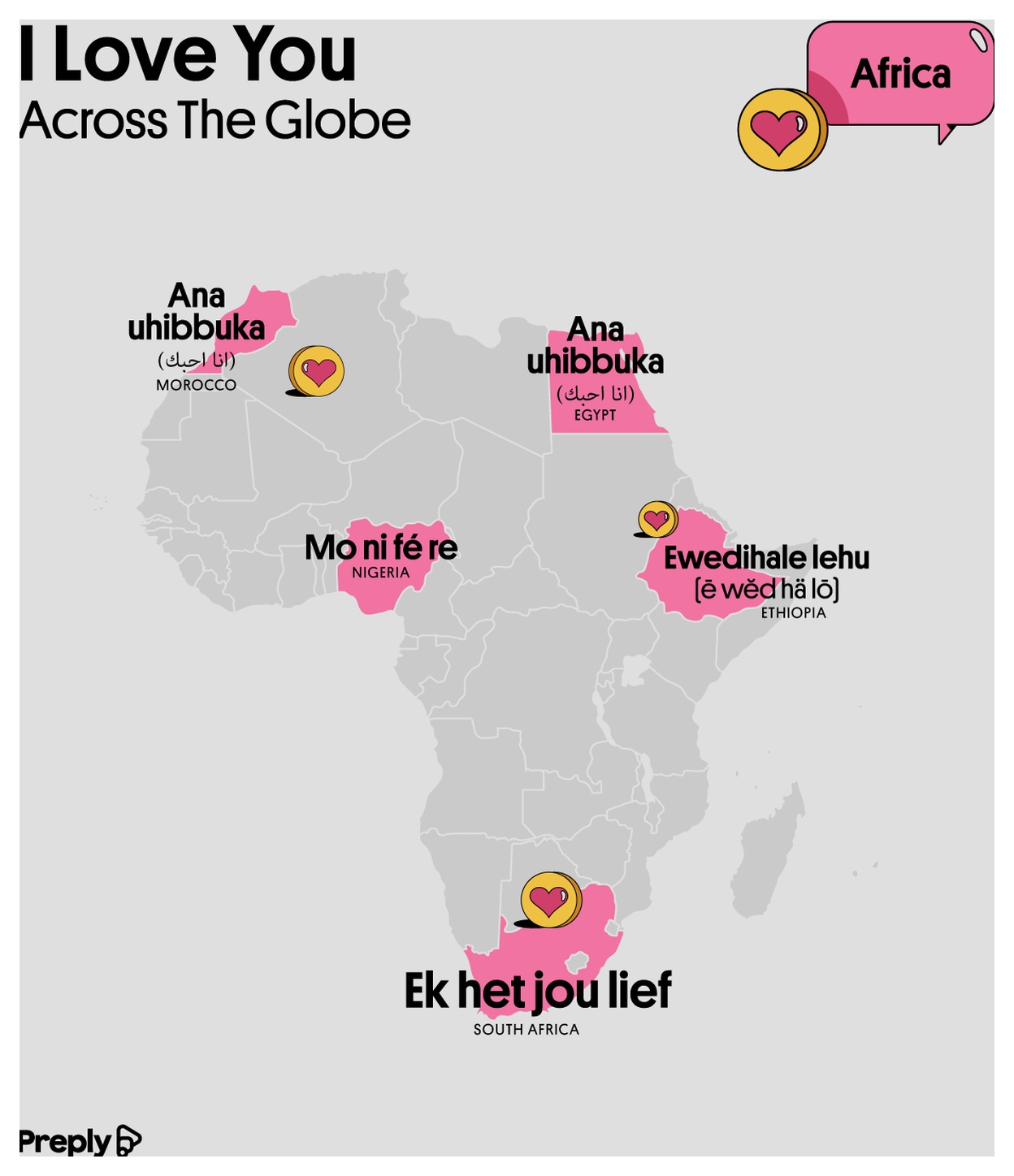
- South Africa – Ek het jou lief
- Ethiopia – ē wĕd hä′ lō (ewedihale lehu)
- Egypt – Ana uhibbuka (انا احبك)
- Morocco – Ana uhibbuka (انا احبك)
- Nigeria – Mo ni fẹ́ rẹ
Egyptians celebrate love on two special occasions: Valentine’s Day and ‘Eidel-Hob el-Masri’ (Egyptian Love Day) on November 4th. These days provide the perfect opportunity to express affection with the phrase “انا احبك” (Ana uhibbuka). Couples partake in traditional customs, exchanging flowers and chocolates, and enjoying romantic outings together.
Valentine’s Day holds a special place in Nigerian culture, where expressing love is a cherished tradition. As the sun rises, the streets come alive with vibrant red, pink, and white decorations, creating a festive atmosphere. It’s customary for people to greet each other with heartfelt messages like “Mo ni fẹ́ rẹ,” meaning “I love you.” A popular way to celebrate is by baking and gifting heart-shaped cakes, making this day a delightful occasion for lovers to connect and share their affection.
In South Africa, expressing love is done with the phrase “Ek het jou lief” in Afrikaans. On Valentine’s Day, a charming tradition sees women adorning themselves with hearts and the names of their partners on their sleeves. Couples celebrate the occasion by going on romantic dates and exchanging thoughtful gifts.
Every culture and region has unique and captivating ways to celebrate love and show affection to those dear to them. What are your favorite traditions for Valentine’s Day?
Frequently Asked Questions
How do different countries express ‘I love you’?
Different countries have unique phrases for ‘I love you’, such as ‘Te amo’ in Spanish and ‘Ich liebe dich’ in German.
What are common Valentine’s Day gifts in various cultures?
Common Valentine’s Day gifts include chocolates, flowers, jewelry, and cards, with roses being particularly popular.
How do Valentine’s Day celebrations differ in Spain and Argentina?
In Spain, Valentine’s Day involves heartfelt letters and poetry, while Argentina celebrates with ‘Semana de la Dulzura’, exchanging candies.
What is a unique Valentine’s Day tradition in South Korea?
In South Korea, women gift chocolates to men on Valentine’s Day, and they celebrate ‘White Day’ a month later for men to reciprocate.
What is the significance of the phrase ‘Ek het jou lief’ in South Africa?
‘Ek het jou lief’ is a way to express love in Afrikaans, and on Valentine’s Day, women wear hearts with their partner’s names.