- Why and how are names translated around the world?
- Most popular English names in other languages & countries
- The phenomenon of adopting Western names in Asia
- Baby names banned in other countries
- United Kingdom
- Germany
- Spain
- Portugal
- France
- Hungary
- Scotland
- Why is it important to preserve the names from a country or region?
- Methodology
- Frequently Asked Questions
- What is the significance of given names in different cultures?
- How are names adapted when moving to a new country?
- What influences naming trends in modern society?
- Why might some names be banned in certain countries?
- What is the process of romanization in name translation?
Across various cultures worldwide, given names carry deep meanings and reflect an individual’s unique identity. The question “What’s your name?” is frequently asked, often without considering the rich significance behind it.
Every day, we encounter names, but we frequently overlook the rich cultural significance they hold. The history and origins of a culture significantly influence the popularity of certain names in specific regions. Many names stem from religious beliefs, historical figures, or elements of nature, and these names often take on unique translations across the globe.
Moving to a new country often involves more than just mastering a new language; it may also require individuals to adapt their names to align with local cultural customs.
Every country boasts its unique sounds and writing systems. When words or names from other languages are introduced, they often undergo modifications to align with the phonetics and linguistic rules of the host language.
We embarked on an exciting exploration of names from different cultures across the globe. Our journey revealed the fascinating reasons behind the translation of names, the most popular English names in various countries, and the unique regulations governing child naming practices in each location. We also discovered the importance of preserving cultural names. Continue reading to uncover more insights!
Why and how are names translated around the world?
Languages vary significantly in their phonologies, which dictate the unique sounds they produce and the rules for combining them. Consider English and Spanish as examples. If you’re currently learning Spanish, you may recognize some of the following illustrations:
In English, words can begin with the consonant cluster “st,” as seen in the name “Steven.” In contrast, Spanish typically requires a vowel before such clusters, leading to the Spanish equivalent “Esteban.” This difference highlights the unique phonetic rules of each language.
Pronunciation follows its own set of rules, much like names do across different languages. For instance, when you encounter the name “James” in English, you instinctively know how to pronounce it. However, the same name, rendered as “Jaime” in Spanish, is pronounced quite differently. This highlights the fascinating variations in pronunciation that exist between languages.
Sometimes, names can be directly translated from one language to another by matching their sounds and letters. For instance, the English name “April” becomes “Abril” in Spanish, showcasing how languages can share similar phonetic elements while adapting to their own linguistic rules.
A name’s essence can remain intact even as its pronunciation adapts to different languages. Take the name “John,” for instance: in Latin America, it’s pronounced “Juan,” in France, it’s “Jean,” and in Italy, it’s “Giovanni.” Each variation not only reflects the cultural identity of its region but also enriches the name’s significance through its unique sound and spelling.
Some names can be transformed into entirely different sounds and letters in another language, leading to a completely new name. For instance, the name “Ashley” becomes “Aida” or “Aitana” when translated into Spanish.
The translation of names across the globe is influenced by the local language and cultural context, leading to diverse interpretations and pronunciations.
Now for the fun part, what does your name look like in different languages?

Learn a language with personalised 1-on-1 classes with our expert tutors from all over the world
French lessons online
Spanish lessons online
Most popular English names in other languages & countries
Translating names into various languages plays a crucial role in preserving the cultural and linguistic identities of individuals. This process not only ensures that names are communicated accurately but also holds significant meaning within the cultural contexts of those who bear them.
For instance, the Irish language features a distinct sound system and grammatical structure that differs significantly from English. As a result, names in English are often translated into Irish to align with its phonetic and grammatical patterns. The same practice occurs with Welsh and Scottish names, which are adapted to capture the unique qualities of their respective languages.
Traditionally, given names have been selected based on cultural and historical significance. However, in today's world, social media, celebrities, films, and TV shows have become powerful influencers in naming trends. As a result, many cultures worldwide are increasingly opting for English names for their children, reflecting a global interconnectedness in naming practices.
Royal names significantly influence naming trends, as seen with the name "George," which saw a dramatic surge in registrations following the 2016 birth of Prince and Princess of Wales' first child. Similarly, names like Archie, Charlotte, and Louis also gained popularity in the wake of royal announcements.
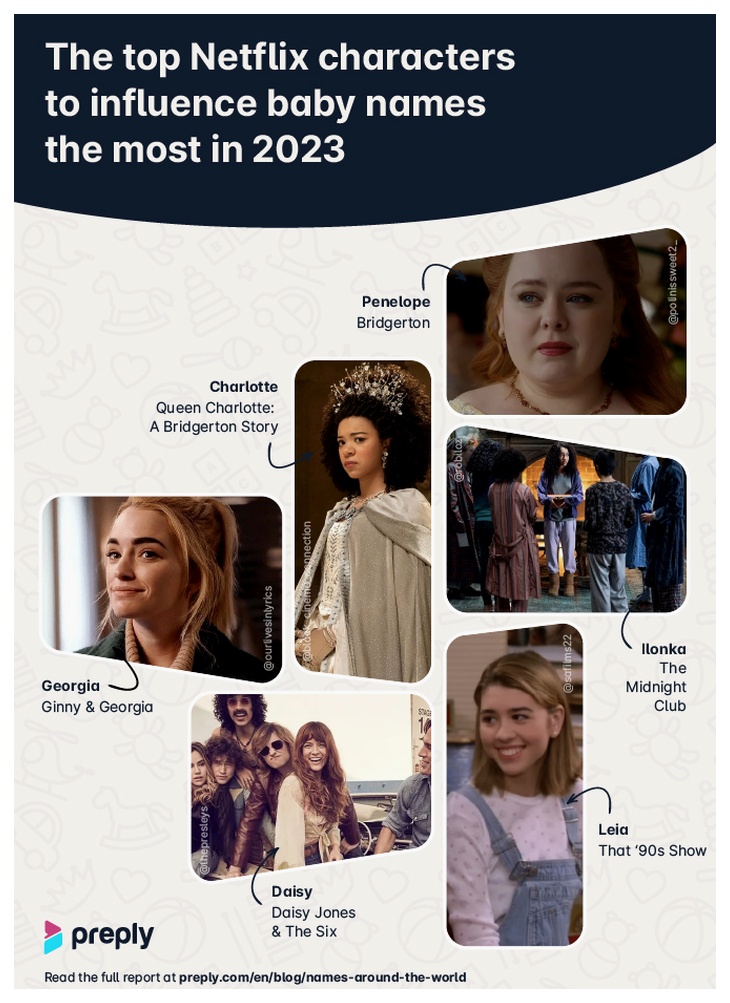
Netflix has significantly shaped naming trends, leading to a surge in registrations for names featured in popular series such as “Bridgerton,” “Sex Education,” and “Peaky Blinders.” Names like Maeve, Otis, Arthur, Tommy, and Finn have seen a remarkable rise in popularity since the shows debuted, reflecting the streaming giant's powerful influence on culture.
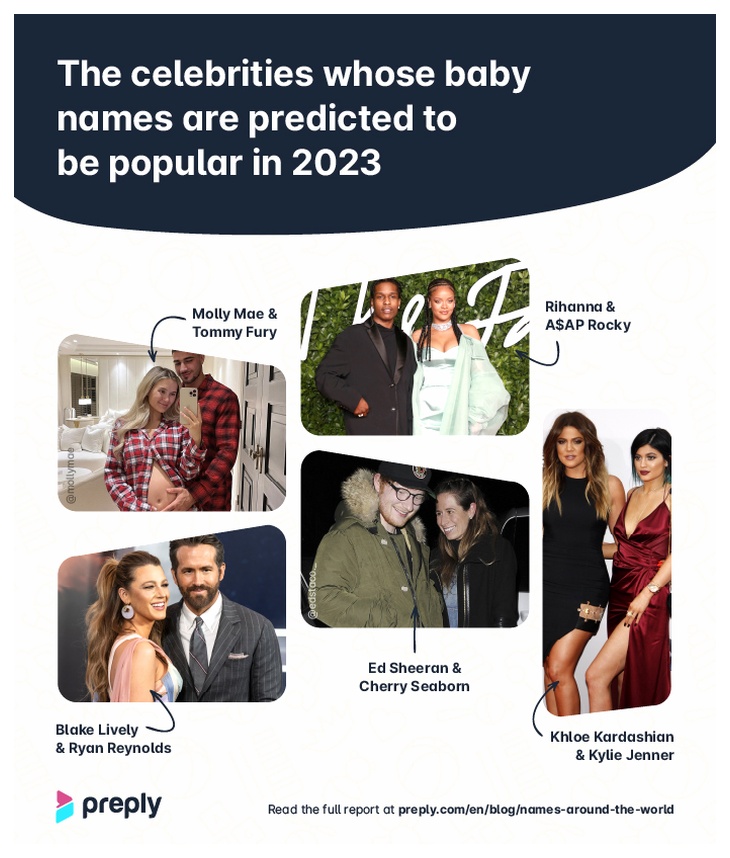
Celebrities have the power to turn any name into a trend. Around the globe, many parents opt to name their children after their favorite footballers, musicians, or actors. For instance, we've seen a significant rise in babies named after football legends like Cristiano Ronaldo, as well as an increase in newborns named after Kim Kardashian and Kanye West's son, Saint.
The name 'Lionel' has surged in popularity, largely due to the fame of Argentinian soccer superstar Lionel Messi. Recent statistics from the Civil Registry of Santa Fe reveal a remarkable 700% increase in registrations for the names Lionel and Lionela. In fact, one in every 70 babies registered in December was given one of these names, highlighting their rising trend.
What other influences do baby names have from TV, celebrities and pop culture?

The phenomenon of adopting Western names in Asia
When the topic of adopting 'English names' arises, China frequently takes center stage. This trend gained significant momentum in the 1970s, coinciding with the country’s opening up and reform policies. For many Chinese individuals, choosing an English name goes beyond mere convenience; it symbolizes a more casual approach to identity and adds an extra dimension to their personal expression.
Adopting a Western name is a widely accepted tradition throughout Asia. If you're taking Chinese lessons and interacting with locals, you may have noticed this practice firsthand. The motivations for choosing a Western name can differ greatly from person to person, influenced by their unique circumstances.
In the Catholic Church, it is common for children to receive an English baptismal name, a practice that extends to several regions in Asia as well.
A key reason many individuals, including those from China, opt for English names is the challenge of translating and pronouncing names with unfamiliar sounds. For instance, Westerners often find it difficult to pronounce names starting with C (which sounds like "tz") or X (which sounds like "sh"). Additionally, directly translating a name can lead to misunderstandings when used in English, prompting many to steer clear of this approach altogether.
A blog from Harvard highlights the trend of English first names among Chinese Americans, revealing that several Western names for men have gained significant popularity.
- David
- John
- James
- Andrew
- Eric
- Peter
- Albert
And for women:
- Jenny
- Amy
- Angela
- Grace
- May
How do we translate names originally from different alphabets?
Taking China as an example, personal names are not translated; instead, they are Romanized. This process involves converting the sounds of Chinese names into English using Roman letters, allowing their original pronunciation to be preserved while making them accessible to an English-speaking audience.
While methods may differ across regions, the romanization of names is widely embraced by Chinese individuals. This practice proves advantageous in various aspects of life, including education, travel, business, and effective international communication.
Learn a language online with our free learning materials.
Learn English online
Learn French online
Baby names banned in other countries
When choosing baby names, some parents certainly push the boundaries of creativity. Take Elon Musk's son, "X Æ A-12 Musk," for example—a name that likely wouldn't fly in many countries due to strict naming laws. These regulations vary widely around the world, reflecting diverse cultural attitudes toward naming conventions.
Countries often have unique motivations for prohibiting certain names, but a common theme emerges: bans typically occur when registrars believe that parents may not prioritize their child's well-being in the naming process. In such instances, government intervention becomes necessary to protect the child's best interests.
It's fascinating to observe how certain names can be banned in some countries while thriving in others. Take the name Mercedes, for instance. While it is widely known as a prestigious German luxury car brand, it enjoys immense popularity in Spain, where it's quite common. Conversely, in Germany, the name is prohibited due to its association with the brand.
Our research shows a growing trend among parents who are opting for names from other countries. This shift is largely driven by globalization and the pervasive influence of mainstream media, which expose people to a variety of cultures and naming conventions. As a result, many parents find themselves drawn to similar names for their children, reflecting a shared global landscape.
This highlights the growing trend of adopting English names in various countries and underscores the importance of implementing guidelines to protect national identities. Without these measures, the prominence of local and regional names may diminish, risking the cultural uniqueness of these places.
United Kingdom
The GRO (General Register Office) states the following about baby names in the UK:
In England and Wales, there are no legal restrictions on the names you can choose for your child. However, certain names may be deemed unacceptable for official use, like passport applications, if they are considered offensive or violate trademark or copyright laws.
If a registrar suspects that a name might be objectionable, it's recommended that they reach out to the General Register Office for guidance.
A name can include any combination of letters from the English alphabet, but it must fit within the designated space on the registration page. Please note that numbers and symbols cannot be included in the name.
Germany
In Germany, names must meet specific guidelines to gain approval from the registrar. Here’s a quick overview of the essential rules for naming.
- No last names (for example, Schmidt)
- No gender-neutral names (for example, Matti)
- No names of objects or brands (for example, Mercedes - as previously mentioned)
- No names of products as first names (for example, Adidas or Nike)
- A universal guideline across countries prohibits names that may harm a child's well-being, such as "Lucifer."
Spain
A few years back, Spain's registrars only allowed Christian names for newborns. Fortunately, this has changed, and the regulations are now more flexible. However, there are still specific criteria that names must meet to gain approval.
- The name can’t make identification confusing (gender neutral or gender exchanged names are not accepted)
- The name must not be the same as one of the other siblings
- The name can’t have negative connotations or risk the dignity of the child (for example, Hitler, Judas, Loco)
- Names may be compound but limited to two components, such as José Juan.
- Last names can’t be names (for example, Martínez)
- You must avoid fruit, celebrity or city names (for example Pera, Tokio)
- It’s important to note that brand names can be tricky to be approved by the registrar
Portugal
Portugal enforces strict regulations regarding baby names, maintaining an extensive 82-page list of prohibited options. Among the notable names banned are Nirvana, Rihanna, Sayonara, and Jimmy. These restrictions aim to ensure that names are suitable and culturally appropriate.
Other names include Logan, Ashley, Bruce, Charlotte, Dylan, Jenny, and Tom. While Tomas is acceptable, it’s important to note that Tom is typically viewed as a shortened form of that name.
Several names are often dismissed because they don't conform to the accepted format, particularly those borrowed from other countries and languages.
- Daisi is allowed but not Daisy
- Kévim, but not Kevin
- Mónica, but not Monique
George and William are names that don't comply with Portuguese naming laws, meaning the royal family would face challenges in using them!
France
Much like in the UK, parents in France enjoy the freedom to choose their child's name, provided it aligns with the child's best interests. If local registrars believe a name could be detrimental, they have the authority to bring the case to court, where the name may be prohibited.
Hungary
In Hungary, there is a curated list of pre-approved names for children. If you choose a name that isn't on this list, it must undergo an approval process. A key guideline is that names must adhere to Hungarian spelling conventions. For instance, if you wish to name your child Juliette, it would need to be spelled Zsüliett to comply with these rules.
Scotland
While Scotland doesn't have strict rules regarding banned names, they do offer some thoughtful guidelines to consider:
- The name chosen shouldn’t be particularly fanciful
- An unusual spelling of a name is likely to cause confusion
A prevalent trend among registrars worldwide is the restriction on registering baby names that may lead to confusion in identification. This includes names that are gender-neutral or those that flip traditional gender associations.
Interest in unisex baby names has skyrocketed over the past year, with a staggering 2,550% increase globally. This surge reflects shifting gender norms and a growing acceptance of non-binary identities. By choosing a gender-neutral name, parents are not just opting for a unique choice; they are also signaling their support for their child's freedom to define their own gender identity.
Why is it important to preserve the names from a country or region?
Names play a crucial role in shaping a culture's heritage and identity. They often encapsulate a nation’s history, traditions, and values, serving as a bridge to connect individuals with their ancestors. By preserving names, we honor cultural legacies and ensure that diverse traditions are celebrated and passed down through generations. If you're thinking about taking language classes, don’t hesitate to engage with your teacher about names; you'll be amazed by the fascinating similarities, differences, and adaptations that exist across languages.
Methodology
We've compiled an insightful guide exploring the global translation of names, delving into the reasons behind these variations and the processes involved in translating them. Additionally, we've examined names that are banned in various countries and the common factors contributing to these restrictions.
Frequently Asked Questions
What is the significance of given names in different cultures?
Given names carry deep meanings and reflect an individual's unique identity, often stemming from cultural, historical, or religious influences.
How are names adapted when moving to a new country?
Individuals may adapt their names to align with local cultural customs and phonetic rules, which can involve changing the pronunciation or spelling.
What influences naming trends in modern society?
Social media, celebrities, films, and TV shows significantly influence naming trends, leading to the adoption of names featured in popular culture.
Why might some names be banned in certain countries?
Names may be banned if they are deemed harmful to a child's well-being or if they violate cultural norms, with registrars intervening to protect children's interests.
What is the process of romanization in name translation?
Romanization involves converting the sounds of names from different alphabets into Roman letters, preserving their original pronunciation while making them accessible to English speakers.