- Key findings
- How many Americans regularly use subtitles
- Why Americans are using subtitles more often
- How Americans use subtitles on mobile devices
- The hardest-to-understand accents, TV shows and celebrities
- How Americans use subtitles to better understand foreign languages
- Do subtitles distract us or help hold our attention?
- Conclusion
- Frequently Asked Questions
- What percentage of Americans watch content with subtitles regularly?
- What are the main reasons people use subtitles?
- How does age affect subtitle usage among Americans?
- What are some challenges viewers face with audio in modern productions?
- Do subtitles help or distract viewers according to the survey?
While subtitles are often viewed as a means to enhance accessibility by transcribing or translating dialogue and sounds, their popularity has surged beyond that role. Recent data reveals that younger audiences increasingly favor watching content with subtitles enabled, making this feature a mainstream choice.
With the surge of streaming services and the growing number of screens in our homes, we set out to uncover the reasons behind America’s fascination with subtitles and their connection to modern content consumption. To gain insights, we surveyed 1,200 Americans about their experiences and preferences regarding this feature.
At LingualNeeds, we specialize in private English lessons and online Spanish courses, and we can attest that using subtitles is a powerful tool for grasping various accents and making language learning enjoyable.
Dr. Melissa Baese Berk, a Professor of Linguistics at the University of Chicago and a language expert at LingualNeeds, highlighted the benefits of on-screen subtitles for viewers. She explained that combining audio with written text enhances comprehension, particularly for language learners. Subtitles can significantly aid understanding, especially when audio quality is poor, such as when using low-quality headphones. This approach proves invaluable for language learners and anyone who struggles to grasp spoken content.
Discover the reasons behind America’s fascination with subtitles, from enhancing language skills to other intriguing motivations. Keep reading to explore this captivating trend!
Key findings
- 50% of Americans watch content with subtitles most of the time.
- 55% say it is harder to hear dialogue in shows and movies than it used to be.
- 62% of Americans use subtitles more on streaming services than regular TV.
- 57% watch content in public; 74% of Gen Z do so.

Learn a language with personalised 1-on-1 classes with our expert tutors from all over the world
French lessons online
Spanish lessons online
How many Americans regularly use subtitles
A striking 89% of respondents reported having used subtitles at some point. However, when we delved deeper into the data, intriguing differences emerged among various age groups regarding their frequency of use.
A recent survey found that half of all respondents enjoy watching TV with subtitles regularly. Notably, Gen Z stands out as the most enthusiastic group, with 70% frequently using subtitles. Millennials also lean towards this trend, with 53% opting for subtitles more often than the average viewer. In contrast, older generations, including Gen X and Baby Boomers, are the least likely to embrace this feature.
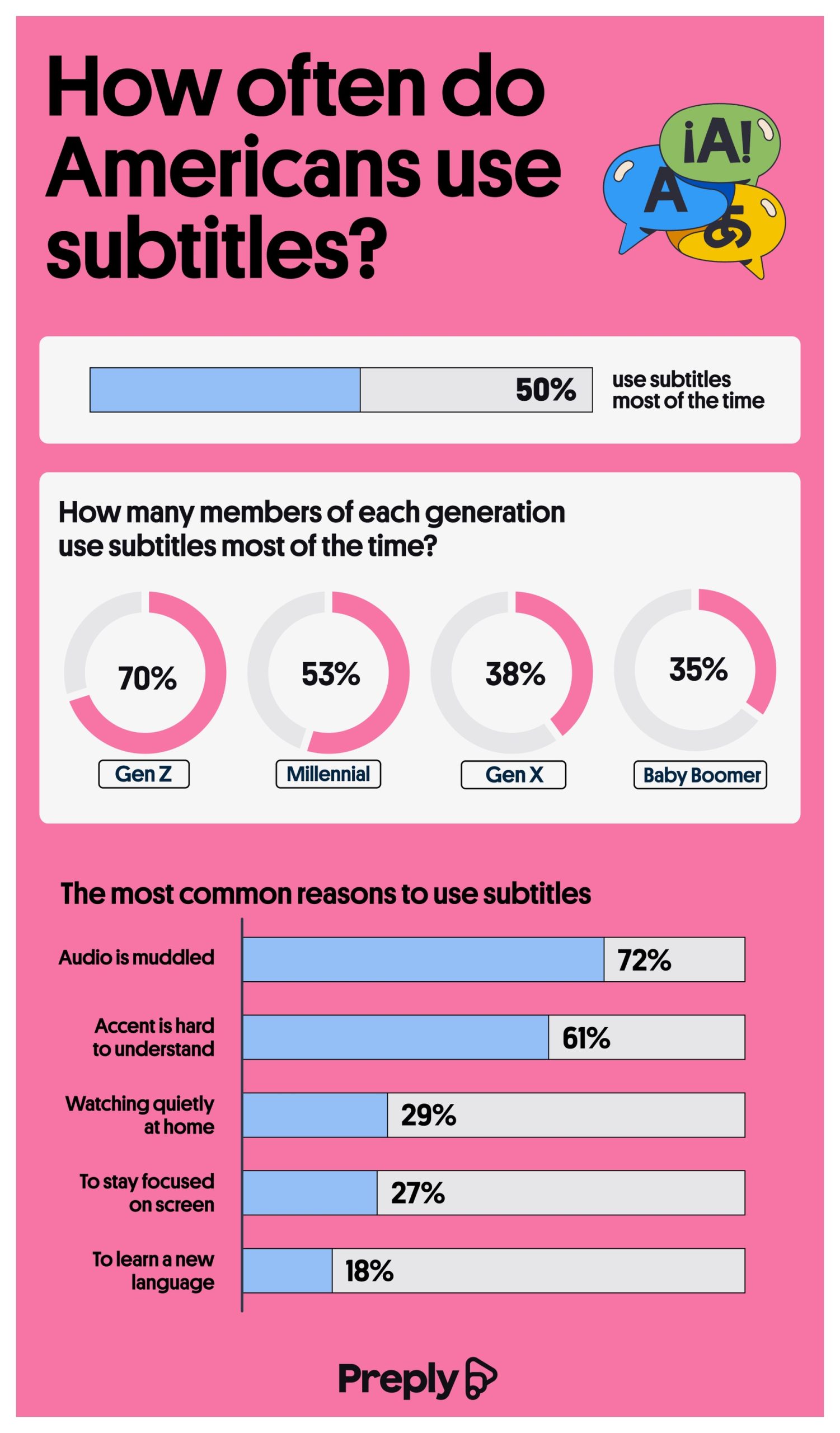
When asked what their main reason is for using subtitles:
- Nearly 3 in 4 respondents claimed muddled audio from their content.
- 61% use them when accents are difficult to understand.
- 29% prefer to watch their content at home quietly, leaving subtitles on so as not to disturb roommates or family.
- 27% of Americans use subtitles to stay focused while navigating distractions from multiple screens, children, pets, work, and news.
- Nearly 1 in 5 regularly use subtitles to learn Spanish or learn English online.
As the popularity of subtitles continues to rise, a significant number of Americans believe they should be automatically enabled rather than requiring users to select them. In fact, 32% of our respondents feel that subtitles should be the standard on streaming platforms and cable television, while 26% advocate for them to be the default option in movie theaters.
Why Americans are using subtitles more often
Recently, we’ve observed a trend in films and TV shows, like “The Batman” and “Euphoria,” featuring such dark visuals that it’s often hard for viewers to see what’s going on. This raises questions: Is this shift the result of evolving directorial choices or the constraints of home entertainment systems? We’re curious to explore whether this trend correlates with the increasing use of subtitles in American households.
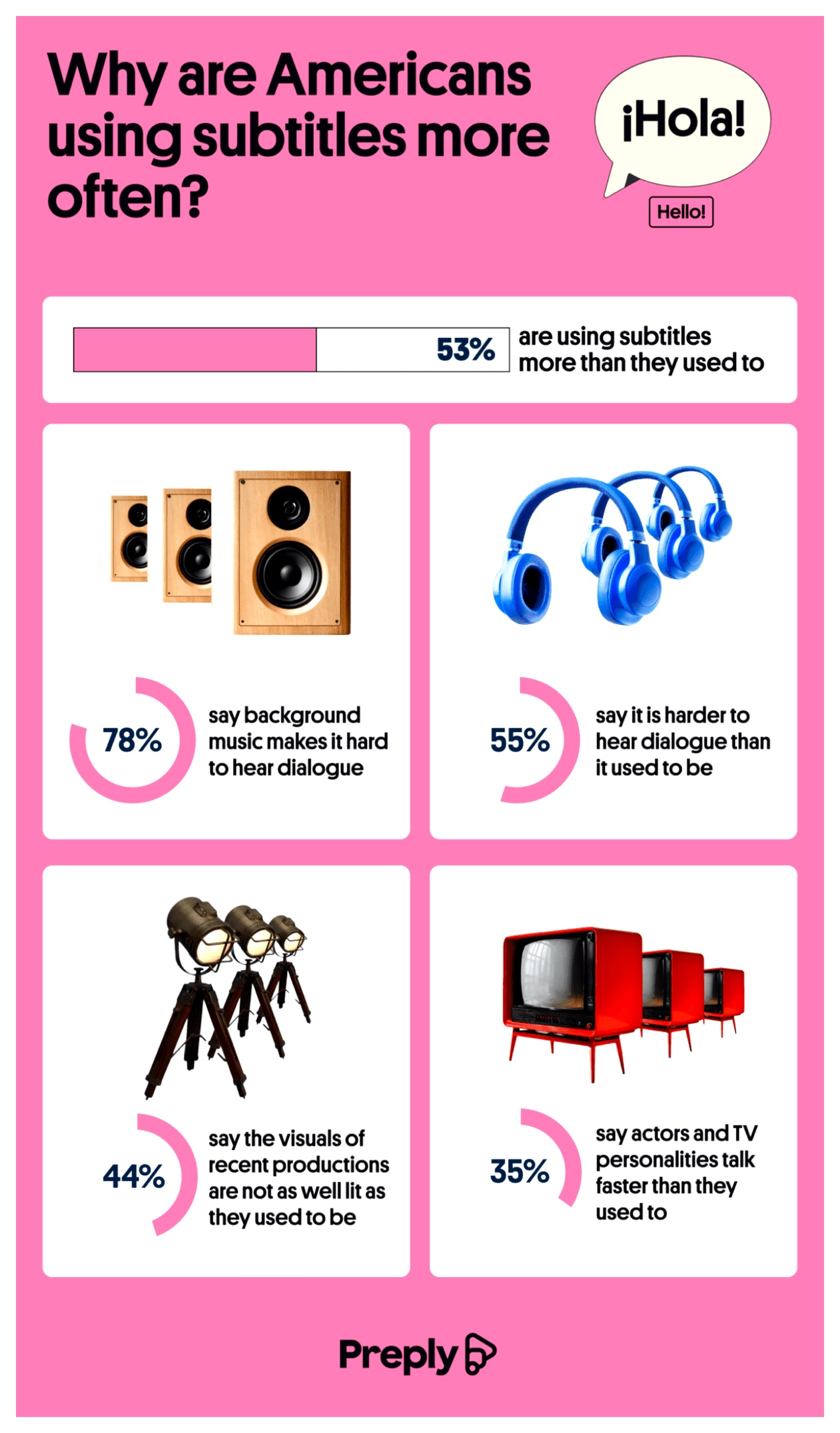
Our findings revealed that 53% of Americans are increasingly relying on subtitles, and audio mixing problems appear to be a significant factor. A staggering 78% of viewers struggle to hear dialogue clearly because of overpowering background music in films and TV shows, with 55% agreeing that understanding on-screen conversations has become more challenging over time.
A significant 44% of Americans believe that recent productions are embracing darker visuals compared to those from the past, leading to less overall lighting. Additionally, 35% feel that actors and TV personalities are delivering their lines at a noticeably faster pace than before.
Learn a language online with our free learning materials.
Learn English online
Learn French online
How Americans use subtitles on mobile devices
One of the great advantages of owning a smartphone is the convenience of entertainment on the go. When it comes to watching online videos, like those on YouTube and TikTok, a significant 41% of Americans prefer using subtitles. Our survey reveals that many people enjoy this content in public settings, making it easier to stay engaged without disturbing those around them.
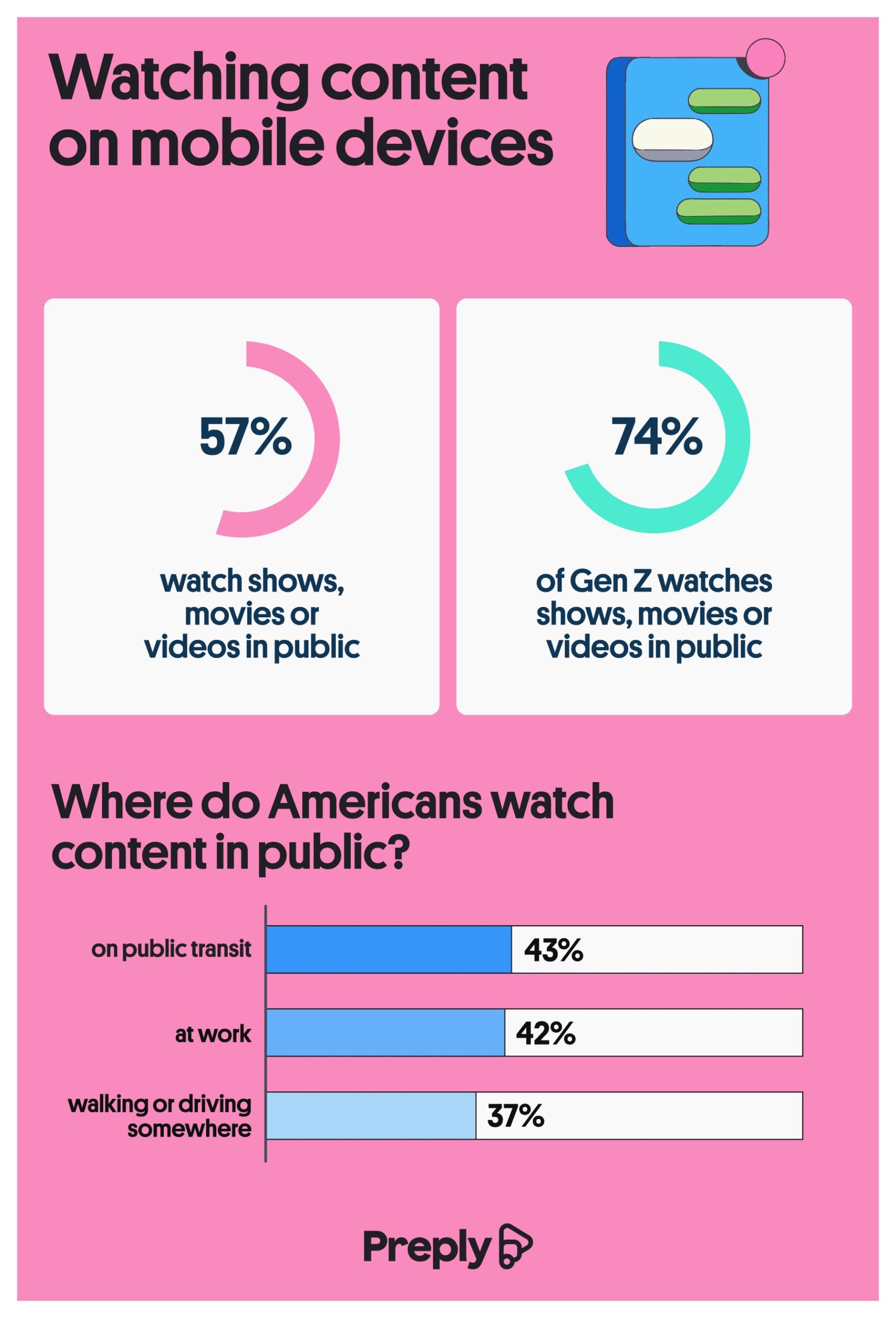
A significant 57% of respondents reported enjoying shows, movies, or online videos in public settings. This trend is especially pronounced among Gen Z, with an impressive 74% of this generation admitting to indulging in content while out and about.
Thanks to modern technology, you can easily indulge in your favorite TV shows anytime, whether you’re commuting, taking a break at work, or even strolling outside. Dr. Melissa highlights that subtitles are particularly useful for multitaskers, allowing viewers to catch missed audio cues by reading what’s on the screen. Interestingly, a survey revealed that 43% of people watch content while on public transit, 42% do so at work, and 37% even tune in while walking or driving.
The hardest-to-understand accents, TV shows and celebrities
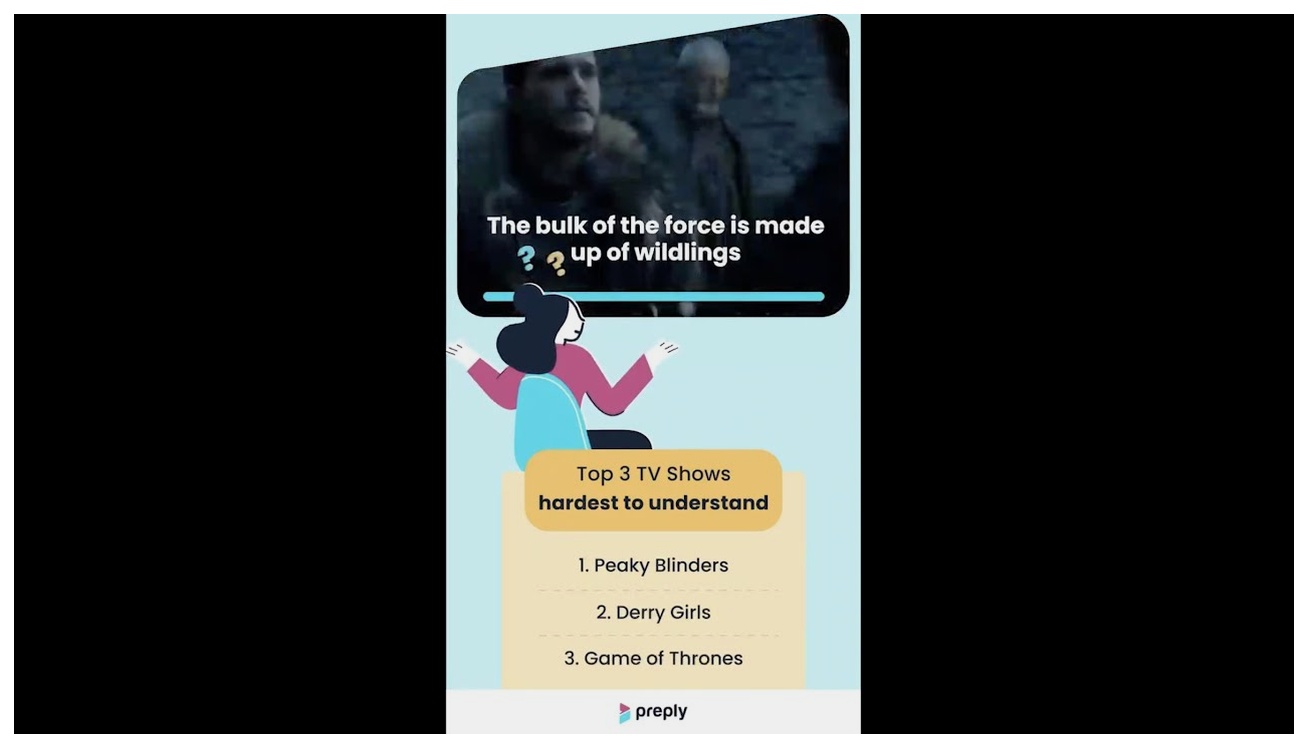
In today’s content-saturated world, it’s no surprise that some performances can leave us puzzled. Even native English speakers sometimes struggle to grasp the dialogue of remarkable actors. Thankfully, subtitles help bridge that gap, enabling everyone to appreciate their talent. Below, we highlight the actors and TV shows that our respondents find most challenging to understand, ranked from the most frequently mentioned to the least.
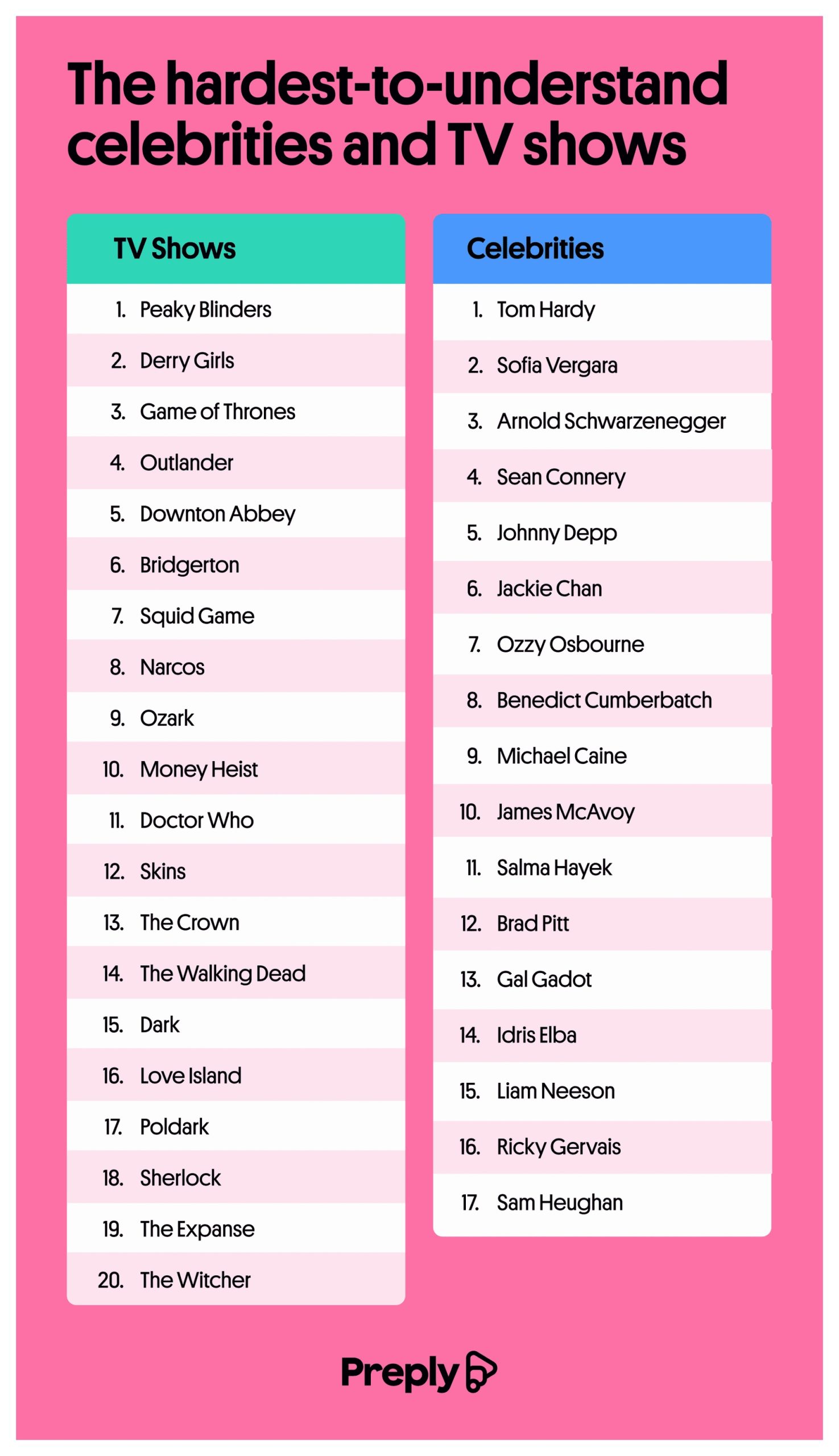
According to survey responses, some of the most challenging TV shows for viewers to follow are *Peaky Blinders*, *Derry Girls*, and *Game of Thrones*, primarily due to their complex dialogue. When it comes to celebrities, particularly actors, Americans often struggle to comprehend the speech of Tom Hardy, Sofia Vergara, and Arnold Schwarzenegger, among others.
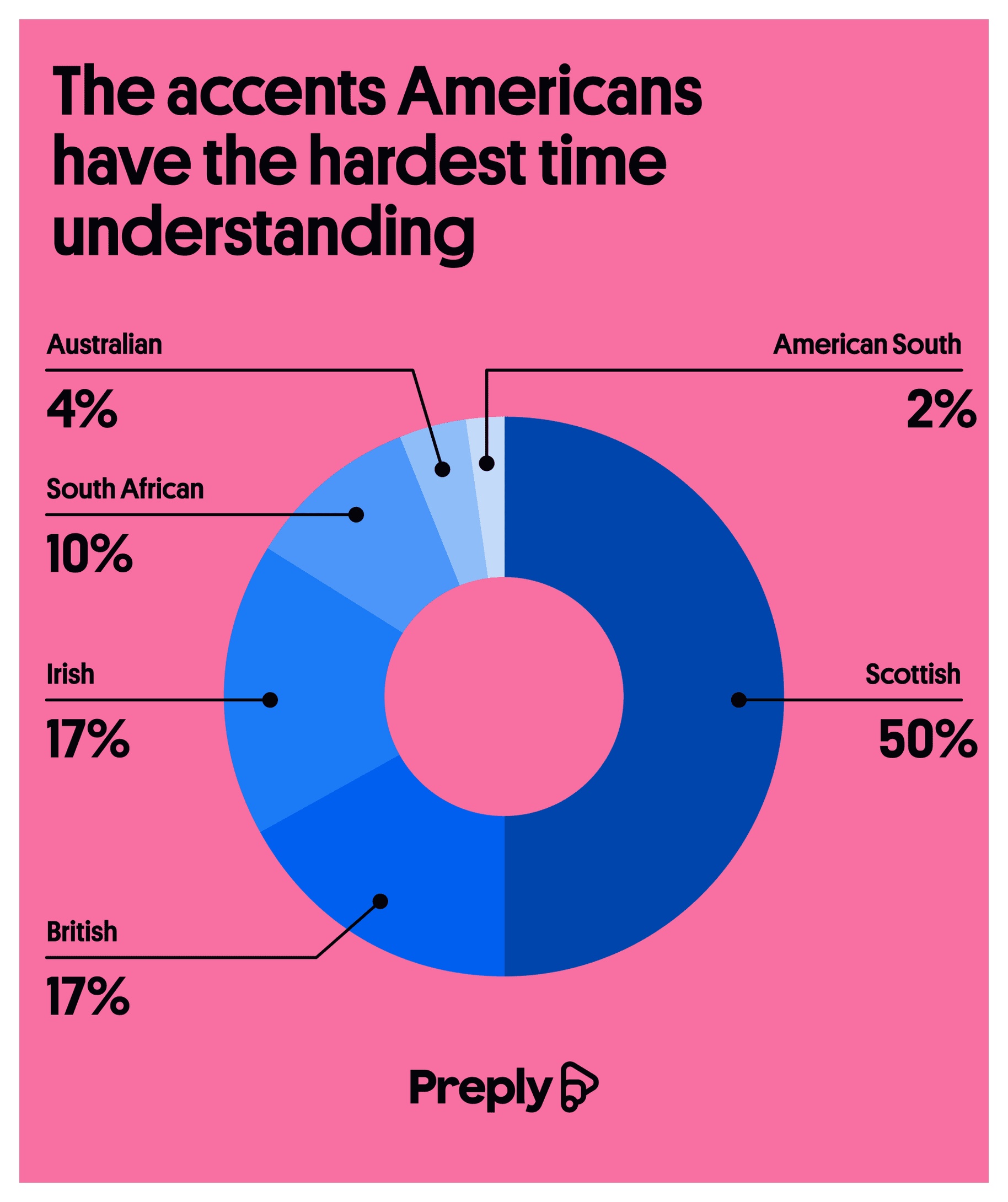
A recent study reveals that 57% of Americans turn to subtitles to grasp the dialogue of actors with accents. The research also highlights which accents pose the greatest challenge for viewers.
How Americans use subtitles to better understand foreign languages
We conducted a survey to explore viewers’ preferences for foreign language films and shows. An impressive 74% of respondents expressed a preference for using subtitles while enjoying content like the hit series Squid Game, which isn’t in their native language. In contrast, 26% of participants favored English dubbing for foreign films and series.
Engaging with media in the language you’re learning is an excellent way to immerse yourself, yet surprisingly, only 26% of Americans have utilized subtitles for this purpose. If you’re ready to take on a fun challenge, watch a foreign language film with English subtitles and see if you can pick up on some phrases along the way!
Do subtitles distract us or help hold our attention?
In today’s screen-centric world, we were curious: do subtitles distract us from what we’re watching, or do they help us focus? Notably, streaming services are driving a surge in subtitle usage, with 62% of Americans reporting they use subtitles more on these platforms than on traditional TV. When it comes to user experience, respondents rated the best subtitle features on streaming services as follows: 1) Netflix, 2) Amazon Prime, and 3) Hulu.
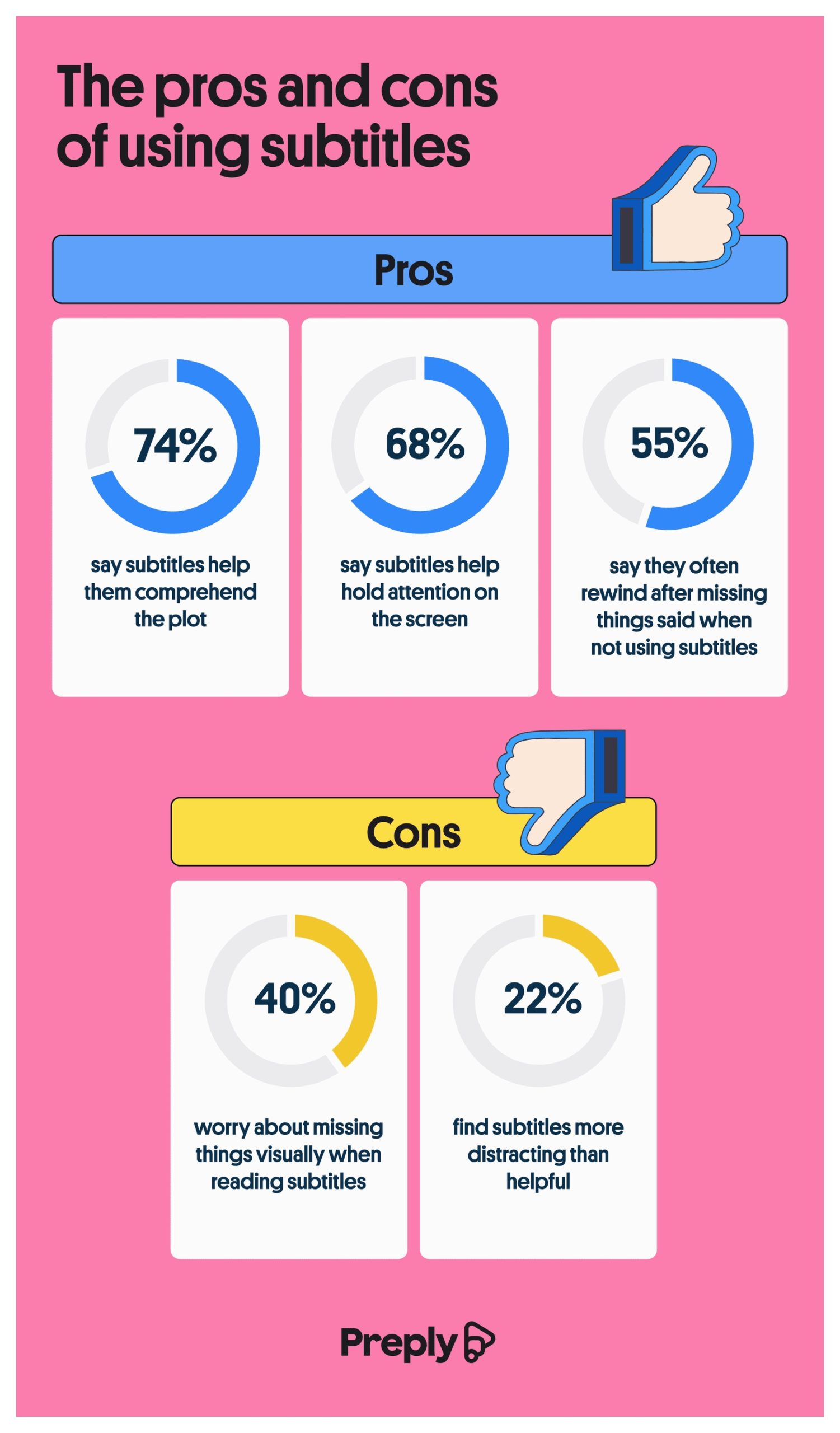
Subtitles offer viewers distinct advantages and drawbacks. On the positive side, they visually guide audiences through the dialogue, aiding in plot comprehension (74%) and keeping them engaged (68%). Additionally, subtitles reduce the need to rewind after missing dialogue (55%), ultimately enriching the overall viewing experience.
While subtitles offer valuable accessibility, they do have their drawbacks. A significant 40% of viewers feel that reading subtitles diverts their attention from the visuals, leading to concerns about missing important details. Additionally, more than 20% of Americans find subtitles to be more distracting than beneficial.
Conclusion
Our survey reveals that subtitles are widely embraced across America—perhaps more than you realize. With entertainment trends leaning towards dim lighting, booming background music, and unclear audio, it’s likely that the popularity of subtitles will continue to rise.
Subtitles offer both advantages and disadvantages, but their main purpose is to enhance understanding, particularly for individuals who are hearing impaired or for those who are non-native English speakers.
Methodology: On May 12, 2022, we conducted a survey involving 1,265 Americans to explore their usage and perceptions of subtitles in entertainment. The demographic breakdown revealed that 49% of participants identified as men, 48% as women, and 3% as nonbinary or preferred not to disclose their gender. In terms of age, 16% of respondents were Baby Boomers, 22% were Generation X, 46% were Millennials, and 16% were Generation Z.
Frequently Asked Questions
What percentage of Americans watch content with subtitles regularly?
50% of Americans watch content with subtitles most of the time.
What are the main reasons people use subtitles?
Nearly 3 in 4 respondents claimed muddled audio from their content, 61% use them when accents are difficult to understand, and 29% prefer to watch quietly at home.
How does age affect subtitle usage among Americans?
70% of Gen Z frequently use subtitles, while only 53% of Millennials do, and older generations like Gen X and Baby Boomers are the least likely to embrace this feature.
What are some challenges viewers face with audio in modern productions?
78% of viewers struggle to hear dialogue clearly due to overpowering background music, and 55% believe understanding on-screen conversations has become more challenging over time.
Do subtitles help or distract viewers according to the survey?
74% of respondents feel subtitles aid in plot comprehension, while 40% believe reading them diverts attention from visuals.