- Key findings
- America’s most confusing emojis
- The lease recognizable emojis
- The most rebelled against emojis
- Communicating clearly in a digital world
- Frequently Asked Questions
- What role do emojis play in communication?
- What are the top three confusing emojis identified in the article?
- How many people admitted to being confused by emoji usage?
- What percentage of people experienced awkward moments due to misunderstood emojis?
- What is the most frequently rejected emoji according to the survey?
Emojis play a vital role in today’s communication landscape, adding color and emotion to our messages. However, their varied meanings and uses can sometimes result in misunderstandings and confusion.
Although certain emojis, like the Upside-Down Smiley and the confused face, leave some users puzzled, most people find joy in using emojis to express their thoughts and emotions in a playful and engaging manner.
At LingualNeeds, we’re passionate about language learning and the intriguing role of emojis in communication. To explore this dynamic, we’ve put together a list of the most perplexing emojis in America and conducted a survey to uncover how people across the country are using them.
No matter if you’re just starting out with emojis or consider yourself a pro, this is your chance to deepen your understanding of these intriguing symbols. Dive in and challenge your emoji expertise!
Key findings
- A majority (78%) have been confused by someone else’s use of an emoji.
- A surprising 1 in 3 have seen a misinterpreted emoji create an uncomfortable situation.
- Friends are most likely to use emojis in confusing ways.
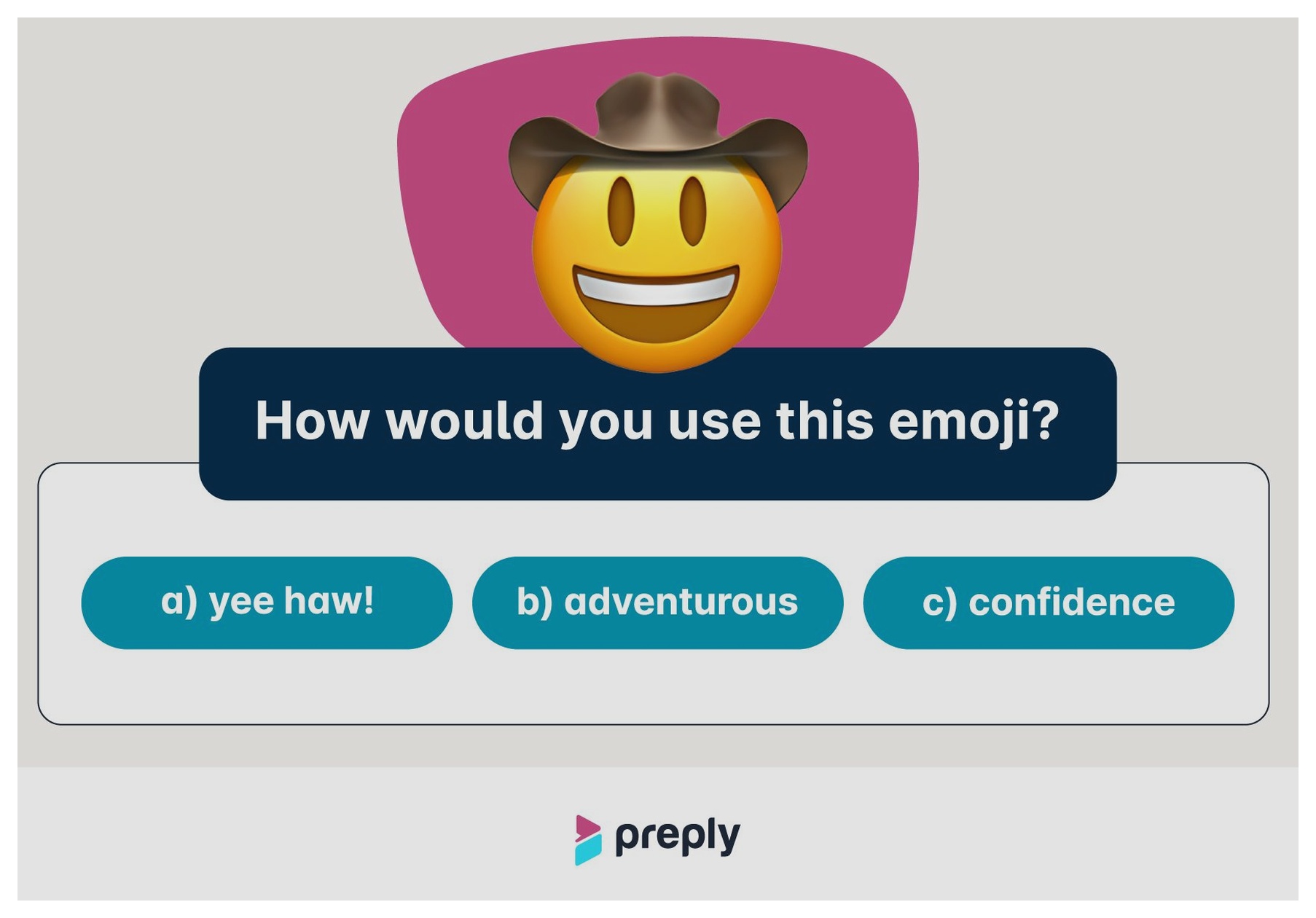
America’s most confusing emojis
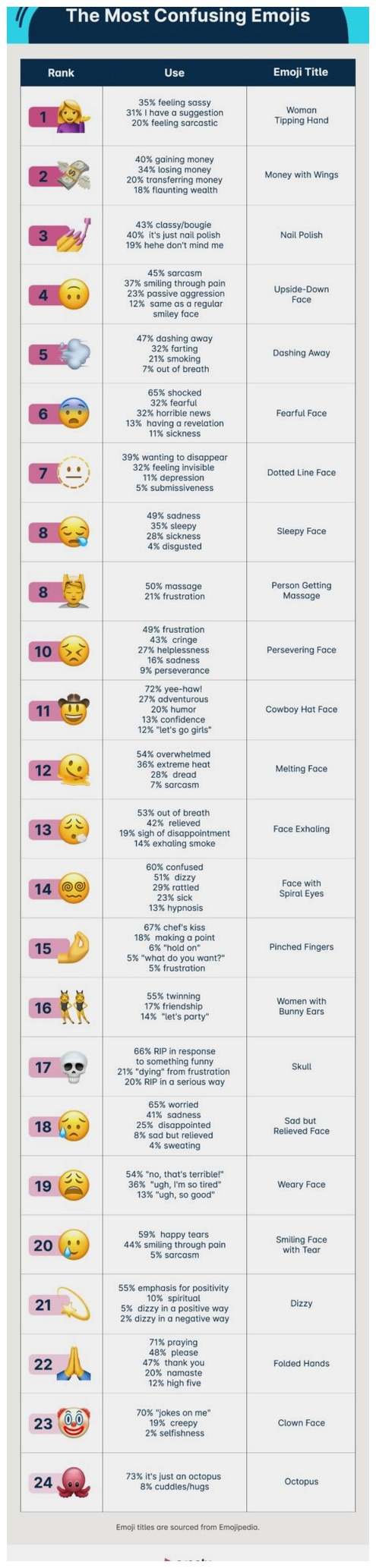
The top three confusing emojis are ?, ? and ?.Let’s take a look at each of them in more detail:
The Person Tipping Hand emoji showcases an individual with one hand raised, commonly signifying sass or sarcasm. Interestingly, others view it as a friendly gesture, akin to an assistant extending a helping hand.
“Money With Wings” evokes different meanings for different people. While some see it as a symbol of money slipping away, suggesting financial loss, others use it to represent wealth or the act of transferring funds. This diversity in interpretation showcases the multifaceted nature of the phrase.
The Nail Polish emoji, featuring a vibrant pink manicure, has transformed from merely representing the act of painting nails to symbolizing elegance and a carefree attitude.
Our research uncovered that an impressive 78% of participants admitted to feeling confused by the emoji choices of others. This insight underscores the importance of context and clarity in our digital communications.
Generational differences may play a significant role in the confusion surrounding emoji usage. Our research found that friends are the most frequent culprits, with 41% of people reporting their friends use emojis in perplexing ways. Interestingly, about one in three individuals say their parents are also prone to sending emojis that leave them scratching their heads.

Learn a language with personalised 1-on-1 classes with our expert tutors from all over the world
French lessons online
Spanish lessons online
The lease recognizable emojis
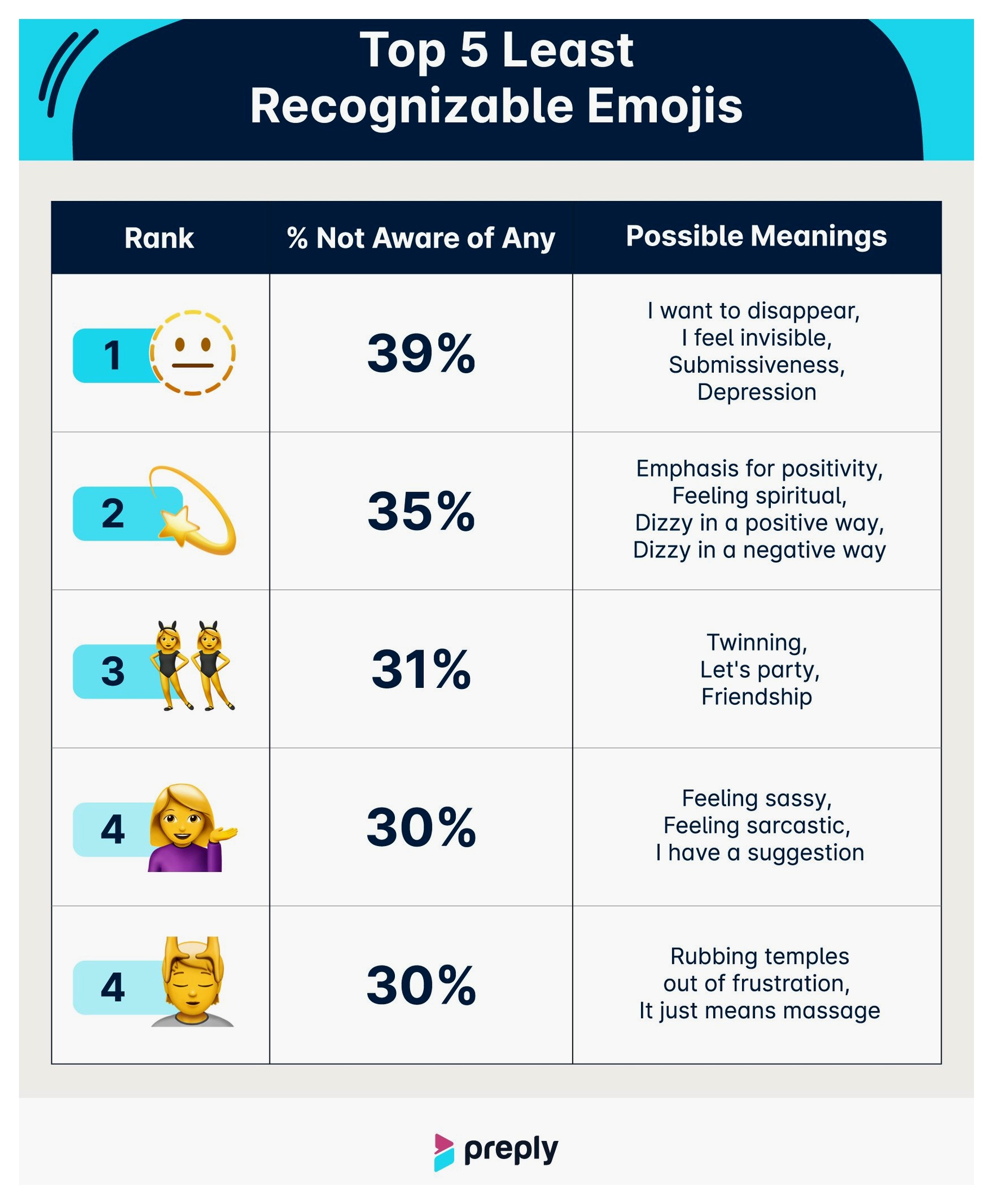
The three least recognizable emojis are the dotted line face, ? and ?. These results might surprise you! However, it’s important to remember that misunderstanding emojis can lead to some awkward situations.
Did you know that one in three people have experienced an awkward moment due to a misunderstood emoji? This statistic highlights the risks of miscommunication that can arise when emojis are either misused or misinterpreted by the recipient.

The most rebelled against emojis
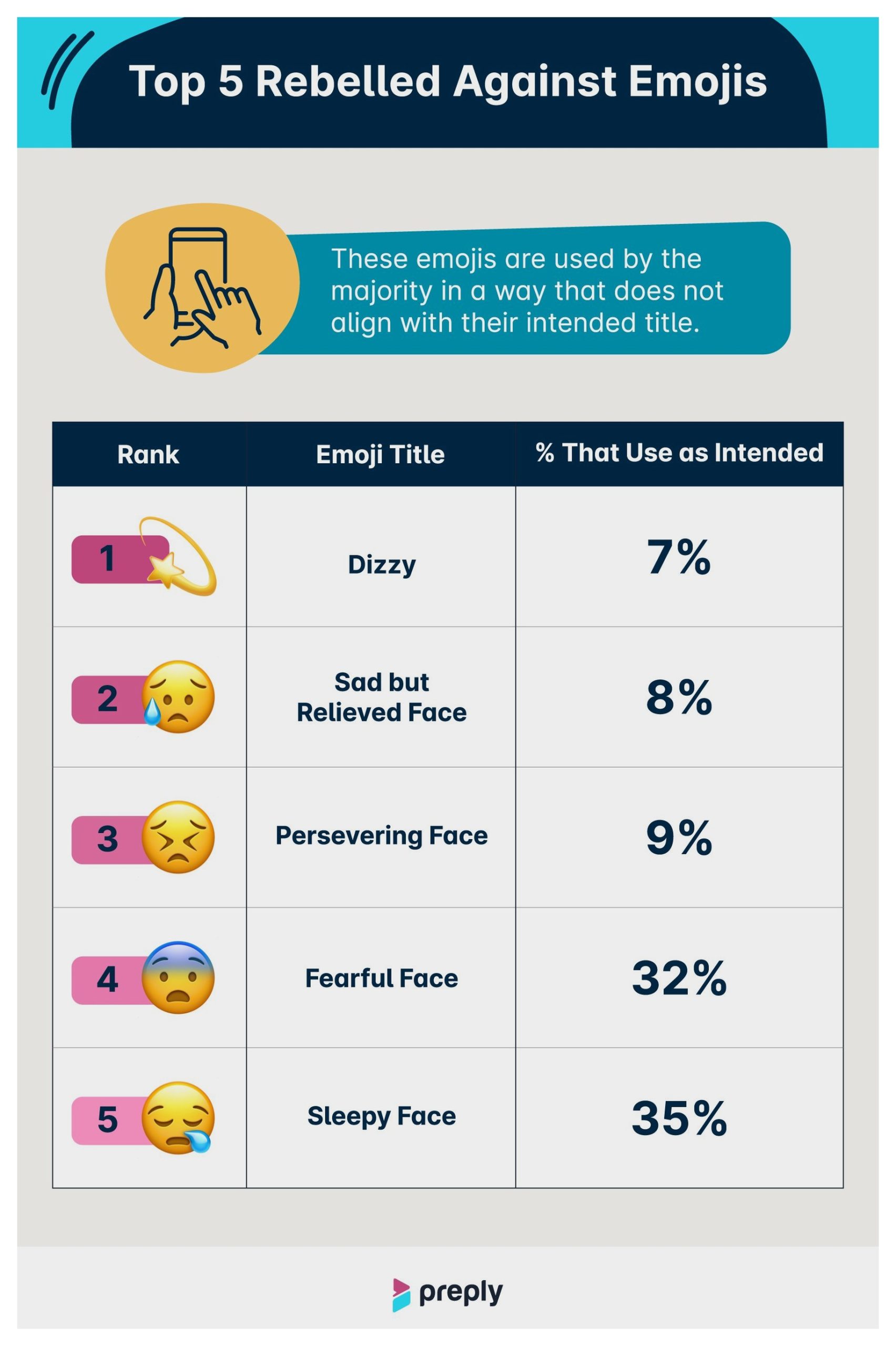
You’ve probably noticed that emojis often stray from their intended meanings. We pinpointed emojis with specific emotional connotations in their names, like “fearful” or “sleepy.” Next, we analyzed who actually uses these emojis in alignment with their intended emotions.
In our survey, only 7% of participants chose the emoji labeled “Dizzy,” making it the most frequently rejected emoji on our “Rebelled Against Emojis” list. This indicates that users often resist the emoji’s intended meaning, highlighting a disconnect between design and interpretation.
Learn a language online with our free learning materials.
Learn English online
Learn French online
Communicating clearly in a digital world
Emojis are undeniably fun yet often perplexing. With options ranging from the Dotted Line Face to Folded Hands, it’s essential to grasp the context behind each emoji and how the sender intends to use it. Our in-depth look at America’s most confusing emojis highlights the importance of clear communication in today’s digital landscape.
Grasping the meanings of emojis is essential, particularly when connecting with individuals from diverse cultures. Many emojis can convey entirely different messages across borders. At LingualNeeds, we recognize the significance of clear communication, which is why our dedicated English language tutors—and experts in other languages—are here to assist you. By enhancing your language skills and fostering a deeper cultural understanding, our tutors empower you to overcome language barriers and communicate with greater confidence and clarity.
Certain emojis can be misleading, such as the “Love-you gesture” emoji. In Spanish-speaking cultures, this gesture may be interpreted as a sign of infidelity, potentially resulting in uncomfortable misunderstandings. If you’re learning Spanish, it’s a good idea to discuss these cultural nuances with your teacher to avoid any faux pas.
The “Octopus” emoji can carry unexpected meanings, especially in Japan, where it may be regarded as an insult. If you’re enrolled in online Japanese classes, it’s a great idea to ask your tutor about this cultural nuance—you’ll be amazed by the differences in interpretation!
No matter your motivation—be it advancing your career, exploring new destinations, or enhancing personal development—LingualNeeds is here to help you sharpen your language skills. With our expert support, you can achieve your goals and eliminate misunderstandings in communication.
Methodology
On March 14, 2023, we conducted a survey with 1,001 Americans nationwide to uncover which emojis leave them scratching their heads. Our participants, aged between 18 and 76, represented a diverse demographic: 48% identified as female, 50% as male, and 2% as nonbinary.
We employed the Gini Coefficient method to analyze the average responses for each emoji. The emojis that generated the most varied answers—those with averages closest to 0—proved to be the most confusing for respondents. It’s worth noting that the percentages for “Most Confusing Emojis” reflect how many participants were familiar with the emoji’s usage in the given context before completing our survey.
Frequently Asked Questions
What role do emojis play in communication?
Emojis add color and emotion to messages, enhancing communication but can also lead to misunderstandings.
What are the top three confusing emojis identified in the article?
The top three confusing emojis are the Person Tipping Hand, Money With Wings, and Nail Polish.
How many people admitted to being confused by emoji usage?
78% of participants reported feeling confused by someone else’s use of emojis.
What percentage of people experienced awkward moments due to misunderstood emojis?
One in three people have experienced awkward moments due to a misunderstood emoji.
What is the most frequently rejected emoji according to the survey?
The most frequently rejected emoji is the one labeled ‘Dizzy’, chosen by only 7% of participants.