- 1. Nodding the head
- 2. Facial expressions
- 3. Eye contact
- 4. Kissing in public
- 5. Nose
- 6. Handshakes
- 7. Hand ring
- 8. Crossed fingers
- 9. Hand waving
- 10. Sitting crossed legged
- Learning a language
- Frequently Asked Questions
- What is the significance of non-verbal communication in language learning?
- How much do non-verbal cues contribute to overall communication?
- How do nodding gestures vary across cultures?
- What role do facial expressions play in different cultures?
- How does the perception of eye contact differ between cultures?
In our previous article, we explored the vital role of non-verbal communication in language learning. Remarkably, every time you interact with someone, you emit countless non-verbal cues, often without even realizing it. These signals are picked up by the other person, either consciously or subconsciously, shaping the way we connect and understand each other.
Psychologist Micheal Argyle reveals that humans possess over 700,000 distinct forms of body language and gestures. In the 1950s, fellow psychologist Albert Mehrabian conducted groundbreaking research on the significance of non-verbal communication. He discovered that words contribute only a minor portion to the overall message we convey, while non-verbal cues and tone of voice play a far more substantial role in shaping meaning.
- Non-verbal cues account for 55%
- The tone of voice and intonation account for 38%
- Finally, words only account for a whopping 7%
Regardless of whether you react with skepticism or exasperation to those statistics, your body language reveals your response to the information. Now that we recognize the significance of non-verbal communication, have you considered how it varies across cultures? Join us as we explore the captivating realm of cultural differences in non-verbal cues worldwide, from head to toe.
1. Nodding the head
For centuries, the act of nodding one’s head has intrigued researchers and cultural anthropologists alike. In numerous cultures, a simple up-and-down nod is universally understood to mean “yes.” Interestingly, Charles Darwin proposed that infants instinctively nod their heads to indicate their search for milk when they’re hungry. However, it’s important to note that this gesture does not universally convey agreement; in some parts of the world, nodding can signify different meanings altogether.
Greece, Bulgaria, and Turkey:
According to Kris Rugsaken, in Greece, and Bulgaria nodding the head actually means “no,” the direct opposite of “yes!”
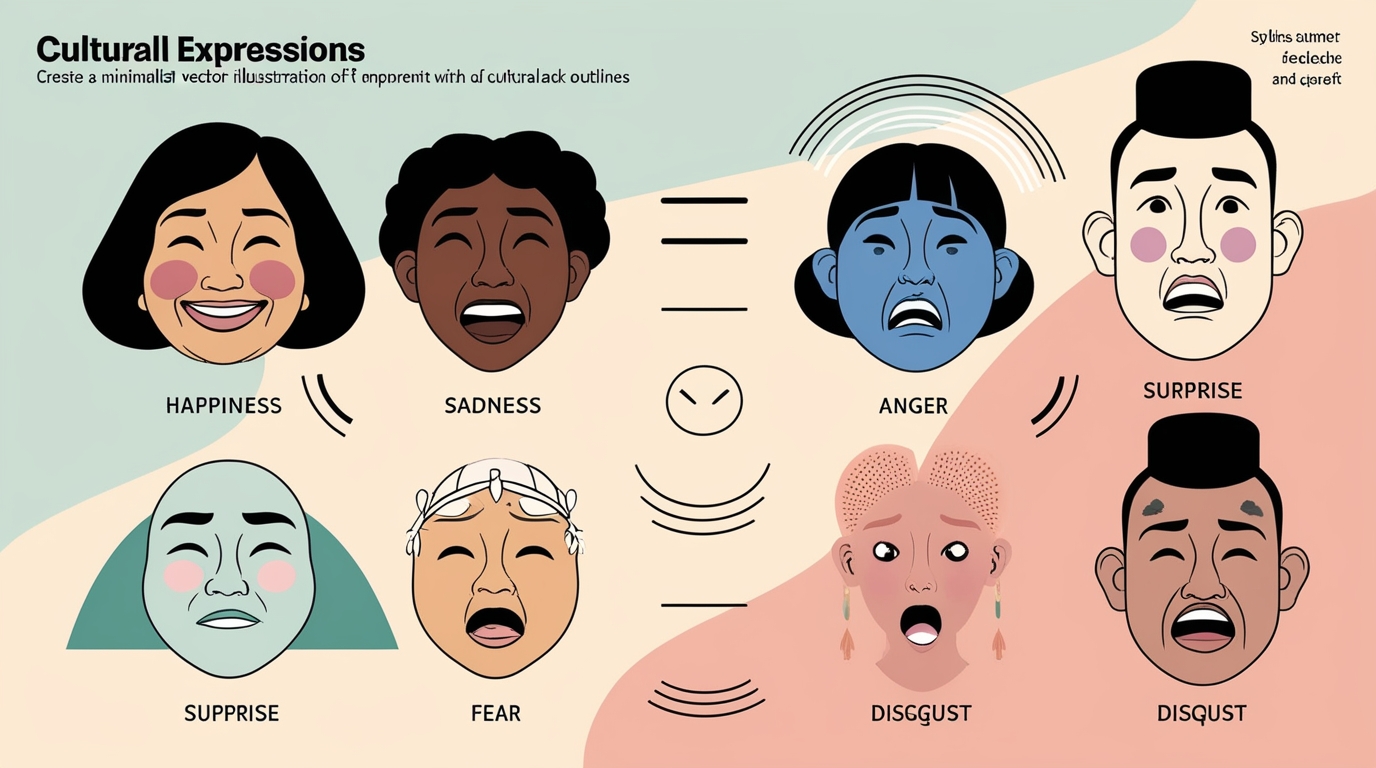
2. Facial expressions
Psychologists Kleef and Côté highlight the significant role of facial expressions as a key aspect of non-verbal communication. Their research on the social impacts of emotions reveals that these expressions are vital indicators of a person’s emotional expressiveness.
Western cultures:
In numerous Western cultures, facial expressions hold significant importance and are widely admired. According to Kleef and Côté, these expressions are frequently viewed as genuine indicators of a person’s true feelings, emotions, and attitudes.
Asia:
Kleef and Côté highlight that in many Asian cultures, individuals are often encouraged to master facial self-control, presenting an “emotionless” demeanor. Interestingly, a smile in these cultures may not necessarily reflect happiness; instead, it can convey confusion or embarrassment, serving as a social mask to diffuse awkward situations.

3. Eye contact
Professors Uono and Hietanen explored the differences in eye contact perception between Western and Eastern cultures. They found that while the eyes serve as a universal form of communication, conveying important information about emotions and intentions, interpretations of eye contact can vary significantly across cultures. Understanding these differences is essential, as what is considered respectful in one culture may be perceived as disrespectful in another.
Western Europeans:
In numerous Western European cultures, maintaining respectful and non-intrusive eye contact during conversations is regarded as a sign of interest and politeness. This subtle form of communication not only enhances engagement but also fosters a positive interaction between speakers.
East Asian cultures:
In various East Asian cultures, eye contact carries a different connotation. Research by Uono and Hietanen highlights that in certain Japanese traditions, prolonged eye contact is discouraged, as it may be perceived as a sign of disrespect.
4. Kissing in public
Kissing is a fascinating form of non-verbal communication found worldwide, rich with diverse traditions. From friendly greetings to significant celebrations and religious rituals, the ways people kiss reflect cultural nuances and personal connections.
Varying cultures:
Kissing is a universal expression of love and affection found in cultures around the world. It serves as a warm greeting and farewell, with the number of kisses varying by region. In countries like Colombia, Argentina, Chile, Peru, and the Philippines, a single kiss is customary for saying hello. In contrast, many European nations, including France, Spain, Italy, Greece, Germany, Hungary, Romania, Croatia, Bosnia, and Brazil, typically exchange two kisses as a friendly gesture.
Asian cultures:
In numerous Asian cultures, kissing is often perceived as a deeply intimate gesture, and public displays of affection can sometimes be frowned upon. However, there is a growing belief that this traditional viewpoint is shifting, with attitudes towards public displays of affection evolving rapidly.
5. Nose
Rugsaken highlighted the fascinating variety of cultural differences in nose-related gestures, ranging from the simple act of touching your nose to blowing it.
Europe and the United States:
Tapping the nose is a widely recognized gesture with different meanings across cultures. In England, a quick tap on the side of your nose with one finger signals that something is “top secret.” In contrast, Italians interpret this same gesture as a warning to “watch out.” Additionally, in many cultures, including North America and England, blowing your nose in public is generally regarded as impolite.
Asian cultures:
In numerous Asian cultures, blowing one’s nose in public is viewed as a beneficial practice, seen as a way to eliminate waste from the body and promote overall health.
6. Handshakes
The handshake is a powerful and universally understood gesture that conveys important messages. Historically, it symbolizes “peace,” signifying that individuals are unarmed and trustworthy. While it has evolved into a widely accepted social practice across various cultures, one notable difference lies in the firmness of the grip, which can vary significantly from one culture to another.
Northern Europe:
In parts of Northern Europe, a quick, firm handshake is a norm.
In parts of Southern Europe, Central and South America:
Commonly, the handshake in Southern Europe and Central/South America is longer and warmer.
Turkey and some Middle Eastern countries:
In Turkey and various Middle Eastern countries, a firm handshake may actually be seen as impolite. Instead, a gentler approach is preferred, reflecting the region’s cultural emphasis on warmth and hospitality.
China and Korea:
In China and Korea, the customs surrounding handshakes reflect cultural values, particularly regarding respect for hierarchy. In China, it’s customary to greet senior individuals first before addressing younger people. Conversely, in Korea, while a senior person typically initiates the handshake, a bow is often preferred as a sign of respect. Understanding these nuances can enhance interpersonal interactions in these countries.
7. Hand ring
When you bring your thumb and forefinger together to form a circle, it’s a gesture that signifies “everything is O.K.” in many cultures. However, the meanings of gestures can vary widely around the globe, sometimes leading to surprising interpretations! Curious about where this hand sign might convey a different message?
Japan:
In Japan, this sign indicates money.
Tunisia:
In Tunisia, sources have referenced it to mean “I’ll kill you.”
France:
In France, this signal can mean “zero” or “worthless.”
8. Crossed fingers
Crossing your index finger and middle finger is commonly a sign of good luck.
Vietnam:
In Vietnam, this gesture is seen as quite disrespectful, particularly when directed at someone else. It’s akin to the offensive meaning of the middle finger in American culture.
9. Hand waving
Waving your hand is a universal gesture that conveys greetings, beckons attention, or serves as a farewell. In various cultures, a palm-outward wave, moving from left to right, is a popular way to say hello. Interestingly, this same motion can also indicate “enough” or “no more,” showcasing the versatility of this simple yet powerful gesture.
Italy:
In Italy, the hand wave commonly used to say goodbye can lead to confusion in other cultures, where it may be understood as a gesture to invite someone to come closer. This wave involves moving your hand from front to back with your palm facing inward.
Asian cultures:
In various Asian cultures, the gesture of beckoning someone with an upward hand motion can be seen as disrespectful and is typically reserved for calling animals. In contrast, many other Asian societies favor a palm-down gesture when inviting someone to come closer.
10. Sitting crossed legged
Sitting cross-legged is common throughout the world, especially in North America and in some European countries.
Asia and the Middle East:
In numerous Asian and Middle Eastern cultures, sitting cross-legged is often seen as a sign of disrespect. Additionally, resting one ankle over the knee can inadvertently direct the sole of the foot towards someone else, which is considered highly impolite.

Learning a language
And there you have it! We’ve explored 10 fascinating cultural differences in gestures and body language, each carrying unique meanings in various parts of the world. Understanding these nuances can deepen our appreciation for global communication!
When diving into a new language, grasping the cultural nuances of body language and gestures is crucial. This understanding not only helps you avoid potential misunderstandings but also enriches your connection with the culture, allowing for more meaningful interactions.
Discovering a new language with a dedicated 1-on-1 tutor offers invaluable insights into the nuances of non-verbal communication and cultural differences. While language apps can be useful for daily practice, they often fall short in conveying essential cultural references and body language that enhance your learning experience. Begin your journey with LingualNeeds today and unlock your full potential!
All the information in this blog should be taken as generalizations.
Frequently Asked Questions
What is the significance of non-verbal communication in language learning?
Non-verbal communication plays a vital role in language learning as it comprises countless cues that shape how we connect and understand each other.
How much do non-verbal cues contribute to overall communication?
Non-verbal cues account for 55% of overall communication, while tone of voice contributes 38%, and words only account for 7%.
How do nodding gestures vary across cultures?
In many cultures, nodding means ‘yes,’ but in Greece and Bulgaria, it actually means ‘no,’ illustrating significant cultural differences.
What role do facial expressions play in different cultures?
Facial expressions are seen as genuine indicators of feelings in Western cultures, whereas in many Asian cultures, individuals may maintain emotional self-control and present an ’emotionless’ demeanor.
How does the perception of eye contact differ between cultures?
In Western cultures, maintaining eye contact is a sign of interest and politeness, while in some East Asian cultures, prolonged eye contact may be perceived as disrespectful.