
- 1. German: How to Speak and Write It – Best for all-round language skills
- Where to find it:
- Rating:
- Pros:
- Cons:
- 2. Easy German Step-by-Step – Best for structured learning
- Where to find it:
- Rating:
- Pros:
- Cons:
- 3. German Made Simple – Best for self-paced learning
- Where to find it:
- Rating:
- Pros:
- Cons:
- 4. Schaum’s Outline of German Grammar – Best for grammar practice
- Where to find it:
- Rating:
- Pros:
- Cons:
- 5. Short Stories in German for Beginners – Best for reading comprehension
- Where to find it:
- Rating:
- Pros:
- Cons:
- 6. Learn German With Stories: Café in Berlin – Best for conversational German
- Where to find it:
- Rating:
- Pros:
- Cons:
- 7. Hammer’s German Grammar and Usage – Best for learning grammar
- Where to find it:
- Rating:
- Pros:
- Cons:
- 8. Deutsch im Einsatz: German B for the IB Diploma – Best for critical thinking and essay writing
- Where to find it:
- Rating:
- Pros:
- Cons:
- 9. Die Entdeckung der Currywurst – Best for cultural understanding
- Where to find it:
- Rating:
- Pros:
- Cons:
- 10. Langenscheidt Power Wörterbuch Deutsch als Fremdsprache – Best for referencing vocabulary
- Where to find it:
- Rating:
- Pros:
- Cons:
- Combine different learning approaches for best results
- Frequently Asked Questions
- What are some recommended books for learning German?
- How can one enhance their language learning experience?
- What type of learners is ‘Deutsch im Einsatz: German B for the IB Diploma’ suitable for?
- What is the focus of ‘Learn German With Stories: Café in Berlin’?
- What are the pros and cons of the book ‘German Made Simple’?
Books serve as a vital cornerstone in your journey to learn German, providing both structure and depth to your studies. They offer the flexibility of self-paced learning and have proven to be one of the most effective, time-honored approaches for enhancing your language skills.
To enhance your learning experience, it’s beneficial to complement your reading with other methods. One-on-one tutoring sessions provide an excellent opportunity to practice speaking, receive instant feedback, and clarify any confusing concepts from your workbooks. Consider booking personalized German lessons online with LingualNeeds for a tailored learning experience!
Let’s dive back into exploring some fantastic reads! Here are our top 10 recommended books for learning German, organized from beginner to advanced levels. We’ll delve into each title in greater detail throughout the article.
- German: How to Speak and Write It by Joseph Rosenberg
- Easy German Step-by-Step by Ed Swick
- German Made Simple by Arnold Leitner
- Schaum’s Outline of German Grammar by Elke Gschossmann-Hendershot
- Short Stories in German for Beginners by Olly Richards
- Learn German With Stories: Café in Berlin by André Klein
- Hammer’s German Grammar and Usage by Martin Durrell
- Deutsch im Einsatz: German B for the IB Diploma by Sophie Duncker, Alan Marshall, Conny Brock, Katrin Fox
- Die Entdeckung der Currywurst by Uwe Timm
- Langenscheidt Power Wörterbuch Deutsch als Fremdsprache by Dieter Gotz
Let’s dive in!
1. German: How to Speak and Write It – Best for all-round language skills

Where to find it:
Amazon (eBook and paperback available)
Rating:
4.4 stars from 300+ ratings
This timeless manual offers a comprehensive and practical approach to mastering the German language. It delves into grammar, vocabulary, and pronunciation, emphasizing their application in everyday conversations.
The book is brimming with a variety of drawings and sketches that vividly illustrate essential concepts and vocabulary. These visual elements enhance the learning experience, making it not only more engaging but also easier to remember.
Despite being an older publication, many learners still find it useful for grasping German basics.
Pros:
- Comprehensive coverage of language basics
- Includes exercises for practice
- Good for self-study
Cons:
- Some may find the style dated
- Less focus on modern, everyday German
- Illustrations don’t work well on e-Readers
2. Easy German Step-by-Step – Best for structured learning

Where to find it:
Amazon (eBook and paperback available)
Rating:
4.7 stars from 100+ ratings
“Easy German Step-by-Step” offers a fresh and practical approach to learning the language. This engaging workbook starts with everyday expressions, building your confidence before progressing to more advanced concepts. Each section is packed with exercises to reinforce your understanding and keep you actively involved in the learning process.
Note that Easy German Step-by-Step is focused on conversational skills and less on reading comprehension and writing.
Pros:
- Clear explanations and gradual progression
- Includes practice exercises and audio recordings
Cons:
- The step system of teaching may feel a little unfamiliar at first
3. German Made Simple – Best for self-paced learning
Where to find it:
Amazon (eBook and paperback available)
Rating:
4.5 stars from 600+ ratings
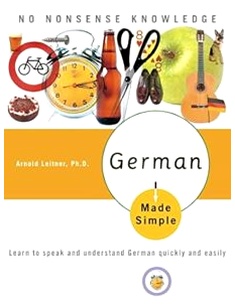
To conclude our curated list of beginner-friendly German books, we present “German Made Simple.” This book is an excellent choice for busy individuals or anyone who enjoys a more adaptable approach to learning at their own pace.
Each chapter begins with a recap of previous lessons before introducing new concepts. This approach allows you to revisit what you’ve learned through varied examples and contexts, helping to reinforce your understanding. It’s a great way to refresh your memory after breaks and seamlessly continue your learning journey.
It covers all aspects of the language, from pronunciation and basic grammar to more advanced concepts.
Pros:
- Comprehensive coverage of language basics
- Summaries of new concepts
Cons:
- Teaching style can get repetitive
- Glossary is sometimes unreliable
4. Schaum’s Outline of German Grammar – Best for grammar practice
Where to find it:
Amazon (eBook and paperback available)
Rating:
4.6 stars from 200+ ratings
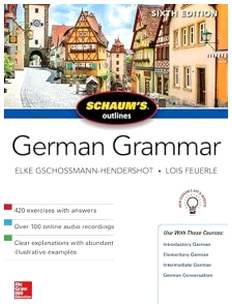
For intermediate learners looking to enhance their German grammar skills, this thorough guide from the Schaum’s Outlines series is an excellent resource.
This resource simplifies complex concepts into manageable segments and offers numerous exercises for practice. It addresses a wide range of topics, from articles and noun genders to advanced verb tenses and sentence structures, making it ideal for advanced self-learners. You’ll find clear explanations and answer keys for each exercise, ensuring you can track your progress effectively.
Pros:
- 420 exercises with answers
- 100+ audio recordings for listening practice
- Access to more audio content on Schaum.com included
Cons:
- Less focus on vocabulary and conversation
- Print quality could be better
5. Short Stories in German for Beginners – Best for reading comprehension

Where to find it:
Amazon (eBook, paperback, and audiobook available)
Rating:
4.6 stars from 2300+ ratings
Once you’ve got the basics nailed down, it’s time to get into reading some German fiction!
Dive into this captivating book featuring eight engaging stories designed specifically for German learners. With a diverse mix of genres—ranging from science fiction and crime to history and thrillers—each tale offers a unique adventure. This rich variety not only makes reading enjoyable but also enhances your vocabulary and language skills.
Each story comes with translations, short summaries, and questions to check understanding.
Pros:
- Engaging stories make learning fun
- Includes translations and comprehension exercises
- Gradual increase in difficulty
Cons:
- Some stories are hard to follow
6. Learn German With Stories: Café in Berlin – Best for conversational German

Where to find it:
Amazon (eBook, paperback, and audiobook available)
Rating:
4.6 stars from 3600+ ratings
Another engaging collection of short stories crafted specifically for German learners is Café in Berlin.
Embark on an exciting journey with Dino, a fresh face in Berlin, as he explores the vibrant life of the capital city. In ten captivating short stories, you’ll discover essential German phrases and vocabulary through relatable scenarios. Each tale is accompanied by an invaluable list of new words and engaging exercises designed to enhance your learning experience.
Imagine having a German friend guide you through the vibrant streets of Berlin, all while effortlessly teaching you the language in an enjoyable, conversational way.
Pros:
- Entertaining stories make learning enjoyable
- Introduces everyday vocabulary and expressions
- Includes exercises and vocabulary lists
Cons:
- Limited grammar explanations
7. Hammer’s German Grammar and Usage – Best for learning grammar
Where to find it:
Amazon (paperback and hardcover available)
Rating:
4.7 stars from 100+ ratings
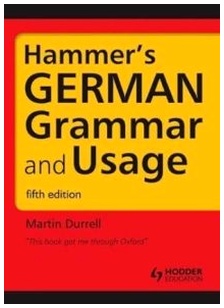
For those looking to master German grammar, “Hammer’s German Grammar and Usage” is an invaluable resource for advanced learners. While it may seem daunting at first glance, this comprehensive guide offers in-depth insights that will greatly enhance your understanding of the language. If you’re committed to improving your German skills, this book is definitely worth exploring!
This book stands out for its thorough exploration of the German language, providing valuable insights into both formal and everyday conversational use. It features helpful comparisons between German and English grammar, making it an excellent resource for English-speaking learners.
Pros:
- Thorough explanations of complex grammar points
- Includes many modern-day examples
- Works well as a reference
Cons:
- Can be overwhelming for beginners
- Focuses heavily on grammar, less on practical use
8. Deutsch im Einsatz: German B for the IB Diploma – Best for critical thinking and essay writing
Where to find it:
Amazon (paperback available)
Rating:
4.5 stars from 19 ratings
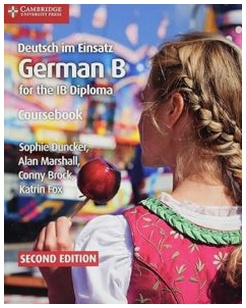
Cambridge University Press designed this course book specifically for the International Baccalaureate Diploma, yet it offers valuable insights that can benefit all advanced students.
The IB Diploma is designed to cultivate a deep understanding across various subjects, encouraging you to explore profound questions as you enhance your language skills.
This resource explores a wide range of topics grounded in real-world contexts, including social issues and cultural studies, all designed to foster critical thinking. You’ll encounter authentic texts, engaging listening exercises, and thought-provoking writing prompts that not only enhance your language skills but also deepen your understanding of various cultures.
Pros:
- Aligns with IB curriculum
- Emphasizes language use in cultural contexts
Cons:
- Relatively expensive
- Need to buy teacher’s resource for answer keys
9. Die Entdeckung der Currywurst – Best for cultural understanding

Where to find it:
Amazon (eBook, paperback, hardcover, and audiobook available)
Rating:
4.2 stars from 750+ ratings
Uwe Timm’s novella is an excellent choice for intermediate to advanced learners eager to explore contemporary German literature. Set against the backdrop of Hamburg during the final days of World War II, it weaves a poignant fictional love story that captivates readers. Plus, the iconic German fast food, Currywurst, adds a flavorful twist to the narrative!
The language used is straightforward yet rich with useful expressions and idioms. Set against a post-war backdrop, this content offers intriguing cultural and historical insights, making it an enjoyable way to deepen your understanding of German history while sharpening your language skills.
Blending flashbacks with multiple viewpoints, the narrative showcases a variety of tenses and storytelling techniques in German. Its concise format and captivating storyline make for a truly rewarding reading experience.
Pros:
- Engaging story with historical context
- Exposes learners to casual language use
- Manageable length for a full novel
- Written by a renowned German author
Cons:
- Some cultural references might require additional research
10. Langenscheidt Power Wörterbuch Deutsch als Fremdsprache – Best for referencing vocabulary

Where to find it:
Amazon (hardcover available)
Rating:
4.7 stars from 75+ ratings
Absolutely, it’s a dictionary, but the Langenscheidt Power Wörterbuch goes beyond mere definitions. It provides essential grammatical details, highlights important vocabulary, and includes a variety of common phrases. Plus, you’ll discover example sentences that illustrate how each word is used in context.
This makes it a great companion for your online German class or language learning app.
Pros:
- Over 50,000 entries
- Includes example sentences and use notes
Cons:
- Not a learning method on its own
- Purely written in German
Combine different learning approaches for best results
Whether you’re embarking on your German language adventure or aiming to refine your existing skills, the top books for learning German cater to every type of learner.
Keep in mind that consistency and practice are essential for mastering a language. Pair these books with regular speaking opportunities and various online resources for learning German, and you’ll see rapid progress.
Happy learning, and viel Glück (good luck) with your German studies!
Frequently Asked Questions
What are some recommended books for learning German?
Some recommended books include ‘German: How to Speak and Write It’, ‘Easy German Step-by-Step’, ‘German Made Simple’, and ‘Schaum’s Outline of German Grammar’.
How can one enhance their language learning experience?
Complementing reading with one-on-one tutoring sessions can enhance the learning experience by providing practice speaking, instant feedback, and clarification on confusing concepts.
What type of learners is ‘Deutsch im Einsatz: German B for the IB Diploma’ suitable for?
‘Deutsch im Einsatz: German B for the IB Diploma’ is suitable for advanced learners, particularly those involved in the International Baccalaureate Diploma program.
What is the focus of ‘Learn German With Stories: Café in Berlin’?
‘Learn German With Stories: Café in Berlin’ focuses on conversational German, using engaging short stories to introduce essential phrases and vocabulary.
What are the pros and cons of the book ‘German Made Simple’?
Pros include comprehensive coverage of language basics and summaries of new concepts, while cons are that the teaching style can get repetitive and the glossary is sometimes unreliable.


