

- Formal and informal greetings in German: What’s the difference?
- Common German greetings and farewells
- Formal German greetings and farewells
- Informal German greetings and farewells
- Regional German greetings and farewells
- Moin!
- Servus
- Habediehre
- Grüß Gott
- Salü
- Tagchen
- Was geht?
- German greeting etiquette
- Handshakes
- Hugs & kisses
- Practicing German greetings and farewells
- Frequently Asked Questions
- What are some formal German greetings?
- When should I use ‘Sie’ instead of ‘du’?
- What is the significance of handshakes in German greetings?
- How do regional greetings differ in German-speaking areas?
- What resources can help me practice German greetings?
Are you gearing up for a trip to a German-speaking country? Or perhaps you’re a German learner eager to connect with fluent speakers and practice your conversational skills?
Mastering German greetings and farewells, along with the associated etiquette, will graciously pave the way for meaningful interactions in the German language.
In German, you’ll find a variety of greetings and farewells tailored for both formal and informal contexts. Let’s explore some of these options to help you choose the right one for any situation!
Learning German goes beyond vocabulary; it’s an exploration of the language within its cultural framework. We’ll delve into the significance of greetings in Germany, including the importance of handshakes, hugs, and the distinction between “Sie” and “du” in making a proper introduction.
Keep reading to learn more or discover online German classes on LingualNeeds.
Formal and informal greetings in German: What’s the difference?
Understanding the nuances of saying “Hello” in German reveals the complexities of the language and its cultural context. German culture places a strong emphasis on formality, and this is reflected in the way greetings are expressed.
Before you say a German “Hello,” you’ll need to know your audience. Ask yourself:
- Is the person I’m addressing more of an acquaintance than a friend?
- Are they a complete stranger?
- Are they older than me?
- Are they an authority figure, like an employer?
If any of the above are true, address that person using Sie.
Sie (formal “you”) puts a little social distance between you and unfamiliar people. It also shows extra politeness and respect.
The formal “you” in German is always capitalized: Sie. (When spelled with a lowercase s, sie can mean “she” or “they”).
Sie can be used to formally address one or more people.

When using “Sie,” it’s important to accompany it with formal greetings and farewells, like “Guten Tag” (Hello/Good day) and “Auf Wiedersehen” (Goodbye). Additionally, always address individuals with their respectful title followed by their family name, rather than their first name.
For example, you might say, “Guten Tag, Herr Schmidt” (“Hello, Mr. Schmidt”) or “Auf Wiedersehen, Frau Müller” (“Goodbye, Mrs. Müller”).
When chatting with a friend, family member, or anyone in your age group or younger, feel free to use casual greetings and farewells. You can also comfortably call them by their first name, making the conversation more personal and relaxed.
To address more than one person informally, you can use ihr, which is sometimes likened to “y’all” in English.
Common German greetings and farewells
In this section, we’ll explore some of the most popular German greetings and farewells. Whether you’re traveling or meeting new people, it’s essential to know how to address strangers appropriately. We’ll begin with formal phrases that will help you make a great first impression!
Formal German greetings and farewells
When interacting with unfamiliar faces, such as hotel desk clerks, salespeople, or restaurant staff, using these formal German phrases will help you make a positive impression.
They’ll also work with older people, authority figures, coworkers, and acquaintances.
| German Phrase | English Equivalent |
| Guten Morgen. | Good morning. |
| Guten Tag. | Good day; hello. [used from around noon until 6 PM] |
| Guten Abend. | Good evening. |
| Gute Nacht. | Good night. |
| Sehr erfreut! | Delighted! [used when meeting someone for the first time] |
| Wie geht es Ihnen? | How are you? [Not often asked in formal settings] |
| Schönen Tag! | Have a nice day! |
| Schönes Wochenende! | Have a nice weekend! |
| Auf Wiedersehen. | Goodbye. |
Informal German greetings and farewells
Use these phrases with people your own age, younger people, family members, and friends.
| German Phrase | English Equivalent |
| Hallo. | Hello. |
| Hi. | Hi. |
| Ciao. | Goodbye [from the Italian; used widely in Europe] |
| Freut mich. | Nice to meet you. |
| Wie geht es dir? | How are you? [when talking to one person] |
| Mir geht es gut. Und dir? | I’m doing well. And you? |
| Wie geht es euch? | How are you? [when speaking informally to more than one person] |
| Wie geht’s? | How’s it going? |
| Es geht. | It’s going / it’s okay. |
| Alles klar? / Alles gut? | All good? [Answered with “Alles klar.”] |
| Na? | Hey, what’s up? |
| Lange nicht mehr gesehen! | Long time, no see! |
| Bis morgen. | See you tomorrow. / Until morning. |
| Bis bald. | See you soon. |
| Bis später. | See you later. |
| Tschüss! | Bye! |
Regional German greetings and farewells
These phrases are often heard in various parts of the German-speaking world.
Moin!
In regions like Bremen, the Jutland Peninsula, Hamburg, and parts of Lower Saxony, the friendly greeting “Moin” is a staple of local culture. Often playfully repeated as “Moin! Moin!”, this expression is widely used across northeast Germany, adding a warm touch to everyday interactions.
In a few places, such as Hessen, it can be used to mean both “hello” and “goodbye.”
Moin can be used at any time of the day or night, just like “Hello” in English.
Servus
This greeting, which derives from the Latin word for “servant,” is similar to “at your service” in English.
This greeting is commonly used by older German speakers in Austria, as well as in regions like Baden-Württemberg, Bavaria, and other areas of southwestern Germany. Interestingly, it functions as both a way to say “hello” and “goodbye.”
You’ll also find it in other Central and Eastern European countries, such as Poland, Hungary, and Romania.
Habediehre
This word is a corruption of the phrase Habe die Ehre.
The phrase translates to “I have the honor,” and is predominantly used by older generations, particularly in areas such as Regensburg in eastern Bavaria.
Like Servus, you can also use Habediehre to say “goodbye.”

Grüß Gott
Grüß Gott is an abbreviated form of the phrase grüß dich Gott (“the greeting of God to you”).
In English, we might translate “grüß Gott” as “may God bless you.” However, for Austrians and Southern Germans, it’s simply a friendly way to say “Hello.”
In Bavaria, the greeting “Grüß Gott” is a charming twist on “Grüß dich,” and it traces its roots back to the longer expression “grüß dich Gott.” This warm salutation reflects the region’s cultural heritage and friendly spirit.
When you travel to eastern or central Switzerland, you’ll encounter a delightful variation of greetings: “Grüezi.” This versatile term can be used in both formal and informal settings, making it a friendly way to connect with locals.
Salü
You can feel the Swiss influence in Baden-Württemberg, which uses the French-sounding Salü as a local greeting.
Tagchen
Meaning “little day,” Tagchen is used to say “hello” in Saxony and Leipzig.
Was geht?
In Saxony, Was geht? (What’s up?) can be used among friends, instead of Hallo (Hello).
German greeting etiquette
When greeting a German speaker, it’s important to use the correct form of address. Opt for “Sie” when speaking formally and “du” or “ihr” for informal situations, as we previously discussed. This distinction shows respect and helps set the right tone for your conversation.
In addition, you’ll need to know about the role that body language and gestures play in German greetings.
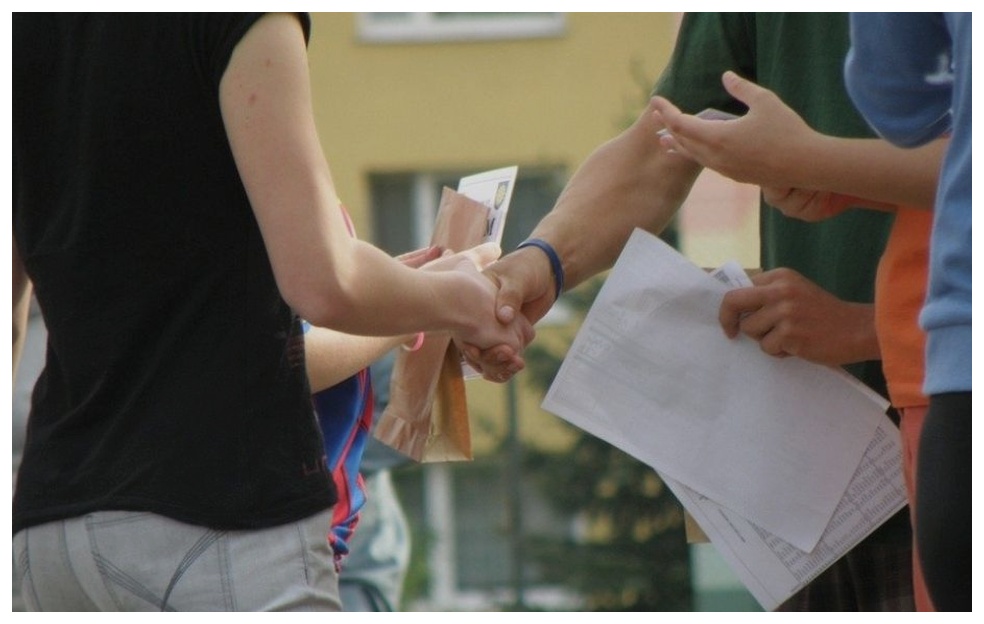
Handshakes
Handshakes are well-established in German culture as a polite gesture of greeting.
A firm (but not bone-crushing) handshake is perfectly acceptable in most cases.
Hugs & kisses
Have you ever encountered someone new and been surprised by a warm hug, perhaps accompanied by a quick peck on the cheek? In contrast, such greetings are quite rare in German culture, where personal space and formal introductions tend to be prioritized.
Hugs and kisses, including friendly pecks on the cheek, are usually gestures reserved for those we know intimately, like family members or close friends. However, the appropriateness of these gestures can vary depending on the cultural context and setting.
In Germany, friends often greet each other with a casual one-armed hug, while in Austria, it’s customary to share two kisses on the cheek as a friendly gesture.
The most valuable guidance is to trust your instincts and observe the behavior of those around you. By paying attention to their actions, you can gain valuable insights and make informed decisions.
Practicing German greetings and farewells
The greetings and farewells we’ve explored are some of the most important German words and phrases for beginners.
Tune into authentic German-language media to grasp how native speakers use greetings in context. German podcasts, in particular, offer an engaging and effective way to learn these expressions, as hosts frequently use them to warmly welcome guests to their shows.
You’ll also hear these phrases in German dialogues and movies, and on German TV shows.
For hands-on experience with various German greetings and farewells, practice these phrases with a German-speaking friend or tutor. A tutor can guide you in selecting the right words and mastering pronunciation, while also providing insights into the cultural nuances and etiquette, ensuring you’re well-equipped for conversations with native German speakers.
LingualNeeds boasts a vibrant community of German tutors from across the German-speaking world. Each tutor is dedicated to customizing lessons and conversations to align with your unique goals and preferences, providing personalized 1-on-1 support at times that fit your schedule.
Embrace the opportunity to practice your German greetings and farewells without hesitation! Whether you’re chatting with friends or meeting new people, don’t shy away from using both formal and informal expressions. Step out of your comfort zone and confidently say “Hallo”!
Frequently Asked Questions
What are some formal German greetings?
Some formal German greetings include ‘Guten Morgen’ (Good morning), ‘Guten Tag’ (Good day), and ‘Guten Abend’ (Good evening).
When should I use ‘Sie’ instead of ‘du’?
‘Sie’ is used to address strangers, older individuals, or authority figures, while ‘du’ is used among friends and peers.
What is the significance of handshakes in German greetings?
Handshakes are a polite gesture of greeting in German culture, typically firm and respectful.
How do regional greetings differ in German-speaking areas?
Regional greetings like ‘Moin’ and ‘Grüß Gott’ vary by area and may serve as both greetings and farewells.
What resources can help me practice German greetings?
Practicing with a German-speaking friend, tutor, or through authentic German-language media like podcasts and TV shows can help you learn greetings.


