- Key findings
- The most commonly mispronounced words in America
- The most commonly misused words and phrases in America
- The most annoying misused words and phrases
- The most disputed pronunciations
- Is it OK to correct others?
- Conclusion
- Frequently Asked Questions
- What is the correct phrase instead of ‘I could care less’?
- Which misused words annoy Americans the most?
- How do most Americans feel about correcting others’ pronunciation?
- What percentage of respondents would correct someone who mispronounces a word?
- Is it acceptable to correct someone’s pronunciation?
Consider a word or phrase that makes you wince when mispronounced. What comes to mind? If you’re learning English, you’re likely aware of the many commonly misused words and phrases, and you might even have a few examples ready to share.
In a recent survey of nearly 2,000 native English speakers, we explored the common words and phrases they frequently hear misused. Participants shared their thoughts on the most irritating mispronunciations and those that spark the most debate. Additionally, we inquired how often they feel compelled to correct others on their pronunciation.
Key findings
- The phrase “I could care less” is often misused in America; the correct expression is “I couldn’t care less.”
- Americans are most annoyed by the use of “irregardless” and “supposably.”
- Most Americans (60%) accept correcting pronunciation or grammar without prompting, with millennials leading this behavior.
The most commonly mispronounced words in America
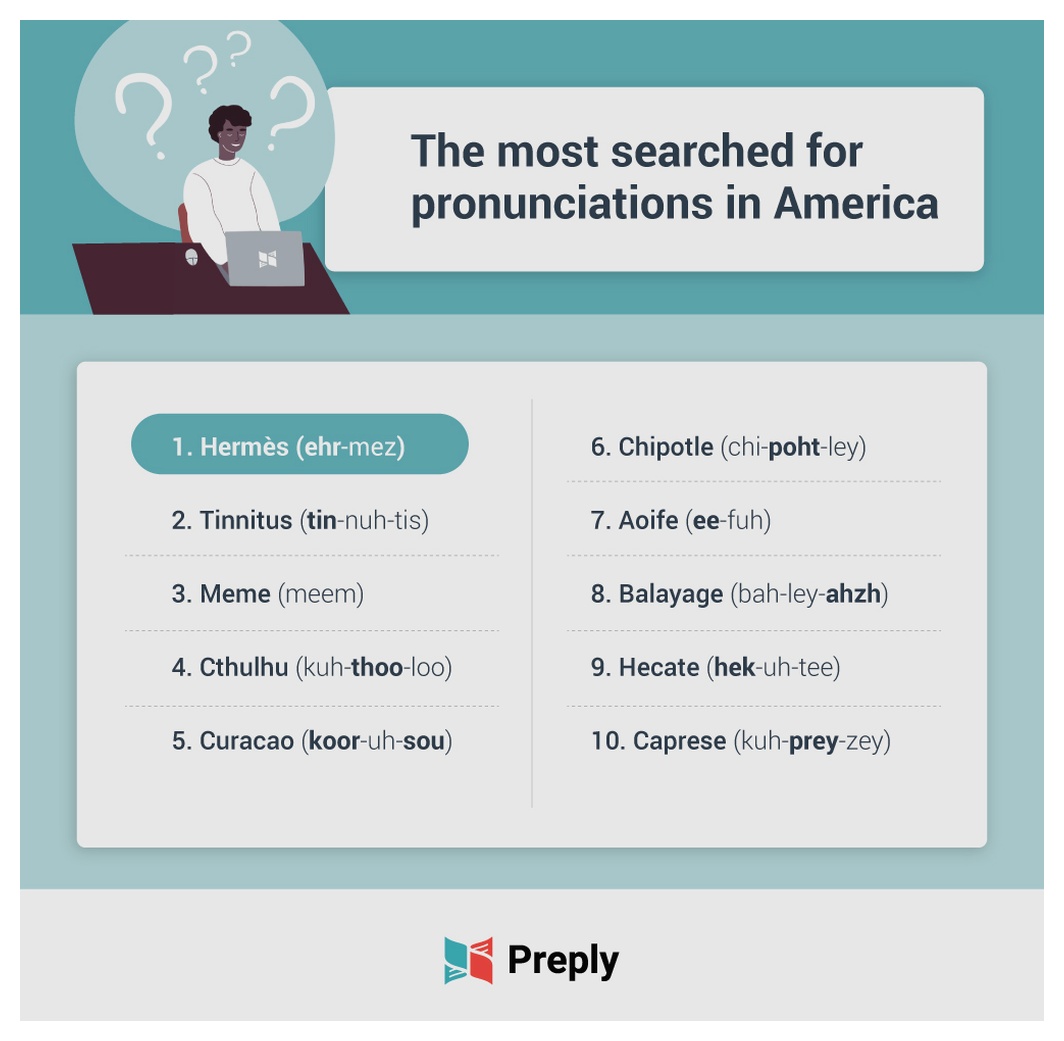
Prior to conducting the survey, we analyzed Google search trends to identify which words Americans struggle to pronounce the most.
Many of these words share a foreign origin, which often introduces subtle sounds that aren’t immediately obvious. This can lead to pronunciation challenges when attempting to read them just by sight.
The most commonly misused words and phrases in America
The initial section of this survey focused on identifying English words and phrases that people frequently hear misused. Respondents provided a variety of examples, including the commonly misused terms “anyways” and “deep seeded.”
The most commonly misused phrases include the following:
- 59% of people misstate “I could care less” for “I couldn’t care less.”
- 58% use “would of” in place of “would have.”
- 55% add an extra “s” to “anyway.”

Many people often misuse phrases like “for all intensive purposes” instead of the correct “for all intents and purposes,” say “taken for granite” when they mean “taken for granted,” and confuse “there of bouts” with the proper term “thereabouts.” These mix-ups can lead to misunderstandings, so it’s helpful to know the right expressions!
Meanwhile, the following incorrect phrases were heard least often:
- 9% mispronounce “fall by the wayside” as “fall by the waste side.”
- 12% of people use “beckon call” instead of “beck and call.”
- 14% used the word “ruf” rather than “roof.”
Over 40% of respondents confessed to using a mispronounced word or misused phrase for over a year! Among the most frequently misused terms are “celry” for “celery,” “case and point” instead of the correct “case in point,” and “lodge” when they meant to say “large.”

The prevalence of mispronunciations often stems from a reluctance to seek assistance. Shockingly, only 1 in 5 people reported that they would ask someone for the correct pronunciation of a word or phrase. Among those who wouldn’t ask, 41% opted to substitute a different word if they were unsure of the original’s pronunciation. Additionally, nearly 20% would attempt to pronounce it silently to the best of their ability, while 15% would pronounce it based on their own interpretation.
Mispronunciations often elicit laughter and playful teasing, which, while typically harmless, can unintentionally discourage individuals from trying to improve their pronunciation. Such reactions may stem from good intentions, but they can hinder confidence and future efforts.
The most annoying misused words and phrases
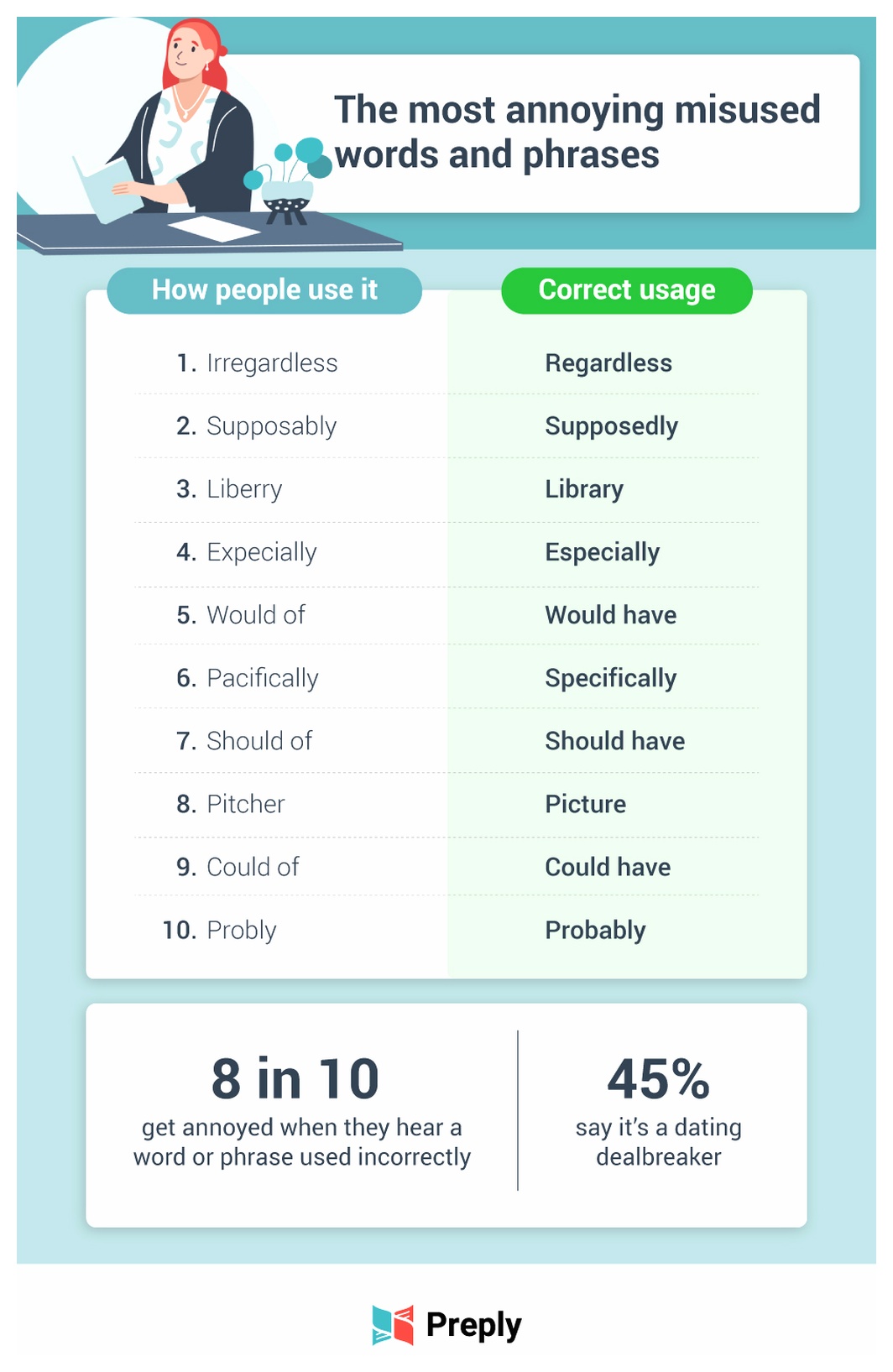
Over 80% of participants expressed frustration when they encounter common words and phrases being mispronounced. Certain misused terms, especially in social settings, particularly ruffled feathers and sparked strong reactions.
When asked to rank the mistakes that annoy them most, these were the most popular responses:
- 46% hate the use of “irregardless” instead of “regardless.”
- 44% can’t stand when “supposably” is used instead of “supposedly.”
Other errors that caused annoyance included “should of,” “liberry,” and “mute point.”
A fascinating discovery emerged regarding a common mispronunciation that many people overlook. In a recent survey, 67% of participants pronounced “GIF,” which stands for Graphics Interchange Format, with a hard “G.” However, Steve Wilhite, the inventor of the GIF format, has clarified that it should be pronounced with a soft “J.” As he famously put it, “Choosy developers choose JIF.”
The survey explored how people respond to mispronunciations. While some choose to overlook them—one respondent noted they can tune it out as long as they grasp the speaker’s intent—many others find it challenging to do so.
Interestingly, the way we pronounce or use words can significantly impact social interactions, often leading to frustration. Nearly 50% of respondents indicated that mispronouncing or misusing a common word or phrase can be a major turn-off on a first date.
The most disputed pronunciations
An intriguing finding revealed that even the simplest English words can spark debate over their pronunciation. Take the word “syrup,” for instance: it has a nearly even divide, with 51% pronouncing it “sir-up” and 49% opting for “seer-up.” The same holds true for “catty-corner,” which 51% pronounce this way, while 49% prefer “kitty-corner.” These examples highlight how subtle differences in pronunciation can create lively discussions among speakers.
The debate over pronunciations rages on, particularly with the words “aunt” and “route.” A slight majority of 55% pronounce “aunt” as “ant,” while nearly half, 45%, favor “ah-nt.” The discussion is similarly divided for “route,” with 53% opting for “rout” and 47% choosing “root.”
It’s essential to recognize that pronunciation variations are frequently influenced by the speaker’s regional background within the country.

Is it OK to correct others?
There are compelling arguments both for and against intervening when someone mispronounces a word. However, a significant portion of respondents—66%—believe it’s perfectly acceptable to correct someone, even if they haven’t solicited feedback. This suggests that many people feel a responsibility to help others improve their pronunciation.
A notable generational gap exists in attitudes toward correction: 69% of millennials view it as acceptable to correct someone, in contrast to just 56% of baby boomers who share this belief.

People are much more likely to correct their friends and family, with the chances soaring in these familiar circles. In contrast, only 20% of individuals have felt inclined to correct a stranger. Various motivations drive this urge to correct others; for instance, many believe that anyone who mispronounces a word deserves to be corrected. Others, however, reserve their corrections for those who engage in debates over pronunciation.
When it comes to correcting others, men tend to feel more at ease than women, with 71% of men expressing comfort in doing so compared to 62% of women. Interestingly, despite this difference in comfort levels, both genders are equally likely to have corrected someone at some point in their lives.
Let’s explore an intriguing question: what motivates individuals to correct others? According to recent survey findings, the primary incentive appears to be the desire to share accurate knowledge. Among the 79% of respondents who reported having their pronunciation corrected, only 15% felt anger or offense. In contrast, 35% expressed gratitude for the correction, while just 28% experienced embarrassment. This suggests that many people appreciate the opportunity to learn and improve.
With nearly 90% of respondents admitting to correcting others, it’s clear that pronunciation correction is an integral aspect of the English language. While motivations for these corrections may vary—sometimes lacking in good intentions—the reality remains: if you mispronounce a word, there’s a strong likelihood that someone will point it out.
Conclusion
It’s quite common for people to mispronounce words or phrases, with nearly half of those surveyed admitting to doing so for a year or more. The survey reveals that these mispronunciations typically fall into two main categories: either misinterpreting a specific word or phrase—like saying “taken for granite” instead of “taken for granted”—or misunderstanding the meaning behind phrases, such as using “I could care less” when they actually mean “I couldn’t care less.”
Interestingly, variations in pronunciation across different dialects had minimal impact on understanding the word. Moreover, these differences were likely evenly represented among the respondents.
The silver lining is that friends and family are often the first to notice when you mispronounce a word. This is a much more supportive way to receive feedback compared to being corrected by a stranger in public.
Frequently Asked Questions
What is the correct phrase instead of ‘I could care less’?
‘I couldn’t care less’ is the correct phrase.
Which misused words annoy Americans the most?
‘Irregardless’ and ‘supposably’ are among the most annoying misused words.
How do most Americans feel about correcting others’ pronunciation?
Most Americans (60%) accept correcting pronunciation or grammar without prompting.
What percentage of respondents would correct someone who mispronounces a word?
Nearly 90% of respondents admit to correcting others.
Is it acceptable to correct someone’s pronunciation?
Yes, 66% of people believe it’s acceptable to correct someone even if they haven’t asked.