

- Key findings
- How Americans act on work video calls
- How communicating via video call can be uncomfortable
- The top symptoms of video call fatigue
- Awkward encounters in virtual meetings
- Communicate online more effectively with LingualNeeds
- Methodology
- Frequently Asked Questions
- What is hyper-gaze anxiety and how does it affect participants during video calls?
- How does video call fatigue compare to in-person meeting fatigue?
- What percentage of participants smile more during video calls compared to in-person meetings?
- What strategies do people use to enhance communication during video calls?
- What are some common challenges faced during work-related video calls?
As remote work becomes increasingly common, video calls have transformed into a vital tool for employees collaborating with teammates across the country. Whether it’s playful fake beach backgrounds or casual chit-chat while waiting for others to join, these virtual meetings offer an opportunity to connect on a more personal level. However, it’s interesting to note that body language often shifts in the digital realm, leading people to adapt their non-verbal communication styles compared to in-person interactions.
At LingualNeeds, we believe that effective language learning involves more than just mastering vocabulary and grammar. To explore the dynamics of communication in diverse work environments, we investigated how Americans interact during video calls with colleagues from various backgrounds. Our research focused on the nuances of body language, gestures, and verbal expression. To gain insight, we surveyed 1,360 Americans about their experiences and feelings related to self-expression in virtual meetings.
Key findings
- Feeling watched by many faces has caused 48% to experience hyper-gaze anxiety.
- Seeing themselves on video has made 46% experience mirror anxiety.
- During video calls, 71% exert energy to maintain good posture.
- Video calls cause 49% of respondents to feel more fatigue compared to in-person meetings.
- While on camera, 48% smile more than they would naturally off camera.

Learn a language with personalised 1-on-1 classes with our expert tutors from all over the world
French lessons online
Spanish lessons online
How Americans act on work video calls
Whether you’re participating in a work call from your company’s office or from the cozy confines of home in your pajama bottoms, virtual meetings offer an effective way to collaborate and maintain connections with your colleagues. This mode of communication has become increasingly prevalent in the workplace, with Americans averaging 5.5 hours per week on video calls.
For employees, maintaining a professional demeanor in the digital realm requires a bit more effort than in face-to-face meetings. Interestingly, 48% of participants reported that they smile more on camera than they do in person. This tendency varies by gender, with 57% of women and only 39% of men indicating they smile more while on video. Moreover, junior employees appear to be more inclined to project positivity, as 59% admitted to smiling often on camera, compared to just 44% of their senior counterparts.
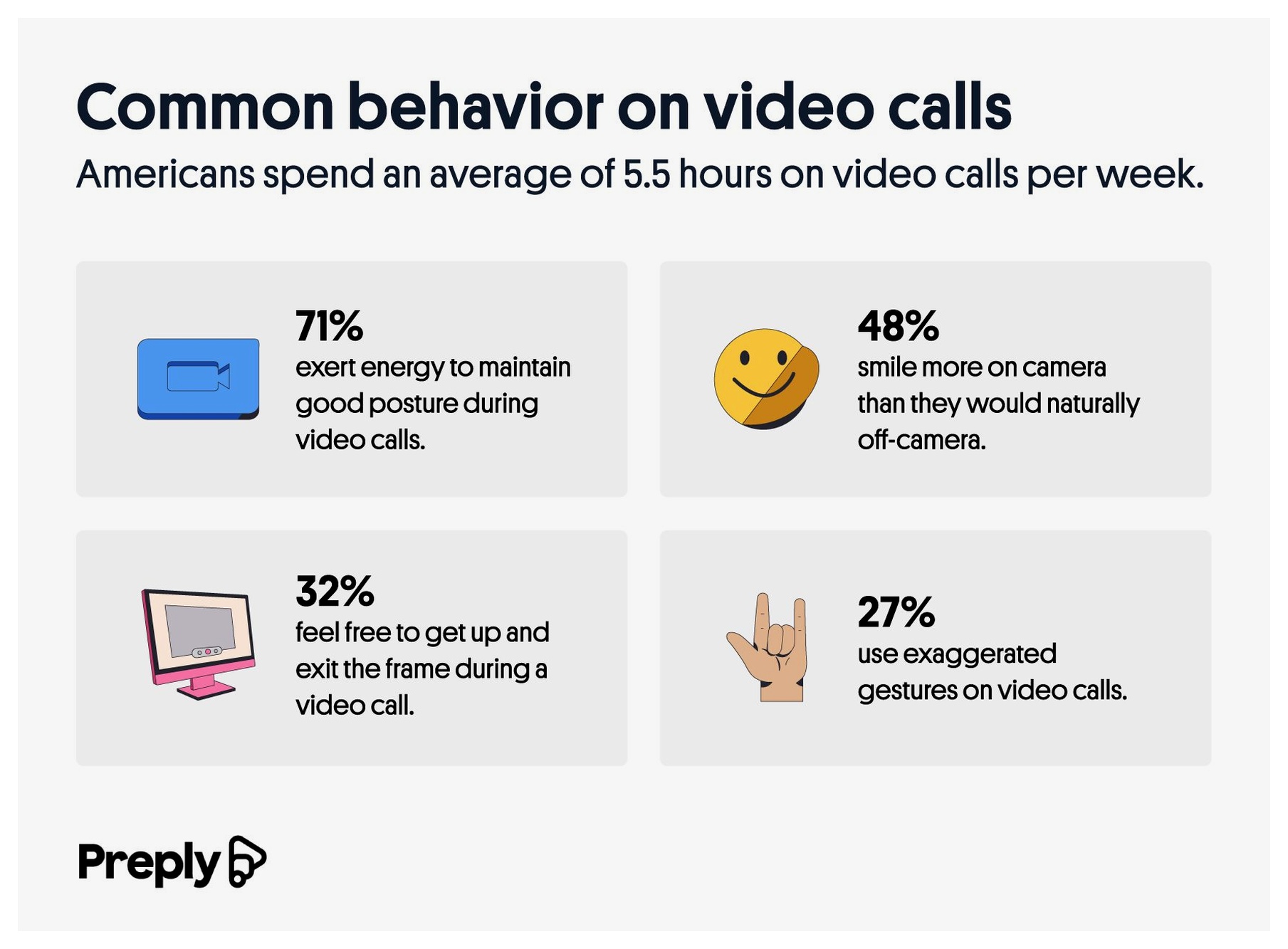
A striking 71% of individuals admit they actively work to maintain good posture during video calls, highlighting a common awareness of how they appear and the importance of professionalism. Whether you’re in a business meeting or participating in an online Spanish lesson, the camera’s presence often encourages us to resist slouching and stay focused.
Communicating effectively during video calls often differs from in-person interactions. In a bustling meeting filled with numerous faces in small squares, non-verbal cues can easily go unnoticed or misread. To enhance clarity, 27% of participants resort to exaggerated gestures when on camera. Additionally, 33% utilize emojis to convey their feelings, while 45% opt to raise their hands to indicate they want to speak. These strategies help bridge the gap in virtual communication.
The tone of a video call can vary significantly based on its purpose, shifting between casual and professional. Unlike in-person meetings, where walking out feels uncomfortable, nearly one-third of participants feel at ease stepping out of view during a video call. Interestingly, 27% of attendees may not even notice when a colleague leaves, as they often concentrate on their own appearance. This self-focused behavior is more prevalent among women, with 34% admitting to it compared to just 19% of men.
How communicating via video call can be uncomfortable
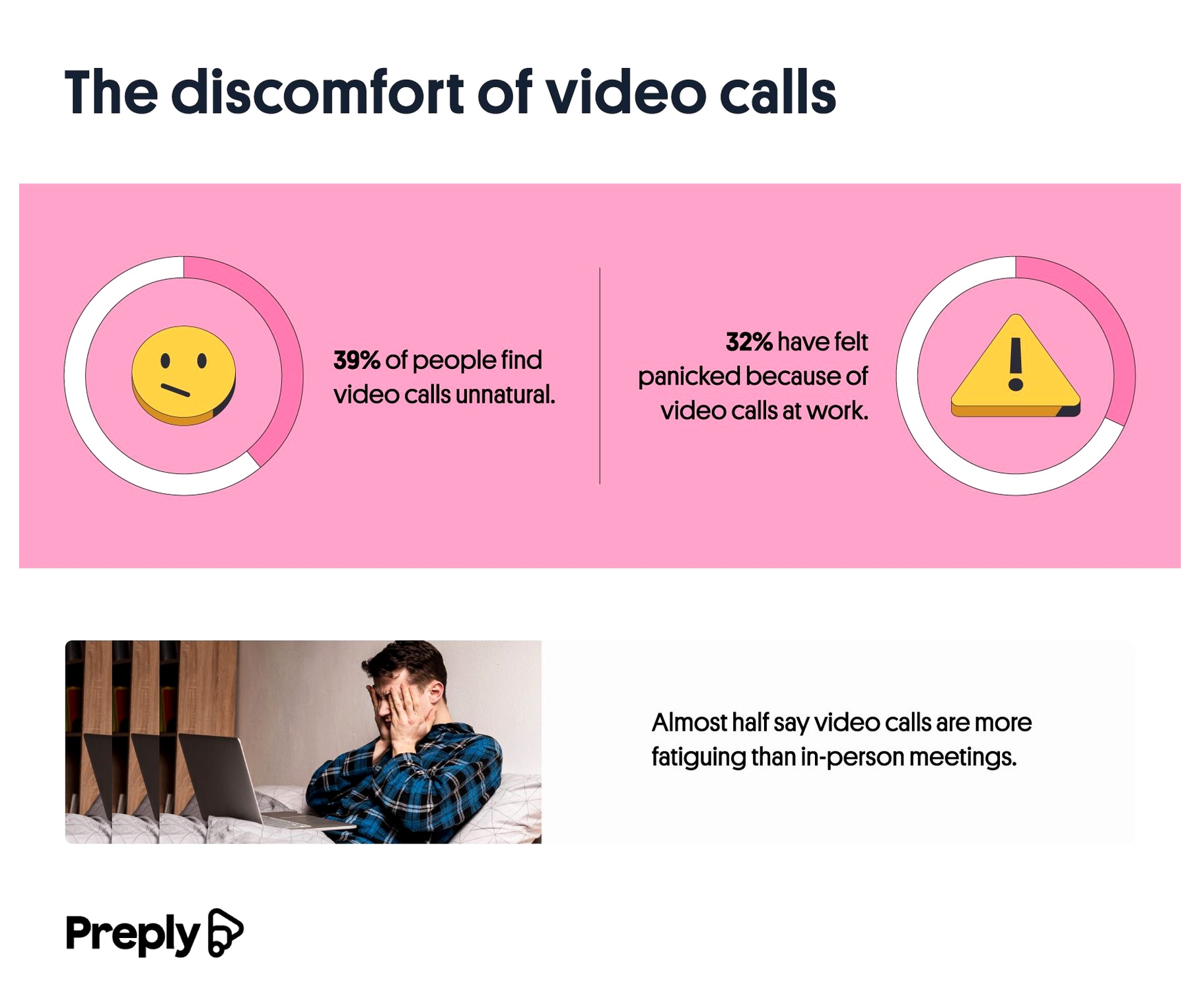
Video calls for work have their supporters and detractors. In fact, nearly half of Americans—49%—find video meetings more exhausting than face-to-face interactions.
Many Americans shy away from video calls, with 39% describing them as unnatural. This sentiment is understandable—after all, in face-to-face conversations, you don’t have to remember to hit the unmute button to express your thoughts. Additionally, the challenge of interpreting nonverbal cues in a virtual setting can create confusion and misunderstandings, further detracting from the natural flow of communication.
Maintaining a polished appearance during meetings can be a source of stress, particularly when you’re also worried about your surroundings. In fact, 32% of our respondents have experienced panic during work-related video calls. Factors like unreliable internet and noisy pets can lead to disruptions, leaving you feeling frustrated and anxious about how others perceive the situation.
LingualNeeds language expert Sylvia Johnson shares insights on the challenges of digital communication compared to face-to-face interactions. She also offers practical tips to help individuals feel more at ease while engaging in online conversations.
To excel in virtual meeting etiquette, treat your online interactions as if you were meeting face-to-face. Body language plays a crucial role in communication, whether in-person or virtual. Alongside tone of voice, it’s a key component of how we convey our messages. When you turn on your camera, your facial expressions and gestures become the initial impression for other participants, so be conscious of how you present yourself, advises Johnson.
From your eyes to your smile, Johnson shares tips to look your best:
To enhance your virtual presence, aim to maintain eye contact slightly below the camera lens, and don’t forget to nod and smile to convey your attentiveness. These simple gestures can help mimic the physical cues of in-person interactions. Additionally, take advantage of digital reactions to express engagement and supplement non-verbal communication. If you want to show appreciation or support for the presenter, feel free to use the chat feature to share your thoughts or compliments.
Learn a language online with our free learning materials.
Learn English online
Learn French online
The top symptoms of video call fatigue
For many, being on camera comes easily, while for others, it can feel daunting. During work video calls, the pressure of being in the spotlight can lead to feelings of self-consciousness or anxiety, as people worry about how they are perceived. A striking 94% of our respondents reported experiencing anxiety during these virtual meetings.
The primary source of anxiety and fatigue during video calls stems from a phenomenon known as hyper-gaze anxiety, where the presence of multiple faces feels overwhelming. But it doesn’t stop there—nearly 46% of participants report feeling anxious about their own appearance on screen. Engaging in a video call can often resemble staring into a mirror, amplifying every gesture, expression, and flaw, creating an experience that can be just as uncomfortable as it sounds.
Even when appearance isn’t a concern, employees often find video calls draining. The primary sources of this fatigue include the effort of reading others’ nonverbal signals, conveying their own nonverbal cues, and the sensation of being physically confined during these meetings.

Awkward encounters in virtual meetings
Awkward moments can arise in both in-person and virtual meetings, but in the virtual realm, they often take center stage—sometimes even captured on video. This visibility can lead participants to overanalyze their actions in an effort to sidestep embarrassment, adding an extra layer of pressure to the experience.
To kick things off, nearly half of all participants—49%—time their entry and exit during video calls in relation to others. Interestingly, once the meeting wraps up, 31% of them choose not to wave or say goodbye verbally. This can create a sense of coldness and awkwardness as they leave the call.

During a video call, the courage to unmute and share your thoughts can easily diminish after a single setback. In fact, research shows that 75% of participants have attempted to contribute only to be interrupted by a colleague, leading many to abandon their intended message.
Interruptions aren’t the sole culprits that can derail a sentence. In today’s tech-driven world, the way we communicate can often lead to misunderstandings and missed opportunities. In fact, a surprising 55% of people have experienced the frustration of preparing to contribute during a work video call, only to discover they were on mute and ultimately decided to drop their thoughts altogether.
Communicate online more effectively with LingualNeeds
Effective communication with team members, whether face-to-face or via video call, comes more easily to some individuals than to others. The way we speak and the body language we display during these interactions significantly shape how others perceive us, often unconsciously.
We frequently find ourselves working alongside colleagues from diverse backgrounds and varying levels of experience, which can lead to anxiety about how our words, gestures, or unintentional habits might hinder effective communication. It’s essential to be mindful of these factors to ensure our message is clear and accessible to everyone involved.
At LingualNeeds, discover skilled private tutors specializing in business communication, empowering you to tackle workplace interactions with newfound confidence. Additionally, our extensive database connects you with English language tutors who can enhance your grammar and pronunciation skills.
Enhance your language skills with our dedicated tutors, who are here to help you master grammar and navigate social cues effectively. With flexible scheduling that fits your lifestyle, now is the perfect time to elevate your communication abilities and achieve your language-learning aspirations.
Methodology
In February 2024, we conducted a survey involving 1,360 Americans to explore their behaviors during work video calls. Our respondents, aged between 18 and 76, included a diverse mix of participants, with 49% identifying as female, 50% as male, and 1% as nonbinary.
Frequently Asked Questions
What is hyper-gaze anxiety and how does it affect participants during video calls?
Hyper-gaze anxiety is the overwhelming feeling caused by the presence of multiple faces on screen, which has led 48% of participants to experience this anxiety during video calls.
How does video call fatigue compare to in-person meeting fatigue?
49% of respondents find video calls more exhausting than face-to-face interactions, primarily due to the effort required to read nonverbal signals and convey their own cues.
What percentage of participants smile more during video calls compared to in-person meetings?
48% of participants reported that they smile more on camera than they do in person, with variations by gender.
What strategies do people use to enhance communication during video calls?
Participants use strategies like exaggerated gestures (27%), emojis (33%), and raising hands (45%) to enhance clarity and communication during video calls.
What are some common challenges faced during work-related video calls?
Common challenges include anxiety about appearance, hyper-gaze anxiety, misunderstandings due to nonverbal cues, and the pressure of maintaining a polished appearance.


