- Key takeaways
- Screen time is an increasing problem
- Parents with more screen time have kids with more screen time
- Many parents struggle to limit screen time
- Most parents agree about the impact of screens on child development.
- Building stronger communication skills for children
- Methodology
- Frequently Asked Questions
- How much screen time do children typically spend daily?
- What percentage of parents believe their children exceed recommended screen usage?
- What challenges do parents face in managing their children’s screen time?
- How does parental screen time influence children’s screen time?
- What positive effects can screen time have on children’s development?
Technology is advancing at an incredible pace, and its impact on our daily lives is undeniable. Whether we’re using laptops and tablets or exploring the realms of artificial intelligence and virtual reality, we are constantly surrounded by innovations that shape our world.
As a result of this growth, there has been a notable rise in the technology that children engage with on a daily basis. The COVID-19 pandemic accelerated this shift, making screens a familiar presence in environments where they were once rare.
At LingualNeeds, we recognize the undeniable convenience that technology brings to our lives. However, it’s important to remember that not all screen time is beneficial. While certain educational programs can enhance learning and development, many cartoons and movies lack the same supportive value. It’s crucial to choose content wisely to maximize its positive impact on growth and learning.
Technology provides a wealth of information at our fingertips, but parents often face challenges when it comes to content that doesn’t support their child’s development. To better understand parents’ perspectives on their children’s technology use, we conducted a nationwide survey.
LingualNeeds conducted a survey exploring various aspects of screen time, including both children’s and parents’ usage, as well as the educational programs that enhance children’s learning. Discover our findings and see how your views align with those of other parents!
Key takeaways
- Children spend an average of 2.7 hours daily on screens outside of school and homework, totaling nearly 1,000 hours annually—equivalent to 41 full days.
- Excessive screen time for kids: 82% of parents say their children exceed recommended screen usage.
- On average, children engage with screens 1.4 hours longer than their parents would like, per day.
- Parents in the top 20% for personal screen time are 1.9 times more likely to have children who also spend excessive time on screens.
- The primary reason parents struggle to limit screen time is their exhaustion from constant management.
- When it comes to supporting language development, 68% of parents believe technology is important.
- Low-income parents are most likely to report that technology is important in supporting language development in children.
- Nearly 2 in 5 parents consider excessive screen time the most significant threat to their child’s health.
Screen time is an increasing problem

While it might seem intuitive that screen time rises as children age, the extent of this increase might surprise you. Our research reveals that kids aged two to five typically spend around two hours each day engaged with screens.
Although the increase in screen time isn’t exponential, it is noteworthy. Children aged six to nine typically spend around 2.2 hours on screens daily. This rises to about three hours for those aged 10 to 13, and escalates further to an average of 3.6 hours for teenagers aged 14 and older.
Beyond their schoolwork and homework, the typical child in the U.S. spends an average of 2.7 hours daily on screens. This adds up to almost 1,000 hours each year, which is equivalent to a staggering 41 full days of screen time.
Screen time can certainly be beneficial, offering opportunities for language learning, math practice, and scientific exploration. However, a report from LingualNeeds reveals that 82% of parents feel their children are spending more time on screens than is healthy. On average, kids are clocking in 1.4 hours more of screen time daily than their parents prefer, suggesting that not all of this time is being used for enriching activities that support their development.
The COVID-19 pandemic prompted a global shift towards online learning for children. A notable 68% of parents reported that their children’s screen time has surged since 2020. This increased reliance on technology is likely to have a significant and lasting effect on kids of all ages.
In today’s digital age, it’s effortless to find ourselves glued to screens, with constant access to text messages, phone calls, video chats, and more. This easy connectivity may explain why 45% of parents believe their children are struggling with screen addiction.
Although technology offers numerous conveniences in our daily lives, it isn’t without its drawbacks. A significant concern among parents—38% of them—identifies excessive screen time as the most pressing risk to their children’s development.

Learn a language with personalised 1-on-1 classes with our expert tutors from all over the world
French lessons online
Spanish lessons online
Parents with more screen time have kids with more screen time
We’ve all encountered the phrase “Monkey see, monkey do,” which highlights how individuals often learn by imitating others. However, this behavior often leads to a lack of understanding about why certain actions are effective or the potential consequences that follow.
Our research revealed an interesting trend: for every extra hour that parents spend on screens, their children tend to increase their screen time by approximately 22 minutes. This highlights the influence of parental behavior on children’s media consumption.
Parents who spend the most time on screens—specifically, those in the top 20%—are nearly twice as likely to have children who also rank in that high screen time category. This trend may stem from the attitudes parents hold toward screen time, as well as the boundaries they establish for both themselves and their children.
The pattern is clear: as screen time increases, so does the likelihood of children mirroring that behavior. Parents who spend five or more hours a day in front of screens are 2.9 times more likely to have children who also rack up five or more hours of screen time daily.
Parents are often just as engaged with screens as their children—if not more so. While they might be managing work emails, organizing schedules, or planning vacations, kids often perceive this screen time as simply browsing. As a result, children may struggle to distinguish between essential tasks and more casual activities, like scrolling through social media while waiting in the car line for school pickup.
When it comes to managing their children’s screen time, parents can encourage a healthy mix of activities. This can include enjoying entertaining videos or cartoons, as well as participating in language-building exercises and other developmental tasks that promote growth and learning.
Many parents struggle to limit screen time
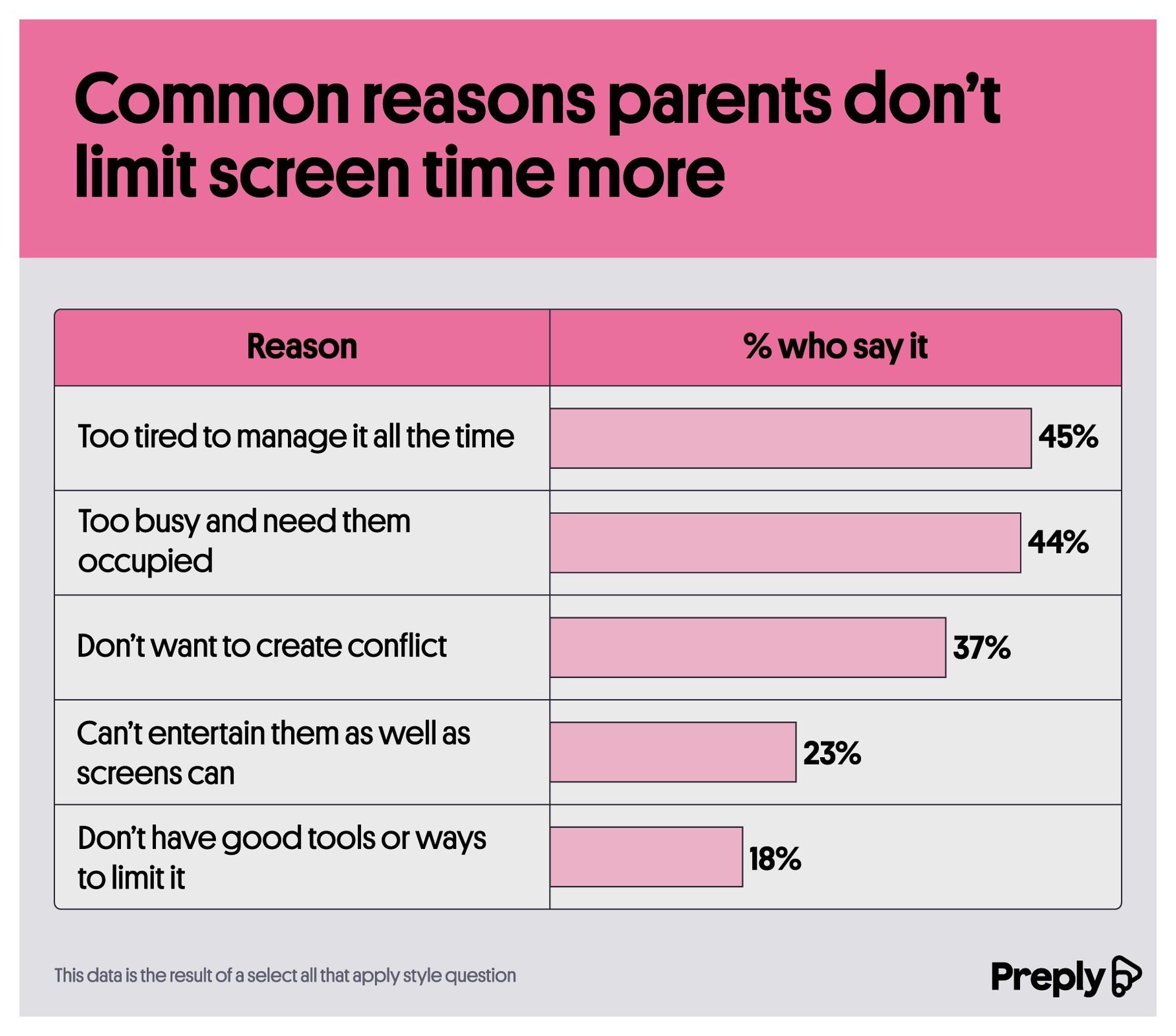
When children struggle to distinguish between beneficial and harmful screen time, it complicates the task of setting limits. While parents can certainly incorporate educational activities, like language learning or skill-building, into screen time, it can be tough to encourage a break from screens—especially when you’re feeling tired or overwhelmed.
Our research reveals that nearly half of parents—45%—struggle to monitor screen time due to exhaustion. Furthermore, 44% indicate that their busy schedules often leave them relying on screens to keep their children entertained.
Many parents find themselves in a dilemma: they may have the time and energy to manage their child’s screen time, yet they hesitate due to the potential for conflict. Interestingly, almost 25% of parents feel they can’t engage their child as effectively as technology can.

While not every parent successfully manages their child’s screen time, an impressive 86% make an effort to do so. Most of these parents establish specific rules regarding how long and when their children can use screens, aiming to create a balanced approach to digital engagement.
Many parents enforce a rule that all devices must be put away at least an hour before bedtime. Research has consistently demonstrated that this practice benefits both children and adults, as exposure to screens can disrupt sleep patterns.
Parents often manage screen time by restricting devices and privileges as a consequence of misbehavior. In addition to setting rules and implementing punishments, many utilize parental control apps or block specific websites and applications on their children’s devices to ensure a safer digital environment.
Screen time limits can be more than just restrictions; they can be an opportunity for growth. Parents can approach screen time positively by encouraging a balanced mix of educational content alongside leisure activities. By emphasizing developmental screen time, families can make the most of technology while ensuring a fun and enriching experience.
Most parents agree about the impact of screens on child development.
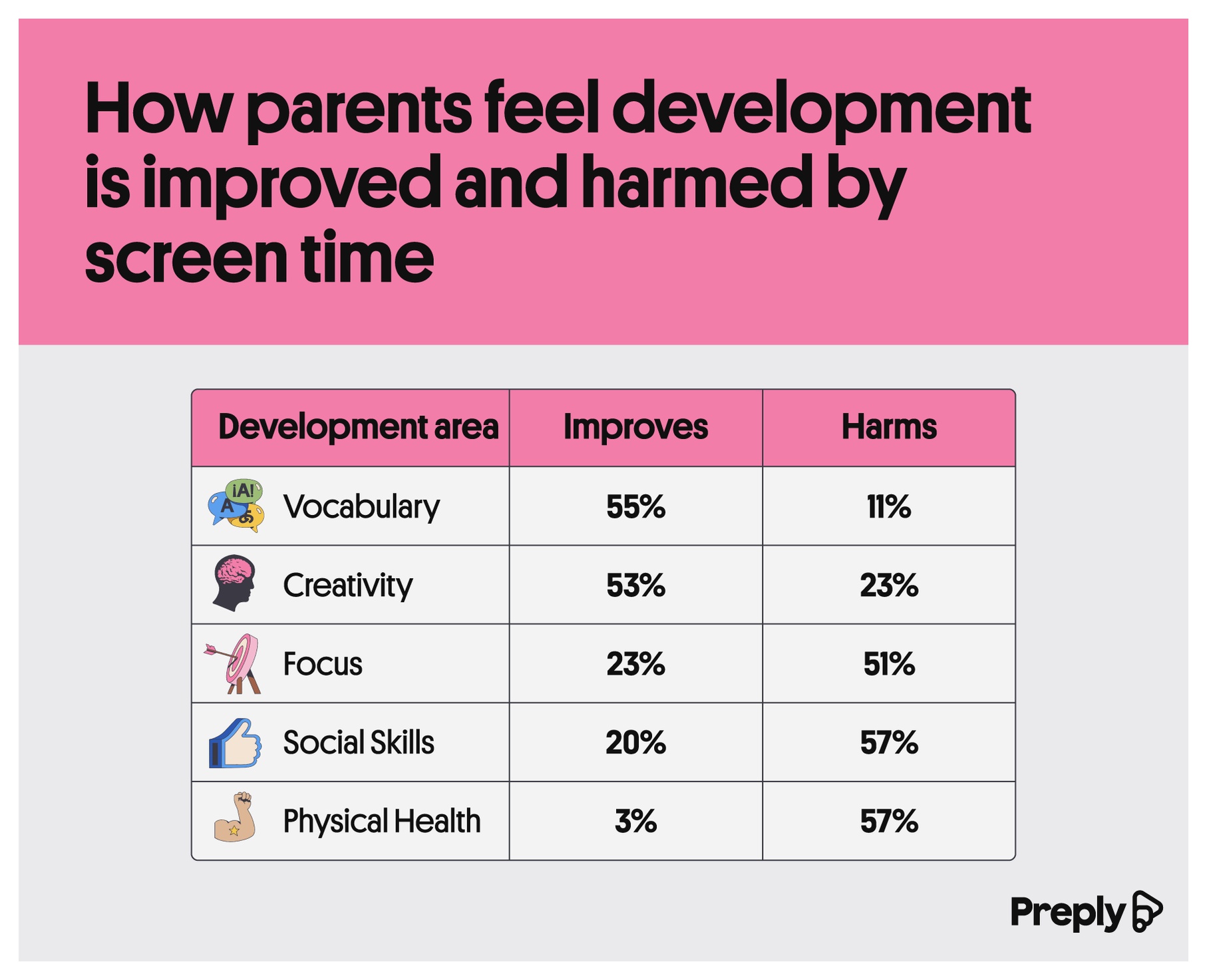
While parents often have concerns about their children’s safety in the digital world, it’s important to recognize the positive side of screen time. When guided by appropriate educational programs, kids can gain valuable knowledge and skills while navigating the online landscape.
Our research reveals that parents attribute part of their child’s enhanced vocabulary to screen time. As children discover new words, they not only improve their communication skills but also gain a greater ability to express themselves effectively.
A significant 68% of parents recognize the vital role of technology in fostering language development. Language expert Sylvia Johnson emphasizes that this development is not merely about communication; it plays a critical role in enhancing cognitive skills and emotional intelligence.
Johnson emphasizes that learning a language opens up new ways of seeing the world. This not only broadens one’s knowledge but also cultivates empathy and understanding across cultures.
Parents increasingly recognize technology as a key driver of creativity in child development. The internet offers a wealth of new experiences and ideas that children may not encounter otherwise. It also provides a platform for exploring diverse perspectives, enriching their understanding and fostering imaginative thinking.
Engaging with screens offers numerous advantages, but many parents are concerned about its effects on their children’s development. In fact, over half of parents report that excessive screen time has adversely affected their child’s attention span, social skills, and physical well-being.
Learn a language online with our free learning materials.
Learn English online
Learn French online
Building stronger communication skills for children
As children explore the online landscape, they require guidance to steer them toward success. By prioritizing programs that support their development, you not only enhance their learning experience but also gain peace of mind as a parent.
Whether you’re seeking an English tutor for your child or aiming to enhance your own conversational skills online, we’ve got you covered. Our extensive database is filled with experienced tutors eager to motivate, challenge, and inspire both you and your child on your language-learning journey.
Technology offers valuable support for language development, yet nothing beats the benefits of real-time interactions with a live person. At LingualNeeds, we recognize the significance of personalized guidance and tutoring. That’s why we’ve assembled a team of passionate tutors proficient in multiple languages, ready to assist you or your child on their language learning adventure.
Kick off your journey today by scheduling private English lessons, or lay the foundation for your child’s bilingual education with engaging Spanish lessons designed specifically for kids.
Methodology
In this research, we conducted a nationwide survey of parents in the U.S. to explore their views on their children’s screen time. Our questions ranged from the actual amount of time their kids spend in front of screens to their ideal screen time limits. We also inquired about their experiences with judgment from others regarding their child’s screen use and their perceptions of how screen time affects their child’s well-being.
Frequently Asked Questions
How much screen time do children typically spend daily?
Children spend an average of 2.7 hours daily on screens outside of school and homework.
What percentage of parents believe their children exceed recommended screen usage?
82% of parents say their children exceed recommended screen usage.
What challenges do parents face in managing their children’s screen time?
Nearly half of parents—45%—struggle to monitor screen time due to exhaustion.
How does parental screen time influence children’s screen time?
For every extra hour that parents spend on screens, their children tend to increase their screen time by approximately 22 minutes.
What positive effects can screen time have on children’s development?
68% of parents recognize the vital role of technology in fostering language development and enhancing cognitive skills.