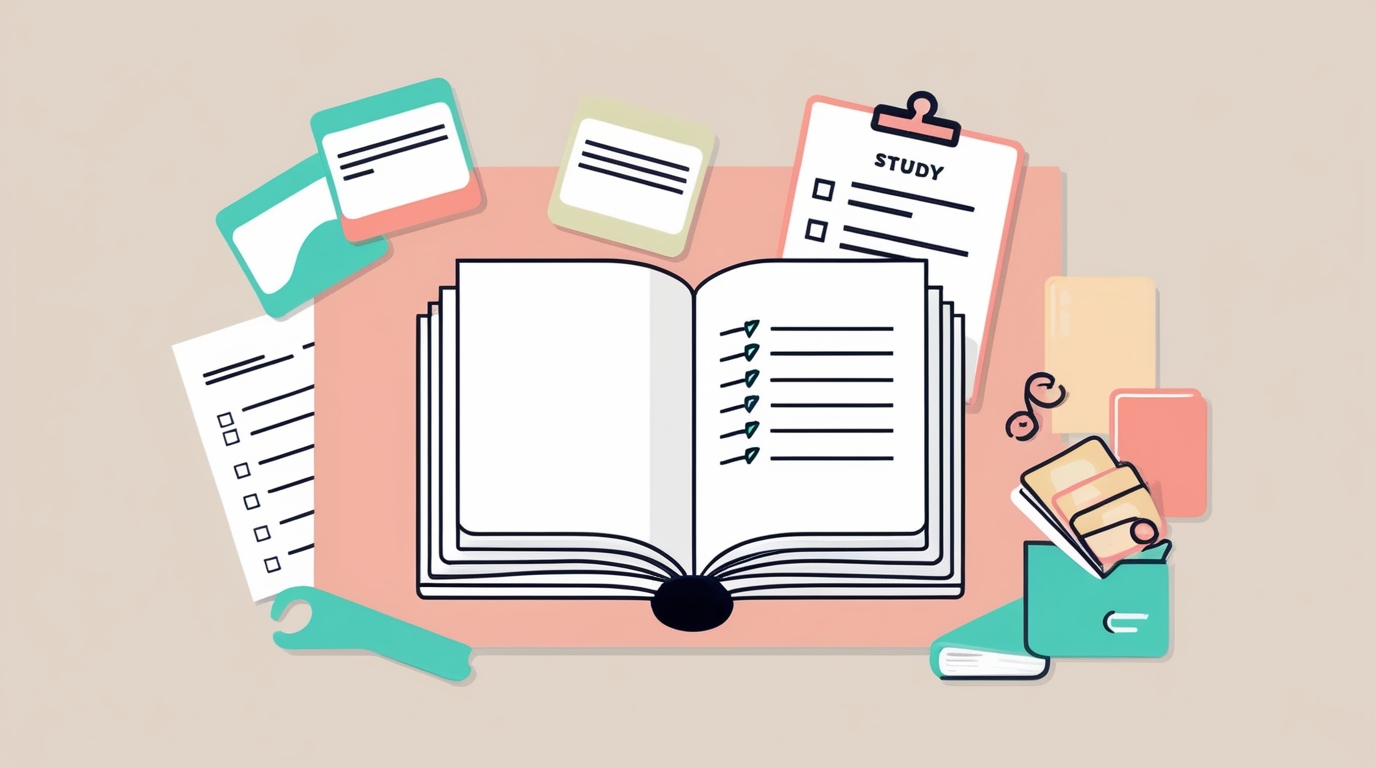
- Should you pick up a ready-made vocabulary list?
- Customize your TOEFL vocabulary list
- TOEFL Vocabulary List: 60 Important Words to Get Started
- Make sets of useful vocabulary lists
- Why is it important to have a vocabulary list based on categories?
- What level of fluency is expected from you?
- Make your own flashcards from the vocabulary list
- How to learn the words in your vocabulary list
- Final Thoughts
- Frequently Asked Questions
- Why is it important to create a personalized TOEFL vocabulary list?
- How can I assess my current vocabulary knowledge for the TOEFL?
- What is the recommended daily practice for expanding vocabulary?
- How can I effectively use flashcards for vocabulary learning?
- What strategies can improve my vocabulary retention for the TOEFL exam?

Feeling overwhelmed by the multitude of English vocabulary lists for TOEFL floating around online? Confused about how to effectively utilize these lists to boost your score? Concerned about memorizing all those tricky words? If you answered ‘yes’ to these questions, you’re in good company. This article is designed just for you. We’ll guide you through a step-by-step process to create your own ultimate TOEFL vocabulary list, helping you ace the exam with confidence.
Should you pick up a ready-made vocabulary list?
It’s easy to be drawn to the countless vocabulary lists available online or in bookstores. However, the most effective list is one tailored to your unique needs. What may seem appealing at first glance might not truly align with your learning goals. Choose a resource that resonates with you for the best results!
Although there are many standard TOEFL vocabulary lists available, creating your own personalized list is highly beneficial. Vocabulary acquisition isn’t a one-size-fits-all process; each learner has unique strengths and learning speeds. Some individuals quickly grasp new words, seamlessly expanding their existing vocabulary, while others may require more time to thoroughly memorize each term, especially if their prior exposure to diverse vocabulary has been limited. Tailoring your vocabulary study to your individual needs can enhance your learning experience and retention.
To effectively enhance your vocabulary, it’s essential to assess your current knowledge. A great way to do this is by taking a TOEFL sample test. Having an objective third party can also help pinpoint your strengths and weaknesses. Since evaluating your skills and learning potential can be challenging, enlisting a tutor can provide valuable guidance on where to begin your improvement journey.
Customize your TOEFL vocabulary list
Creating your vocabulary list is simpler than it may seem, and it can significantly streamline your efforts to master new words. To help you build your ultimate TOEFL vocabulary list, we’ve compiled some excellent resources. To ensure you stay focused amid the vast array of words, follow these helpful tips for crafting your personalized vocabulary list.
- Word List- TOEFL Vocabulary
- TOEFL Vocabulary- Alphabetical Order
- TOP 1000 Vocabulary Words
- Essential Words for TOEFL
- TOEFL 5000 Vocabulary List
Evaluating your skills in advance can streamline your study process by directing your attention to the areas that need improvement. Typically, vocabulary resources for the TOEFL include around 5,000 words deemed essential for achieving a high score. However, there’s no need to memorize all of them! TOEFL examiners focus on your ability to use words accurately in context rather than the sheer number of words you know. So, prioritize understanding and applying vocabulary effectively.
The golden rule suggests learning “five words a day,” but it’s not enough to simply memorize them from a random list. To effectively retain new vocabulary, immerse yourself in practical usage. Try incorporating these words into specific conversations, dialogues, or writing exercises. This approach not only enhances your memory but also helps you understand the context in which these words thrive.
If you’re already familiar with 50-60% of the words on your vocabulary list, it’s time to adjust your learning strategy. Keep in mind that an effective vocabulary list should ideally contain no more than 600 to 800 words.
TOEFL Vocabulary List: 60 Important Words to Get Started
The most effective TOEFL vocabulary list is one tailored to your personal learning needs. But what level of complexity should you target when selecting words? To kickstart your journey, here are 60 essential words to consider.
| Word | Word type | Definition | Example sentence |
| Academic | Noun or adjective | Noun: a university lecturer.
Adjective: a person who excels in their studies. |
My uncle was an academic.
She was a very academic child. |
| Adverse | Adjective | Unfavorable, inauspicious. | The medicine might have adverse effects we don’t know about. |
| Adversity | Noun | Hardship. | He overcame significant adversity to become a doctor. |
| Aesthetic | Noun | A philosophical theory about why things are beautiful.
Now also used as a synonym for “style.” |
Your room has a great aesthetic. |
| Ambiguous | Adjective | Unclear, sometimes intentionally unclear. | Are we friends or enemies? Her body language is ambiguous. |
| Analogy | Noun | A comparison between two things, or a partial similarity. | A well-oiled machine is a great analogy for a successful business. |
| Apt | Adjective | Suitable, extremely fitting. | The cat was always nervous so Twitchy was an apt name. |
| Banter | Noun, verb | Noun: (slang, informal) jokes, jovial conversation.
Verb: to joke around with someone |
The party had everything: great drinks, great atmosphere and great banter.
My uncle was bantering at the funeral, it was not appropriate. |
| Bizarre | Adjective | Odd or strange. | It was bizarre to run into my next door neighbour in the middle of the desert, thousands of miles from home. |
| Bland | Adjective | Boring, without flavor or identifying characteristics. | My mother’s leek soup is comforting but a little bland. |
| Bombastic | Adjective | Showy, loud or over-the-top. Often used to describe people. | The circus was run by a bombastic little man in a red hat. |
| Candid | Adjective | Without working hard to seem different or important, caught in a moment of naturalness. Often used to describe photos the subject doesn’t know is being taken. | The candid photos from the wedding were more romantic than the official, posed ones. |
| Chronic | Adjective | Long-term. Often used to describe illnesses. | He’s got a chronic cough from smoking every day. |
| Civil | Adjective | Polite, well-mannered, sometimes in a way that implies a lack of friendliness. Also anything to do with citizens and citizenship. | I’m not friends with my neighbour, but we are civil to each other. |
| Compatible | Adjective | When two people or things are able to exist in each other’s presence in harmony, without conflict. | My ex-husband and I did not have compatible tastes in furniture. |
| Concede | Verb | To willingly give into something, to admit defeat without a fuss. | I concede that white was not the smartest colour for a table cloth. |
| Crucial | Adjective | Necessary. Absolutely essential. | It’s crucial that you hand this assignment in on time. |
| Devastate | Verb | To destroy or ruin something. Or to disappoint, shock or overwhelm a person in a profound way. | The tsunami devastated the island.
I was devastated when my dog died. |
| Diversify | Verb | To make something more varied and different in its parts. | We diversified our workforce and now employ an equal number of women to men. |
| Ephemeral | Adjective | Lasting for a very short time; here one day and gone the next. | Instagram posts are one of the most ephemeral art forms: in your feed one moment, forgotten the next. |
| Erratic | Adjective | In a state of unpredictable and dynamic change. | He was driving erratically so I knew he was drunk. |
| Fallible | Adjective | Flawed, not resistant to weaknesses. | You become a teenager when you realise your parents are fallible. |
| Fiasco | Noun | A situation which causes a lot of angst and unnecessary effort. Often a little silly. | I lost my phone on the way to the interview, it was such a fiasco. |
| Gluttonous | Adjective | Greedy, especially in regard to food. | One scoop of ice cream is delicious, two is a special treat, but three is just gluttonous. |
| Hoax | Noun | A trick, a situation created to deliberately mislead someone or a group of people. | The robbers said they needed to enter the house to read the electricity meter, but it was a hoax! |
| Immune | Adjective | When someone or something cannot be damaged by something else, they are “immune to” it. It is often used in relation to illness. | Vegetarians are immune to certain types of cancer. |
| Implicit | Adjective | A meaning which is suggested, but not stated directly. | She didn’t say she was moving out, but it was implicit in her actions. |
| Ingenious | Adjective | When something is brilliant in an innovative way. Often used to refer to solutions which solve a difficult problem in a simple way. | We created an ingenious pulley system to move the mattress up 10 flights of stairs. |
| Inhibit | Adjective | To prevent something’s development, to hold something back. | Don’t let fear of failure inhibit your personal growth! |
| Jargon | Noun | Words and phrases developed for use in specific contexts, especially ones that are unnecessary or pointlessly complex. | The worst thing about being a lawyer is all the legal jargon you have to understand! |
| Lavish | Adjective | When something is more luxurious than it needs to be, usually in a positive way. | The empress wore a lavish fur coat and a crown of diamonds. |
| Lucid | Adjective | Easy to understand, perfectly clear. Also used to mean bright or full of light. | I couldn’t sleep last night and am not very lucid this morning.
|
| Malice | Noun | Ill-will. Bad vibes. The intent to harm someone or something. | There was malice in the robber’s smile. |
| Mediocre | Adjective | Literal meaning is average, but it is often used to describe something worse than average. | My grades were always mediocre at school. |
| Myriad | Adjective | Many or lots of something, especially many very dissimilar things. | Friendship can take a myriad of forms. |
| Nostalgia | Noun | A feeling of longing for something in the past. | Fashion today is all about 1990s nostalgia. |
| Notorious | Adjective | Famous or renowned for bad reasons. | He was notorious for never doing the washing up. |
| Novice | Noun | Beginner. Person starting to learn a skill from scratch. | Even novice fishermen can catch big fish if they are lucky. |
| Oblivious | Adjective | Describes a person who is completely unaware that something is happening, often in an ignorant way. | My nephew was oblivious that taking your shoes and socks off in a restaurant is rude. |
| Obtrusive | Adjective | Something that gets in the way of a positive situation or result. An unwelcome interference. | My neighbour’s new shed is very obtrusive, it blocks my view of the sea. |
| Ostracize | Verb | When a person is deliberately made to feel unwelcome or separate from a group. | He was ostracized from society for his unusual paintings. |
| Paradox | Noun | A situation or phrase that logically contradicts itself. | Mistakes are a sign that we are failing, but paradoxically, making mistakes is the way for us to learn to succeed. |
| Pedantic | Adjective | A person or thing that pays special attention to small details. Often has negative connotations. | My last teacher was so pedantic, she loved correcting every tiny mistake. |
| Plagiarism | Noun | To copy someone’s work and pretend that you created it yourself. | I couldn’t borrow your essay! That would be plagiarism! |
| Precarious | Adjective | A situation that is unstable or at risk of losing balance. | As a freelance actress, my income was precarious. |
| Radical | Adjective | Extreme, or very different from the norm. Can have positive or negative connotations. | 2020 brought radical change to lifestyles all over the world. |
| Refute | Verb | To prove something to be wrong or false. Also, to contradict a statement or disagree with it strongly. | Claims that climate change isn’t man-made have been refuted by leading scientists for decades. |
| Reiterate | Verb | To mention the same point again, to repeat your idea in a way that strengthens it. | Just to reiterate: please buy your own milk. |
| Satellite | Noun | An object placed into orbit around the earth, usually for communications reasons, such as television satellites.
The moon is a natural satellite. |
I’m not sure if that light in the sky is a star or a satellite. |
| Sinister | Adjective | Something or someone that seems slightly evil, or which might have the potential and intention to cause harm. | The alley was dark and his shadow looked sinister in the moonlight. |
| Sleazy | Adjective | Sordid, corrupt or immoral. | It was 5am and the only night-clubs still open were expensive and sleazy. |
| Tangible | Adjective | Something that you can measure, or otherwise understand as a definite concept. The opposite is intangible, when you can’t quite describe something exactly. | We left the meeting with some tangible next steps. |
| Tantamount | Adjective | Equal to. Virtually the same as something else. | Leaving the house during the hurricane would be tantamount to suicide. |
| Tenuous | Adjective | Something that is very fragile, almost on the point of failure. Often used to refer to unproven claims. | The claim that Geminis have higher divorce rates is tenuous at best. |
| Trivial | Adjective | Silly, superficial, or lacking in depth. Can be used in a positive or negative sense. | We talked about trivial things and ignored the difficult problem we needed to discuss. |
| Utilitarian | Adjective | Something which is purely functional, with no decoration or unnecessary details. | The bedroom was utilitarian: just a small bed, a chest of drawers and a reading lamp. |
| Versatile | Adjective | Something or someone that has many uses, or can be adapted to lots of different situations. | This lipstick is such a versatile colour; I could wear it to work, on a date, or whilst having dinner with my parents. |
| Whim | Noun | Something you feel like doing for no serious reason, just to please yourself. Implies a sense of spontaneity. | I bought this teapot on a whim, but now I use it every day! |
| Xenophobia | Noun | Fear of people who are different, or outside of your everyday norm. Often used as a synonym for “prejudice.” | My grandparents can be very xenophobic sometimes. |
| Zealous | Adjective | Extremely enthusiastic. | He hit the tennis ball so zealously that it flew out of the park and onto the road. |
Make sets of useful vocabulary lists
Begin by eliminating any common words from your vocabulary list that take up unnecessary space. If a word doesn’t appear in the recommended vocabulary lists provided, it likely lacks importance, so be sure to remove it too.
Similarly, you should also remove the words which are unfamiliar, and you have never encountered them.
These two steps are essential because memorizing a large number of new words right before your TOEFL exam isn’t effective.
A tutor can assist you in eliminating superfluous words that don’t serve your current level. It’s important to ensure that the vocabulary you choose aligns with the rest of your language, creating a seamless and natural flow in your communication.
If you’re looking to expand your vocabulary on your own, consider using online dictionaries whenever you encounter a word that seems familiar but eludes your memory. However, if you find a new word difficult to grasp, it’s best to set it aside and concentrate on those terms that you can easily remember and incorporate into your language.
Why is it important to have a vocabulary list based on categories?
Have you ever heard this tip from a tutor? Many recommend creating a categorized list to enhance memorization and recall. By connecting these categories to your personal interests and daily life, you’ll find it easier to remember and apply the information.
Avoiding irrelevant categories that don’t align with your interests is crucial for a fulfilling experience. This is a personal tip I highly recommend.
When organizing your ideas, you’ll find the most popular categories include School or Studying, Family, Technology, Job, Friendship, Entertainment, Countries, Celebrities, and Travel. After selecting your categories, enrich each one by adding relevant words. I suggest prioritizing adjectives over nouns, as they can provide more vivid descriptions. For clarity, consider splitting your list into two columns—one for nouns and another for adjectives—under each category.
What level of fluency is expected from you?
As previously noted, the TOEFL exam evaluates your skills by testing your comprehension of vocabulary. In the reading section, you’ll encounter academic papers and texts that pose vocabulary-related questions. Therefore, it’s essential to immerse yourself in a variety of materials—such as books, non-fiction, newspapers—and actively note the vocabulary used within them. This practice will help you build a strong foundation for success on the test.
To truly grasp the meaning of unfamiliar words, it’s essential to see how they are used in various contexts. Instead of rushing to the dictionary when you encounter a word you don’t know, jot it down along with the sentence it appears in, and save the definitions for after you’ve finished reading. Before consulting the dictionary, take a moment to guess the word’s meaning based on the context. Once you’ve made your guess, check it against the actual definition. This engaging exercise not only enhances your vocabulary but also helps you retain the word and its usage more effectively.
It is also crucial to understand the meaning of the word and in what situations you can use it.
I highly suggest watching TED talks with subtitles and a transcript available alongside. This approach allows you to grasp the context in which specific words and phrases are used, which is particularly beneficial for the speaking and writing sections of the TOEFL exam. Most TED talks on the official website come with a transcript, enabling you to follow along as you listen, enhancing your understanding and language skills.
To enhance and expand your vocabulary effectively, it’s essential to have regular assessments. Consider partnering with someone who can evaluate your progress on a weekly basis.
Make your own flashcards from the vocabulary list
Ensure that learning remains enjoyable! While classic vocabulary games like Scrabble and Pictionary are beloved staples, one of the most effective methods is using flashcards. This approach doesn’t require a partner, giving you the freedom to practice whenever you like, reinforcing your knowledge at your own pace.

As you prepare for the TOEFL, creating flashcards can be a highly effective study tool. Organize your flashcards by using different colors for various categories, making them visually appealing and easy to navigate. On one side, write the word, and on the reverse, include its definition along with contextual examples to enhance understanding. You can create these flashcards using platforms like Flashcard Online, Quizlet, or the Anki app. Take advantage of short breaks—aim for at least five five-minute intervals each day—to review your flashcards. Setting reminders on your phone can help you stay on track with this effective study habit.
How to learn the words in your vocabulary list
There’s no need to pressure yourself into memorizing the meanings of words. It’s easy to recognize when someone has truly integrated a word into their vocabulary. Take “serendipity,” for instance—while it might come up in a writing exercise or a matching task, it’s not a term most people use in everyday conversation. Focusing on practical language skills rather than aiming for ambitious vocabulary is a more effective approach.
This final tip is crucial for enhancing your vocabulary skills. Once you have a solid grasp of new words, challenge yourself with this straightforward exercise: incorporate as many adjectives as possible to enrich your descriptions.
The young boy wandered aimlessly, feeling both frightened and alone. His distressing situation did not go unnoticed, yet no one stepped in to help. The indifference of those around him is truly disheartening.
Here is how you could check your vocabulary:
The young boy felt utterly lost, overwhelmed by despair and a lack of direction. Though his deteriorating health was noticed by those around him, no one stepped forward to help. It’s truly shocking how ignorance can prevail in such situations.
This exercise not only allows you to practice vocabulary but also helps you grasp the context in which words are used. Team up with a friend to enhance the experience and compare your findings for a more interactive learning session!
Final Thoughts
Mastering new vocabulary is a unique journey for each learner; there’s no one-size-fits-all approach. Start by creating your personalized TOEFL vocabulary list that aligns with your skill level—this will serve as your foundation for success. Remember, when preparing for the TOEFL exam, it’s the quality of the words that matters more than sheer quantity. Make a habit of incorporating these new words into your daily conversations to reinforce your learning. While self-study is valuable, working with a tutor can provide tailored guidance to enhance your progress. Ready to take your vocabulary to the next level? Click here to find the perfect tutor for you!
Frequently Asked Questions
Why is it important to create a personalized TOEFL vocabulary list?
A personalized vocabulary list aligns with your unique learning goals and strengths, enhancing your retention and overall learning experience.
How can I assess my current vocabulary knowledge for the TOEFL?
Taking a TOEFL sample test or enlisting a tutor can help evaluate your strengths and weaknesses in vocabulary.
What is the recommended daily practice for expanding vocabulary?
The golden rule suggests learning five words a day, but it’s important to use them in context to enhance retention.
How can I effectively use flashcards for vocabulary learning?
Create flashcards with the word on one side and its definition and examples on the other, and review them regularly using different colors for categorization.
What strategies can improve my vocabulary retention for the TOEFL exam?
Incorporating new words into daily conversations, watching TED talks with transcripts, and regularly assessing your progress are effective strategies.