- What is DALF?
- DILF, DELF, and DALF: What’s the difference?
- DALF C1 vs. DALF C2
- What does the DALF exam include?
- How to prepare for DALF?
- Take DALF classes
- Practice with authentic content
- Familiarize yourself with the exam format
- Expand your vocabulary
- Ready to meet your DALF tutor?
- Frequently Asked Questions
- What does DALF stand for?
- What skills are assessed in the DALF C1 and C2 exams?
- What are the main differences between DALF C1 and C2?
- How can I prepare for the DALF exam?
- What types of candidates are best suited for the DALF exam?
Congratulations on reaching the DALF stage of your French language journey! This milestone reflects your dedication, having mastered thousands of verb conjugations and explored countless dictionary entries. The DALF exam, endorsed by the French Ministry of National Education, is designed for advanced learners who can confidently navigate diverse situations in the language. You’re well on your way to showcasing your proficiency!
Discover everything you need to excel in the DALF exam, from selecting the perfect preparation classes to incorporating genuine French media into your study routine!
What is DALF?
DALF stands for diplôme approfondi de langue française, or Diploma in Advanced French Language.
The DALF, awarded by the French Ministry of National Education, signifies an advanced proficiency in the French language, corresponding to the C1 and C2 levels of the Common European Framework of Reference (CEFR). Achieving this level means individuals can communicate fluently and confidently, enabling them to undertake higher education and pursue careers in French-speaking countries without any language obstacles.
Earning a DALF diploma requires candidates to take an exam that evaluates their speaking, listening, reading, and writing abilities in French. There are two distinct levels: C1, which signifies an autonomous user of the language, and C2, representing mastery. Each level has its own exam designed to test how effectively candidates can use French in a variety of real-world situations.
DILF, DELF, and DALF: What’s the difference?
DILF, DELF, and DALF are all French proficiency exams for learners of different levels.
The DILF exam is exclusively available in France and is designed for complete beginners who have just arrived in the country with no previous knowledge of the French language.
DELF and DALF are popular certifications that assess various levels of French language proficiency. Learners can conveniently register for these exams at local French exam centers in their respective countries.
|
Exam name |
Expansion |
Corresponding CEFR levels |
Good for |
|
DILF |
Diplôme initial de langue française (Initial Diploma in French Language) |
A1.1 |
Complete beginners who have just arrived in France with no French knowledge |
|
DELF |
Diplôme d’études en langue française (Diploma in French Language Studies) |
A1, A2, B1, B2 |
Students, university applicants, and professionals needing beginner to intermediate certification |
|
DALF |
Diplôme approfondi de langue française (Advanced Diploma in French Language) |
C1, C2 |
Advanced students looking to certify high-level proficiency in French for various purposes, including research, academics, or work |
DALF C1 vs. DALF C2
The DALF C1 and C2 certifications cater to advanced learners of French, specifically those who possess bilingual or near-native proficiency. To put this into perspective, the requirements for French residency vary: an A2 level is needed for a multiyear residency, a B1 level for a 10-year residency, and a B2 level for obtaining French citizenship.
The DALF C2 level offers a greater challenge than C1, as it combines reading and writing into a single comprehensive test, whereas C1 assesses these skills individually. Both levels require candidates to demonstrate fluency in social, academic, and professional settings. However, C2 signifies a higher proficiency, demanding a near-native command of the language, including mastery of idioms and colloquial expressions.
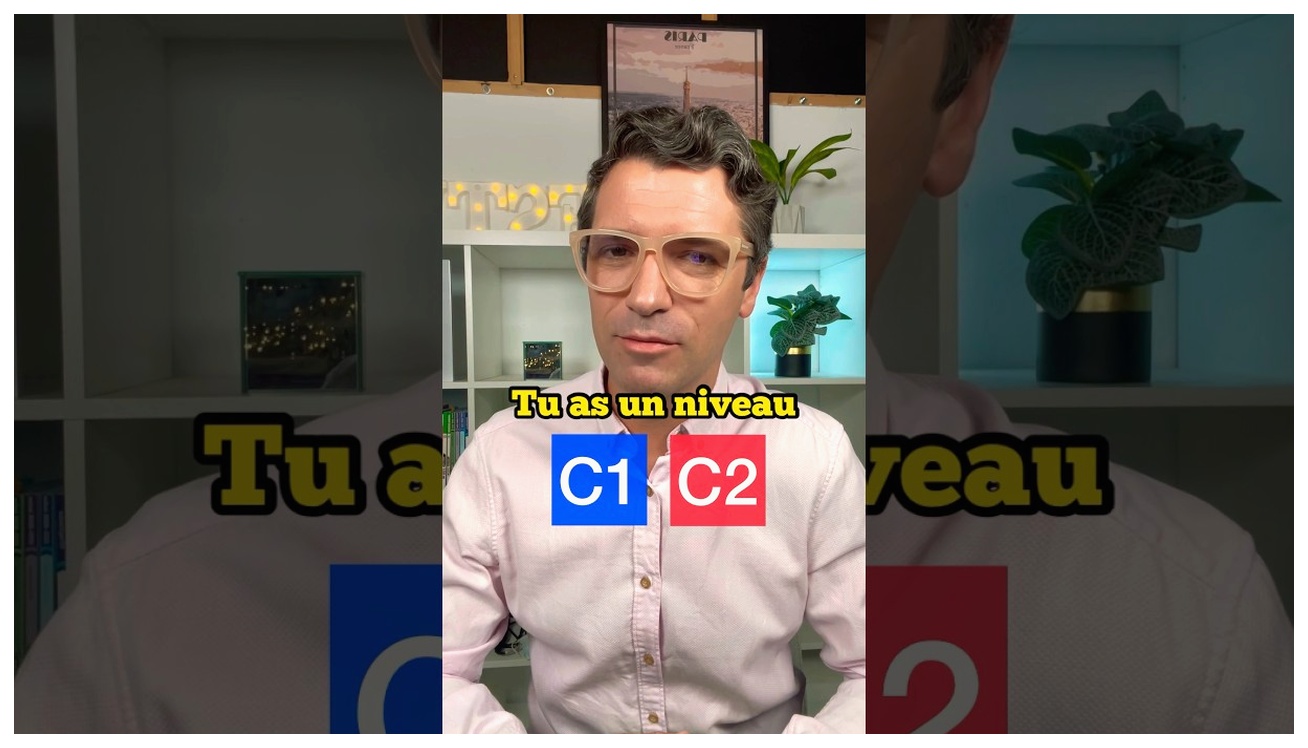
Here’s an example expression from a French tutor:
What does the DALF exam include?
The DALF C1 and C2 exams assess four key language skills: speaking, listening, reading, and writing. For the C1 level, each skill contributes equally, accounting for 25% of the overall score. The exam is scored out of 100, with candidates required to achieve a minimum of 50 points to pass. Additionally, it’s crucial to score at least five points in each individual component to meet the passing criteria.
|
Exam component |
DALF C1 |
|
Speaking |
One monologue and one dialogue of 30 minutes, with an additional one hour of preparation time |
|
Listening |
Two exercises of 40 minutes |
|
Reading |
One exercise of 50 minutes |
|
Writing |
Two exercises of two hours and 30 minutes |
The DALF C2 exam tests your proficiency in French by integrating reading, writing, speaking, and listening skills. To successfully pass, candidates need to achieve a minimum score of 50 out of 100, with at least 10 points in each individual component.
|
Exam component |
DALF C2 |
|
Reading and writing |
Writing a text based on a 2,000-word journalistic document in three hours and 30 minutes |
|
Listening and speaking |
Engage in a lively discussion about a recording with the examiners for 30 minutes, complemented by an hour of preparation time beforehand. This setup not only allows you to gather your thoughts but also to present your insights effectively. |
How to prepare for DALF?
The DALF exam is known for its challenging vocabulary, advanced grammar, and thought-provoking questions, making it a tough test to tackle. However, if you’ve already reached an advanced level in French, the hardest part is behind you! By following effective preparation strategies, you’ll be well-equipped to succeed on exam day.
Here are the best ways to study for DALF:
Take DALF classes
Whether you choose a local group course or opt for online French classes, collaborating with a skilled DALF instructor will give you valuable insights into the exam structure. This is a fantastic opportunity to receive tailored feedback, enhance your weaker skills, and deepen your understanding of the exam’s various components.
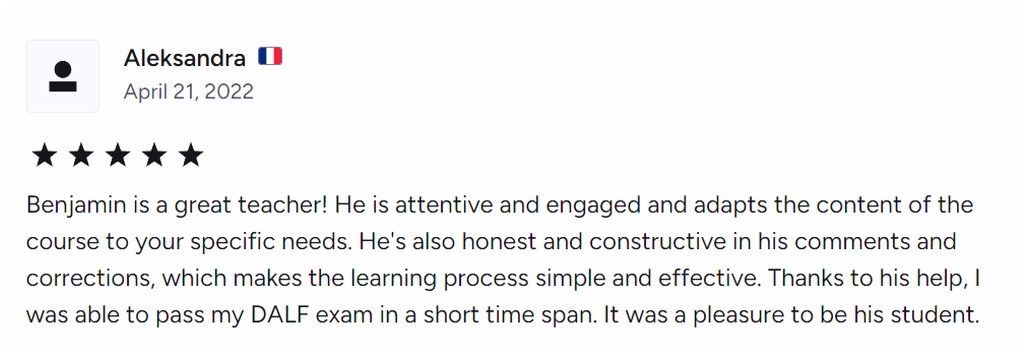
At LingualNeeds, many of our DALF tutors also serve as examiners, giving them an in-depth understanding of the testing system. Through personalized 1-on-1 online lessons, they have successfully guided hundreds of students to pass the exam.
Practice with authentic content
Enhance your in-person or online French lessons with books, newspapers, magazines, films, and podcasts.
To excel in the C1 and C2 DALF exams, candidates must demonstrate fluent expression and a strong grasp of natural French. The most effective way to prepare is by immersing oneself in authentic conversations and materials created by native speakers.
Stay motivated by selecting content that aligns with your interests. If you’re passionate about literature, challenge yourself by reading Amin Maalouf’s works in their original French. This not only enhances your enjoyment but also deepens your understanding of the text and language.
Familiarize yourself with the exam format
Challenge yourself by utilizing previous DALF exam papers, textbooks, and workbooks. The French National Education website offers an extensive collection of sample exam topics, past papers, and valuable study tips, all designed to enhance your preparation effectively.
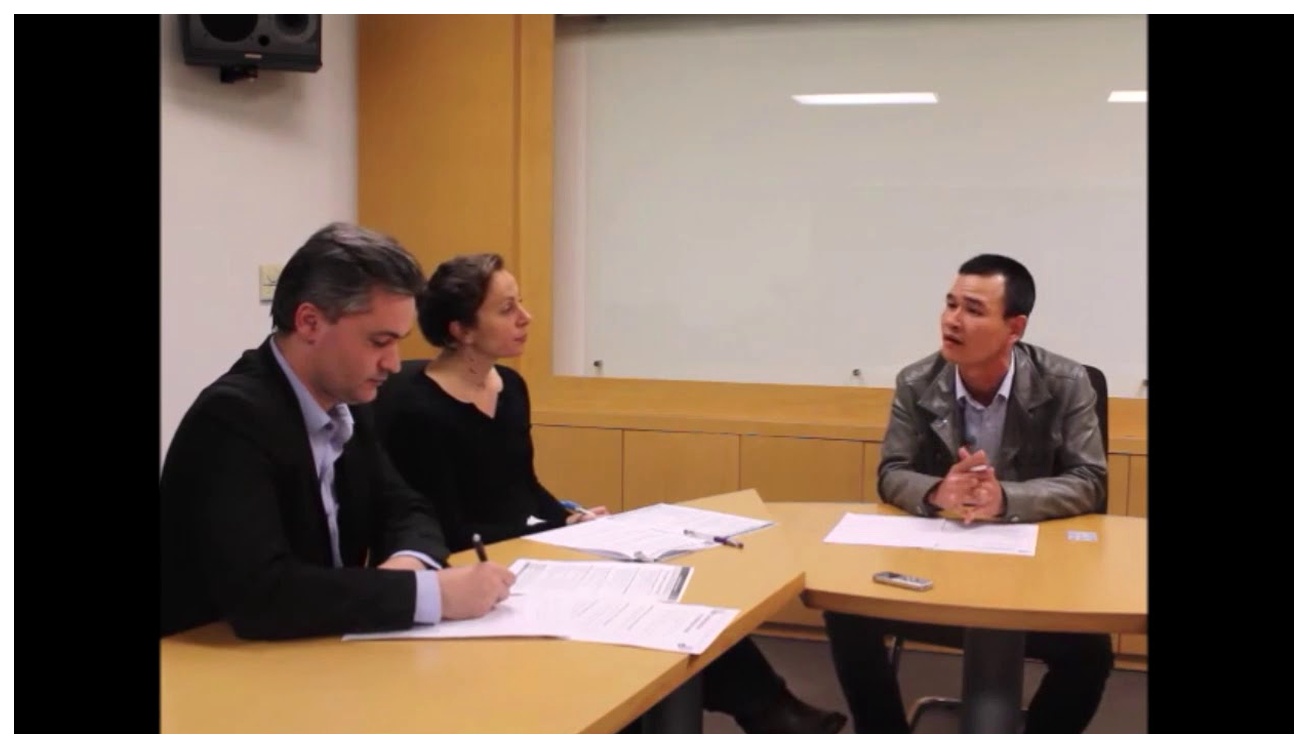
Whenever you can, take mock exams with your tutor to gain a better understanding of what to anticipate. To help set realistic expectations, check out this video showcasing a genuine DALF C2 listening and speaking exam:
Expand your vocabulary
The DALF exam tests your vocabulary far beyond basic French. You’ll need to grasp a diverse array of terms spanning topics like politics and science. Staying informed about current events is crucial, as this knowledge can significantly enhance your performance in both speaking and writing tasks.
Understanding French culture can greatly enhance your language learning experience. For instance, in the speaking exam video mentioned above, the candidate highlights the significance of studying Molière and classical French literature, emphasizing how these elements enrich a learner’s grasp of the language.
Ready to meet your DALF tutor?
At LingualNeeds, you’ll discover a diverse selection of over 200 online French tutors who specialize in DALF preparation and are eager to assist you on your journey. After you find the perfect tutor, schedule a trial lesson to ensure they’re the right match for your learning style. Once you’re satisfied, you can subscribe and begin your focused preparation for the DALF exam. Soon enough, you’ll be ready to celebrate your success!
Frequently Asked Questions
What does DALF stand for?
DALF stands for diplôme approfondi de langue française, or Diploma in Advanced French Language.
What skills are assessed in the DALF C1 and C2 exams?
The DALF C1 and C2 exams assess four key language skills: speaking, listening, reading, and writing.
What are the main differences between DALF C1 and C2?
DALF C1 assesses speaking, listening, reading, and writing separately, while DALF C2 combines reading and writing into one comprehensive test.
How can I prepare for the DALF exam?
To prepare for the DALF exam, consider taking DALF classes, practicing with authentic content, familiarizing yourself with the exam format, and expanding your vocabulary.
What types of candidates are best suited for the DALF exam?
The DALF exam is suited for advanced students looking to certify high-level proficiency in French for various purposes, including research, academics, or work.