- Gym equipment terminology
- Types of cardio machines
- Types of weight machines
- Types of free weights
- Fitness program and training terminology
- Types of workouts
- Fitness program terminology
- Exercise glossary
- Common exercise terms for classes
- Terms for muscle groups and body parts
- Gym and fitness center lingo
- Terms for gym and fitness center policies and procedures
- Gym culture and slang
- See progression in your English too
- Frequently Asked Questions
- What is ‘gymtimidation’?
- What are some common types of cardio machines?
- What is the purpose of weight machines in strength training?
- What does HIIT stand for and what does it involve?
- How can mastering gym vocabulary enhance my fitness journey?
Stepping into a gym can be daunting, a feeling often referred to as “gymtimidation.” This experience can be particularly overwhelming if you’re unfamiliar with gym terminology or if English isn’t your primary language. The great news? This blog post is designed to guide you through it all, making your gym experience more enjoyable and less intimidating.
This comprehensive glossary of fitness terms empowers you to work out confidently and engage effortlessly with trainers and fellow gym enthusiasts.
Ready to decode English gym language, one rep at a time. Let’s get started.
Gym equipment terminology
When you first join a gym, you’ll be welcomed with an induction session led by a trainer. This is your opportunity to explore the facility and get familiar with how each machine operates. To help you feel more prepared, here’s some essential equipment vocabulary to learn before your visit:
Types of cardio machines
Cardio machines are those which raise your heart rate, allowing for cardiovascular exercise. Popular cardio machines include:
- **Treadmill**: A treadmill enables you to walk, jog, or run in place, offering adjustable speed and incline settings for a customizable workout experience.
- **Stationary Bike**: Often referred to as a ‘spin bike’ or ‘exercise bike’, this indoor cycling equipment allows you to pedal without moving. It provides an effective low-impact cardio workout, making it gentle on your joints while still delivering excellent fitness benefits.
- **Elliptical Trainer**: This low-impact exercise machine mimics walking, jogging, or running while minimizing joint strain. Featuring foot pedals and handles, it allows for an elliptical motion that delivers a full-body workout by engaging the legs, arms, and core muscles.
- **Stair Climber**: This fitness machine simulates stair climbing with foot pedals that move vertically. It effectively tones leg muscles, particularly targeting the glutes, thighs, and calves.
- Rowing Machine – This fitness equipment mimics the rowing motion, featuring a sliding seat, footrests, and a handlebar linked to a resistance system. Rowing machines deliver a comprehensive full-body workout, effectively targeting legs, core, and upper body muscles.
Types of weight machines
If you’re just starting with strength training, weight machines are an excellent choice. They provide guidance for each exercise, helping you maintain safe and correct form. Plus, their user-friendly design makes them simple to use, making your workout experience more enjoyable and effective.
Here are some common types of weight machines:
- **Leg Press Machine**: This equipment effectively targets lower body muscles, focusing on the quadriceps, hamstrings, and glutes. It allows users to push a weighted platform away, simulating a squat motion for enhanced strength training.
- Chest Press Machine – Designed to strengthen the chest, shoulders, and triceps, this machine requires you to push the handles forward, effectively targeting your upper body muscles.
- **Lat Pulldown Machine** – This equipment effectively targets the latissimus dorsi muscles in your back. To use it, simply pull the bar or handles down toward your chest, engaging your back muscles to enhance upper body strength.
- **Shoulder Press Machine**: This equipment targets the deltoid muscles in your shoulders through an overhead pressing motion, where you push the handles upward.
- Leg Extension Machine – This equipment targets and strengthens your quadriceps by allowing you to extend your legs against resistance while seated.
Types of free weights
Once you’re comfortable using the weight machines, consider exploring the free weights section of the gym. This area features a variety of weights and equipment, expanding your fitness vocabulary and enhancing your workout options.
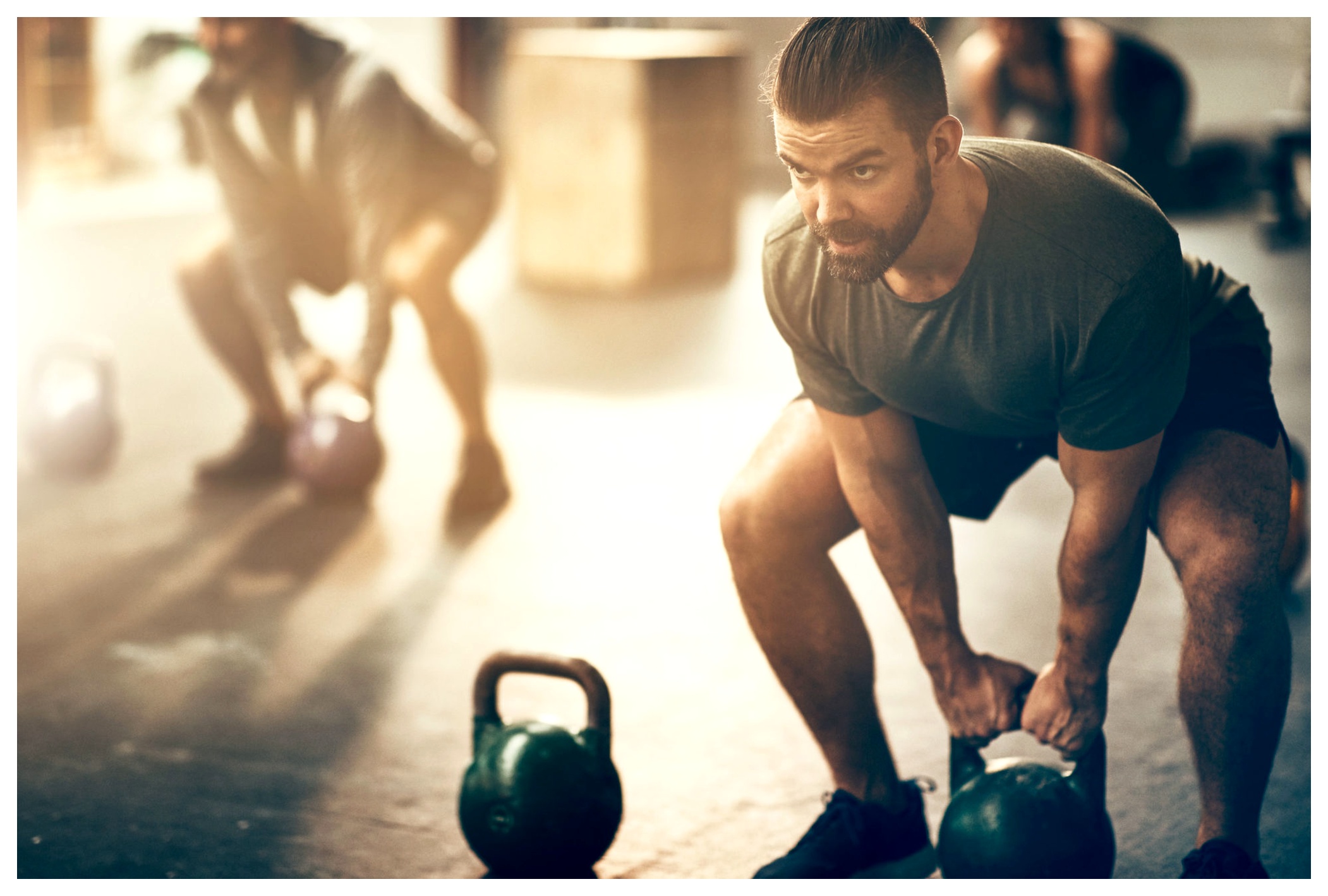
- Dumbbells, barbells, and kettlebells are various types of strength training weights available in sizes ranging from 2 to 100 pounds.
- **Weight Plates**: Flat, circular discs made from cast iron or rubber, used to enhance resistance in barbells, dumbbells, and weight machines. Available in various weights, from 2.5 lbs to 50 lbs, they help increase the intensity of your workouts.
- Battle ropes – Also known as battling ropes or power ropes, these are thick, heavy ropes used for full-body workouts.
- **Weight Bench** – A versatile gym seat found in the free weights section, weight benches are available in various styles and adjustable angles to effectively target different muscle groups during workouts.
Fitness program and training terminology
Ready to dive into a gym class or team up with a personal trainer? You’ll encounter a variety of new fitness terms along the way. To help you feel confident and informed, we’ve compiled a list of common phrases to get you started.
Types of workouts
Various workouts focus on different fitness goals and may be referred to in diverse ways by your trainer or fitness app. To help you navigate the terminology, here’s a list of essential workout vocabulary to familiarize yourself with:
- **Aerobic Workouts**: These exercises elevate your heart rate and breathing, enhancing overall fitness. Common aerobic activities include walking, running, cycling, and swimming.
- HIIT (High-Intensity Interval Training) involves short, intense exercise bursts, such as jumping jacks, burpees, and sprints, interspersed with brief rest periods for maximum efficiency and effectiveness.
- **Weight/Strength Training**: This workout focuses on increasing muscle strength and size through various methods, including free weights, weight machines, and bodyweight exercises such as squats and push-ups.
- Circuit Training: A sequence of diverse exercises performed consecutively with minimal rest, circuit training effectively blends strength and cardiovascular workouts for a full-body fitness routine.
Fitness program terminology
When you begin a fitness program, your trainer will use gym vocabulary to direct you. These terms include:
- **Warm-Up**: A brief session of light exercise or stretching before a workout, designed to increase blood flow and elevate body temperature, preparing your body for more intense physical activity.
- Reps, short for repetitions, indicate the number of times you perform a specific exercise. For instance, completing 10 push-ups means you’ve done 10 reps.
- **Sets** – A set consists of a series of consecutive repetitions followed by a brief rest. For example, completing 3 sets of 10 push-ups means performing 10 push-ups, resting, repeating 10 push-ups, resting again, and finishing with another 10 push-ups.
- **Cool Down**: This post-workout phase helps lower your heart rate, reduce body temperature, and enhance recovery. Effective cooling down activities include gentle stretching, walking, and deep breathing exercises.
Exercise glossary
Now that you’re familiar with various gym machines and movements, let’s explore some common gym terminology. Many of these terms might sound familiar, as they are often used beyond the gym setting as well.
Common exercise terms for classes
When you check out your gym’s schedule, you won’t see straightforward labels like “stretching” or “cycling.” Instead, the classes often have more creative names that reflect their unique styles and formats. Here are some popular options you might find:
- Pilates – Pilates is a low-impact exercise method that strengthens the core, improves flexibility, and enhances body alignment.
- Yoga: This practice integrates physical postures, breathing techniques, and meditation to enhance flexibility, strength, relaxation, and the mind-body connection. Familiarizing yourself with key yoga terminology can enhance your class experience.
- **Spin Class**: A dynamic group indoor cycling workout designed to enhance cardiovascular fitness, strengthen leg muscles, and burn calories. Led by an instructor, participants follow a choreographed routine while adjusting bike resistance throughout the session.
- Zumba: A high-energy dance fitness class featuring Latin and international music that offers a fun cardio workout while enhancing coordination.
- CrossFit: A high-intensity fitness program that combines weight training and cardio to boost strength, endurance, and agility. Ideal for those seeking a challenging workout.
Terms for muscle groups and body parts
When discussing the advantages of various exercises, we frequently mention specific muscle groups and body parts. Take upper body workouts, for example; they focus on strengthening the muscles in the upper half of your body, such as the chest, back, shoulders, and arms. The primary muscles targeted in these workouts include:
- Lats (Latissimus Dorsi) – These large muscles, situated on the sides of your upper back, play a crucial role in pulling movements and shoulder extension.
- Trapezius Muscles: Positioned between the upper back and neck, the trapezius muscles facilitate shoulder movement, neck mobility, proper posture, and arm support.
- Pecs – the main muscle in your chest, also known as the pectoralis major.
- Biceps – located on the front of your upper arm, they are used in pulling movements
- Triceps – located on the back of your upper arm and used in pushing movements.
In contrast, lower-body workouts use these muscles:
- Quads: The quadriceps, or quads, are a group of muscles at the front of the thigh that extend the knee. Effective exercises to strengthen the quads include squats, lunges, and leg presses.
- **Glutes**: The gluteal muscles—gluteus maximus, gluteus medius, and gluteus minimus—are located in the buttocks. Effective exercises to strengthen these muscles include squats, lunges, and hip thrusts.
- **Calf Muscles**: The gastrocnemius and soleus are the primary muscles in the lower leg. Target them effectively with exercises such as calf raises.
Gym and fitness center lingo
In addition to common fitness terminology and weightlifting jargon, there’s a whole world of gym vocabulary that you might not be familiar with. Just as offices have their own set of business abbreviations, the gym has its unique lingo and slang used by both enthusiasts and staff. To truly immerse yourself in the gym culture, it’s a great idea to learn these essential phrases.
Terms for gym and fitness center policies and procedures
When you sign up for a gym membership, you might encounter various professional terms and jargon. Understanding these phrases is crucial to grasping what you’re committing to and how to make the most of your fitness journey.
- **Gym Code of Conduct**: A comprehensive guide outlining essential rules for gym etiquette, including acceptable behavior, dress codes, equipment usage, and regulations to ensure a safe and respectful environment for all members.
- Joining Fee – A one-time payment required to enroll in the gym, distinct from recurring monthly or annual membership fees.
- **Liability Waiver**: A legal document that absolves a gym or fitness center from responsibility for injuries or accidents during workouts. Signing this waiver indicates your acknowledgment of the risks associated with physical exercise.
Gym culture and slang
Looking to connect with fellow gym enthusiasts? Check out these popular phrases used by fitness fans that can help you feel more included and make new friends at the gym!
- Gains (or gainz) refer to muscle growth achieved through consistent gym workouts. This term is commonly used in a positive context to celebrate progress, such as saying, “Wow, I can see some serious gainz” after months of training.
- Shredded: This term refers to a low body fat percentage combined with prominent muscle definition. In gym culture, being called “shredded” is a compliment, indicating your hard work and fitness achievements.
- PR/PB – PR, or personal record, is commonly used in strength training, while PB, or personal best, is typically referenced in cardio activities. For example, a friend might share that they’ve achieved a PB while running on the treadmill.
See progression in your English too
Mastering gym vocabulary is a crucial step in enhancing your fitness journey. Familiarizing yourself with the terminology not only boosts your training routine but also helps you connect with fellow gym-goers and maximize your workout experience. Save this page as a handy reference, and start applying your new fitness vocabulary right away!
Feeling a bit overwhelmed? Consider booking a personalized one-on-one lesson with an online English tutor through LingualNeeds. With thousands of qualified tutors just a click away, you can easily find the perfect match that meets your needs and fits your budget.
Align your lessons with your workout routine, or collaborate with your tutor to develop a customized plan that focuses on the fitness terminology highlighted in this guide. With LingualNeeds, you can enhance both your English skills and your physical fitness simultaneously!
Frequently Asked Questions
What is ‘gymtimidation’?
Gymtimidation refers to the feeling of intimidation or anxiety that people often experience when stepping into a gym for the first time.
What are some common types of cardio machines?
Common types of cardio machines include treadmills, stationary bikes, elliptical trainers, stair climbers, and rowing machines.
What is the purpose of weight machines in strength training?
Weight machines provide guidance for each exercise, helping users maintain safe and correct form while making workouts more enjoyable and effective.
What does HIIT stand for and what does it involve?
HIIT stands for High-Intensity Interval Training and involves short, intense bursts of exercise followed by brief rest periods.
How can mastering gym vocabulary enhance my fitness journey?
Mastering gym vocabulary boosts your training routine, helps you connect with fellow gym-goers, and maximizes your workout experience.