- Basic climbing vocabulary
- Climbing gear
- Basic climbing techniques
- Bouldering vocabulary
- Common bouldering terms
- Bouldering grades
- Sport climbing vocabulary
- Common sport climbing terms
- Sport climbing grades
- Traditional climbing vocabulary
- Common trad climbing terms
- Trad climbing grades
- Climbing slang
- Common climbing slang terms
- Woody
- Beta
- Crux
- Gumby
- Pumped
- Sandbag
- To flash
- The benefits of scaling up your English
- Frequently Asked Questions
- What is a climbing harness?
- What is the difference between lead climbing and top-rope climbing?
- What does the term ‘crux’ mean in climbing?
- What is a crash pad used for in bouldering?
- How are climbing grades determined?
Climbing offers a fantastic way to unwind after a long day at work, providing a full-body workout while fostering social connections. Whether you’re conquering indoor walls or tackling outdoor cliffs, understanding climbing jargon is crucial. It not only enhances your climbing experience but also helps you engage with fellow climbers and choose the right equipment for your adventures.
Confused about climbing terms like “whipper” or “woody”? No worries! This blog post breaks down key climbing techniques, essential gear, difficulty grades, and common slang. Dive in to discover the vocabulary that will enhance your climbing adventures!
Basic climbing vocabulary
Let’s start this glossary of climbing terms with the fundamentals that every climber should know.
Climbing gear
- **Climbing Harness:** A padded belt and leg loop system that offers climbers a secure attachment point for ropes and gear.
- **Carabiner:** A spring-loaded metal loop used to connect components in climbing systems, including ropes and harnesses.
- Belay Device: A mechanical tool that regulates rope during belaying, offering friction to effectively manage and secure the rope.
- Quickdraw: A pair of durable carabiners linked by a short sling, used to connect climbing rope to protection points on rock or walls.
- Climbing shoes: Specialized tight-fitting footwear that provides grip on the rock.
- Chalk: A powder or solid form of magnesium carbonate climbers use to improve grip on handholds.
- Handholds: Grips used on rock or climbing walls, with the most common types including:
- Crimp: A fingertip grip technique used by climbers to securely hold the edge of a rock surface.
- Pinch Hold: A climbing grip utilizing the thumb and fingers to grasp a protruding rock feature.
- Sloper: – This smooth, rounded hold is used with a climber’s open hand to create friction against the rock surface.
- Pocket: A small, concave rock feature that demands climbers to grip its interior using their fingertips.
- Edge: A narrow grip that demands climbers to use their fingers to hold onto the rock surface.
Basic climbing techniques
- **Belaying:** The technique of controlling the climbing rope to ensure safety and stability for climbers during their ascent or descent.
- **Lead Climbing:** A climbing technique where the climber ascends a route, intermittently securing the rope to protection points—either pre-placed in sport climbing or self-placed in traditional climbing.
- **Top-Rope Climbing:** A climbing technique where the rope is anchored at the top of the route, allowing for continuous protection as the climber ascends without needing to clip into protection points.
- **Footwork**: Mastering footwork in climbing involves techniques like edging (using shoe edges for traction on small footholds), smearing (pressing the shoe sole against surfaces for support), and heel/toe hooking (utilizing your toes or heels on holds for added stability).
- Route: The path a climber takes to ascend the rock or wall.
Bouldering vocabulary
Now that you’ve grasped the fundamentals, let’s dive into the essential terminology related to bouldering—an exciting climbing style where you tackle shorter rocks or walls without ropes or harnesses. We’ll break down key bouldering terms, essential climbing gear, and grading systems, all of which are crucial for tracking your progress and enhancing your skills.
Common bouldering terms
- Boulder Problem: A series of specific moves on a boulder or climbing wall, commonly referred to as a “problem” in climbing terminology.
- Spotting: Providing physical support to a boulderer, helping to guide their fall and protect them from injury.
- Crash pad: A portable, cushioned mat placed beneath a boulder problem to soften the impact of falls.
- Mantel: A climbing technique that involves pushing down with the hands and stepping up with the feet to navigate over a ledge or lip.
- Dyno: A dynamic move where a climber explosively jumps off the wall, temporarily losing contact to grasp a distant hold.
- **Project:** A challenging boulder problem that a climber is currently tackling, often requiring several attempts to master due to its difficulty level.
Bouldering grades
Bouldering grades serve as a measure of the difficulty level of a boulder problem, much like how industry-specific abbreviations can enhance your professional communication. Familiarizing yourself with these grading systems can elevate your climbing conversation and expertise. There are two main grading systems used in bouldering:
- V-scale (Vermin or Hueco Scale): Originating in the U.S., the V-scale measures bouldering difficulty from V0 (easiest) to V17 (hardest). As you advance in climbing skills, you’ll face progressively challenging problems with higher V-grades.
- Fontainebleau (Font) Scale: Developed in France, the Font scale measures bouldering difficulty from 3 (easiest) to 9A+ (hardest). It uses a combination of numbers and letters, where 6A is easier than 6B, and 6B+ is more challenging than 6B but less so than 6C. This scale is widely used across Europe and beyond.
Sport climbing vocabulary
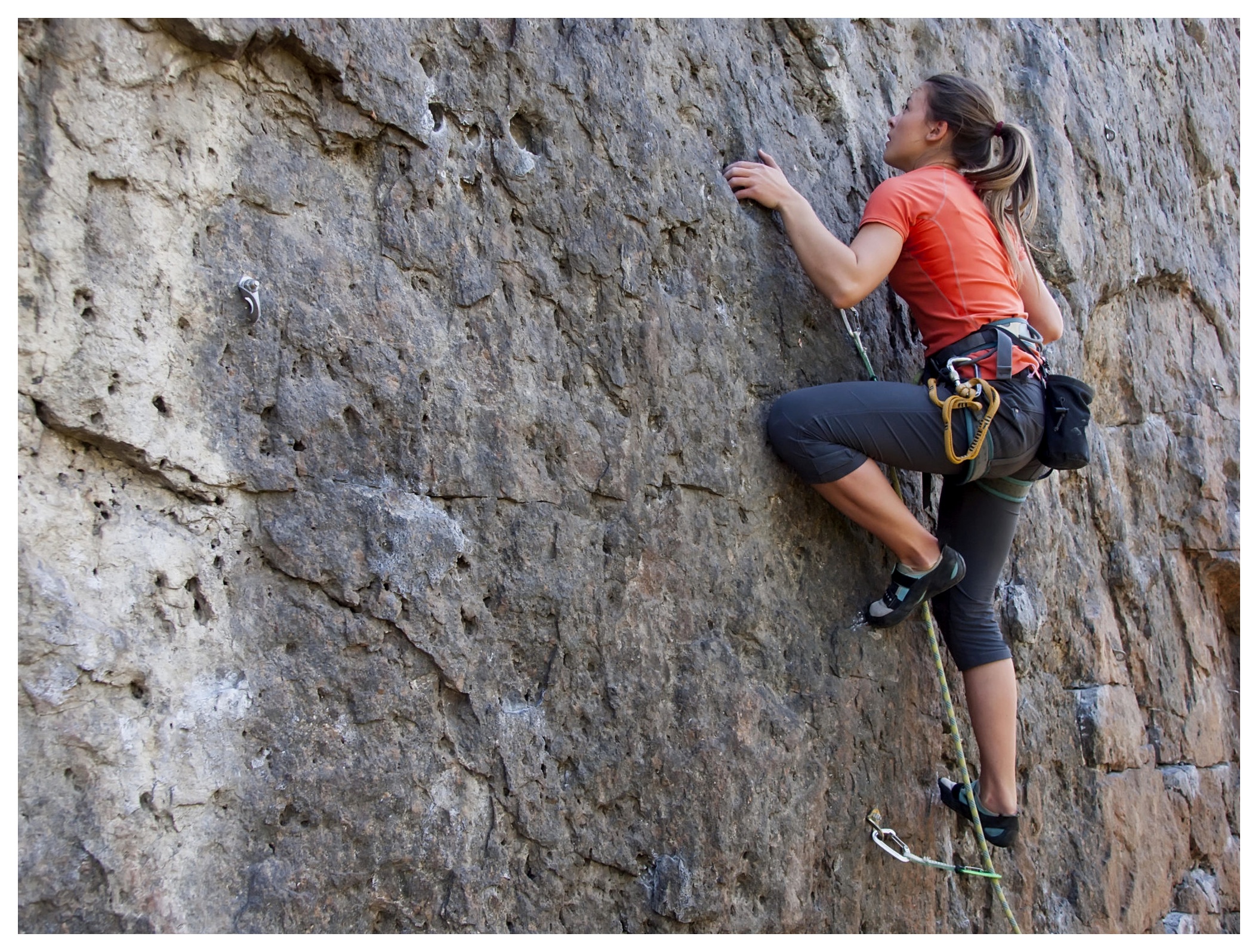
Discover the ins and outs of sports climbing terminology and grading systems. This dynamic climbing style focuses on ascending routes that are secured with fixed anchors and bolts, allowing climbers to tackle challenging climbs with confidence.
Common sport climbing terms
- **Bolt:** A fixed anchor embedded in rock, used for attaching quickdraws and securing climbing ropes during ascents.
- Clipping: The process of securing climbing rope to a quickdraw—two carabiners linked by a textile sling—attached to a bolt for safety in climbing.
- Whipper: A dramatic fall by the lead climber when they are above their last piece of protection (quickdraw).
- Redpoint: Derived from the German term “Rotpunkt,” this climbing technique signifies completing a route without falls or resting on gear. Discover more about redpoint climbing by watching the insightful documentary featuring top climber Alex Megos.
- Onsight: Successfully climbing a route on the first attempt without prior knowledge or beta, while avoiding falls and rope rests.
- Route setting: Creating routes on a climbing wall by strategically placing holds.
Sport climbing grades
Sport climbing grades are essential tools for climbers to evaluate the challenge posed by different routes. The two primary grading systems used in sport climbing are:
- **Yosemite Decimal System (YDS)**: The YDS is a popular grading system for sport climbing in the U.S., consisting of a class number (5 for technical rock climbing) and a difficulty rating (ranging from 5.0 to 5.15). For instance, a 5.10a route is less challenging than a 5.10c, while a 5.11a is more difficult than a 5.10d.
- **French Grading System:** The French grading system, widely used in Europe and beyond, rates climbing difficulty using a numerical scale (e.g., 6a, 6b, 7a+). Higher numbers indicate greater difficulty, while a “+” signifies a slightly harder climb within the same grade.
Traditional climbing vocabulary
Familiarize yourself with key terminology and concepts related to this style of climbing, where the lead climber must strategically place their own removable protection—like nuts and camming devices—while navigating the ascent. Understanding these terms is crucial for both safety and success on the route.
Common trad climbing terms
- **Protection (Pro):** Removable gear like nuts, camming devices, and hexes is utilized by the lead climber to secure the climbing rope in cracks or rock features, preventing long falls.
- Camming device (cam): A spring-loaded piece of protection that expands when placed into a crack to provide an anchor point.
- Rack: The assortment of protective gear and climbing equipment that the lead climber secures on their harness during traditional (trad) climbing.
- Nut: A wedge-shaped metal piece attached to a wire, used to create anchor points by fitting into rock constrictions.
- Runout: A section of a trad route with limited or no opportunities for placing protection.
- **Multi-Pitch Climbing:** A climbing route exceeding a single rope length, involving multiple sections (pitches) where climbers establish intermediate belay stations to advance.
Trad climbing grades
The two most common grading systems for trad climbing are:
- Yosemite Decimal System (YDS): The YDS, utilized for grading both sport and trad climbs in the U.S., employs the same class number (5) and difficulty scale (5.0 to 5.15). However, trad climbing demands a wider array of techniques, along with enhanced gear management and route-finding skills.
- **British Grading System:** Widely utilized in the UK, this system combines adjectival grades (e.g., Moderate, Severe, Hard Severe) with technical grades (e.g., 4a, 5b, 6c) to assess both overall difficulty and the hardest move on a traditional climbing route. For instance, an HS (Hard Severe) 4b route is more challenging than a Sev (Severe) 4a route.

Climbing slang
Even if you consider yourself a “gumby” (a term for an inexperienced climber) on the wall, you can impress fellow climbing enthusiasts by using these essential climbing slang terms.
Common climbing slang terms
Woody
A simple type of plywood wall that features a combination of either bolt-on holds or screw-on holds.
Example: “I’ve decided to build a woody at home.”
Beta
This word means insider information or advice about a climbing route or specific moves, often shared by other climbers.
Example: “Can you give me some beta on that crux section?”
Crux
The crux is the hardest or most challenging part of a climbing route or boulder problem.
Example: “I almost sent the route, but the crux got me.”
Gumby
As mentioned above, this term describes an inexperienced or clumsy climber. Often used lightheartedly.
Example: “I felt like such a gumby when I couldn’t figure out that move.”
Pumped
In climbing terms, pumped means having tried forearms caused by sustained gripping or overexertion.
Example: “I couldn’t finish the route because my arms were too pumped.”
Sandbag
A climbing route or boulder problem that’s considered more challenging than its assigned grade.
Example: “You’re not a gumby – that 5.10c is a total sandbag!”
To flash
You can use this verb when you successfully complete a climb on your first attempt, without any falls or resting on the rope, by leveraging your prior knowledge of the route—commonly referred to as “beta.”
Example: “I flashed that 5.11a after watching my friend climb it.”
The benefits of scaling up your English
To truly enjoy the stress-relieving benefits of climbing after a long day, mastering the climbing vocabulary is essential. Familiarity with the terminology not only helps you connect with fellow climbers and forge new friendships, but it also enhances your ability to tackle ascents and feel a sense of belonging within the climbing community.
Climbing is a fantastic way to relieve the stress that often comes with a demanding job. However, if work-related anxiety is a frequent struggle for you, consider addressing the underlying issues by exploring changes in your career.
Feeling lost on how to begin? Elevating your language skills might be the key! Mastering English communication can open doors to your dream job, secure that coveted promotion, and build strong professional relationships, all of which contribute to greater job satisfaction.
Looking to boost your skills and gain confidence in the workplace? Join LingualNeeds! This innovative online language learning platform connects you with skilled business English tutors for personalized 1-on-1 lessons that are both affordable and flexible. Get ready to enhance your professional communication and excel in your career!
Unlock the potential of your business English skills with LingualNeeds’s cutting-edge search tools. In just a few clicks, you can find a curated list of qualified teachers ready to tailor courses that meet your unique requirements.
Are you ready to transform your daily commute into a positive experience? Join the thousands of learners who are enhancing their English skills with LingualNeeds. Book a trial lesson today and take the first step toward fluency!
Frequently Asked Questions
What is a climbing harness?
A climbing harness is a padded belt and leg loop system that offers climbers a secure attachment point for ropes and gear.
What is the difference between lead climbing and top-rope climbing?
Lead climbing involves ascending a route while securing the rope to protection points, whereas top-rope climbing has the rope anchored at the top, allowing for continuous protection as the climber ascends.
What does the term ‘crux’ mean in climbing?
The crux refers to the hardest or most challenging part of a climbing route or boulder problem.
What is a crash pad used for in bouldering?
A crash pad is a portable, cushioned mat placed beneath a boulder problem to soften the impact of falls.
How are climbing grades determined?
Climbing grades are determined using various grading systems, such as the Yosemite Decimal System (YDS) and the V-scale, which assess the difficulty level of climbing routes and boulder problems.