

- Topics from English speaking practice with Jennifer
- Tools, resources, and ideas mentioned:
- Top 5 tips on practicing your English speaking skills
- Focus on accent reduction, not accent elimination
- Read the same text aloud (and multiple times)
- Use social media to practice individual sounds
- Read news headlines to practice English
- Practice speaking on the phone with a partner
- Practice your speaking skills from home
- Frequently Asked Questions
- Why is it important to improve pronunciation in English?
- What should I focus on when practicing my accent?
- How can I practice my speaking skills at home?
- What is a good way to enhance my English reading skills?
- How can I overcome the fear of speaking on the phone in English?
Navigating real-life situations can be daunting when you’re uncertain about your English skills. If you struggle to speak clearly, it can be frustrating for others to comprehend you. Likewise, poor listening abilities can leave you confused and disconnected from conversations. It can be quite overwhelming!
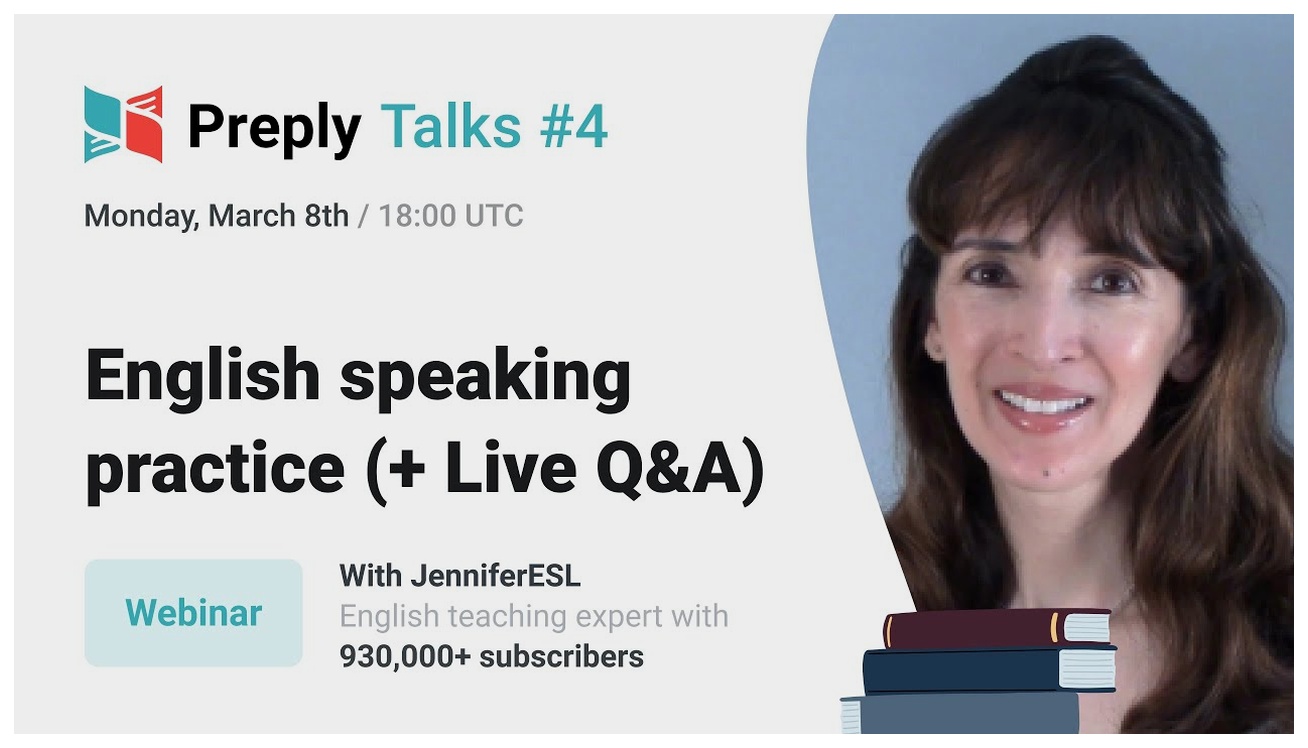
There are plenty of relaxed methods to practice your English speaking skills, ensuring you’re ready for those high-pressure moments. In our engaging webinar featuring YouTube English expert Jennifer Lebedev, we offered valuable tips and addressed questions from learners in real time.
With over twenty years of experience in teaching English, Jennifer has built a thriving online presence through her YouTube channel, English with Jennifer, which boasts an impressive 87 million views and nearly 1 million subscribers. Her valuable insights and practical tips have become a go-to resource for countless individuals looking to enhance their conversational English skills daily.
Here, you’ll discover a collection of tips, exercises, and tools that Jennifer shared. These resources are designed to help you enhance your English speaking skills, making you feel more at ease and self-assured in your conversations. Dive in and start practicing!
Topics from English speaking practice with Jennifer
- Is it important to improve your pronunciation?
- What are the most common pronunciation mistakes?
- How can you improve your speaking skills at home?
- How to practice individual sound
- How to adapt your English for business
- Using TV and movies to practice speaking
- Are idioms important to sound natural?
- Understanding different accents
- Understanding English on the phone
Prefer audio-only? Listen to the LingualNeeds podcast?
Tools, resources, and ideas mentioned:
- Understanding American English Consonant Sounds: Jennifer explains the “manner and place of articulation,” detailing how and where consonant sounds are produced in English.
- Daily conversation starters: Brief prompts on diverse topics for discussions with your tutor, exclusively for English learners on LingualNeeds.
- English with Jennifer: Jennifer’s website with English learning resources, study tips, videos and more.
- How to Read News Headlines: Discover the benefits of reading news headlines for English practice, along with engaging tasks to enhance your skills with Jennifer.
- Language learning study planner: A template to create your weekly language study routine, and stay disciplined to reach your goals.
- Literary devices: How to express yourself with subtlety in English using similes, metaphors, puns, irony and more.
- NPR podcasts: Popular and engaging English language podcasts with transcripts.
- Jennifer’s Oral Reading Fluency Series: Improve your English communication skills through regular practice with short reading exercises.
- Public speaking in English: 10 useful tips to present yourself with confidence in English.
- YouGlish: A free English pronunciation tool that lets you search for any word and find YouTube videos featuring it spoken in various accents.
Top 5 tips on practicing your English speaking skills
Jennifer generously offered nearly an hour of insightful tips for enhancing English speaking skills. With so much valuable information, it was tough to narrow it down! Here are five standout recommendations that we think you’ll find particularly helpful.
Focus on accent reduction, not accent elimination
If your first language heavily influences your speech to the point where others struggle to understand you, it’s essential to improve your pronunciation for both clarity and accuracy. However, this doesn’t mean you have to sound exactly like a native speaker. In my view, the goal isn’t accent elimination but rather accent reduction, which facilitates clear communication. Unless you’re preparing for a role that requires you to convincingly adopt a specific accent, it’s more important to ensure you are understood. Remember, everyone has an accent—even I do! So, prioritize clarity in your speech; that should be your main objective.
Read the same text aloud (and multiple times)
When practicing reading aloud, choose a text you’re already familiar with. This familiarity means you’ve likely encountered and understood any challenging words before. I suggest opting for shorter pieces, as they allow for repeated readings. The core idea of my oral reading fluency series is to work with these brief texts, enabling you to refine your pronunciation through practice. Start by prioritizing clarity over speed; once you feel more confident with the material, you can gradually increase your pace.
Use social media to practice individual sounds
Many individuals can master specific sounds by actively listening, practicing, and focusing on achieving accuracy. If you recognize sounds that you struggle to produce, consider seeking resources on platforms like YouTube or Instagram, or finding a teacher you connect with. It’s beneficial to learn from at least two or three instructors, as this allows you to compare their explanations. While some concepts may overlap, one particular teacher’s approach might resonate with you, enhancing your understanding.
Read news headlines to practice English
In my experience, the most successful language learners are often avid readers. Consider incorporating a daily reading habit into your routine, even if it’s just skimming the headlines from your favorite news source, like BBC or NPR. This practice not only keeps you informed about current events but also immerses you in written English, enhancing your language skills over time. Make reading a part of your day and watch your language abilities grow!
Practice speaking on the phone with a partner
For non-native English speakers, conversing on the phone can be quite challenging. During my journey learning Japanese, we engaged in a weekly activity where we would call a language partner and chat in Japanese for at least five minutes. Although our vocabulary was limited, this exercise aimed to overcome the fear of speaking on the phone while enhancing our listening skills. It can be daunting to tackle this fear alone, so starting with a patient and understanding partner can make all the difference.
Practice your speaking skills from home
Jennifer’s advice offers a comforting perspective for anyone eager to learn English without residing in an English-speaking country. The great news is that many of the exercises she suggests can easily be practiced independently in the comfort of your own home!
Are you eager to learn a new language from the comfort of your home? Don’t miss our informative webinar on effective strategies for mastering a language online! If you enjoy these discussions and want to stay updated on our upcoming live sessions, be sure to subscribe to LingualNeeds’ YouTube channel for notifications.
Now it’s your chance to take action! Which of Jennifer’s tips will you implement to enhance your speaking skills? Enjoy the journey of learning!
Frequently Asked Questions
Why is it important to improve pronunciation in English?
Improving pronunciation facilitates clear communication and helps others understand you better.
What should I focus on when practicing my accent?
Focus on accent reduction rather than elimination to ensure clarity in your speech.
How can I practice my speaking skills at home?
You can practice by reading texts aloud, using social media to focus on individual sounds, and engaging in phone conversations with a partner.
What is a good way to enhance my English reading skills?
Incorporate a daily reading habit, such as skimming news headlines, to immerse yourself in written English.
How can I overcome the fear of speaking on the phone in English?
Practice with a patient and understanding language partner to build confidence in your speaking skills.


