

- 10 tips for how to speak with confidence in the workplace
- 1. Maintain eye contact with your audience
- 2. Throw away filler words and phrases
- 3. Speak slowly and clearly
- 4. Project your voice
- 5. Practice nonverbal communication
- 6. Remember to smile
- 7. Use pauses for emphasis
- 8. Work on active listening
- 9. Begin with an engaging hook
- 10. Incorporate concrete examples
- How to improve your speaking skills in 5 steps
- 1. Expand your vocabulary
- 2. Practice pronunciation with experts
- 3. Ask for feedback
- 4. Learn with a private language tutor
- 5. Observe experienced speakers
- Learn how to speak with confidence with online language tutors
- Frequently Asked Questions
- What are some tips for speaking confidently in the workplace?
- How can I improve my pronunciation when speaking a second language?
- What role does active listening play in effective communication?
- Why is it important to smile during presentations?
- How can I expand my vocabulary for better communication?
If the idea of speaking in front of an audience makes you feel uneasy, you’re in good company—studies indicate that around 30% of individuals share this fear. This anxiety can intensify, especially when delivering a presentation in a second language within a professional environment.
The great news is that mastering confident public speaking is not only within your reach, but it can also transform your career.
Picture yourself entering a meeting room, poised to guide your team, present to top executives, or captivate potential clients. Mastering the art of confident communication in these situations is not merely a valuable skill; it’s a powerful catalyst for advancing your career.
Mastering a second language or enhancing your public speaking skills can significantly boost your confidence, which is essential for demonstrating your leadership abilities and advancing your career. Embracing these skills not only showcases your expertise but also opens doors to new opportunities for professional development.
Today, we’ll dive into our best strategies for conquering nervousness, engaging your audience, and making a memorable impact in every interaction.
10 tips for how to speak with confidence in the workplace
Outstanding public speakers are not simply born; they are crafted through practice and dedication. To boost your speaking skills and approach your next meeting or presentation with confidence, consider these helpful tips.
1. Maintain eye contact with your audience
Eye contact serves as a powerful nonverbal cue, conveying messages like, “I see you, I appreciate you, and I’m speaking directly to you.” This simple gesture fosters a deeper connection with your audience, enhancing the personal and engaging nature of your communication.
Making eye contact not only conveys confidence in yourself and your message, but it’s also a vital skill to hone, especially when communicating in a non-native language at work. This practice can strengthen your connections and enhance your effectiveness in conversations.
To enhance your presentation, make a deliberate effort to connect with your audience through eye contact. Rather than just a fleeting glance, take a moment to hold your gaze on one person for several seconds before shifting to someone else. This practice not only engages your listeners but also fosters a sense of connection and trust.
Resist the urge to become overly focused on your notes or to gaze aimlessly above your audience’s heads. Keep in mind that your primary objective is to foster a genuine connection with your listeners, rather than simply delivering your speech.
Pay attention to how this subtle shift alters the flow of your conversation. You’ll quickly realize that this minor adjustment can significantly enhance your confidence in communication, particularly in professional environments where each interaction plays a vital role in advancing your career.
2. Throw away filler words and phrases
Filler words can obscure your message and weaken your credibility in conversation. Using interjections such as “um,” “uh,” “ah,” “like,” or “you know” can create an impression of uncertainty or lack of preparation. To communicate more clearly and confidently, it’s best to minimize these distractions.
To effectively tackle this issue, start by raising awareness. Record yourself during conversations or presentations, then review the footage. Pay close attention to any filler words you may use. This simple exercise can help you become more mindful of your speech.
Now that you’ve recognized your use of filler words, the next step is to practice breaking the habit. Instead of relying on these verbal crutches, take a moment to pause. These brief pauses allow you to gather your thoughts and add more impact to your words.
Sharpen your speaking skills by discussing a topic you’re passionate about—whether it’s your favorite hobby, sports team, or TV show—with a friend or family member. As you share your thoughts, make a conscious effort to minimize filler words, enhancing the clarity and impact of your message.
Keep in mind that transforming a habit is a gradual process. However, with persistent effort, you’ll notice your speech evolving to be clearer, more authoritative, and ultimately brimming with confidence.
3. Speak slowly and clearly
Effective communication hinges not only on your message but also on your delivery. By enunciating clearly, you enhance understanding and eliminate the risk of misinterpretation, ensuring your audience grasps your ideas fully.
Speaking slowly and clearly not only showcases your confidence and command over your message but also reflects your respect for your audience. By prioritizing clarity, you ensure that your listeners can easily grasp your ideas.
When communicating in a second language, speaking more slowly can help overcome the challenges of your accent, making your message clearer to everyone present. Focus on enhancing your pronunciation skills to sound more like a native speaker and ensure your speech is easily understood.
Enhance your reading skills by practicing aloud at a slower pace, paying close attention to each syllable’s pronunciation. Consider recording yourself during presentations or casual chats. Listening to these recordings can provide valuable insights, revealing areas where your enunciation may need some work.
Tongue twisters are not only entertaining but also an excellent way to enhance your articulation skills, particularly when you’re learning a new language. Give them a try to make your practice both enjoyable and effective!

4. Project your voice
Projecting your voice goes beyond simply raising your volume; it’s about ensuring that your voice resonates throughout the room, making it easy for everyone to hear and understand you.
A strong, well-projected voice reflects confidence and authority, signaling that you’re not merely present to speak, but to be truly heard. In professional environments, where numerous ideas vie for attention, a resonant voice that captures and holds interest is an invaluable asset.
Wondering how to enhance your speaking ability? The key is to engage your diaphragm instead of relying solely on your throat. By mastering this technique, you can boost your volume effortlessly and protect your vocal cords from strain.
Engage in deep breathing exercises to enhance your speech. Concentrate on using your diaphragm, allowing your breath to fuel your voice. Think of it as inflating a balloon; the more air you add, the further it can soar.
To enhance your speaking skills, practice by reading a passage from a book aloud, aiming to project your voice so it carries across the room. Consider recording yourself during this exercise, then listen to the playback to evaluate the volume and clarity of your speech. This will help you identify areas for improvement and boost your overall communication effectiveness.

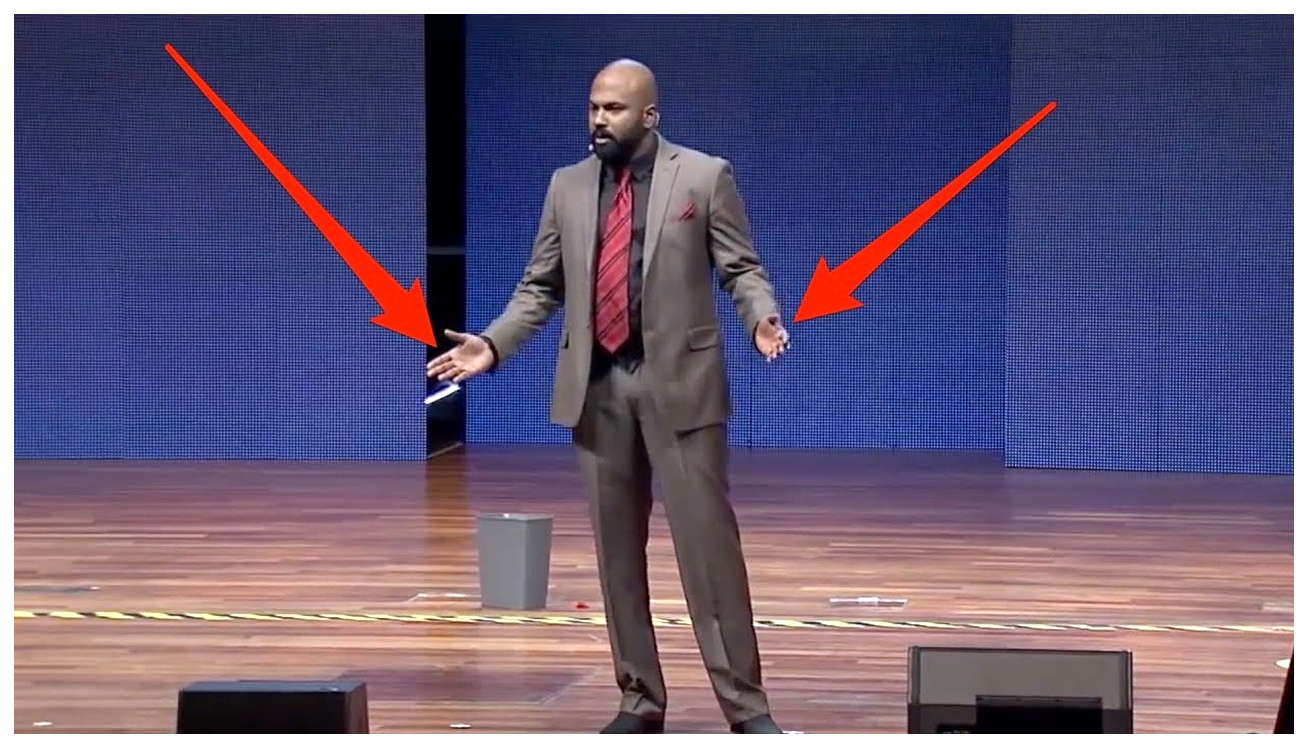
5. Practice nonverbal communication
Your body language, facial expressions, and hand gestures play a crucial role in enhancing your verbal communication. These nonverbal signals can elevate a typical presentation into a captivating and unforgettable experience for your audience.
Your body language communicates powerful messages even before you say a word. For example, using positive gestures and adopting a confident posture can greatly amplify your message’s effectiveness, making it more persuasive and captivating.
In a diverse workplace, where language differences can pose challenges, effective nonverbal communication becomes essential. It helps close the gaps in understanding, ensuring that your message resonates and is truly understood, not just heard.
Body language starts with your posture. Stand tall, with your shoulders back and your head held high. This stance exudes confidence.
When you speak, enhance your message with hand gestures to highlight important points. However, be mindful that these gestures should support your words, not overshadow them. To improve your delivery, practice in front of a mirror and observe how your gestures sync with your speech.
Pay attention to the body language of seasoned speakers and consider integrating their techniques into your own presentation style. Watching acclaimed TED Talks can provide valuable insights into how effective communicators use gestures and expressions to enhance their message beyond mere words.
6. Remember to smile
Smiling at the right moments during a presentation or conversation can significantly enhance the way your message is perceived. This simple yet powerful tool not only makes you appear more approachable and relatable but also boosts your confidence, creating a positive connection with your audience.
A smile is a powerful symbol of friendliness and approachability that transcends language barriers. When communicating in a language that isn’t your native tongue, a smile acts as a warm bridge, fostering connection and understanding. It not only reflects your comfort but also helps put your audience at ease, creating a more inviting atmosphere for interaction.
The secret lies in achieving the right balance—smile sincerely during moments that feel authentic. Begin with a warm smile when addressing your audience; it creates a welcoming atmosphere and sets a positive tone for the entire interaction.
Incorporate smiles to highlight cheerful moments or emphasize positive messages throughout your presentation. Not only do smiles enhance your delivery, but they also convey your engagement and approachability when responding to questions.
7. Use pauses for emphasis
Taking a moment to pause allows your audience to fully absorb and contemplate your message. This is especially crucial when discussing intricate concepts or highlighting important points.
Pausing while speaking not only helps you organize your thoughts but also prevents you from rushing or going off on tangents. In a professional setting, a hurried delivery or a lack of clear breaks can signal nervousness or uncertainty, potentially eroding others’ confidence in your expertise.
A well-timed pause goes beyond merely halting your speech; it serves to emphasize a crucial idea or indicate a shift to a new topic. In your next presentation, make a deliberate effort to pause after sharing an important point. This technique not only gives your audience a moment to process the information but also highlights its importance.
As you rehearse your speech, identify key moments in your script where a pause can enhance the impact. Consider pausing after posing a question, before unveiling an important point, or at the conclusion of a section to give your audience time to absorb the message.
8. Work on active listening
Active listening goes beyond merely hearing words; it involves immersing yourself in the conversation. This means you are fully present with the speaker, grasping their message, and able to respond with insight and understanding.
Active listening enhances your ability to respond thoughtfully and fosters a stronger connection with your audience. By truly hearing others, you minimize misunderstandings and ensure that everyone feels acknowledged and appreciated.
Active listening hinges on being fully engaged in the conversation and concentrating on the speaker without formulating your response while they speak. A practical way to enhance this skill is to consciously summarize the other person’s points before replying. This approach demonstrates your attentiveness and helps eliminate any potential misunderstandings.
Enhance your active listening skills by practicing exercises like mentally repeating the speaker’s last few words. This technique not only helps reinforce their message but also keeps you engaged in the conversation.
9. Begin with an engaging hook
First impressions during a presentation are just as important as they are in any personal interaction. Kicking off with an engaging opening serves as a magnet, capturing your audience’s attention and piquing their curiosity about what’s to come. This initial hook lays the groundwork for a dynamic and unforgettable presentation.
To craft an engaging hook, it’s essential to know both your audience and your topic inside out. A compelling hook should resonate with your readers, making the content feel relevant and relatable. For example, when tackling a technical subject, starting with a surprising fact or a recent statistic can effectively capture attention right from the beginning.
To make your team meetings more engaging, consider kicking things off with a brief personal story that connects to the meeting’s theme. Sharing an experience, such as a past interaction with a client or insights from a recent brainstorming session, can effectively set the tone and foster a deeper connection to the agenda at hand.

10. Incorporate concrete examples
Using specific, relatable examples creates a vivid image for your audience, ensuring your message resonates. Incorporating real-life anecdotes not only enhances your presentation but also builds a stronger connection with your listeners, making your content more memorable.
Choose examples that are relevant to your topic and resonate with your audience. Here are some examples:
- Share a relevant success story or challenge from your experience that complements your presentation’s theme.
- Use well-known case studies or current events as analogies to illustrate your points.
- Include short stories or anecdotes that highlight the practical application of your ideas.
Incorporating real-world examples into your presentation not only enhances your audience’s understanding but also makes the content more engaging and relatable.
How to improve your speaking skills in 5 steps
The strategies we’ve discussed will equip you for your upcoming business meeting. However, to truly master the art of speaking confidently in every interaction, regular practice is key.
We’ve crafted an easy-to-follow plan designed to boost your confidence and prepare you for your upcoming workplace interactions, especially if you’re communicating in a second language.
1. Expand your vocabulary
The choice of words is crucial in shaping how your message is received. A diverse vocabulary enables you to express your ideas with greater clarity and persuasion, reducing the likelihood of misunderstandings.
Expanding your vocabulary with intriguing and powerful words can significantly enhance the impact of your speech, making it more memorable. Additionally, practicing essential phrases for business presentations will help you become more confident in using your newfound language skills.
To expand your personal vocabulary, immerse yourself in a variety of reading materials, especially if you’re learning a new language. Exploring books, articles, and journals related to your interests not only exposes you to fresh terminology but also helps you grasp new phrases and concepts.
Explore language learning apps specifically crafted to enhance your vocabulary. These innovative tools provide interactive methods to learn and apply new words in real-life contexts. Additionally, you can easily save and revisit new words and phrases you come across, allowing for effective practice at your convenience.
Engage with native speakers or colleagues who excel in the language to enhance your skills. Observe their word choices and expressions, and aim to incorporate similar language in your upcoming meetings, presentations, or conversations. This practice will help you sound more fluent and confident.
2. Practice pronunciation with experts
In a professional setting, clear pronunciation is crucial; it significantly impacts how your message is interpreted. Mastering this skill not only enhances communication but also boosts your self-confidence by minimizing the risk of misunderstandings.
To enhance your pronunciation skills effectively, consider collaborating with language tutors or speech coaches. These professionals provide valuable feedback and tailored guidance, helping you target specific challenges—whether it’s perfecting certain sounds or grasping the nuances of rhythm and intonation. If you’re looking for a budget-friendly alternative, online speaking classes offer focused instruction on pronunciation without breaking the bank.
Enhance your language skills by utilizing language learning apps that provide pronunciation exercises. These apps often allow you to record your voice and compare it with that of a native speaker, helping you pinpoint areas for improvement. Additionally, some applications incorporate speech recognition technology to detect and highlight your pronunciation errors, making your practice even more effective.
Engage in regular conversations with native speakers or language exchange partners to enhance your speaking skills. Focus on their pronunciation and make an effort to imitate it. Don’t hesitate to ask them for gentle corrections whenever you mispronounce a word. This interactive practice will significantly improve your language proficiency!
3. Ask for feedback
Whether you’re presenting, leading a meeting, or participating in daily workplace discussions, grasping how your communication is received can greatly enhance your effectiveness. Constructive feedback not only reveals your strengths but also uncovers opportunities for improvement, helping you to grow and connect better with your audience.
Constructive feedback is invaluable for ensuring that your message comes across clearly, your pronunciation is correct, and your tone fits the situation. This is especially important in a workplace where you’re using a second language and may not yet grasp the subtleties of tone and formal communication.
Embrace feedback with curiosity and a desire to grow. After a presentation or meeting, reach out to a trusted colleague or mentor to seek their candid insights. Be clear in your request by focusing on specific areas for improvement, such as clarity, engagement, and delivery. This targeted approach will help you refine your skills effectively.
If you’re participating in a language learning program, make the most of it by seeking feedback from your instructors. Actively engage in activities that challenge your language abilities, and don’t hesitate to request in-depth feedback to enhance your learning experience.
Keep in mind that seeking feedback isn’t about getting validation; it’s about fostering growth and improvement. Embracing this ongoing process can greatly enhance your communication skills over time.
4. Learn with a private language tutor
Customized language instruction designed for your unique professional requirements can greatly enhance your learning speed. By focusing on relevant topics, each lesson becomes directly applicable to your everyday work interactions, resulting in a more efficient and meaningful learning experience.
To enhance your language learning experience, it’s essential to choose a tutor who not only excels in the language but also possesses expertise in your particular industry. At LingualNeeds, you can explore a diverse selection of thousands of online language tutors, each specializing in various fields. Plus, you can conveniently filter your search by price, availability, and even country of origin—perfect for practicing a specific dialect or accent that suits your needs.
LingualNeeds tutors often showcase their industry specializations in their profiles, making it simple for you to connect with someone who truly understands the intricacies of your field. After assessing your current proficiency and language objectives, your tutor will design a tailored learning plan to accelerate your progress effectively.
Discover the best online English courses to jumpstart your learning.

5. Observe experienced speakers
Studying the techniques of accomplished speakers can motivate you to enhance your own communication skills. This strategy is especially beneficial for non-native English speakers seeking to build their confidence in professional settings.
Confident speakers typically refine their abilities through years of dedicated practice, mastering techniques that often go beyond what is taught in traditional classrooms. By observing their speeches and presentations, you can gain valuable insights into how to effectively utilize tone, pacing, body language, and storytelling to captivate an audience.
Plus, skilled speakers can provide real-world examples of handling various speaking situations, from formal presentations to impromptu speeches.
How can you gain insights from expert speakers? One effective approach is to participate in public speaking events or watch videos of acclaimed speakers, like TED Talks. Observe their techniques for launching their speeches, highlighting key messages, and connecting with the audience. Take note of the styles and strategies that inspire you, such as their use of pauses for dramatic effect, storytelling skills, or how they manage audience interactions. By analyzing these elements, you can enhance your own speaking abilities.
Consider integrating some of these techniques into your speaking practice. For instance, if you notice a speaker skillfully employing a specific storytelling method, try adopting a similar style in your next presentation to enhance your storytelling skills.
Learn how to speak with confidence with online language tutors
Embarking on the journey to master confident public speaking—particularly in a second language—demands dedication, practice, and the right tools. By applying the strategies outlined in this article, you’ll enhance your communication abilities, empowering you to become a more effective and self-assured leader in any professional environment.
If you’re eager to enhance your business vocabulary, perfect your pronunciation, or boost your confidence in language skills, LingualNeeds offers personalized online tutoring tailored to your needs. Our expert tutors will design a customized learning plan that accelerates your progress and ensures effective results.
Tutors are available around the clock in every time zone, making it simple to fit lessons into your hectic work schedule. Plus, you can select a tutor with expertise in your specific industry, allowing you to immediately apply your newfound knowledge in practical situations.
If you’re eager to learn a language beyond English, look no further than LingualNeeds! With over 30,000 tutors available for 50 different languages, you’ll easily find the perfect match to help you achieve your learning objectives.
Frequently Asked Questions
What are some tips for speaking confidently in the workplace?
Maintain eye contact, eliminate filler words, speak slowly and clearly, project your voice, and practice nonverbal communication.
How can I improve my pronunciation when speaking a second language?
Consider collaborating with language tutors, utilizing language learning apps, and engaging in conversations with native speakers for practice.
What role does active listening play in effective communication?
Active listening enhances your ability to respond thoughtfully and fosters a stronger connection with your audience.
Why is it important to smile during presentations?
Smiling can make you appear more approachable and relatable, boosting your confidence and creating a positive connection with your audience.
How can I expand my vocabulary for better communication?
Immerse yourself in various reading materials, use language learning apps, and engage with native speakers to learn new words and phrases.


