- Key takeaways:
- Your state’s slang may be harder to understand than you think
- It’s not a “sloppy joe” in South Dakota, it’s a “tavern” – and more state slang meanings revealed
- Always remember where you are from and be willing to learn from others
- Methodology
- Fair use statement:
- Frequently Asked Questions
- Which state has the most misunderstood slang?
- What percentage of people misunderstood Maine’s slang?
- Which state has the most easily understood slang?
- What does ‘jiffy feet’ mean in Florida?
- What is a ‘tavern’ in South Dakota?
Have you ever noticed how your friends and family from different regions of the country use slang that sounds completely foreign to you? It’s fascinating! Regardless of where you hail from in the United States, you likely have unique expressions and words that shaped your upbringing—terms that might be completely unfamiliar to others.
Curious about which state’s slang leaves the most Americans scratching their heads? We surveyed over 1,000 people across the U.S. on slang terms from all 50 states to see which ones they struggled to define. The results were surprising!
Key takeaways:
- Maine was the hardest to understand, with over 88% of people defining the state’s slang incorrectly
- Arkansas was the most understood, with only 7% of people getting the state’s slang wrong
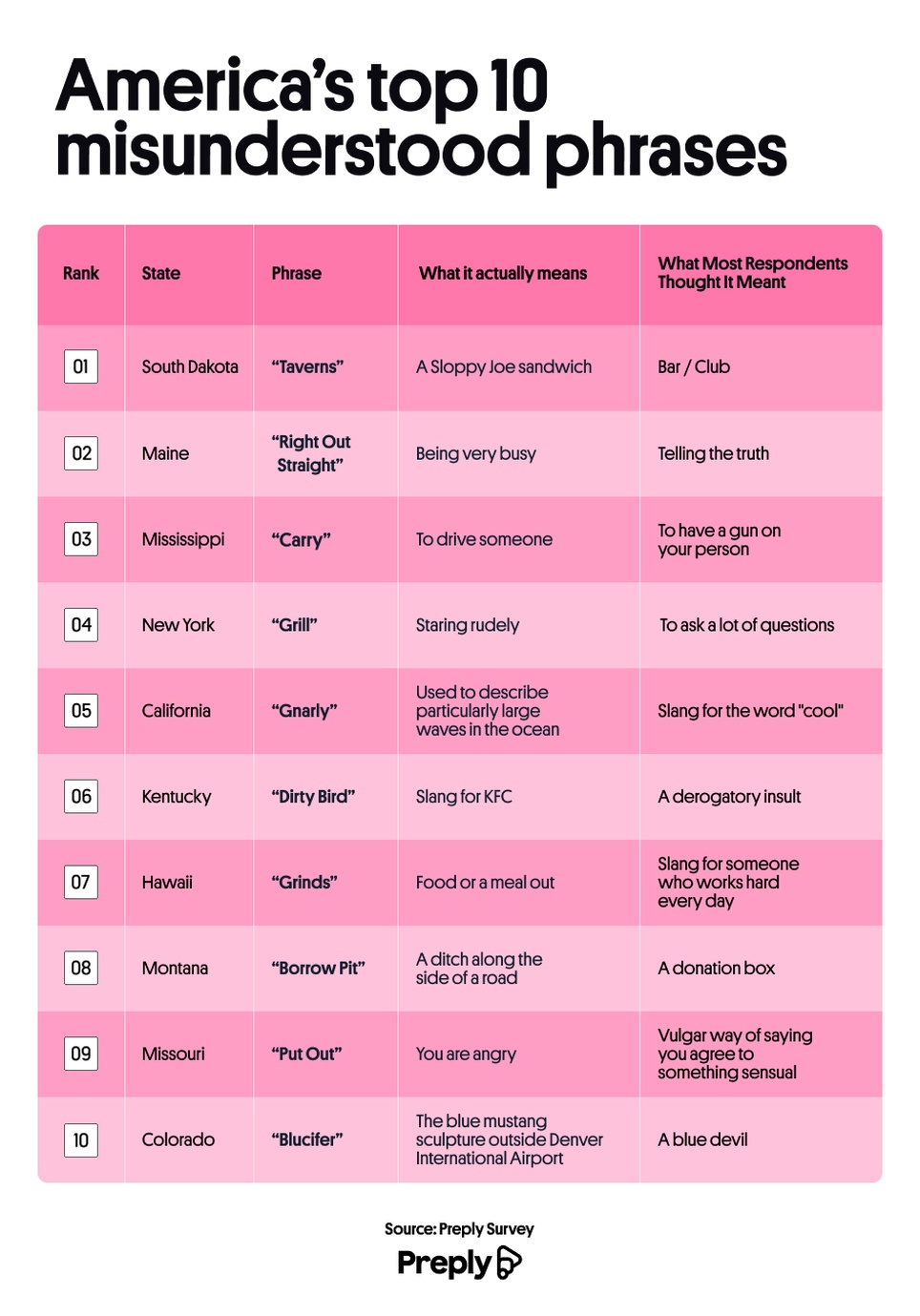
- Only 1% of Americans could correctly define what “taverns” means in South Dakota
- Having “jiffy feet” in Florida means you have dirty feet, but 43% thought it meant having talented dance moves

Learn a language with personalised 1-on-1 classes with our expert tutors from all over the world
French lessons online
Spanish lessons online
Your state’s slang may be harder to understand than you think
Have you ever visited another state and felt as if you’d stepped into a whole new world? You’re definitely not the only one! Many states boast their own distinctive slang that can be quite puzzling. This unique linguistic twist makes for an interesting conversation with our online American English tutors. Curious to see how well others understand the slang from your state? Dive in and find out!
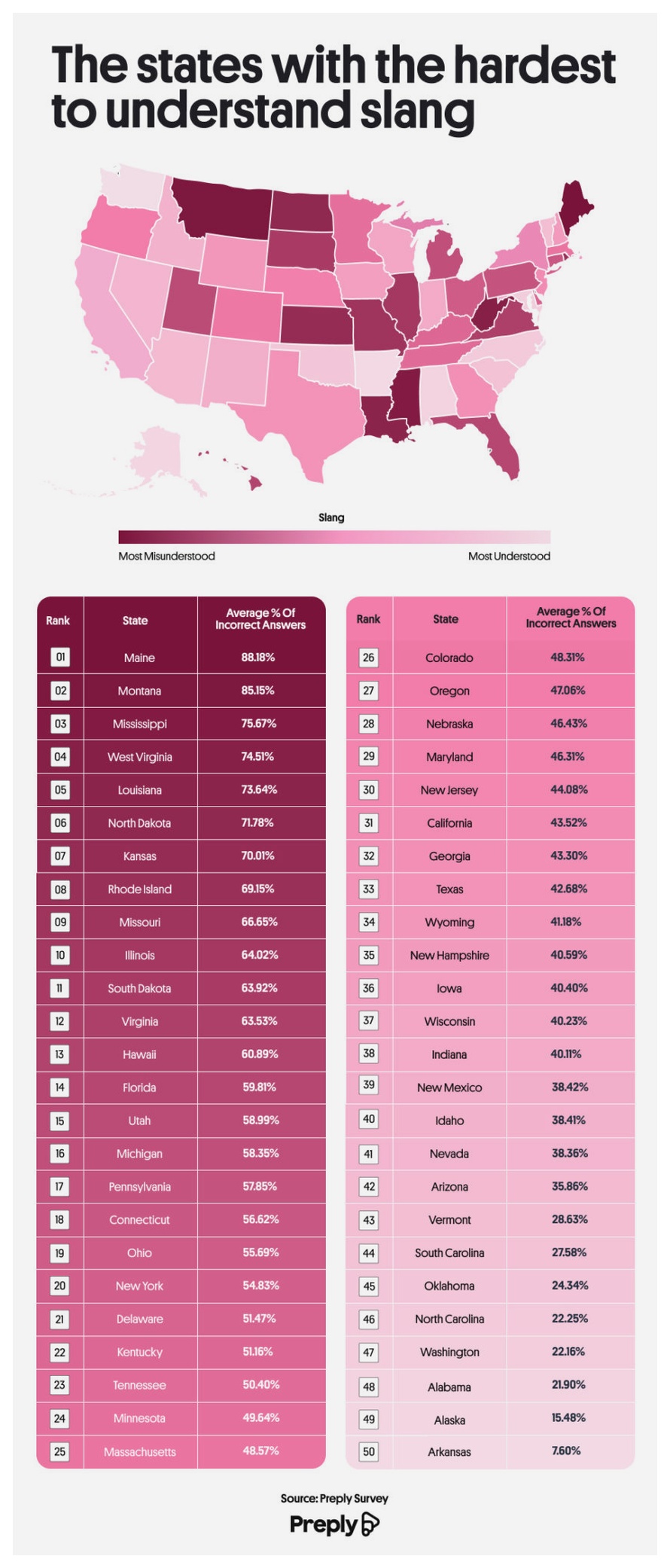
Maine has been crowned the most misunderstood state when it comes to slang, while Arkansas stands out as the most easily understood. The complexity of state slang often stems from distinct regional influences, historical context, and cultural diversity. It’s fascinating to consider how the words we learn while growing up reflect our family backgrounds and the states we call home. These expressions serve as a linguistic fingerprint, linking us to our unique cultural heritage.
It’s not a “sloppy joe” in South Dakota, it’s a “tavern” – and more state slang meanings revealed
Surprisingly, several phrases and words have puzzled many Americans! Our research revealed that some terms can be quite enigmatic. For instance, the word “carry” in Mississippi and the nickname “Blucifer” in Colorado left many scratching their heads. These intriguing state expressions could spark fascinating discussions with your online English conversation tutor!
Other states also stood out for having some funny misunderstandings:
- In Florida, “jiffy feet” refers to having dirty feet from not wearing shoes. Interestingly, 43% of people mistakenly believe it means someone has impressive dance skills.
- In Kansas, “concrete” refers to a popular post-dinner ice cream treat, although 45% of residents mistakenly believe it means sidewalk.
- In Pennsylvania, “yinz” is a colloquial term for “you all.” Interestingly, over one-third of surveyed individuals mistakenly believed it was a nonsensical word.
- If you’re spending summer in Arizona, you’ll likely encounter “haboobs,” which are massive dust storms that occur during the monsoon season. Interestingly, 1 in 3 Americans mistakenly believe “haboob” is a derogatory term.
- In West Virginia, skunks are commonly referred to as “polecats,” but over 25% of Americans mistakenly associate the term with adult entertainers.
Learn a language online with our free learning materials.
Learn English online
Learn French online
Always remember where you are from and be willing to learn from others
The next time you find yourself chatting with someone from another state, challenge them to define a slang term from your region. Their responses could lead to some amusing moments and a fun exchange of local lingo!
Dive into the vibrant local culture and engage with the welcoming residents to unlock the secrets of their unique slang. Language is deeply influenced by culture, and an English speaking course can reveal these fascinating connections. Explore the nuances of the English language and its cultural context by partnering with a dedicated tutor from LingualNeeds.
Methodology
To uncover the quirkiest slang in the United States, we gathered a collection of phrases from onlyinyourstate.com and enjoytravel.com, focusing on the unique vernacular of each state. In September 2023, we surveyed 1,028 U.S. residents to identify which states boast the most challenging slang to comprehend.
Fair use statement:
Feel free to share this data! You can use any of the information or graphics provided above for non-commercial purposes. Just remember to include a linked attribution to this page in your article to give credit.
Frequently Asked Questions
Which state has the most misunderstood slang?
Maine has been crowned the most misunderstood state when it comes to slang.
What percentage of people misunderstood Maine’s slang?
Over 88% of people defined Maine’s slang incorrectly.
Which state has the most easily understood slang?
Arkansas was found to have the most understood slang, with only 7% of people getting it wrong.
What does ‘jiffy feet’ mean in Florida?
‘Jiffy feet’ in Florida means you have dirty feet, but 43% thought it meant having talented dance moves.
What is a ‘tavern’ in South Dakota?
In South Dakota, a ‘tavern’ refers to what many might think of as a ‘sloppy joe’; only 1% of Americans could correctly define it.