
- What is group learning?
- The problem with traditional language learning
- It can be boring
- You don’t use what you learn in school
- Inconvenient or expensive format
- Benefits of working in a group for language learning
- Share ideas
- Learn from others
- Stops procrastination
- Less pressure and anxiety
- Deeper understanding of what you’re learning
- Take the next step in your journey
- Frequently Asked Questions
- What is group learning in language acquisition?
- How does group learning enhance language retention?
- What are the limitations of traditional language learning methods?
- What are the benefits of learning a language in a group?
- How can LingualNeeds’s group classes change the language learning experience?
Have you ever faced the challenge of learning a new language, only to find it difficult to stay motivated and retain what you’ve studied? Joining a group can be a game-changer! Group learning offers a dynamic and social environment that not only keeps you engaged but also enhances your retention and understanding of the language.
In this article, we’ll explore the concept of group learning and highlight the limitations of traditional language learning methods. We’ll delve into the advantages of collaborative learning and demonstrate how LingualNeeds’s group classes can revolutionize your approach to language acquisition. Stay with us to discover more!
What is group learning?
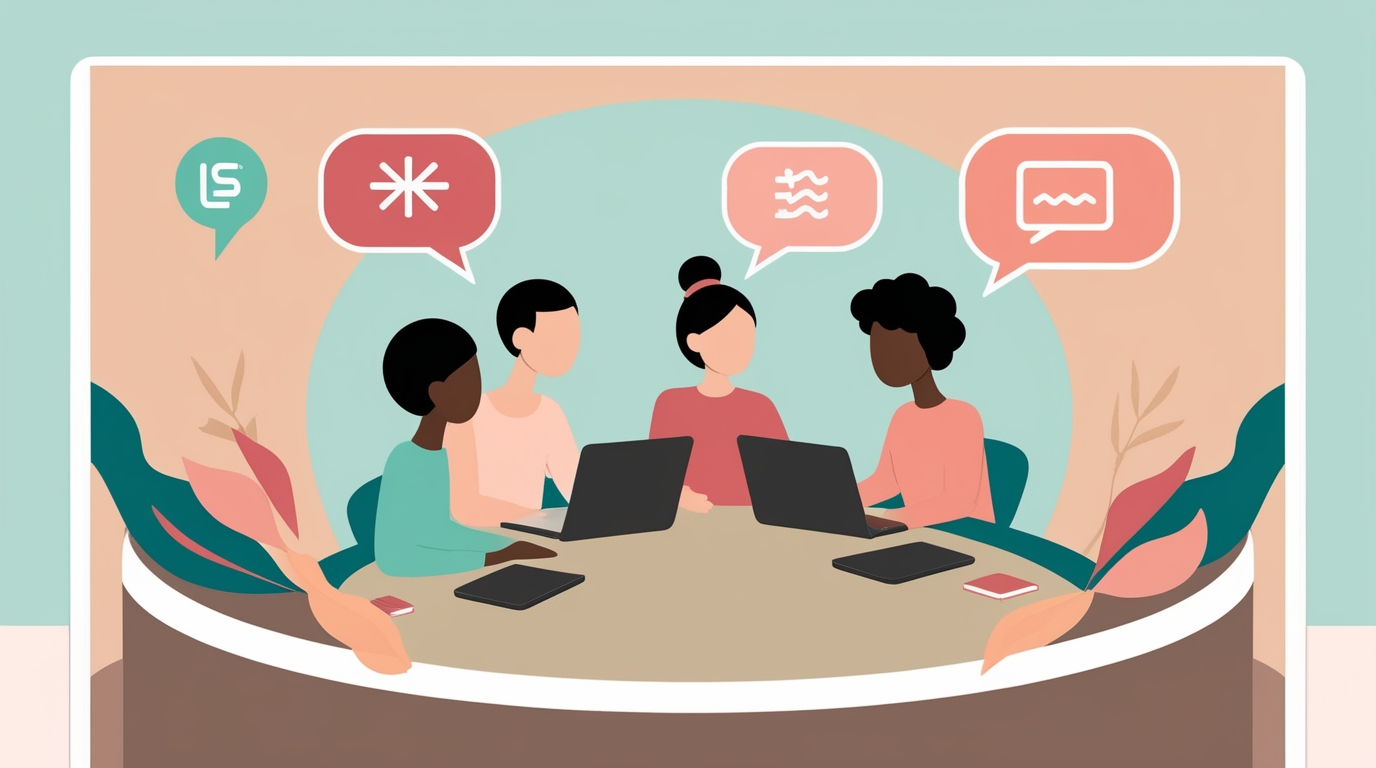
Group learning encompasses any educational interaction among individuals eager to explore a shared topic. It manifests in various engaging formats, such as paired activities, small group discussions, and collaborative team projects. Additionally, group learning can involve interactive elements like games, dialogues, and skits, making the experience both enjoyable and effective.
Scientists assert that learning is fundamentally a social process, and the advantages of collaborating in groups are plentiful. Working in teams allows you to exchange ideas and insights, identify assumptions and misconceptions, and collaborate to generate innovative concepts. These interactions not only deepen your understanding but also enhance your critical thinking abilities.
Group learning is an effective approach for mastering challenging subjects, making it a staple in language education. Engaging in activities like practice dialogues and collaborative presentations enables learners to explore specific concepts and vocabulary in depth, while also honing their speaking and listening skills.
Group learning fosters vibrant interaction among language learners, making it an effective resource for both young students and adults. This collaborative approach enhances exposure to the language and significantly boosts retention, helping learners grasp new concepts more effectively.
The problem with traditional language learning

Traditional language learning methods can be effective for many, but they may not suit everyone’s unique learning style. If you find yourself struggling, you’re not alone. Here are some common challenges you might encounter in a conventional language learning environment.
It can be boring
Many learners often find traditional language education dull and uninspiring. Factors such as repetitive memorization, outdated resources, and large class sizes can hinder language retention and lead to burnout, making the journey of acquiring a new language feel overwhelming.
Textbooks frequently emerge as the main offenders in education, as teachers responsible for large classes often depend on these hefty volumes to guide their instruction.
In a classroom setting, teachers often encourage students to follow along in the textbook, aiming to synchronize with the pace of their peers. However, since each individual learns in their own unique way, it can be challenging to guarantee that everyone is truly absorbing the material.
Large class sizes often lead to an increased homework load, as students must work harder to catch up on any material they missed during lessons.
Using supplementary materials such as movies, podcasts, and articles can enhance your learning experience. However, it’s important to remember that these resources are meant to reinforce the knowledge you’ve already acquired, rather than introduce entirely new concepts.
You don’t use what you learn in school
One significant drawback of traditional language learning is that it often fails to align with the practical communication skills needed in everyday life. What you study in the classroom may not effectively prepare you for real-world conversations.
Excelling in a conventional language learning setting may help you ace an exam, but that doesn’t necessarily mean you’ll be able to converse fluently with a native speaker.
Conjugating verbs is a skill everyone must master at some point, but the journey of learning a language doesn’t have to involve tedious grammar drills or memorizing rules in isolation. Instead, it thrives on understanding and context, making the process more intuitive and engaging.
By emulating the way you acquired your first language—through consistent daily interactions and an emphasis on speaking and listening—you’ll find that learning a new language unfolds gradually and naturally, with grammar becoming intuitive along the way.
Inconvenient or expensive format
In addition to the obstacles faced within the classroom, traditional language learning in schools can be quite inconvenient. Language courses typically have set schedules, meaning they are offered only at specific times and days. Furthermore, not all courses are available for enrollment throughout the year, limiting students’ options.
Finding local classes for your desired language can be challenging, as options may be limited or nonexistent in your area. If you reside in a rural location, the nearest language school could be quite distant, making it difficult to attend in person.
If the hassle of attending language classes at a school has prompted you to explore private, one-on-one tutoring nearby, you may encounter some challenges due to the limited availability of qualified tutors.
Finding someone with the right skills who also fits well with you can be a challenge, and when you do, local options may prove too costly to maintain in the long run.
Benefits of working in a group for language learning
We’ve already highlighted that group learning is not only convenient and enjoyable, but also intellectually stimulating. But does it enhance productivity? The answer is a resounding yes! Here are some key benefits of group learning that can significantly boost your language skills.
Share ideas
Group learning fosters collaboration among students. Your tutor will guide engaging activities such as think-pair-share and group presentations, providing you with valuable chances to enhance your language skills through teamwork.
Engaging in discussions with a partner or delivering a proposal to a group offers an excellent opportunity to articulate your viewpoint effectively. This process not only helps you defend your stance but also enables you to outline the advantages and disadvantages clearly, while considering and respecting differing perspectives.
These skills are essential for professional negotiations, situations like bargaining during travel, and even day-to-day interactions.
Learn from others
To truly enhance your understanding, it’s essential to learn from others as well. Engaging in group learning allows you to encounter diverse perspectives and explore ideas you might not have previously considered. This exchange not only sharpens your listening skills but also enriches your critical thinking abilities.
Learning from others goes beyond simply listening to their viewpoints; it also involves engaging with them. If you often find yourself at odds with a peer, there’s no need to be concerned. In group classes, you’ll gain valuable skills in articulating your thoughts respectfully yet assertively—an essential ability in any language.
Stops procrastination
A key advantage of group learning is the enhanced sense of accountability it fosters. When you skip preparation for class, it not only hampers your own language development but also impacts your peers’ progress. This shared responsibility encourages everyone to stay committed and engaged.
If you need an extra push to prepare, think back to your last group project or meeting where you weren’t ready. Chances are, it wasn’t a pleasant experience—one you’d likely prefer to avoid repeating!
Group learning enhances your chances of revisiting material between classes, keeps you organized with your studies, and boosts your motivation to achieve your goals.
Collaboration is essential for thriving in a group learning environment, but introducing a touch of healthy competition can also enhance the educational experience.
Less pressure and anxiety
Many individuals experience anxiety when learning a new language, prompting language experts to create the Foreign Language Classroom Anxiety Scale. This tool helps measure and understand the feelings of nervousness that often accompany language acquisition.
Learning a new language challenges your brain in remarkable ways, engaging skills such as memory retention, strategic planning, and problem-solving. In one-on-one courses, the demand to utilize these cognitive abilities for an entire hour can be truly draining.
In contrast, group learning offers a relaxed environment for language acquisition, allowing you to absorb information without the constant pressure of immediate responses. As you listen to your classmates share their thoughts, your mind stays active while also giving you the space to thoughtfully process the conversation.
Studying a language with peers provides a unique opportunity to take notes and jot down any questions you might want to ask your tutor, all without disrupting the smooth flow of conversation. This collaborative environment enhances your learning experience by allowing you to engage fully while still capturing important insights.
Deeper understanding of what you’re learning
Finally, group learning drives deep understanding by providing multiple viewpoints and perspectives on not what you learn but how you learn.
Your tutor will provide valuable insights into the language, but your classmates can also be a fantastic resource. They can share fresh perspectives and effective strategies for memorizing vocabulary, understanding idiomatic expressions, and tackling challenging grammar rules.
Keep in mind that while your tutor is the language expert, your classmates are valuable resources when it comes to their personal language struggles and successes. Don’t hesitate to seek their advice or share your own insights. After all, you are also an expert on your unique language journey!
Take the next step in your journey
Mastering a new language can be challenging, but learning in a group setting can significantly ease the process. At LingualNeeds, our engaging group classes allow you to step away from conventional methods, fostering a fun environment where you can share insights, embrace learning from mistakes, and gain fresh perspectives along the way.
Regardless of your language learning goals, LingualNeeds tutoring provides the support you need to kickstart your journey and enhance your confidence in what truly counts—speaking.
Frequently Asked Questions
What is group learning in language acquisition?
Group learning involves educational interactions among individuals exploring a shared topic, utilizing formats like discussions, paired activities, and collaborative projects.
How does group learning enhance language retention?
Group learning fosters vibrant interaction among learners, which increases exposure to the language and significantly boosts retention of new concepts.
What are the limitations of traditional language learning methods?
Traditional methods can be boring, fail to align with practical communication skills, and may be inconvenient or expensive, often leading to burnout.
What are the benefits of learning a language in a group?
Benefits include sharing ideas, learning from others, reducing procrastination, lessening pressure and anxiety, and fostering a deeper understanding of the language.
How can LingualNeeds’s group classes change the language learning experience?
LingualNeeds’s group classes create an engaging environment that encourages collaboration, sharing insights, and learning from mistakes, making language acquisition more enjoyable.


