- What is a skills gap analysis?
- Why is a skills gap analysis important?
- Prepares your organization for an uncertain future
- Improves retention
- Helps your hiring strategy
- Helps internal training
- Helps you make the most of your training budget
- When is the best time to conduct a skills gap analysis?
- Skills gap analysis template
- 1. Identifying the skills that are important to your team
- 2. Assessing your team’s skills
- 3. Assessing each individual’s skills gap
- 4. Assessing the team’s skills gap
- How can I tell what skills my employees will need in the future?
- Developing skills that can’t be automated
- How to close skills gaps
- Frequently Asked Questions
- What is a skills gap analysis?
- Why is a skills gap analysis important?
- When is the best time to conduct a skills gap analysis?
- How can I tell what skills my employees will need in the future?
- How can organizations close skills gaps?
The landscape of work has transformed dramatically in recent years. Teams now navigate hybrid environments and foster digital connections, adapting to a new norm. As certain positions become obsolete, organizations are recognizing the necessity of developing new roles to tackle emerging challenges effectively.
But what do these rapid changes mean for your workforce?
In today’s rapidly changing environment, organizations are prioritizing learning and development (L&D) to cultivate agile workforces capable of swiftly adapting to emerging challenges.
Before committing to training programs, it’s essential to ensure they focus on the specific skills employees need to improve. Tailoring the training to address these critical areas will maximize its effectiveness and benefit the workforce.
That’s where a skills gap analysis comes in. In this guide, we’ll explore the following questions:
- How can I tell what skills my employees will need in the future?
- What is a skills gap analysis?
- Why is a skills gap analysis important?
- When is the best time to conduct a skills gap analysis?
- Skills gap analysis template
- How to close skills gaps
What is a skills gap analysis?
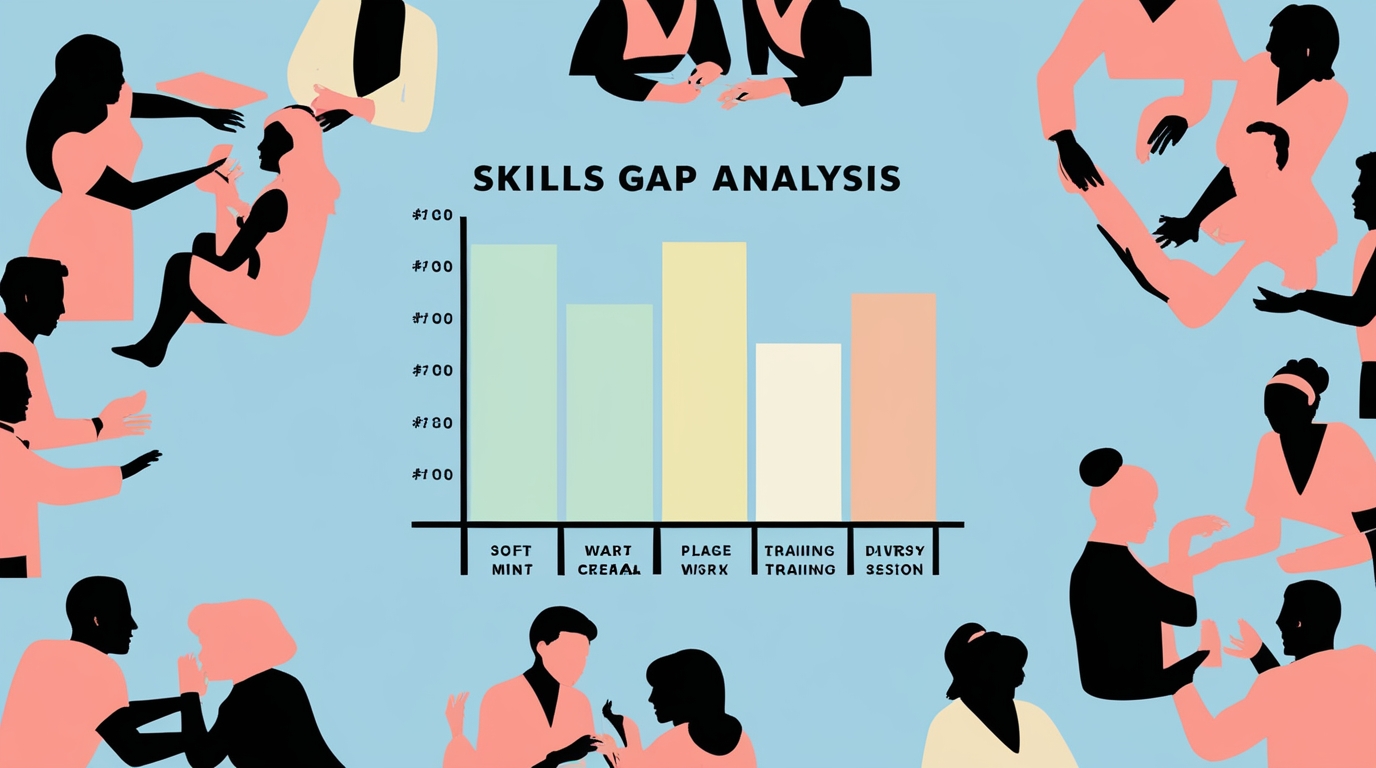
A skills gap analysis, often referred to as a training gap analysis, is a comprehensive process that helps organizations pinpoint the existing skills of their workforce while also identifying the skills necessary for future growth. This multi-step approach ensures that companies can effectively bridge the gap between current capabilities and future demands.
A thoughtfully crafted analysis will reveal the disparity between your employees’ current skills and the skills you aspire for them to possess. This insight is crucial for effective workforce development and training.
This technique enables employers to accurately identify their training needs. It can be applied on an individual basis, to evaluate a specific team or department, or implemented across the entire organization to gain a comprehensive view of the company’s skills landscape.
Why is a skills gap analysis important?
A skills gap analysis is a valuable tool that not only identifies which employees, teams, and departments require training but also offers additional advantages for your organization. By conducting this analysis and implementing targeted training programs, you can enhance overall performance and drive success in various ways:
Prepares your organization for an uncertain future
As automation increasingly influences various industries, ensuring that your employees are prepared for upcoming changes is crucial, no matter what shape those changes may take within your organization.
Conducting regular training gap analyses positions you for future success. This proactive approach enables you to anticipate emerging technology trends, industry changes, and competitor strategies. By identifying these gaps, you can ensure your employees acquire the essential skills needed to thrive in an evolving landscape.
Improves retention
A recent survey by the Pew Research Center revealed that for workers who left their jobs in 2021, the absence of advancement opportunities was as significant a reason for their departure as their pay rate.
Companies that actively invest in their employees’ skill development enjoy higher retention rates, which is crucial in today’s competitive job market. Retaining your talent not only fosters a more experienced workforce but also saves your organization the considerable time and resources required to replace skilled workers.
Helps your hiring strategy
When growing your team, conducting a company-wide skills gap analysis can provide valuable insights into the areas where you need to focus your recruitment efforts.
To effectively identify your next hire, it’s essential to have a clear understanding of your team’s current gaps. By pinpointing the specific hard or soft skills that are lacking, you can prioritize your search for new employees who will best complement your existing workforce.
Helps internal training
After conducting a training gaps analysis, you’ll pinpoint your organization’s subject matter experts and discover which employees would gain the most from further training opportunities.
This insight is crucial for developing an effective mentoring or peer-to-peer training program. By pairing employees with varying skill levels—those who excel alongside those who may struggle—you create a dynamic environment where they can learn from each other and grow together.
This type of internal training has the added benefit of boosting employee communication and connectivity throughout your organization.
Helps you make the most of your training budget
By pinpointing specific skills gaps, you can focus your training efforts effectively, ensuring that resources are dedicated only to employees who truly need them. This targeted approach maximizes efficiency and minimizes wasted time in the training process.
Simultaneously, you can hone in on the specific skills and expertise that your employees need to develop. With a clear focus, you’ll ensure every dollar of your training budget is spent wisely.

When is the best time to conduct a skills gap analysis?
To fully harness the advantages of this approach, timing is crucial. There are specific moments in both personal careers and within organizations when conducting a training gaps analysis can be incredibly beneficial for determining future actions. Let’s explore this further:
- For individuals
Conducting a skills gap analysis for an individual can be invaluable when an employee is promoted or their responsibilities shift. This assessment highlights the areas where they may require additional support, ensuring a smoother transition into their new role.
When a team member returns from a sabbatical, secondment, or parental leave, it’s essential to update them on any significant changes to their role during their absence. This ensures a smooth reintegration into the team and helps them quickly get up to speed.
Finally, conducting a skills gap analysis can be a constructive step following a disappointing appraisal. This approach provides valuable insights that empower employees to enhance their skills and improve their performance.
- For a team
A team training gaps analysis is a good idea when a new team leader comes on board.
After gaining a solid understanding of their role’s expectations, conducting a skills gap analysis will enable them to pinpoint the team’s weaknesses and effectively allocate their training budget.
When a team embarks on a new project filled with fresh challenges, conducting a skills gap analysis can pinpoint the areas where additional support is essential. This process helps ensure the team is well-equipped to tackle upcoming tasks effectively.
If a team consistently struggles to meet its targets, conducting a skills gap analysis can uncover the underlying issues and identify any skills shortages that may be hindering performance. This proactive approach allows you to effectively address and resolve the challenges at hand.
- For a department/company
Conducting a comprehensive skills analysis across your organization can provide valuable insights into how well your team is prepared for significant changes. This approach is particularly beneficial when considering expansion into new markets or when your industry is rapidly adopting new technologies. By understanding your current skill set, you can better anticipate and navigate these transitions.
Identifying a skills gap provides you with valuable insights and the resources necessary to tackle it swiftly and effectively. As a result, your workforce will be better prepared with the essential tools to thrive in a changing environment.
Learn more about why a training needs assessment is important for your company.

Skills gap analysis template
The following skills gap analysis example has 4 main steps. It helps you by:
1. Identifying the skills that are important to your team
In this phase, you establish the purpose of your skills analysis. Reflect on the specific abilities your team will require to successfully tackle their upcoming project. Additionally, think about the performance level you anticipate from them.
After completing the analysis, you’ll gain valuable insights into the support your team requires to achieve your expectations.
2. Assessing your team’s skills
This step focuses on identifying both the strengths and gaps in skills within your team. There are multiple strategies you can use to effectively assess these capabilities.
- Encourage team members to self-assess through an anonymous survey using tools like SurveyMonkey, Google Forms, or Typeform.
- Consider conducting casual interviews to foster transparency and honesty, emphasizing that the goal is to offer training.
- For a hands-off approach, request the team leader to evaluate each member’s skills or analyze performance review feedback to identify skill gaps.
A quick example
The mockup below features a straightforward skills gap table. Here, the manager is tasked with identifying and outlining the essential skills they prioritize within their department, which includes Accounting, English, and Project Management.
They have assigned a priority level to each skill, indicating the potential impact of lacking that skill on their department’s performance. Additionally, they have specified a desired rating for each skill on a scale of 1 to 10.
Employees have been encouraged to provide honest and anonymous self-assessments across various areas. In return, they can look forward to the introduction of tailored training resources to support their growth and development as needed.
| Skill | Average team member self-assessed rating | Manager’s desired rating | Manager’s priority |
| Accounting skills | 4 | 8 | High |
| English language | 2 | 9 | Medium |
| Project management | 8 | 8 | Medium |
There is a clear and pressing demand for training in Accounting skills and English, while project management appears to be progressing well.
The manager should then be consulted to confirm that the results match their expectations.
3. Assessing each individual’s skills gap
In the third step, we focus on identifying and detailing each person’s specific skill gaps. Team members have the option to self-assess, or the team leader can conduct the assessment for a more guided approach.
In this stage, you’ll assess both strengths and areas that need enhancement. This evaluation opens the door to peer-to-peer training initiatives, such as mentoring, where team members can exchange their knowledge and skills effectively.
4. Assessing the team’s skills gap
With a clear understanding of your teams’ skill gaps in hand, it’s time to align that with your desired goals. This comparison will guide you in determining the most effective next steps for development.
Whether you opt for internal training or hire an external provider, you can clearly outline your specific needs and the skills you aim to develop through the training process.
Looking to streamline your assessment process? Download the free Skills Gap Analysis Template today and customize it to fit the unique needs of your organization!
How can I tell what skills my employees will need in the future?
While you may not have a crystal ball to foresee the future, there are effective ways to anticipate the skills and knowledge your workforce will require. How can you stay ahead of the curve?
To gain valuable insights into market trends, begin by examining your own company. Assess your goals and aspirations for the next two, five, or even ten years. This foundational understanding can provide a clearer picture of how the market may evolve.
Look at the conversations happening online among thought leaders and industry experts. The questions to ask are:
- What developments are they excited about?
- What new tech trends are on the horizon?
- Where do you see the industry headed in the next decade?
After conducting thorough research, you’ll gain a clearer understanding of the essential skills your team requires. This insight will empower you to adapt effectively and thrive as your industry evolves.
Developing skills that can’t be automated
In today’s rapidly automating world, it’s essential to focus on both soft skills—often referred to as power skills—and hard skills. These uniquely human abilities, such as leadership, strategic thinking, creativity, critical thinking, and effective communication, are increasingly valuable as they cannot be easily replicated by AI. To enhance your career prospects, explore ways to develop your communication skills for success in the workplace.
After pinpointing the essential skills required for your workforce, conducting a thorough skills gap analysis becomes crucial. This process will not only reveal which team members possess the necessary skills but also highlight individuals who could benefit from additional training to enhance their abilities.
Instead of wasting time and money with a general approach, you can direct your resources where they’re most needed.
How to close skills gaps
After pinpointing the training gaps within your organization, the next step is to tackle them head-on. Collaborate with your Learning and Development (L&D) team and senior leaders to create tailored internal training programs. Encourage employees to share their knowledge through mentoring and peer-to-peer learning opportunities, fostering a culture of continuous improvement and collaboration.
Consider exploring external training options, such as online courses. These programs offer a flexible format that enables employees to enhance their skills and knowledge at their convenience, fitting learning into their busy schedules.
Encouraging your team to participate in industry events and conferences is an excellent strategy for enhancing their skills and expertise. Depending on your organization’s specific needs, you can also fill skills gaps through targeted external training programs, providing a more structured approach to professional development.
For example, this might involve contracting an external provider to deliver training over weeks or months.
Conducting a skills gap analysis is the essential first step in bridging the skills gap within your organization. This process helps you pinpoint specific areas where improvement is needed, allowing you to develop targeted strategies for upskilling and fostering ongoing professional development for your team.
Discover how LingualNeeds’ corporate language training can enhance your team’s language and communication skills, empowering your organization to reach new heights.
Frequently Asked Questions
What is a skills gap analysis?
A skills gap analysis is a comprehensive process that helps organizations identify the existing skills of their workforce and the skills necessary for future growth.
Why is a skills gap analysis important?
It helps organizations prepare for future changes, improves employee retention, informs hiring strategies, enhances internal training, and optimizes training budgets.
When is the best time to conduct a skills gap analysis?
It’s beneficial to conduct a skills gap analysis when there are promotions, role changes, new team leaders, new projects, or when team performance is lacking.
How can I tell what skills my employees will need in the future?
By examining company goals, researching market trends, and engaging with industry thought leaders to anticipate developments.
How can organizations close skills gaps?
Organizations can close skills gaps by creating tailored internal training programs, encouraging mentoring, exploring external training options, and facilitating participation in industry events.